Fender Made in Mexico #1
The Standard Series
THE MEXICAN STANDARD STRAT


Table of Contents
ToggleThe Birth of the Mexican Standard Stratocaster
Fender’s first Mexico-made instruments appeared on the January 1, 1991, price list, marking the debut of the Ensenada-built line. The Standard Stratocaster, Standard Telecaster, Standard Precision Bass, and Standard Jazz Bass—all previously produced in Japan—now bore the “MADE IN MEXICO” label.
By 1992, the Ensenada factory was assembling around 175 Standard Stratocasters each day, along with other models in the Standard series. Within just three years, daily output had soared to roughly 600 instruments, signaling the rapid growth and stability of Fender’s Mexican operations.
Contrary to popular belief, the first Standard Stratocasters were not made at the Corona factory. John Page explained that bodies and necks were shipped from the U.S. in a raw state and then smoothed and finished with polyester in Mexico. These components did not belong to the same production lots as those intended for American Standard Stratocasters—they were set aside just for the Ensenada factory.
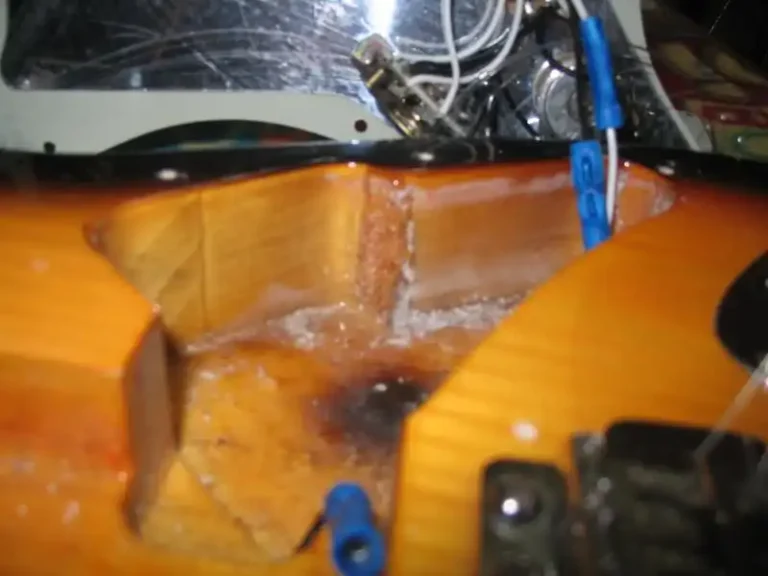
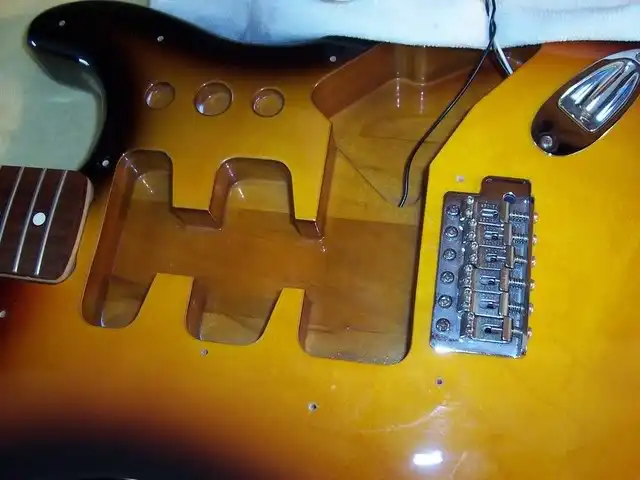
The Standard Stratocasters featured poplar bodies made from multiple blocks, with a veneered top and back, finished in polyester.
The cavities of this Standard Stratocaster body reveal its multi-piece construction

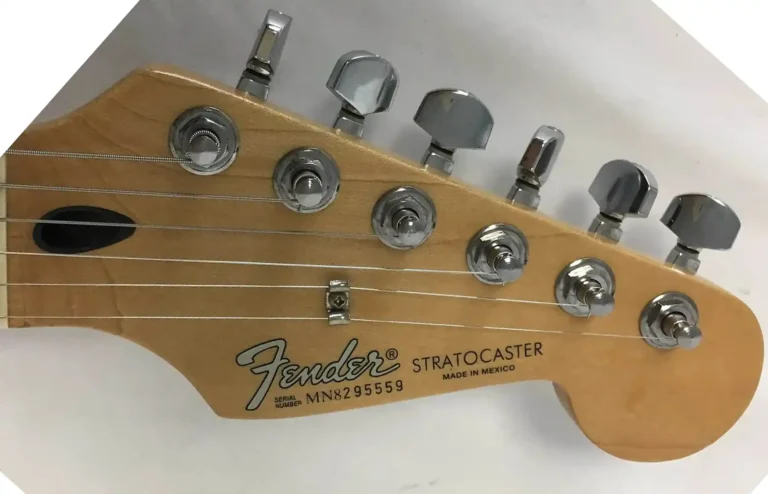
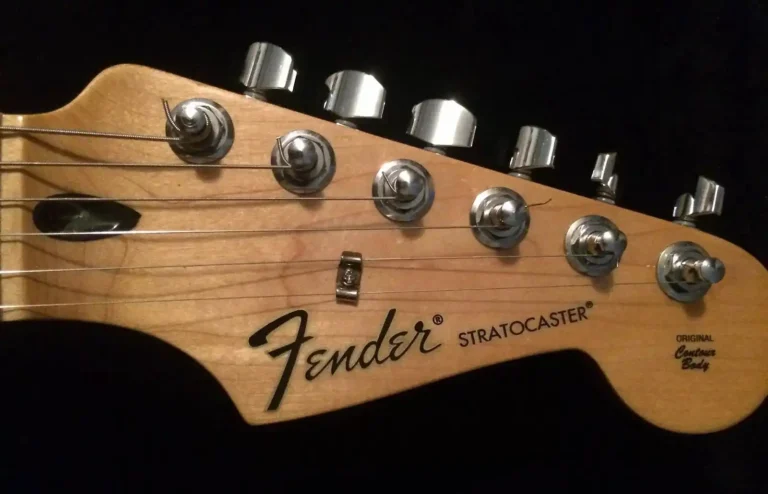
The headstock displayed a whitish Modern logo. A small black plastic truss rod insert surrounded the adjustment nut at the headstock—a detail that would become characteristic of Mexican Fenders and traced back to Japanese Fender production.
In the early 1980s, FujiGen Gakki developed this neck construction method for Fender Japan, incorporating the insert into their streamlined manufacturing process.
When Fender established the Ensenada factory in 1990, it borrowed heavily from these Japanese production methods, including FujiGen-style CNC programs, jigs, and even some leftover neck tooling.


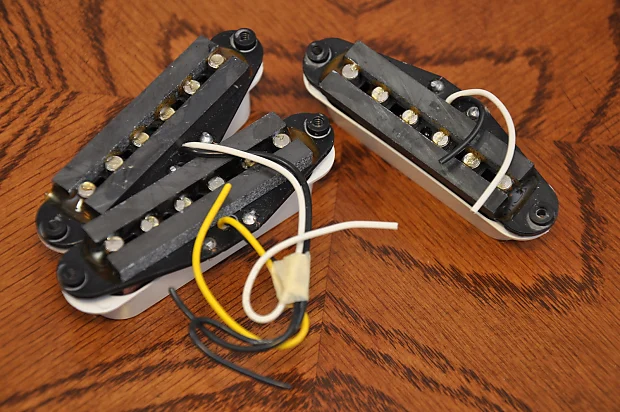
Each Standard Strat’s ceramic pickups had two thin magnetic bars, a departure from earlier Japanese Standards and Korean models, which used only one.
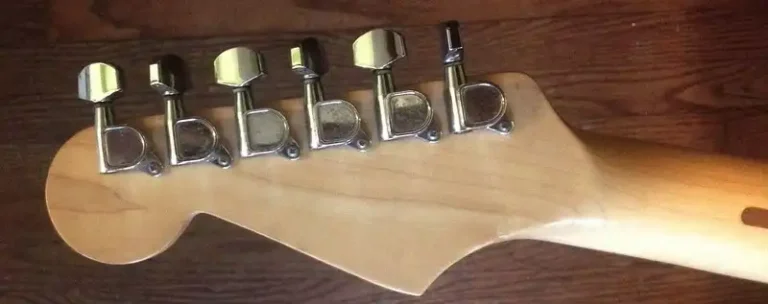
Hardware—including the tuning machines, the bridge (narrower than that of the American Standard, with 52 mm mounting and string spacing), and the saddles—was produced by Ping in Taiwan under Fender license.
One common issue with the earliest Mexican Standard Stratocasters was that the neck did not always sit perfectly in the neck pocket, creating a small gap between neck and body and reducing overall stability.
From experiment to market: the first Standard Stratocasters and their inconsistencies
The earliest Mexican Standard Stratocasters date back to 1989-1990 and served as test guitars. Fender was experimenting with Ensenada’s new factory, adapting production methods, and sourcing parts from multiple suppliers. Despite being test guitars for a new manufacturing process, they were sold to the public, making them unique markers of Fender’s first Mexican output.
Some guitars, for example, featured a CBS-style gold logo, 22 frets, a vintage-style truss rod, a Synchronous Tremolo bridge with thin block saddles (also seen on some Squier Stratocasters), or different types of pickguards.
This inconsistency was a direct result of the early Ensenada production process, as Fender dealt with a ramping factory and persistent parts shortages. To keep the assembly moving, Fender sourced components wherever possible—sometimes even from non-Fender suppliers—resulting in these uniquely varied instruments.
Other unusual Stratocasters, likely made in early Ensenada and sold to the public, include some of the earliest Standard Stratocasters with “MADE IN USA” decals and serial numbers beginning with “E9.”
These guitars can be identified by features such as the black plastic truss rod insert at the nut, trapezoid or standard tuners, or bodies routed differently from those of U.S.-made Stratocasters.
Other odd Mexican-made Strats closely resembled the Japanese ST-40, were sold without any country-of-origin markings, or even had “MADE IN USA” stamped into the wood. These instruments often had serial numbers starting with “I,” “K,” or “H,” and rarely, “F” or “G.” A full article on these unusual guitars can be found here.


Evolution of the Mexican Standard: 2002–2008
In 2002, the body wood—which had previously been poplar—was replaced with alder.
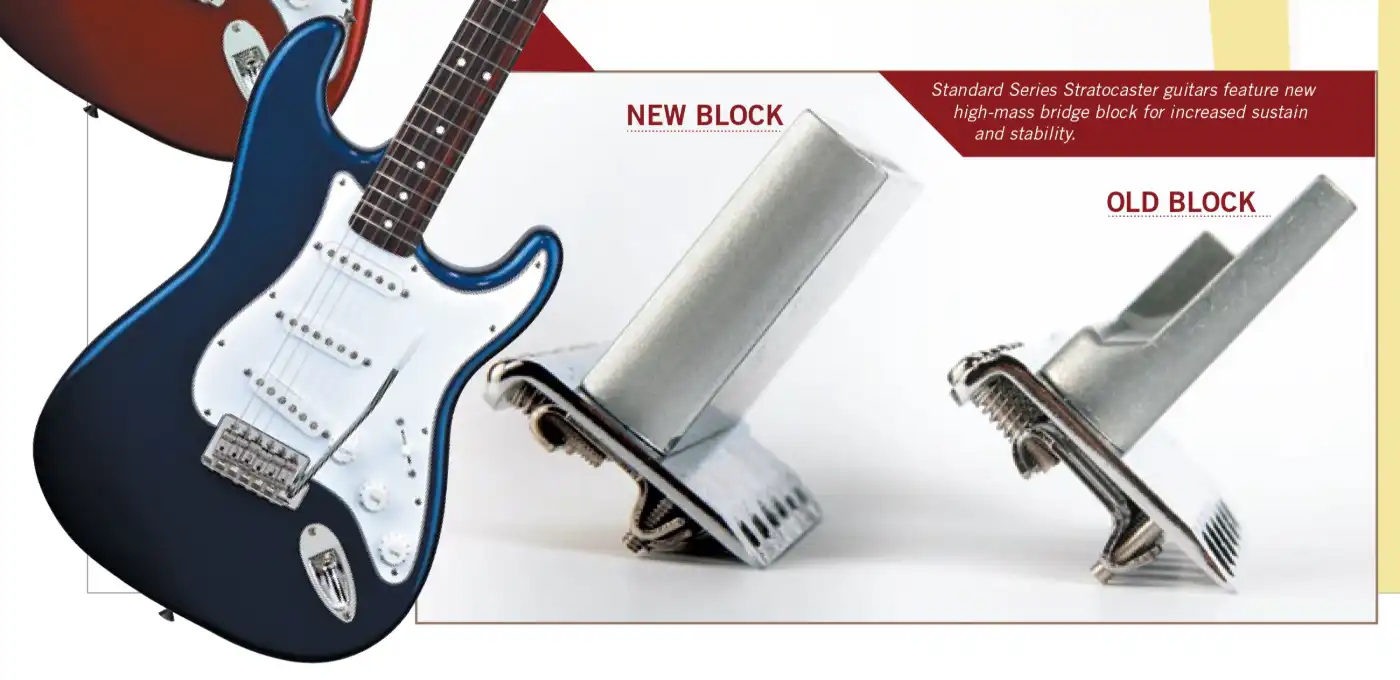
By 2006, the tremolo block had been reinforced, the body cavities had been shielded, and the vintage-style frets had been replaced with medium-jumbo frets.
By this point, the guitar had evolved significantly from its debut. At the end of 2008, all these changes were formalized with the introduction of the new Standard Stratocaster, now identifiable by a Black CBS logo, whereas previous models had featured a whitish Modern CBS-style logo.