Fender Custom Shop #7
Strat Pro, Proto Stratocaster and Postmodern Series
REFINEMENT, STANDARDIZATION, AND EXPERIMENTATION


Table of Contents
ToggleStratocaster Pro
Standardizing Innovation: The Origins of the Stratocaster Pro
The introduction of the Stratocaster Pro Series by the Fender Custom Shop in 2006 marked a significant milestone in the evolution of Fender’s flagship instrument. These guitars were a culmination of the most sought-after modifications and enhancements that the Custom Shop had developed and refined over the preceding two decades.
While individual details had appeared on other guitars, their combination featured on the Stratocaster Pro was unique and practical. By incorporating these popular modifications into a standardized production model, the Stratocaster Pro Series aimed to offer players a premium instrument that combined the best features and upgrades available from the Custom Shop.
This approach provided guitarists with access to professional-grade instruments that boasted superior playability, tone, and craftsmanship, without the need for custom ordering or modifications.
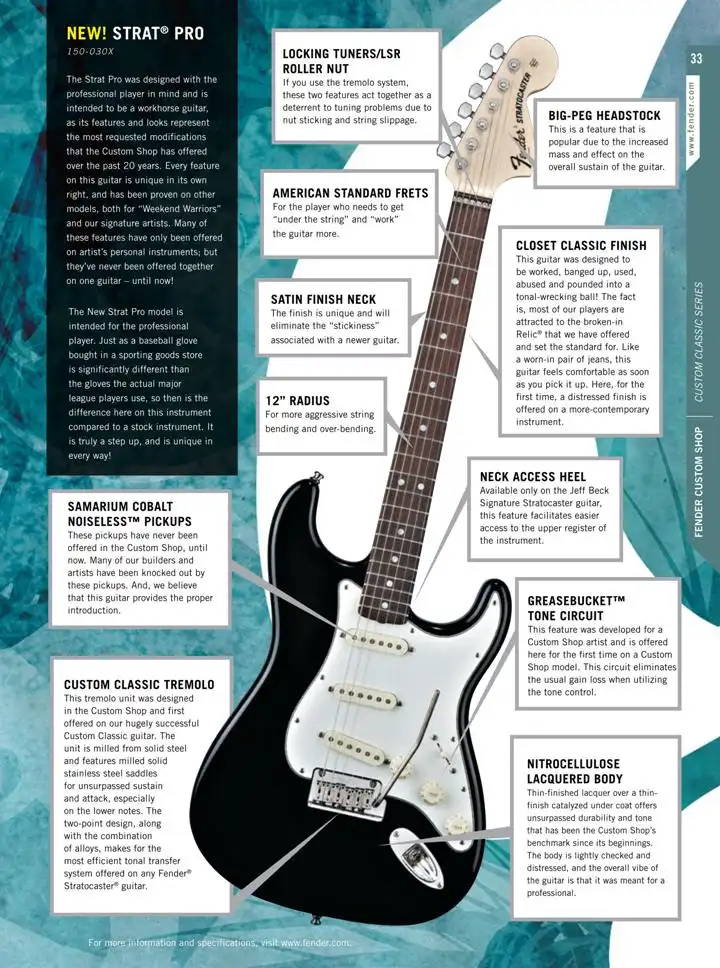

Each year, the Stratocaster Pro Series showcased a diverse range of features, making each guitar distinct from its predecessors. From differences in headstock size and nut types (bone or roller nut) to variations in fingerboard radius, number of frets, tuning machines, pickups, heel designs, finishes, and electronic circuits such as the Greasebucket circuit, each year’s Stratocaster Pro model brought something new to the table.
This approach catered to individual playing styles while enabling experimentation with new features and configurations.


Other Stratocaster Pro models. The 2011 and 2012 Strat Pro differed significantly from the original 2006 model

What Does “Pro” Really Mean?
The interpretation of the term “Pro” found on the back of the headstock of these guitars has sparked speculation and debate among enthusiasts and collectors. While Fender has not provided a definitive answer, two common interpretations have emerged: “professional” and “prototype.”
Many people interpret “Pro” to mean “professional,” suggesting that these guitars were intended for professional musicians who demanded high-quality instruments that met their performance needs. This interpretation suggests that the Stratocaster Pro series represented Fender’s commitment to crafting top-tier guitars for professional players.
Another interpretation posits that Pro stands for prototype, suggesting that these guitars could serve as prototypes for new features or designs that Fender was considering for future production models. This interpretation implies that the Stratocaster Pro Series could incorporate experimental features or modifications that could influence the development of future Fender instruments—for example, the 2011 Strat Pro featured a pine body, later used on a few limited-edition Stratocasters and in the American Professional II Series.
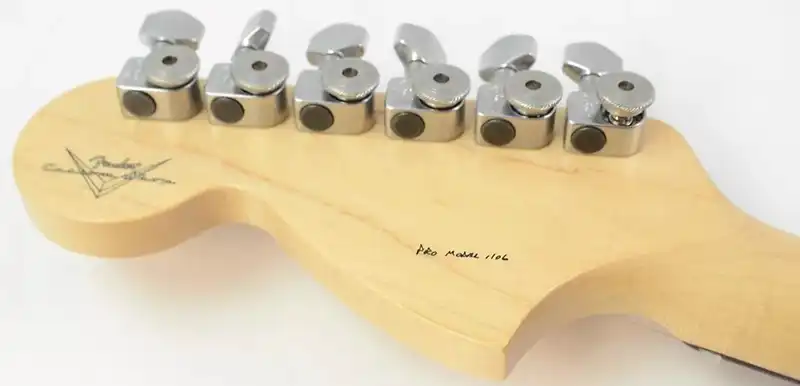
Ultimately, the true meaning of “Pro” may remain open to interpretation, and it’s possible that Fender intentionally left it ambiguous to allow for multiple interpretations. Regardless of its exact significance, the presence of “Pro” on the headstock of these guitars adds an air of distinction and prestige, reinforcing their status as high-quality, professional-grade instruments.

From Pro to Proto
It is interesting to note that Fender Custom Shop Strat Pro guitars were at first included in the Special Edition Series and, since 2009, in the Limited Collection. In addition to the Stratocasters Pro showcased in the catalog, some special units with different finishes were also made.
They remained in production until the end of 2013, although in the following years, some models were manufactured at the specific requests of dealers.
In 2014, Strat Pro Series changed its name to Proto Series and was replaced in 2015 by the Postmodern Series.
The name change to Proto Series may suggest a connection to prototypes or experimental designs, indicating that these guitars could serve as precursors to future production models or incorporate innovative features and concepts.

Postmodern Series
Fender introduced relic guitars in 1995, marking a significant shift in the industry and redefining approaches to guitar aesthetics and craftsmanship. Despite being a subject of debate among enthusiasts, relic guitars have undeniably left a lasting impact on the guitar world, helping to drive Fender’s commercial success.
The practice of intentionally aging and wearing guitars has indeed become a notable trend, reflecting a nostalgic reverence for vintage instruments and the aesthetic allure of well-worn guitars.
Fender celebrated the 20th anniversary of its first Fender relic instruments, showcased at the 1995 Winter NAMM, by introducing a new artificially aged finish—the Journeyman Relic—on the also-new-for-2015 Postmodern Series.
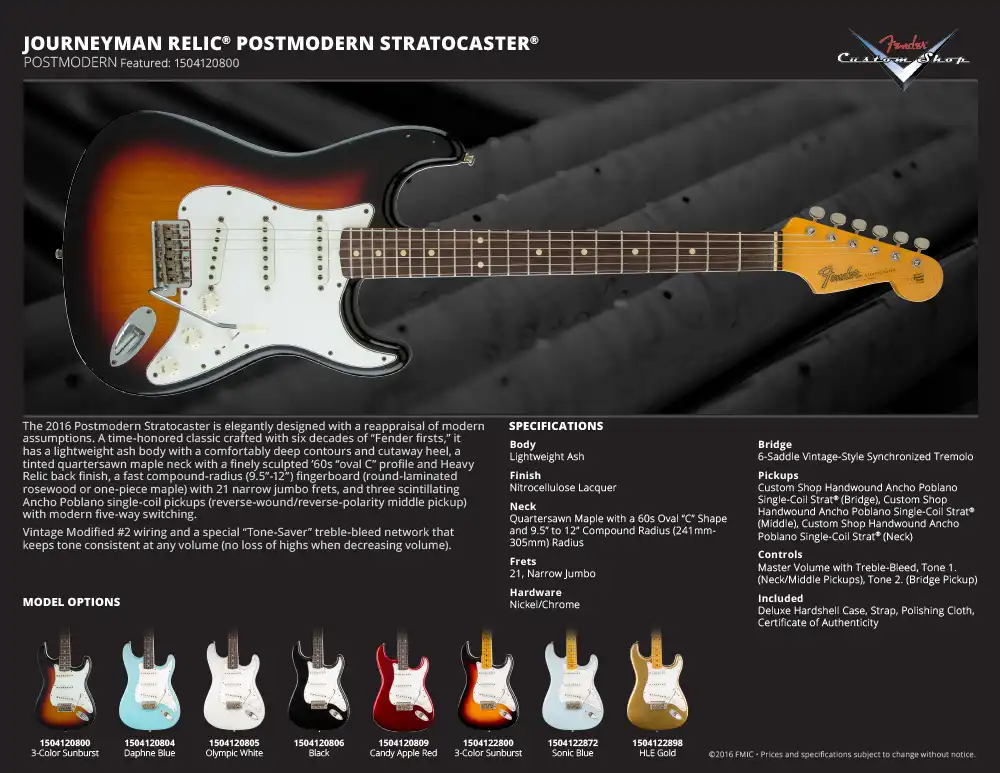

The launch of the Journeyman Relic finish at the 2015 Winter NAMM show marked a notable development in Fender’s relic guitar offerings under the leadership of Mike Lewis.
This new finish represented a refinement of Fender’s relic process, providing guitarists with an intermediate option between the Heavy Relic and Closet Classic finishes. Described as “used but not abused,” it catered to players seeking a vintage aesthetic without excessive wear.
The Postmodern Stratocasters were instruments that recreated the most important features of various years.
The first instruments of the new series were a Stratocaster, a Telecaster, and a Precision body/Jazz neck hybrid bass, all available in the Journeyman Relic and NOS finishes.

