Signature & Iconic Strats

Blackie, Brownie, and the origin of the Eric Clapton Stratocaster

HISTORY OF THE SIGNATURE MODELS AND LIMITED EDITION STRATOCASTERS, FROM THE CRASHOCASTER TO THE GOLD LEAF

advertisement

advertisement
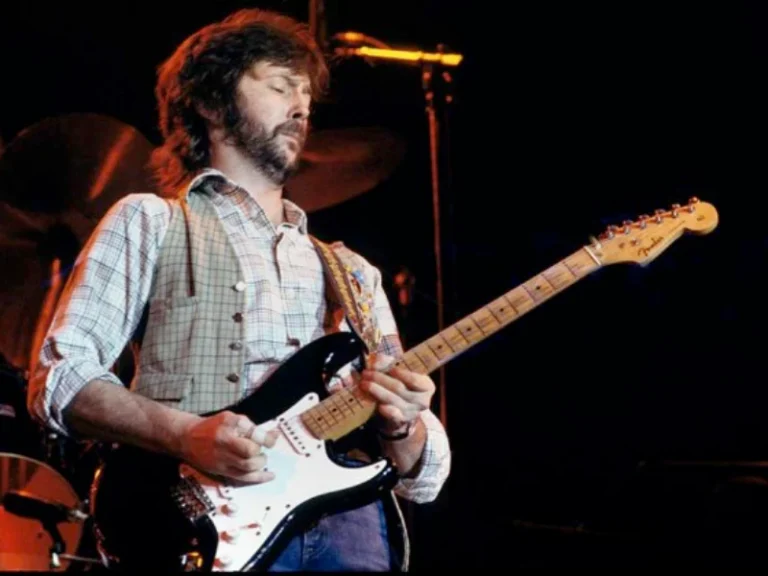
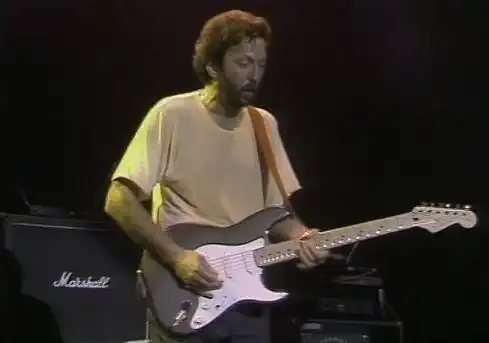
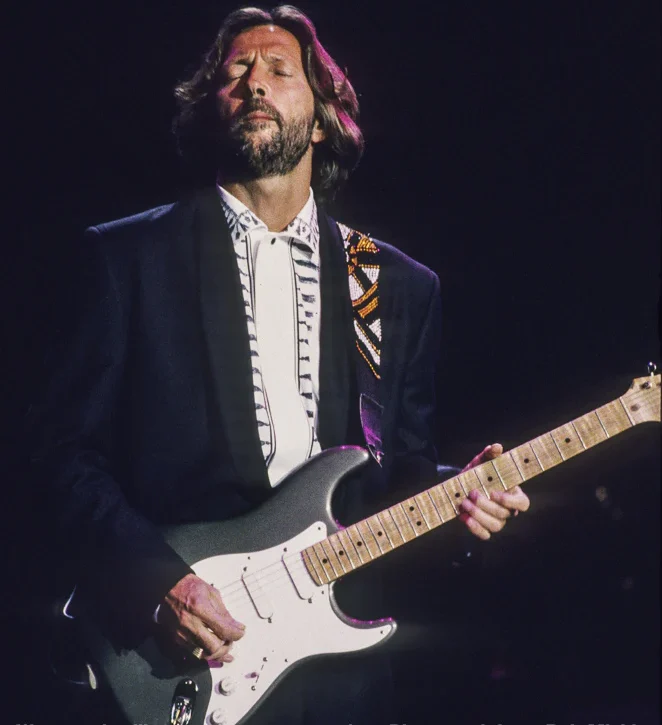
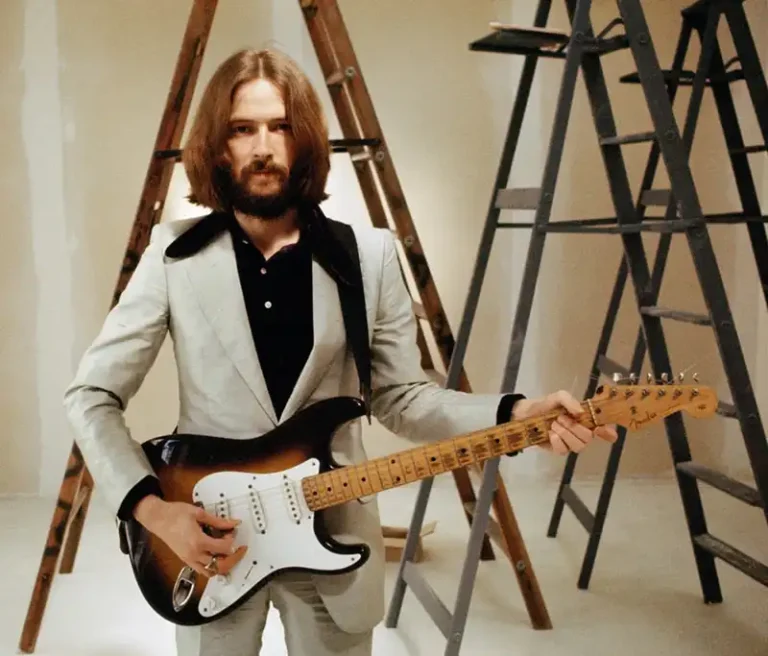
Eric Clapton with Backie
Advertisement

“Blackie is simply worn out. It’s unplayable. The problem is in the neck. The rest of the guitar is okay, but the neck is worn, and the high E is popping off the fingerboard. The frets are almost down to the wood, and it’s already been refretted once and couldn’t take another refret. I’ve played it so much that even the sides of the neck, running along the length of the fingerboard, are wearing down—the neck is actually getting thinner. It’s not even wide enough to support six strings, so I simply had to go with something else. The Fender guys came up with some ideas, and the guitars I’m playing now are the result,” Clapton recalled in an interview with Tom Wheeler.
However, both Fender Master Builder Todd Krause and Lee Dickson—Clapton’s guitar technician from 1979 to 2009—later stated in interviews that Blackie was not actually as ruined as Clapton had suggested.

According to them, the guitar simply showed the normal signs of decades of heavy use and had become somewhat more difficult to play, though Eric had already made up his mind to move on to another instrument.
The deeper reason behind the change was that Fender Musical Instruments Corporation was entering a new era of corporate restructuring and renewed commitment to quality. During this period, Dan Smith had begun promoting the idea of building custom instruments specifically for leading artists—recognizing that many prominent players would not perform with standard production Fender guitars of the 1980s unless they were tailored to their personal specifications.

Advertisement 970x250

Which was the first Fender signature model?

The first Fender signature model might well have borne the name of either David Gilmour or Jeff Beck. However, circumstances unfolded differently.

John Hill, Fender’s first Artist Relations and Brand Director for Europe, had supplied Gilmour with six 1983 Stratocasters. Delighted with those instruments, Gilmour felt no immediate need for a custom-built model. At the time, his legendary Black Strat—after years of heavy use—appeared to be nearing retirement and was loaned to the Hard Rock Cafe Dallas, where it remained on display for more than a decade. Gilmour’s new number-one Strat became a 1983 Candy Apple Red model, the guitar he played during the Live Aid performance.

Hill had also visited Jeff Beck during the recording sessions for his seminal album There & Back at AIR Studios, bringing six Stratocaster prototypes with him. Beck ultimately chose a Graffiti Yellow Vintage Stratocaster, which he used for his 1986 Japanese tour. Several customizations followed, though the process was complicated, as experimentation was underway with various tremolo systems and roller-nut configurations.

Meanwhile, Hill had been attending Clapton’s private and public concerts, thanks to the assistance of Roger Forrester, Duck Dunn, and Albert Lee, as well as through his work with Warner Bros. Records promotional teams during the Another Ticket and Money and Cigarettes album campaigns.

The first discussions about a custom-made guitar to address Blackie’s worn condition began when Hill visited the soundcheck for the ARMS Concert at the Royal Albert Hall in September 1983.
Hill arranged a follow-up meeting two months later at the Forum in Los Angeles. Dan Smith was unable to attend and instead sent John Page and Freddie Tavares, along with one of the first ’57 Vintage Reissues, to Clapton, who at the time was engaged with the ARMS Charity Concert.
Following this initial meeting, others took place.
In particular, Dan Smith recalls that on his birthday, April 5, 1985, he personally visited Clapton in Dallas. Eric was offered both elements that each of the “Britpack” guitarists received: a custom guitar and a clone of one of their most treasured instruments. However, Clapton was not yet interested in a clone of Blackie.

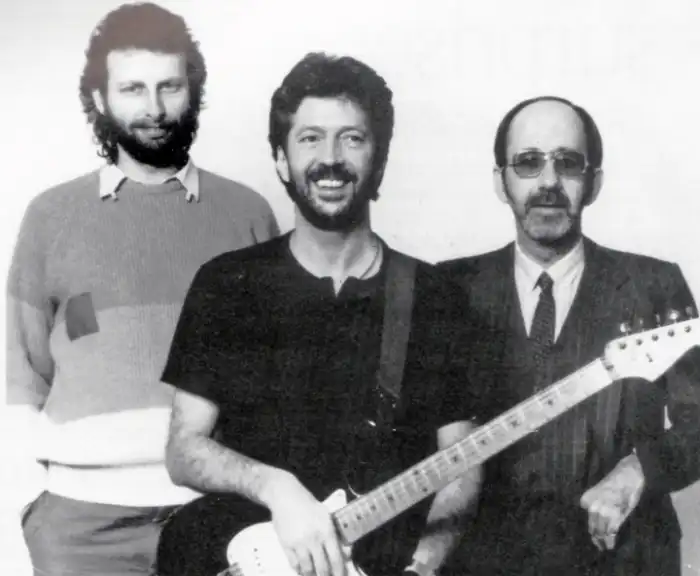
John Page and Freddie Tavares with Eric Clapton, 1983 (Courtesy of John Page)

Thus began the work on the custom one-off Stratocaster designed specifically for Eric Clapton, the instrument that would ultimately become his first official signature model.

Advertisement
advertisement

The Birth of the Eric Clapton Signature Stratocaster

John Hill, who had been entrusted with Blackie, and Dan Smith drove the guitar over to John Carruthers’ workshop in Santa Monica. There, Dan removed Blackie’s neck and placed it on a neck-copying machine, which rolled along the original neck to cut three exact replicas. John Page—and possibly George Blanda—then built three prototype guitars with the tremolo blocked using a piece of wood.

Clapton selected two neck profiles: a sharper “V” and a soft “V”. He then chose three Stratocaster prototypes that featured these profiles: one in Torino Red (originally called Ferrari Red by Hill) with the sharper “V”-shaped neck, serial number V000007, and two in Pewter with the soft “V”-shaped neck, bearing serial numbers V000008 and V000009.

The Pewter finish closely resembled the anthracite shade Clapton favored, which he sometimes called Mercedes Charcoal Gray. These soft “V” neck models would later be used by Clapton during the Prince’s Trust Live Aid, the Live in Montreux concert, and the Eric Clapton & Friends shows in 1986.

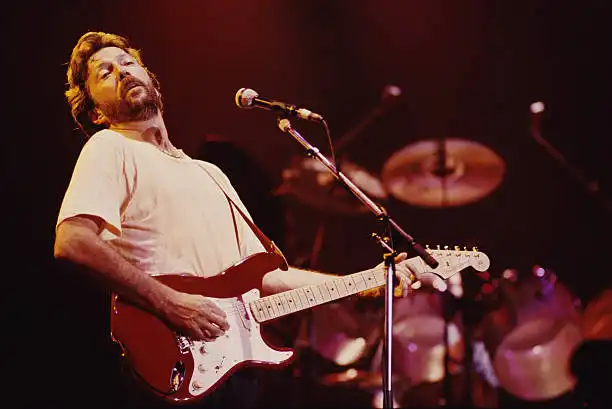
Eric Clapton with the Torino Red Prototype, 1986 Eric Clapton and Friends
Eric Clapton with the Torino Red Prototype, 1986 Eric Clapton and Friends (Photo by Michael Putland/Getty Images)
Eric Clapton with the Pewter Prototype, 1986 Live in Birmingham

Each prototype was equipped with three Gold Lace Sensor pickups paired with a 21dB boost. In various locations, including his management offices in Marylebone, London, Eric had told Hill that he had always wanted a master volume control from his Marshall amp routed directly on the guitar. As a result, onboard preamps were trialed both in London and California, with the final configuration successfully assembled and specified by George Blanda. The prototypes were presented to Eric during the recording of his August album, and the guitarist was so enthusiastic that he even recorded some of his album solos using them.

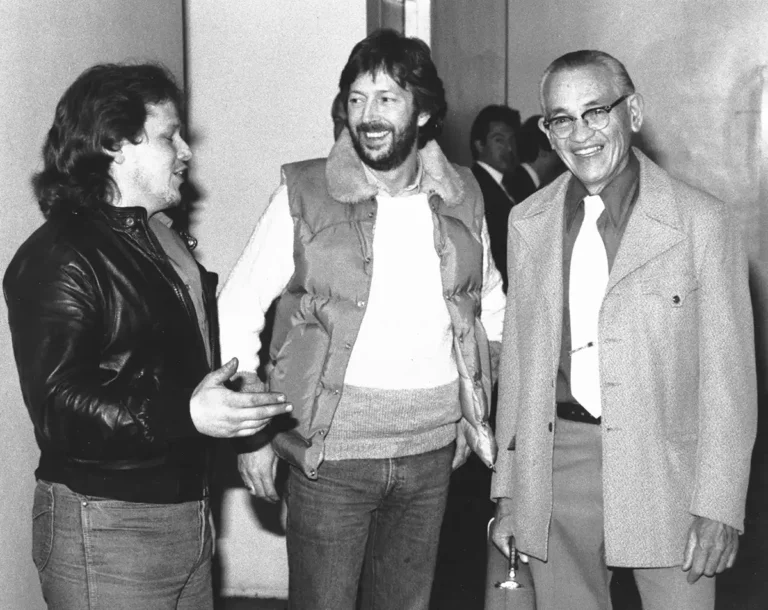
John Hill, Eric Clapton, and Roger Forrester (Courtesy of John Hill)
Advertisement

The contract between Eric Clapton and Fender Musical Instruments Corporation was signed on May 7, 1987, by his manager, Roger Forrester, and witnessed by John Hill, who co-signed on behalf of Fender.
Hill had been negotiating with Forrester for some time. During those discussions, Forrester pointed out that Clapton had never entered into an endorsement agreement before. In that sense, the deal represented a first for the guitarist.
It also incorporated Hill’s forward-looking idea that the custom Stratocaster being developed to Clapton’s specifications might eventually be made available to players worldwide.

At the time, however, that was far from the original intention. The project had begun simply as an effort to persuade Clapton to play contemporary Stratocasters rather than rely on his pre-CBS instruments. Moreover, Dan Smith and Bill Schultz initially felt that signature models were more closely associated with Gibson than with Fender.
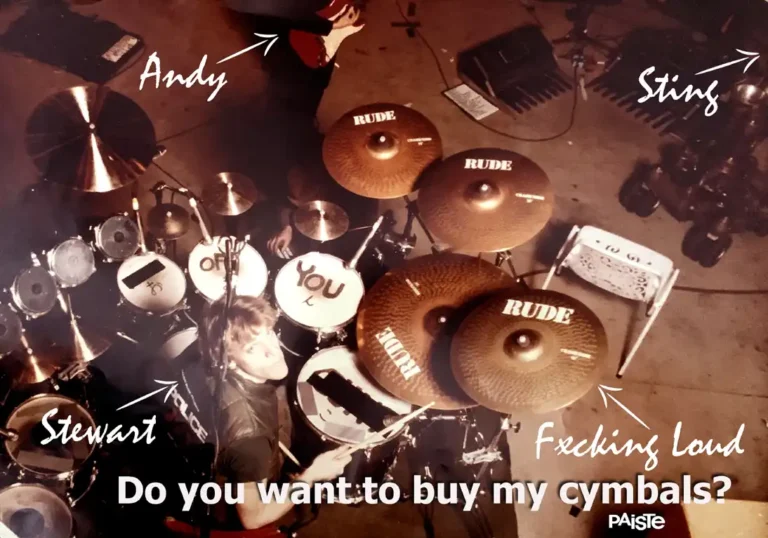
Hill, however, had another idea. He showed Forrester, Schultz, and Smith the advertisement he had produced with Stewart Copeland, and the reaction was immediate. The group agreed to add a provision to the contract that gives Fender the option to further develop the concept.
The Eric Clapton Signature Stratocaster was born.

Stewart Copeland Advertisement
Advertisement 970x250

Pre-Production Models and the Regular Run

The first Pre-Production Eric Clapton Stratocasters

After the 1987 agreement, the Fender Custom Shop built the first samples of the new vintage-styled signature model.
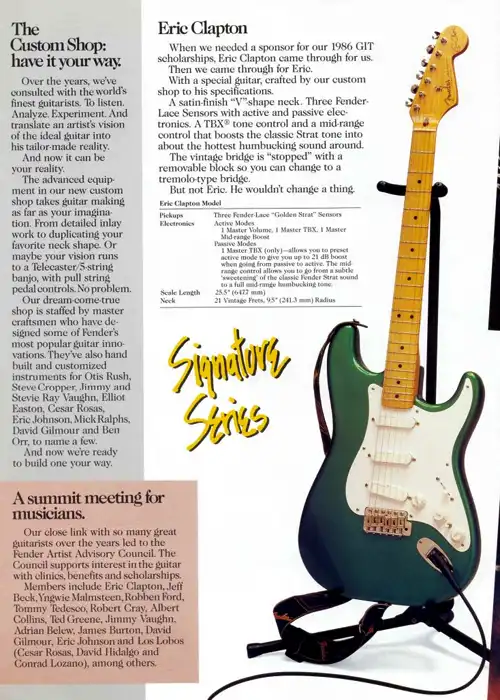
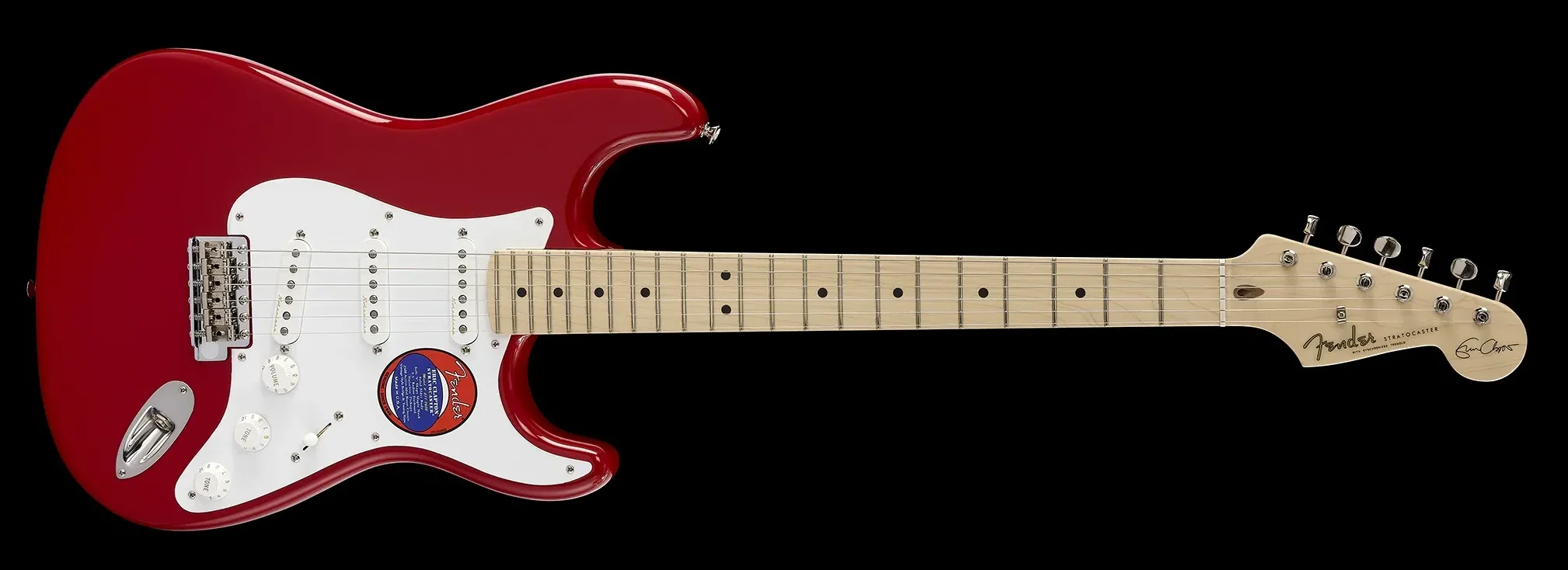
Visually reminiscent of a ’57 Stratocaster—with its characteristic 21 frets and a pronounced “V”-shaped maple neck—the instrument nevertheless incorporated a number of modern features. These included three Gold Lace Sensor pickups, a TBX tone control, and an MDX circuit providing a 21 dB mid-boost. The guitar also featured a slightly flatter fretboard and a tremolo system blocked with a small piece of wood.

As a distinctive element of the new series, Eric Clapton’s signature was placed on the front of the headstock. Some of these earliest instruments—largely rare prototypes and pre-production guitars—also included a small switch that allowed the player to select between active and passive electronics.

At the beginning of 1988, before factory production had begun, Eric Clapton requested three additional guitars and a new neck for one of the two original Pewter prototypes.

Since Eric did not want to play a guitar that looked or felt brand new, John Hill enlisted Robbie Gladwell in England to artificially age the instruments.

Clapton Stratocaster, 1988 Fender Catalog. The guitar shown is still the pre-production version, with 21 frets and the switch.

New necks, modeled after Blackie’s neck, which had previously been scanned by John Carruthers, were constructed at the Fender Custom Shop. George Blanda and John Page installed a curly maple neck on a new Pewter Stratocaster and a figured maple neck on a Candy Apple Green Stratocaster. The latter color—also known as 7-Up Green—had previously been used by Eric Clapton on a Giffen Stratocaster, created with Patti’s nail varnish.
This time, the necks featured a slightly softer shape—later referred to as a soft “V”—which proved to be perfect.

Advertisement

The Second Pre-Production  models and the Eric Clapton Stratocaster

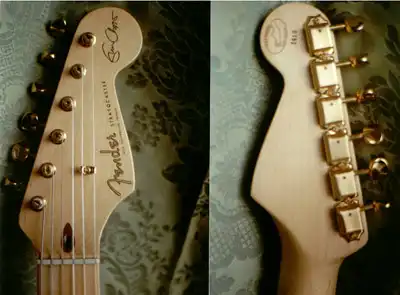
Second Pre-Production Clapton Stratocaster, Headstock
Headstock of the Second Pre-Production Clapton Stratocaster. Note the Custom Shop logo on the back (Photo: Real Vintage)

Soon after the first pre-production Eric Clapton Stratocasters were built, Dan Smith recommended adding a twenty-second fret and the new BiFlex truss rod. At Clapton’s request, the mini-switch was removed, and the midrange boost was increased to 25 dB.

These rare early instruments—essentially a second run of pre-factory prototypes produced by the Custom Shop, as the logo on the back of the headstock indicates—preceded the regular “factory” production of the Fender Eric Clapton Stratocaster.

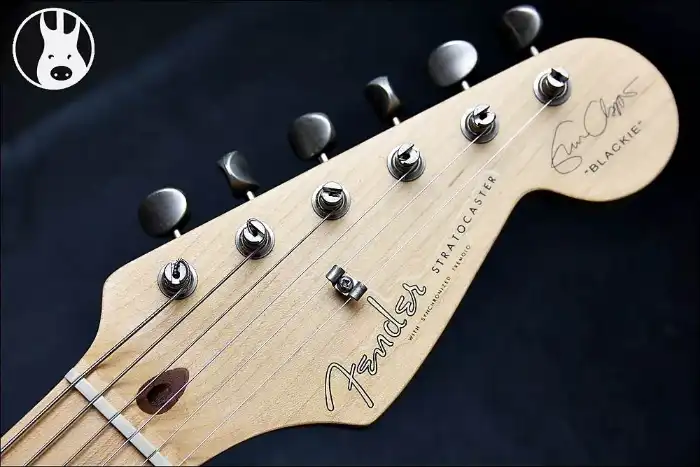
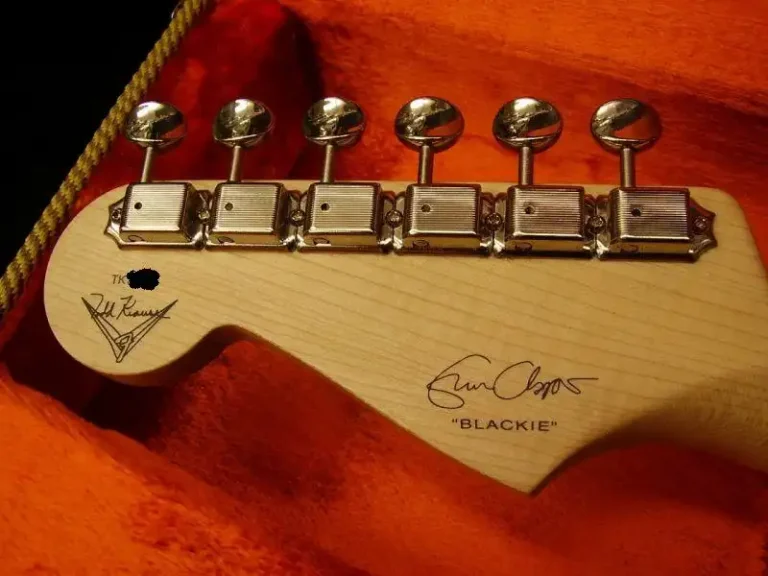
The word “Blackie” on the headstock of a black Eric Clapton Stratocaster
The word “Blackie” on the headstock of a black Eric Clapton Stratocaster (Courtesy of Squealing Pig Guitars)

Initially, the “production” model—which was not made by the Custom Shop— was offered only in Torino Red, Candy Apple Green, and Pewter. In 1991, a Black finish was introduced, followed by Olympic White in 1994.

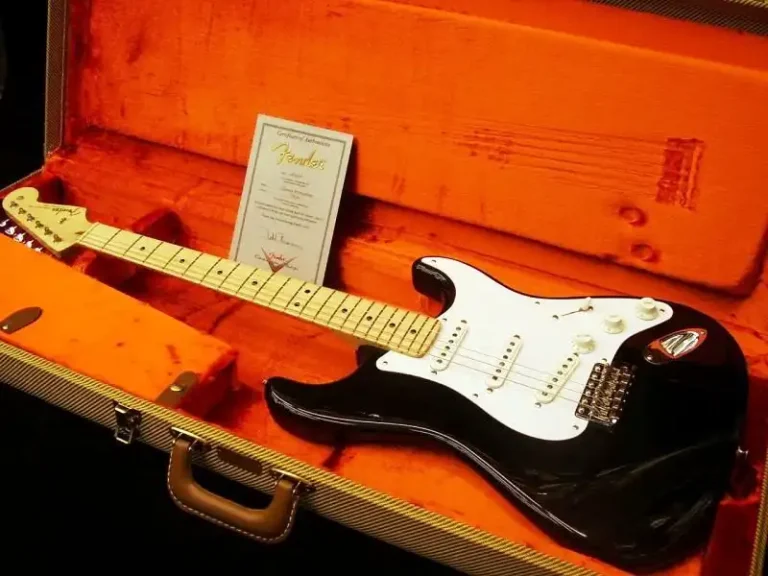
The Black version featured the “BLACKIE” decal alongside Clapton’s signature; however, it is important not to confuse these guitars with the limited-edition Blackie Tribute Replica released in 2006, which did not carry this decal.

Eric Clapton was so pleased with the 22-fret neck that he requested it also be fitted to the first two Pewter prototypes. Master Builder Michael Stevens installed the new necks, which—unlike the earlier ones bearing the “ORIGINAL Contour Body” decal on the ball of the headstock—featured Clapton’s signature instead. In particular, the figured maple neck that Michael installed on prototype V000009 came from the Candy Apple Green prototype.

Eric Clapton with the Pewter prototype fitted with the neck from the Candy Apple Green one at the Shoreline Amphitheater
Eric Clapton with the Pewter prototype fitted with the neck from the Candy Apple Green one at the Shoreline Amphitheater (Photo: Bob Minkin)
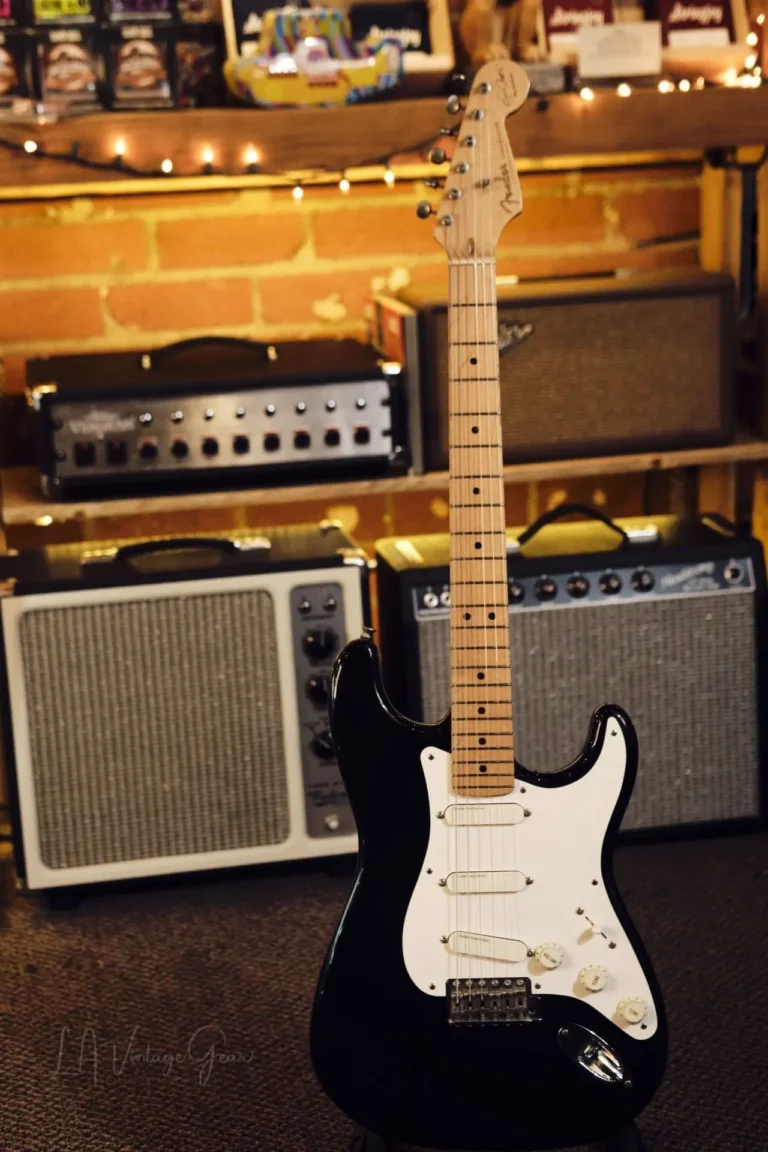
Eric Clapton Stratocaster, First Series
Eric Clapton Stratocaster, First Series (Courtesy of LA Vintage Gear)
Advertisement

In 1991, Fender, in agreement with Clapton, produced a limited run of signature models with rosewood fretboards to appeal to players who preferred them over maple. Only 95 units were made and sold before production was discontinued.

The Clapton Stratocaster continued to feature Lace Sensor pickups until 2001, when they were replaced by the Vintage Noiseless pickups.
Thus, the second series of the Clapton Stratocaster was born.
Although the contract between Fender and Actodyne General, the Lace Sensor manufacturer, had ended and Noiseless pickups gradually replaced Lace Sensors across all Fender guitars, Lee Dickson noted that it was Eric himself who preferred the Noiseless pickups over the originals.
Master Builder Mark Kendrick, who crafted many guitars for Clapton, observed that Eric personally favored the sound of the Lace Sensors over the Vintage Noiseless pickups. Eric also disliked the TBX tone circuit, so Kendrick removed it from the guitars he built for him.

The bodies of the Stratocasters that Todd built for Eric were typically quite heavy because Eric firmly believed that a heavier body resonated better than a lighter one. This ran counter to the prevailing trend, which saw guitarists increasingly seeking lighter instruments.

Eric Clapton Stratocaster, Second Series
Eric Clapton Stratocaster, Second Series (Courtesy of Round Hill Music Co)
Advertisement 970x250

The Custom Artist model

In 2004, the team-built Custom Shop Eric Clapton Signature Stratocaster was introduced. This model could be recognized by Clapton’s signature and the Custom Shop logo, both applied to the back of the headstock.
The available finishes were Midnight Blue, Mercedes Blue, and Black. Like the factory versions, the black Custom Shop model featured the “BLACKIE” decal alongside Clapton’s signature—but it should not be confused with the limited-edition Blackie Tribute Replica released in 2006.

Master-Built models were also produced, differing slightly from the team-built versions. They featured higher-quality woods and finishes, different frets, and—most notably—necks with updated profiles and no TBX tone circuit.

In 2009, Todd Krause explained that the team-built models retained the TBX because when they were created in 2004, Eric still used it, and those guitars were never modified.

In contrast, the Master-Built models were continuously updated to reflect the changes Eric made to his personal guitars; since he no longer used the TBX and preferred different neck shapes, these adjustments were incorporated into the Master-Built versions.

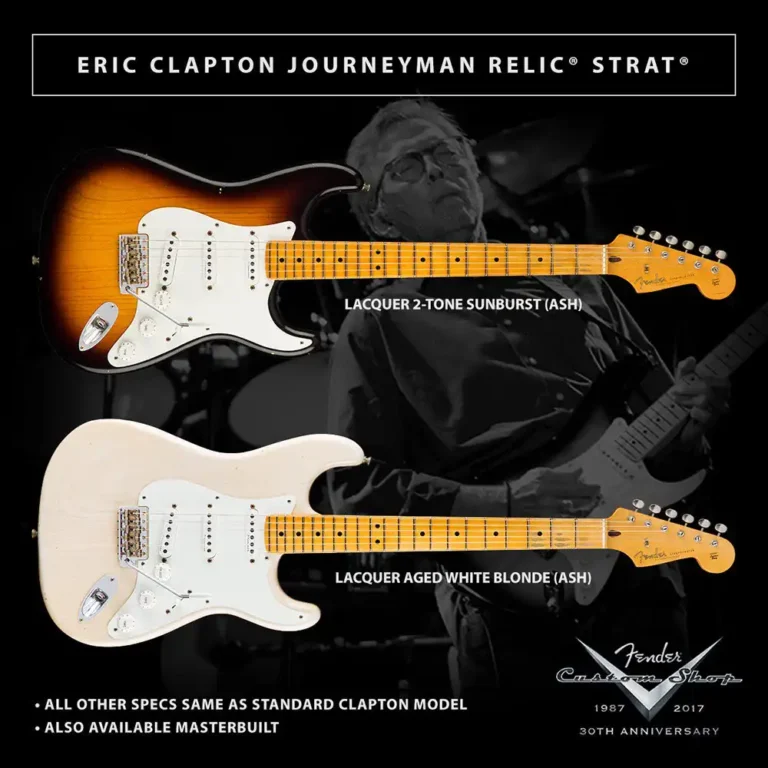
In 2017, the Journeyman Relic Eric Clapton Signature Stratocaster was introduced. This team-built version featured an aged 2-Color Sunburst or Aged White Blonde finish.

Masterbuilt Clapton Stratocaster
Masterbuilt Clapton Stratocaster (Photo: JP Stingray Guitars)
Masterbuilt Clapton Stratocaster, Headstock Back
Masterbuilt Clapton Stratocaster, Headstock Back (Photo: JP Stingray Guitars)
2017 Custom Shop Eric Clapton Stratocaster Journeyman Relic Advert
Advertisement

Other Special Versions

Over the years, the Fender Custom Shop produced not only special editions of the Clapton Stratocaster but also guitars made exclusively for Eric Clapton. For instance, for the recording of the 1992 Jimi Hendrix: Stone Free tribute album, Clapton requested a special Stratocaster based on his white signature model, fitted with Texas Special pickups. This guitar was used frequently in the studio, though it was never played live.

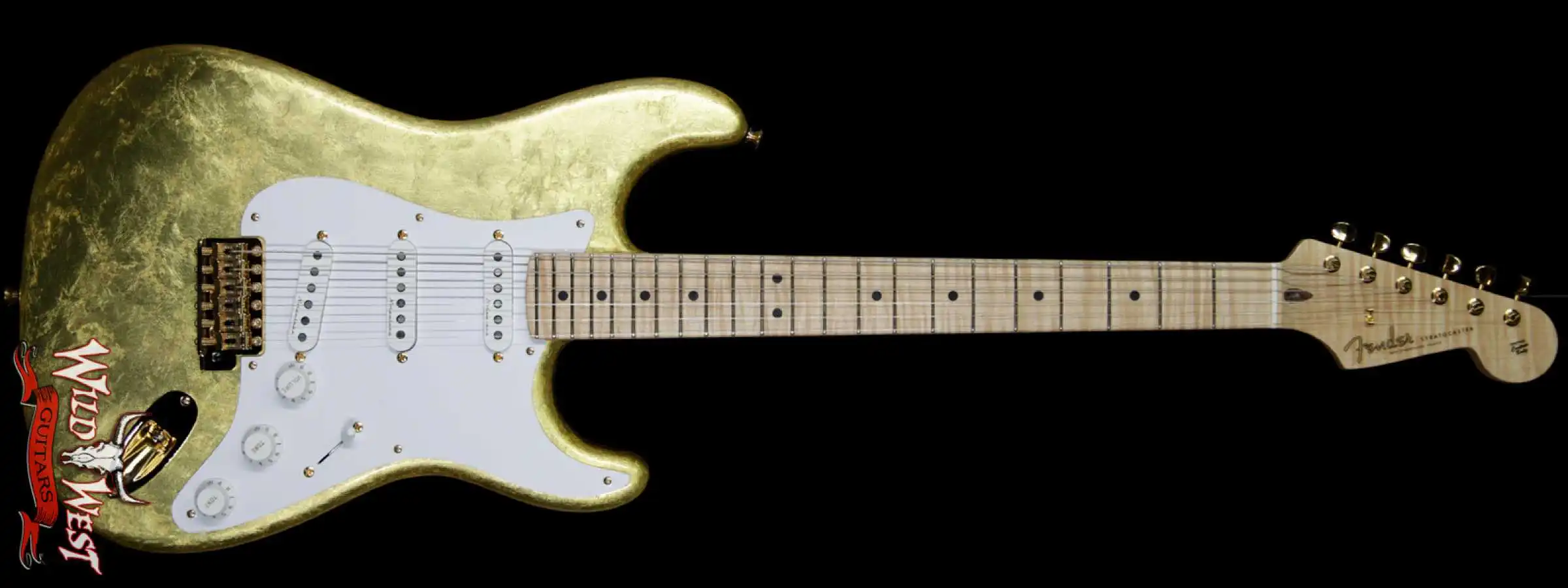
The Gold Leaf model

The Gold Leaf Stratocaster is a custom-order guitar crafted by Master Builder Mark Kendrick in 1996 to celebrate Fender’s 50th anniversary.
Eric Clapton wanted a guitar with an aged appearance—“something that could be hung in the Louvre,” as he recalls.
After three attempts, the final Stratocaster was completed: a two-piece alder body finished with gold foil applied by George Amicay and sealed under a thin, transparent lacquer. The neck plate, stamped with the “EC1” serial number, commemorates Fender’s anniversary. Kendrick recalled that the guitar originally had a fully gold pickguard, which Clapton immediately replaced with a white one.
Clapton played this Stratocaster between 1996 and 1997, with its last recorded appearance in 2001 during the One More Car, One More Rider tour, before it was sold for $455,000.

In 2004, Custom Shop Master Builders reissued the guitar in a 50-unit limited edition. The Gold Leaf Stratocaster replica was equipped with Vintage Noiseless pickups and a standard tone control, replacing the Gold Lace Sensors and TBX circuit of the original. It also featured the “ORIGINAL Contour Body” decal, which was not present on the original Gold Leaf Strat.
A Gold Leaf Replica can still be ordered today from Fender Custom Shop Master Builders.

Gold Leaf Stratocaster Replica
Advertisement
advertisement

The Graffiti Stratocasters

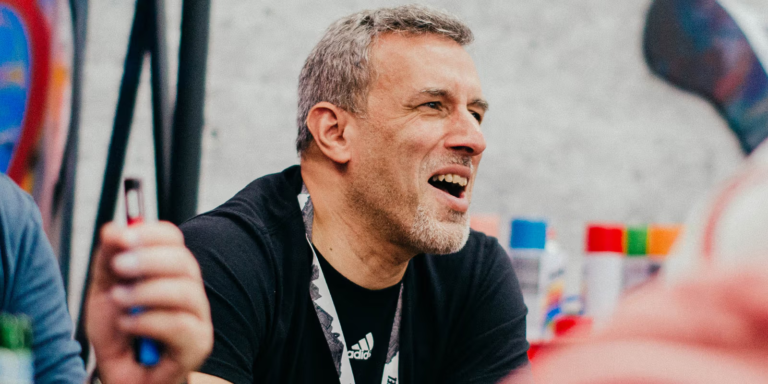
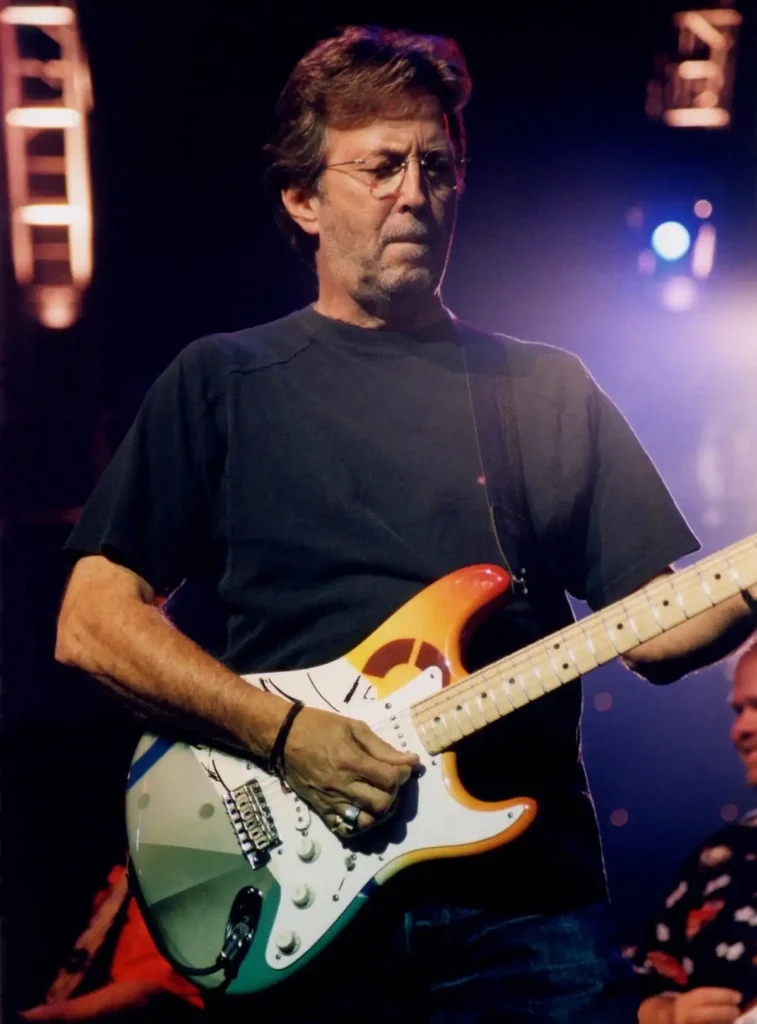
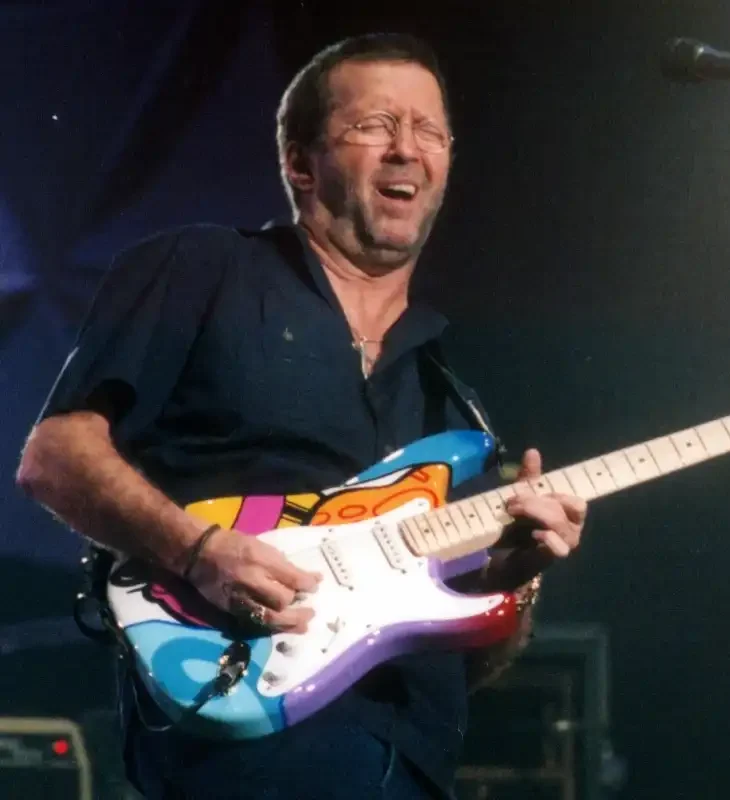
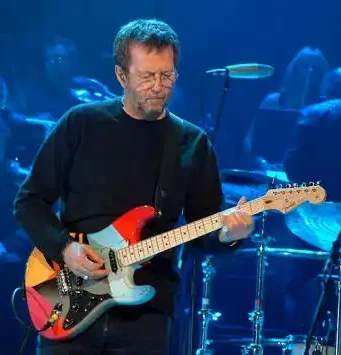
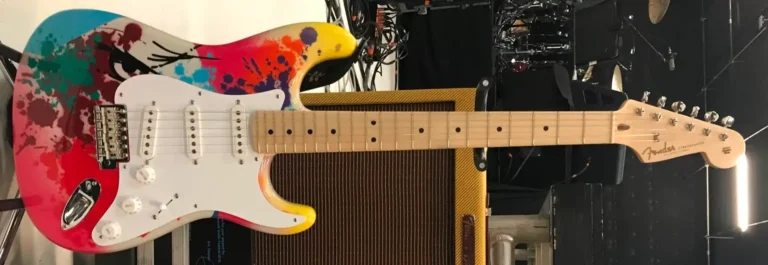
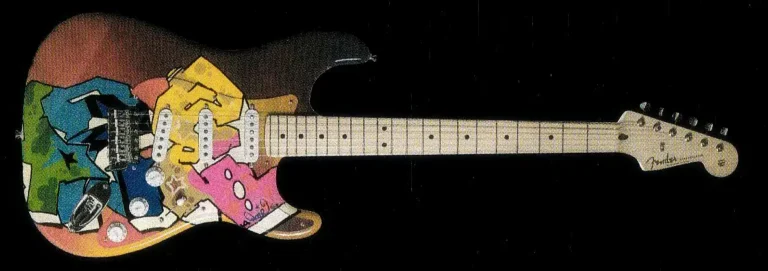
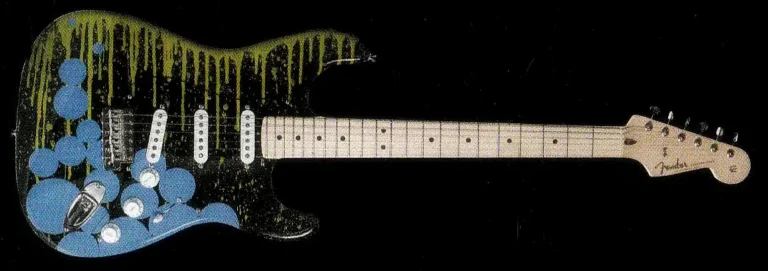
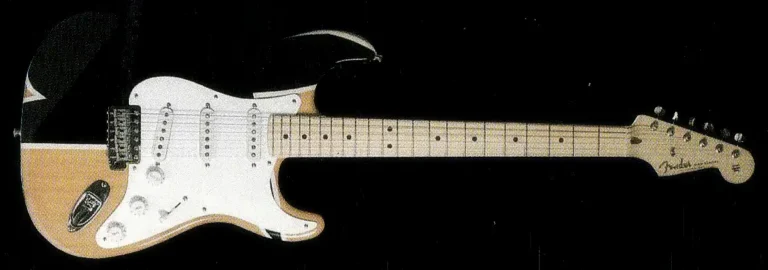
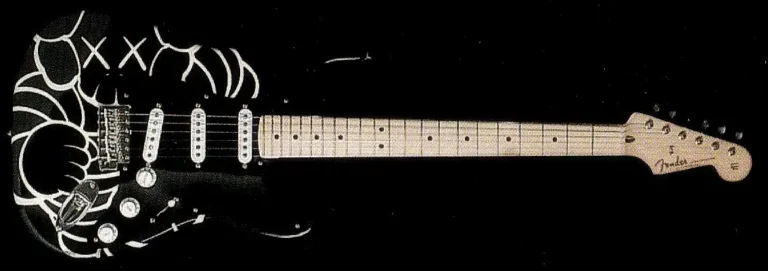
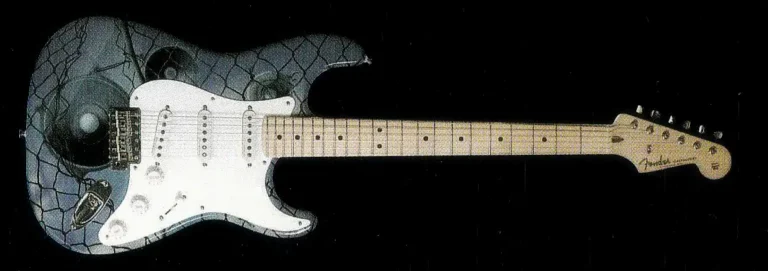
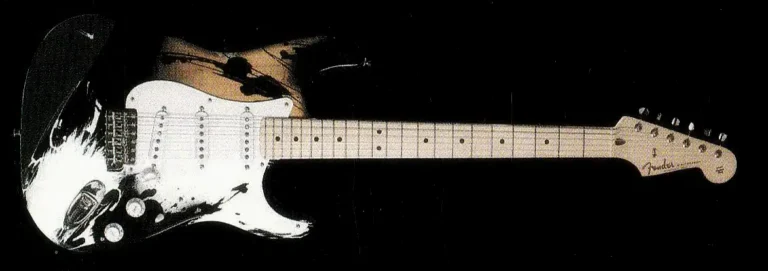
For his 2001 tour, Clapton sent several bodies built by Todd Krause to John Matos—better known as Crash—the renowned New York graffiti artist, who hand-painted them. Once completed, the bodies were returned to Krause for clear coating and final assembly. 

John Matos
John Matos

The collaboration ultimately produced three Crashocasters: Clapton Signature Stratocasters characterized by their striking hand-painted artwork.
“Creating a painted guitar is very different than painting a canvas. Canvases are painted against a wall, or easel. Walls, well, they don’t move, as simple as can be. The Stratocaster has no edges, the designs revolve from front to back, so it’s quite tricky. Also, because of that same reason, when I paint them, I hang them from the ceiling so that I can easily move them, therefore creating a seamless design… yes, tricky indeed,” John stated in 2019.

The Eric Clapton Crashocasters debuted at the Wyclef Jean All-Star Jam at Carnegie Hall. They were also used during the 2001 Reptile Tour, appeared in the Ain’t Gonna Stand for It video, and were played in other live performances.

Crashocaster #1 debuted at the 2001 Wyclef Jean All-Star Jam. Clapton later used it during the 2001 Reptile Tour, the 2003 Japan Tour, and again in 2004. It also appears in the music video for “Ain’t Gonna Stand for It.”
Clapton played Crashocaster #2 during the Japan Tour (November–December 2001) and at a few concerts in 2004.
Clapton introduced Crashocaster #3, featuring a metallic pickguard designed by Mark Kendrick, at the benefit concert One Generation for Another at London’s Royal Albert Hall on 15 March 2004. He later played it at the 2004 Crossroads Festival and for the last time on 23 June 2004 in Albany, New York.
Advertisement

Between 2004 and 2007, John Matos painted another fifty Stratocasters built by Todd Krause—although these were not Eric Clapton Signature models—each featuring a different design. These guitars bore Crash’s signature on the neck plate and that of the master builder on the back of the headstock. They also featured a metallic pickguard, similar to that of Crash #3, and were equipped with black-covered Noiseless pickups.

The 2019 Crashocaster

In 2019, John Matos painted a new Crashocaster, which Eric Clapton played at the 2019 Crossroads Guitar Festival in Dallas.

In an interview with Where’s Eric #34 magazine, Clapton revealed that he had commissioned an entire “graffiti” series and stated that, in addition to the Crashocasters used live, he owned eight other guitars painted by artists including Stash, Daze, and Futura. Photographs of these guitars were published in the following edition of the magazine.

Eric Clapton Crossroads Stratocaster

Crossroads Stratocaster
Advertisement

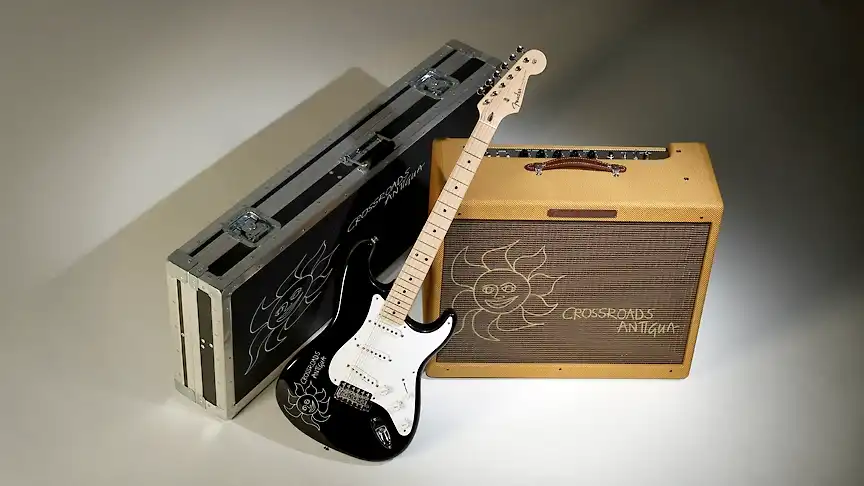
In 2007, Fender released 100 Eric Clapton Crossroads Stratocasters (also known as Sun Strats) alongside 50 Crossroads ’57 Twin Amps, produced simultaneously.

Each guitar and amp featured a unique Crossroads Antigua illustration: a smiling sun designed by Clapton himself.

Proceeds from the sales went to the Crossroads Centre Antigua, the rehabilitation center founded by Clapton on the Caribbean island of Antigua.

Advertisement

Eric Clapton 10th Anniversary Crossroads Antigua Stratocaster

The Antigua Finish

In the late 1960s, Fender introduced the Coronado as its hollow-body guitar offering. The Coronado II was a variant of the model equipped with two pickups.
The guitar’s double-bound body presented certain production challenges at the time, and Fender discovered that the bodies often showed minor scorch marks during the binding process. Rather than discarding them, the company developed a finish designed to conceal these imperfections: the now-iconic Antigua finish.

In the late 1970s, Fender revived the Antigua finish and applied it to several models, including the Stratocaster, Telecaster, and Precision Bass.

The earliest examples of the Antigua finish differ significantly from these later versions. The original finish featured a much darker edge burst with a more greenish-yellow center, while the later interpretation had a more grayish-green hue with a lighter edge burst.

Another distinctive detail was Fender’s decision to paint the pickguards to match the body color. The unusual paint scheme, combined with the matching pickguards, gives Antigua instruments a truly unique appearance and makes the finish one of the most polarizing Fender has ever offered.
The Antigua finish was produced in relatively small numbers, making these instruments somewhat rare today.

The Clapton Antigua model

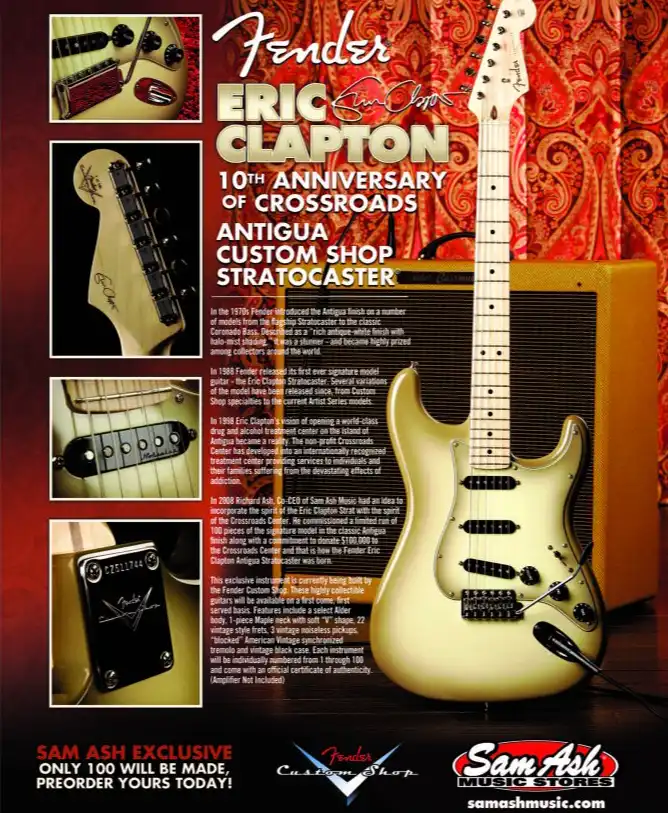
In 2008, to mark the 10th anniversary of the Crossroads Center in Antigua, Richard Ash, CEO of Sam Ash Music, asked the Fender Custom Shop to produce a limited-edition Stratocaster for charity.
The instrument revived the Antigua finish of the late 1960s and 1970s.

The Corona factory produced one hundred units of the Eric Clapton Antigua 10th Anniversary Crossroads Stratocaster.
Each was sold for $5,000, with $1,000 from every guitar donated to the recovery center.

The instrument followed the specifications of the Eric Clapton Signature Stratocaster—alder body, one-piece maple neck with a soft “V” profile, 22 vintage-style frets, Vintage Noiseless pickups, a blocked vintage-style tremolo, and Fender’s MDX and TBX circuitry.

The Antigua finish was recreated by Jesús Andrade, the same craftsman who had painted the original Antigua Stratocasters between 1977 and 1979.

Poster of Eric Clapton’s Antigua Strat, highlighting its distinctive finish
Advertisement

The Limited Eric Clapton Signature Stratocaster

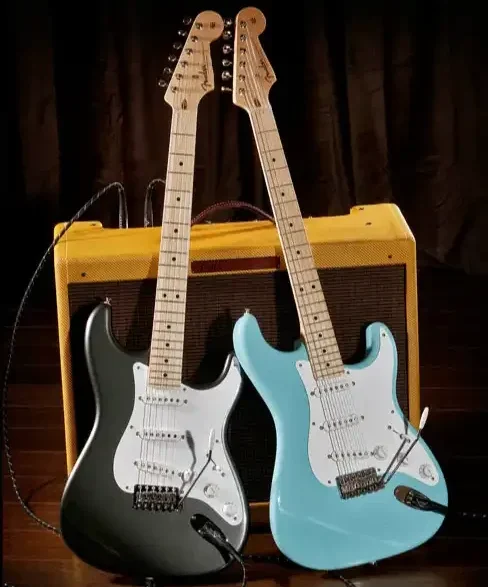
In 2010, the Custom Shop released the Limited Eric Clapton Signature Stratocaster, available in both Daphne Blue and Gray.

The Daphne Blue version was a meticulous recreation of the guitar Clapton used during his 2009 Australian tour, while the Gray finish—slightly darker than Pewter—was a faithful replica of the Stratocaster he played on the 2006 and 2007 world tours.

Both versions featured an alder body, a soft “V” maple neck, 22 vintage-style frets, a bone nut, Vintage Noiseless pickups, Fender’s MDX circuitry, and a blocked vintage-style tremolo.

They could be distinguished from similar models by the “LIMITED EDITION” decal, placed alongside the Custom Shop logo on the back of the headstock.

Daphne Blue and Gray Clapton Strats

Blackie and the Tribute Replica

The Story of Blackie: Eric Clapton’s Legendary Stratocaster

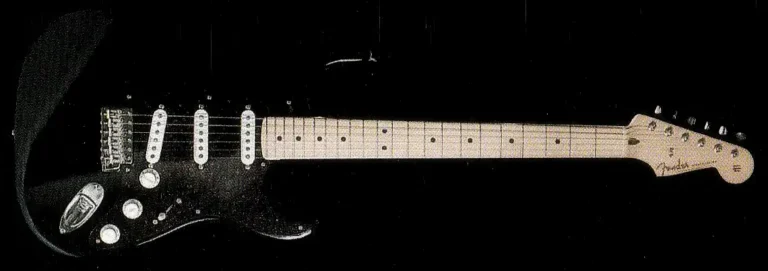
Blackie was a “partcaster” assembled by Eric Clapton from parts of three different Fender Stratocasters.

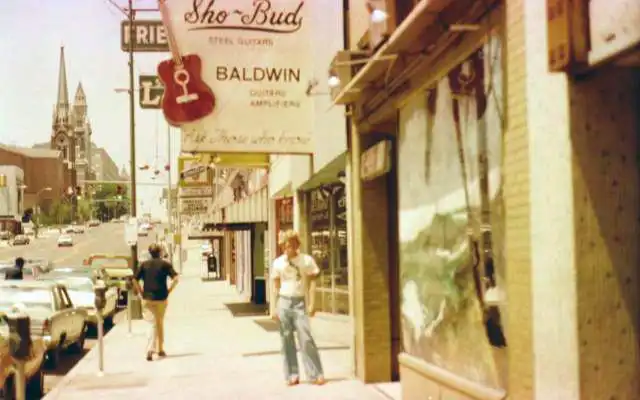
Clapton recalled being in Nashville at a store called Sho-Bud, which had an entire rack of used 1950s Fender Stratocasters for sale. At the time, these guitars were so out of fashion that an original pre-CBS Stratocaster could be purchased for just two or three hundred dollars.

He bought six or seven Stratocasters in total, giving one to Steve Winwood, one to George Harrison, and one to Pete Townshend, keeping the remainder for himself.

he Sho-Bud retail store at 416 Broadway, Nashville
Advertisement

He liked the black body of a worn Stratocaster, so he kept it and assembled Blackie from parts of other guitars—pickups from one, a pickguard from another, and the neck from a third.
Over the years, Eric Clapton described Blackie as “a part of me.” In 2004, Fender G.B. Ireland named it one of the top ten Fender Stratocasters “to die for.”
Blackie made its debut at the Rainbow Concert on 13 January 1973 and served as Clapton’s primary stage and studio guitar from 1970 to 1985. Not only was it used in the studio for every album recorded during that period, but it also appeared at landmark events such as the ARMS Benefit Tour and Live Aid, as well as in Clapton’s first music video, Forever Man.
In 1985, Blackie was officially retired.

How Fender Custom Shop Recreated Blackie, Eric Clapton’s Legendary Partcaster

Blackie came out of retirement on two occasions while still in Eric Clapton’s possession: for a television commercial for Honda Cars Japan in 1990, and at the Royal Albert Hall in 1991.
On 24 June 2004, Blackie was auctioned at Christie’s in New York to raise funds for the Crossroads Centre Antigua, a rehabilitation center founded by Clapton in 1998. The guitar was purchased by the Guitar Center—represented by David Belzer and Drew Berlin, known among vintage collectors as the “Burst Brothers”—for $959,500.
About a year later, on 24 October 2005, the guitar was “loaned” to the Fender Custom Shop for inspection. In 2006, with Eric Clapton’s approval, the Guitar Center announced it would release a limited edition of Blackie replicas as part of the Fender Master Built Tribute Series.

Michael Doyle, Director of Purchasing at Guitar Center, said, “We’re going to put our heads together to replicate this guitar the best way we know how. I think that’s going to be the major test of the Fender Custom Shop: pulling that off would mean being able to say, ‘Can you tell the difference between the most famous guitar in the world and a copy of it?’ Obviously, there’s no better place than Fender and the Custom Shop to do that, and I have every confidence that Fender will, because they started doing that sort of thing. In many ways, it’s the pinnacle, if you will, of a relic guitar: an instrument such that even Eric Clapton is happy with the results.”

Under the supervision of Todd Krause, Custom Shop Master Builders produced 275 Blackie Tribute Replica Stratocasters.
During the 2005 video documentation of the original Blackie, Todd explained what makes a guitar truly unique.

“First, this is the one you’ve all been waiting for. Ever since Fender started doing relics, the grumblings have been: ‘When are you going to do a Blackie?’ This is what gives a guitar its personality: night after night on the stage, being handled by the same person. It picks up certain nicks, wear, and little things that give it character. It really takes on a personality of its own. […] I’m kind of excited that I got to look at some of the innards of this guitar so we could replicate them in the new one as well.”

Todd Krause

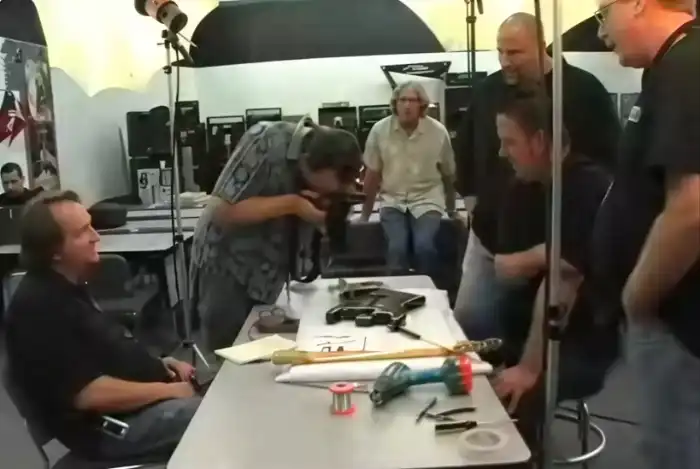
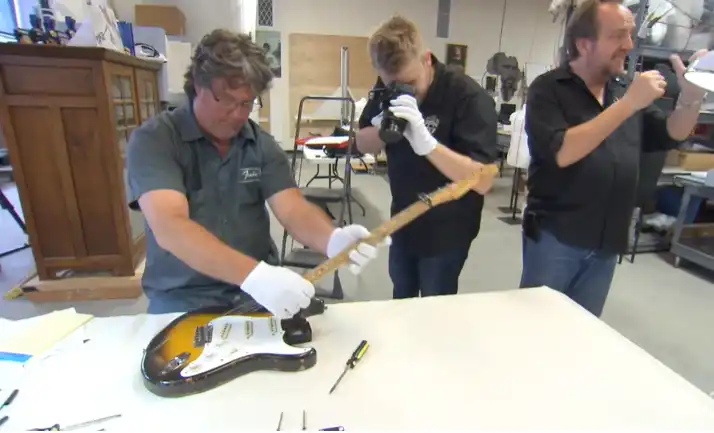
Mike Eldred and Todd Krause Inspecting Blackie
Mike Eldred (left) and Todd Krause (right) examining Blackie during the Fender Custom Shop documentation process.

On 17 May 2006, Clapton played the first Blackie prototype for three songs during his concert at London’s Royal Albert Hall.
The replicas went on sale to the public on 24 November 2006 and sold out in a single day, priced at around $20,000 each. A portion of the proceeds was donated to Crossroads Centre Antigua.
The replicas were, of course, unsigned and did not carry the “BLACKIE” decal found on all Blackie Signature models.
They also exhibited subtle signs of wear, including cigarette burns on the headstock. While the hardware was nickel and the tuning machines chrome-plated—all intentionally aged—the high E tuning key was gold-plated and oxidized, just like the original.

Advertisement 970x250

Brownie

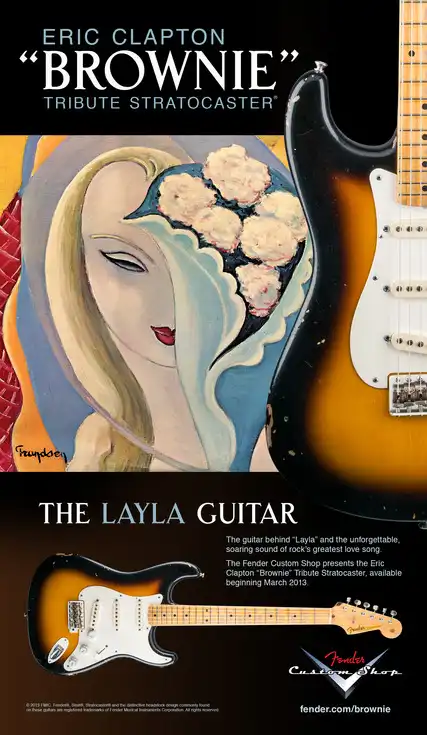
Brownie: Eric Clapton’s First Stratocaster and Iconic Guitar of Layla

Brownie was Eric Clapton’s first Stratocaster and one of his favorite guitars.
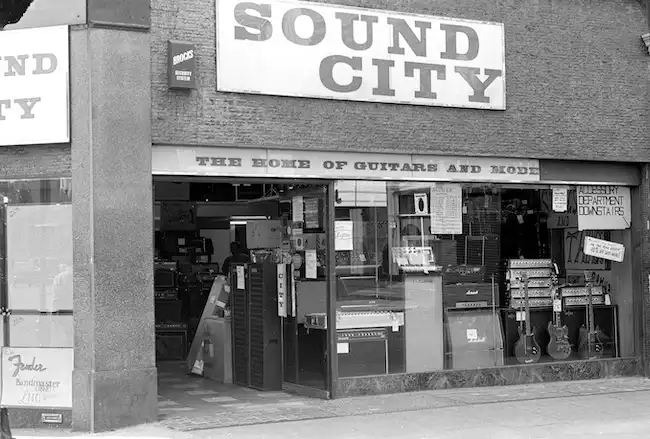
He purchased it at Sound City in London on May 7, 1967, while still a member of Cream.
Clapton used Brownie extensively for recordings and concerts over the following years.
Notably, it appeared on his first solo album, Eric Clapton (1970), sharing the front-cover photograph with him.
Later that same year, Brownie played a central role on the Layla album—including the title track—and was again featured on the album cover, this time on the back, photographed on the floor of Criteria Studios.

Sound City, Shaftesbury Ave. Photo by Pete Cornish
Sound City, Shaftesbury Ave. (Photo: Pete Cornish)

On June 24, 1999, Clapton sold Brownie at Christie’s in New York City for $497,500 to raise funds for his alcohol and drug treatment center, the Crossroads Centre in Antigua.

Eric Clapton with Brownie
Eric Clapton with Brownie (Photo: Barry Feinstein)

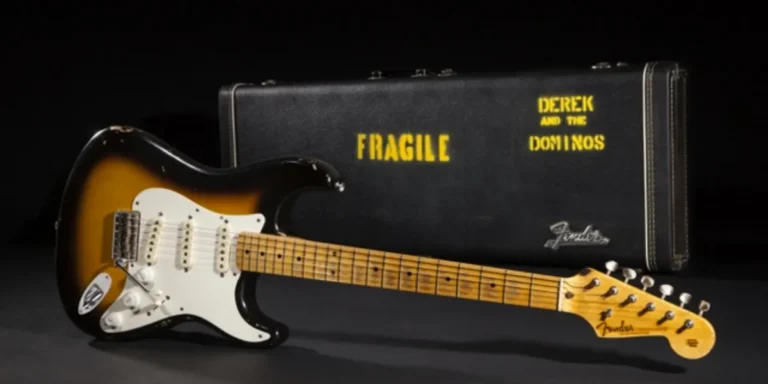
Brownie was a 1956 Fender Stratocaster in an asymmetrical 2-Color Sunburst finish, serial number 12073.
The neck heel bore the initials “XA” and the date “6-56” in pencil, while the body was similarly dated 6-56.
Eric kept the guitar in a black rectangular hardshell case, stenciled on both sides in yellow with “DEREK AND THE DOMINOS” and “FRAGILE,” and featuring Lee Dickson’s handwritten tie-on label reading: “1956 Strat 2073 2TSB BR.”

In a June 1970 interview with Fred Stuckey for Guitar Player, Eric Clapton said that, although he was still playing a Les Paul at the time, he used Brownie with Delaney & Bonnie because it had a great sound and was “just right for the kind of bag I was playing with them.”

Stuckey also asked Clapton, “Have you done anything to the Stratocaster—like modify the pickups or have the frets shaved?” Clapton replied, “No. I just set the switch between the first and middle pickups. There is a little place where you can catch it so that you can get a special sound somehow. I get much more rhythm and blues or rock kind of sound that way.”

Advertisement

Eric Clapton’s Brownie Tribute Stratocaster: Fender Custom Shop Recreates a Legend

In February 2013, Fender announced a Custom Shop reproduction of Brownie, available exclusively through Guitar Center beginning March 21, 2013.
The Eric Clapton Brownie Tribute Stratocasters were meticulously crafted by Custom Shop Master Builder Todd Krause.

The entire project took Todd about a year to complete. “It might have seemed to the public that it took a couple of months,” he explained, “but I had been working in secret for months and months before word went out.”

The 100 replicas featured a nitro-finished, three-piece alder body; a custom, large, soft “V”-shaped maple neck; 21 vintage-style frets; Custom Shielded ’56 Stratocaster pickups; a five-way switch; a vintage-style bridge; and nickel hardware.
They faithfully reproduced the original guitar in every detail, from the smallest scratches and dents to the cigarette burns and the asymmetrical 2-Color Sunburst finish of the body.

Each instrument was accompanied by a numbered certificate of authenticity, personally signed by Eric Clapton, the 40th Anniversary Deluxe Edition box set of Layla and Other Assorted Love Songs, a black textured-vinyl Derek and the Dominos “Fragile” guitar case, a Fender Custom Shop story and photo album booklet, and a Crossroads Antigua brochure.

Brownie brochure

Proceeds from the sale of every “Brownie” Tribute Stratocaster benefited Crossroads Centre Antigua, the Caribbean drug and alcohol treatment facility founded by Clapton in 1997, as well as the EMP Museum.

Inspecting Brownie
Inspecting Brownie
Brownie Tribute Replica
Antonio Calvosa
Antonio Calvosa
Antonio Calvosa is a pharmaceutical chemist with a deep passion for electric guitars. He is a former guitarist for Lost Property Office, with whom he won the Italian edition of Emergenza Rock in 2004 and performed at the Taubertal Festival in Rothenburg, Germany. In 2014, he founded Fuzzfaced, a valuable platform for electric guitar enthusiasts, and in 2022, he contributed to the book "Stratocaster: sei corde nella leggenda."
Antonio Calvosa
Antonio Calvosa
Antonio Calvosa is a pharmaceutical chemist with a deep passion for electric guitars. He is a former guitarist for Lost Property Office, with whom he won the Italian edition of Emergenza Rock in 2004 and performed at the Taubertal Festival in Rothenburg, Germany. In 2014, he founded Fuzzfaced, a valuable platform for electric guitar enthusiasts, and in 2022, he contributed to the book "Stratocaster: sei corde nella leggenda."