Signature & Iconic Strats
The Alex Gregory 7-String Stratocaster
THE FIRST FENDER 7-STRING STRATOCASTER


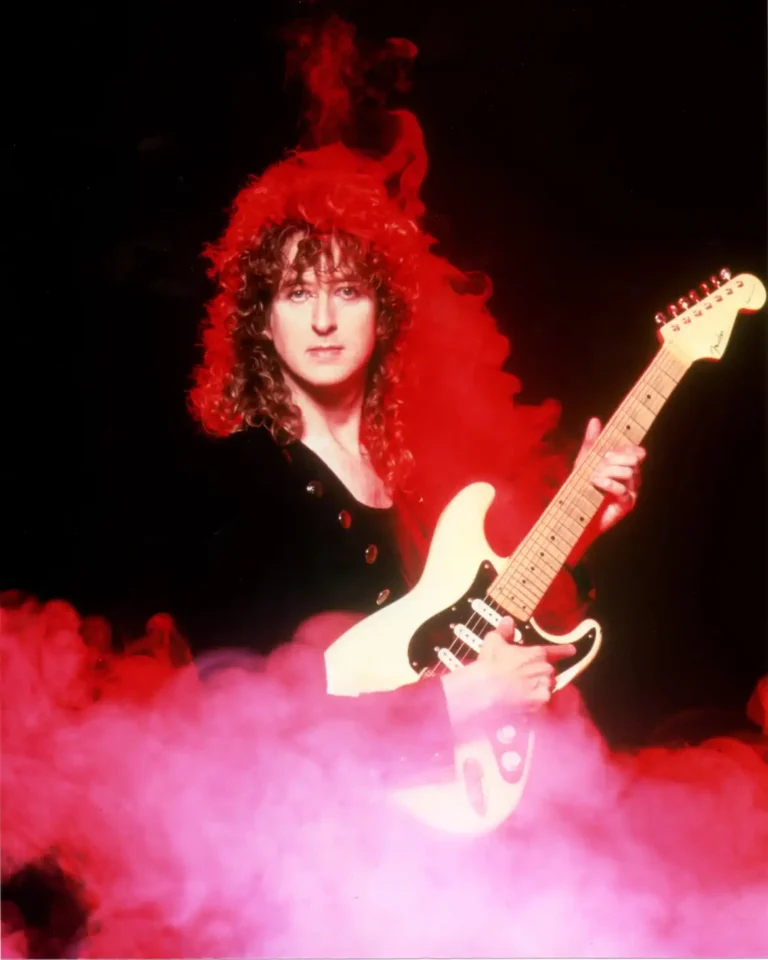
Alex Gregory is a multi-instrumentalist who was awarded the title of “Maestro” by the British government in 1983. A graduate of the Milan Conservatory, he developed a deep appreciation for modern musicians despite his classical training, citing figures such as Ritchie Blackmore, Jan Akkerman, and Allan Holdsworth as key influences.
“I grew up on classical music, but I had uncles in rock bands with red Stratocaster guitars. One of them even played an electric mandolin. I was corrupted from day one. I freaked out when I heard Ritchie Blackmore, and hanging around with Allan Holdsworth as a teenager was the final straw,” Gregory recalled.
However, Gregory is not only a renowned musician. Thanks to a couple of patents, he is also credited with the development of Fender’s first seven-string electric guitar.
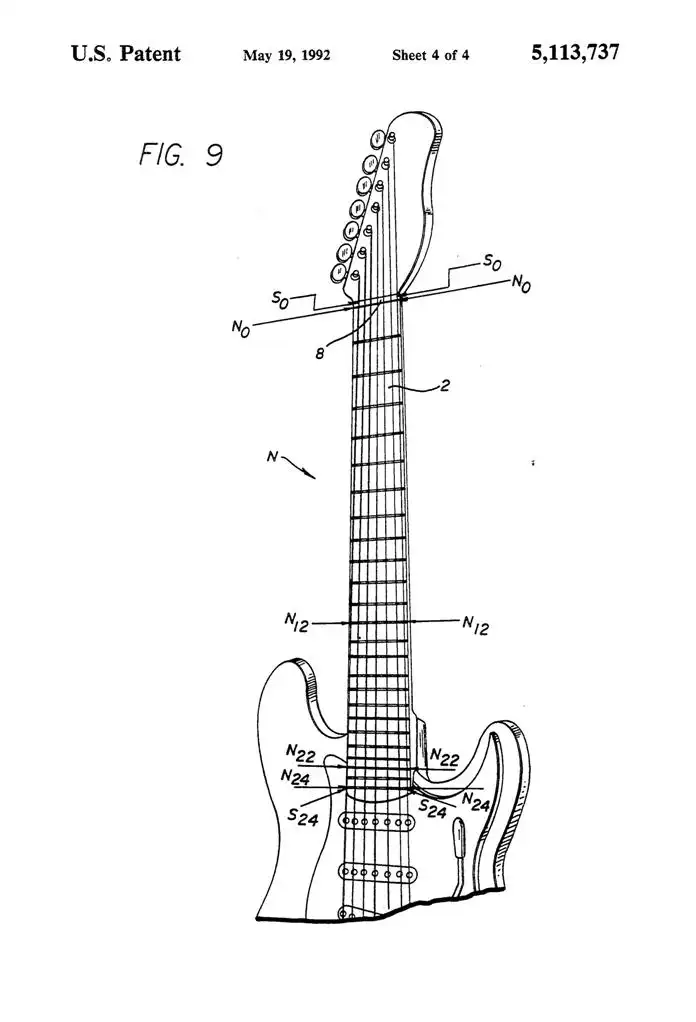
The idea emerged from his desire for an instrument capable of handling both aggressive power chords and melodic lines inspired by the violin, whose range is significantly wider. He also insisted on extending the fingerboard to a twenty-fourth fret, enabling him to perform pieces such as the introduction to Capriccio No. 5 in A minor by Paganini.

“By the time I was at college studying orchestration, I had already devised the concept of a 24-fret seven-string guitar with a top A string. In my mind, that was the instrument I needed to play my favorite romantic violin parts with a rock sound. It’s lucky that I didn’t live in the Middle Ages—back then I would have been burned alive for thinking such impure thoughts!” he joked.
Gibson also expressed interest in marketing the Alex Gregory model; however, Gregory ultimately chose Fender to produce it.
A couple of prototypes were presented at the Anaheim NAMM Show in January 1988, and two models—the Alex Gregory Ultra 7-string Stratocaster and the Alex Gregory Elite 7-string Stratocaster—were introduced in the Fender catalog later that year as the company’s third signature Stratocasters, following the Clapton and Malmsteen models. However, the instrument never entered large-scale production, except for Custom Shop replicas produced many years later.
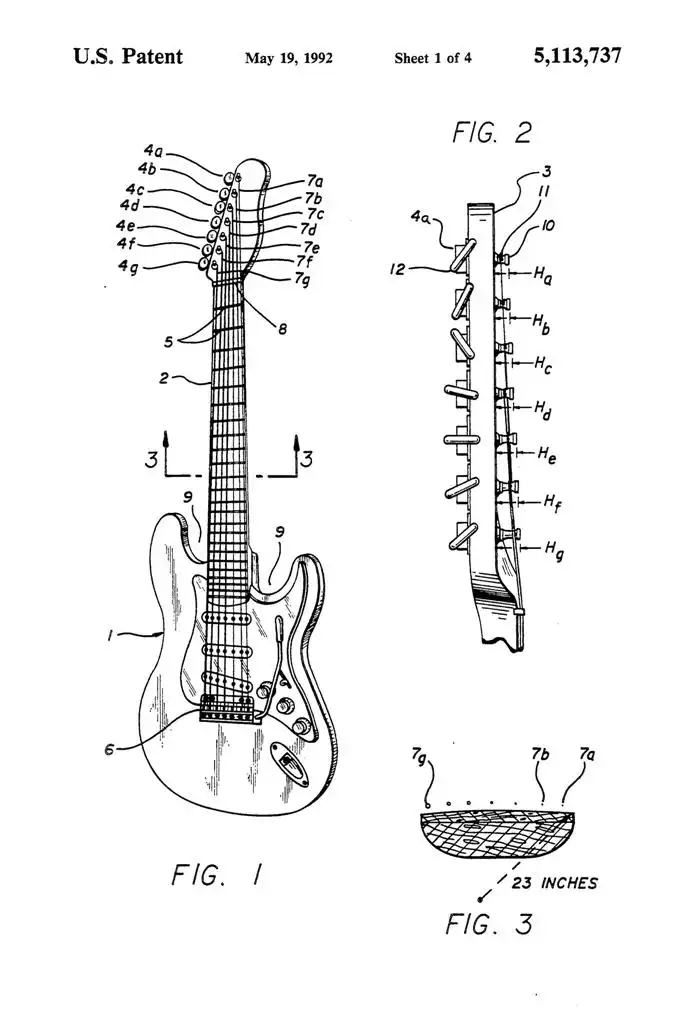
The Ultra model featured a scalloped ebony fretboard, highly figured maple neck and body, and gold-plated hardware, while the Elite sported a rosewood fretboard and chrome hardware. Both had twenty-four frets, a 25.5″ scale length, and three Fender Lace Sensor pickups.
The necks were designed with a pronounced taper: the ratio between the width at the last fret and that at the nut was greater than on Stratocasters of the time, providing enhanced playing comfort.
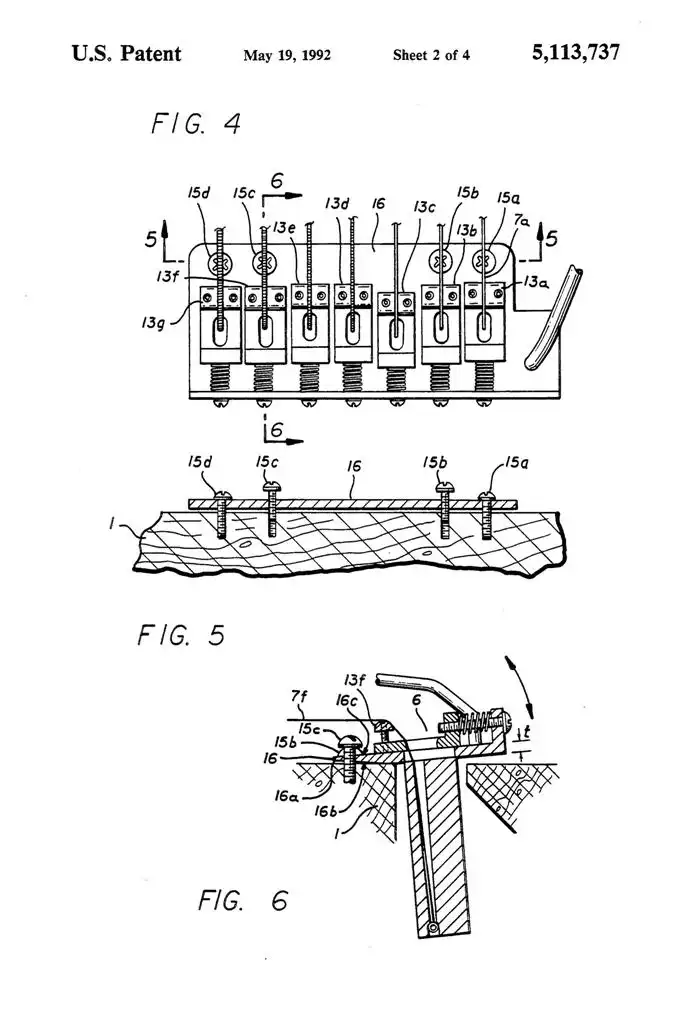
Alex Gregory’s patents for seven-string electric guitars

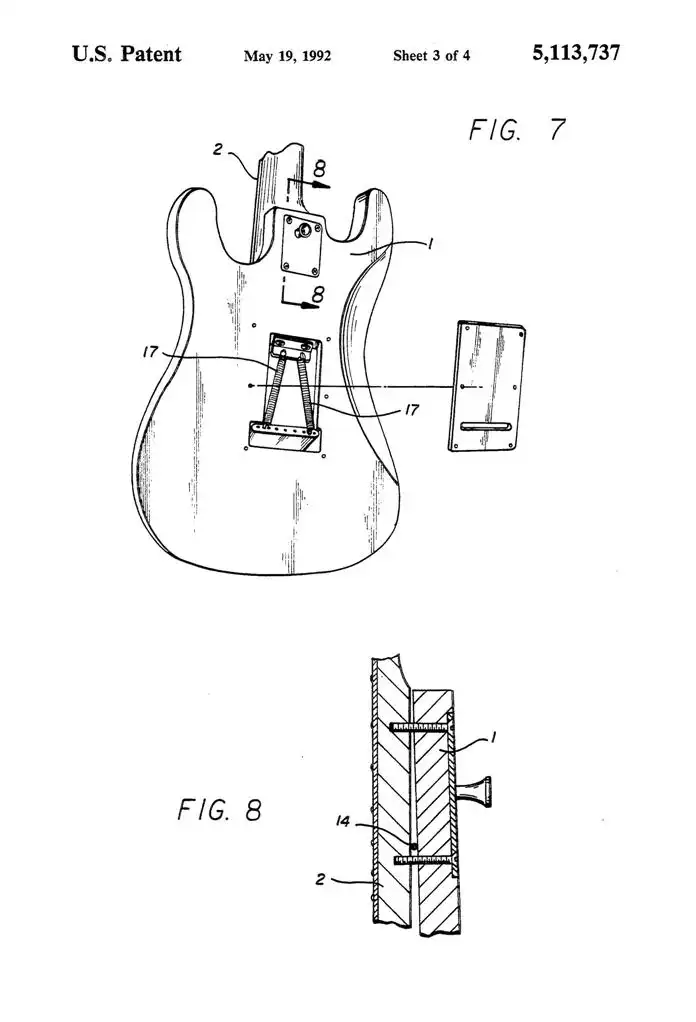
The critical issues inherent to the seven-string design were largely attributable to reduced sustain on the additional A string, the thinnest of the set. To address this, Alex conceived a redesigned bridge and a set of staggered-height tuning machines.
The bridge, while reminiscent of a vintage-style unit, departed from the traditional six-screw mounting system. Instead, it was secured to the body by two outermost “fixing screws,” firmly anchored, and two inner “stabilizing screws,” which were intentionally left less tight. The saddles were set as high as possible.
This configuration was intended to maximize the transmission of string vibrations to the body, thereby improving sustain.
The prototypes exhibited at NAMM in 1988 differed slightly from the production models, featuring a 25” scale length and a reverse headstock.
The first prototype had a scalloped ebony fretboard, a one-piece quilted maple body with a burgundy see-through finish, three Seymour Duncan pickups with eight exposed poles, and gold hardware.
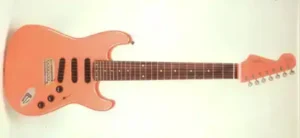
The second prototype featured an unscalloped Brazilian rosewood fretboard, a one-piece swamp-ash body with a Peach Pearl finish, and nickel hardware.

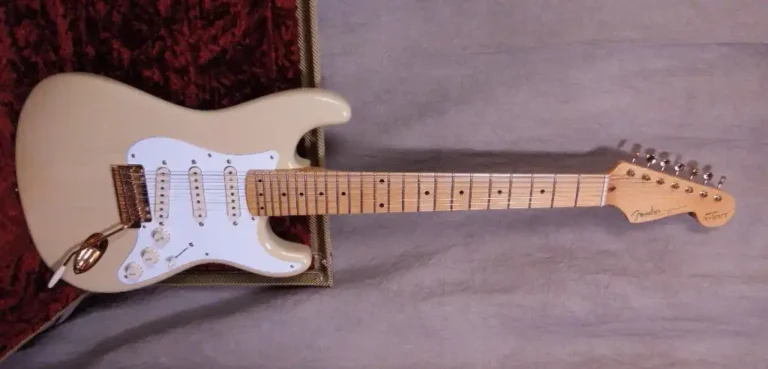
A third prototype featured a 25.5” scale length, a standard headstock (as opposed to a reverse one), staggered tuning machines, a one-piece maple neck, a one-piece swamp ash body with a blonde finish, and three Seymour Duncan 7-string Alnico V stack pickups with cream bobbins. This was the ideal prototype; however, in the end, Gregory’s signature model was never released.
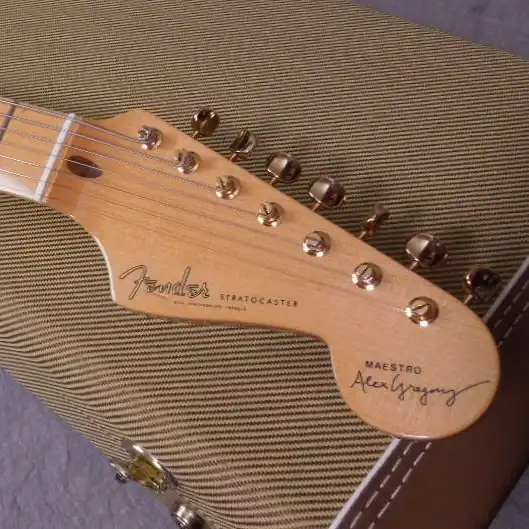
Between 2001 and 2003, Fender once again offered several Limited Edition Alex Gregory 7-String Stratocaster models, each unique and crafted by the Custom Shop under George Blanda’s supervision, featuring Gregory’s signature on the headstock.