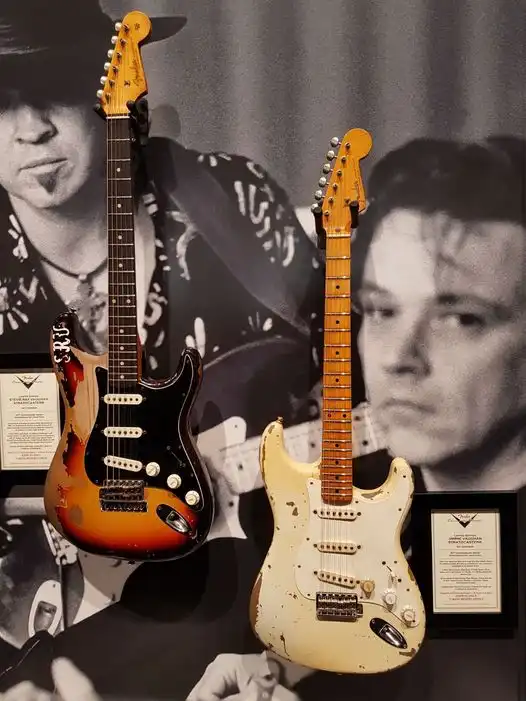
Signature & Iconic Stratocasters

The Stevie Ray Vaughan Stratocaster

THE TRUE STORY BEHIND NUMBER ONE, LENNY, AND THE SRV SIGNATURE STRAT

advertisement

advertisement

The Stevie Ray Vaughan Signature Stratocaster

The origin of the SRV Stratocaster and the early prototypes

Fender began developing the Stevie Ray Vaughan Signature Stratocaster in the late 1980s, but progress on the project proved slower than expected. As a result, the planned launch of the signature model was delayed and ultimately abandoned following Stevie Ray Vaughan’s tragic death on August 27, 1990.

In late 1991, his brother, Jimmie Vaughan, reestablished contact with Fender and became directly involved in bringing the SRV Stratocaster project to completion.

The guitar was finally unveiled in January 1992 at NAMM in Los Angeles, presented as a tribute to the “King of Texas Blues,” approximately a year and a half after Vaughan’s passing.
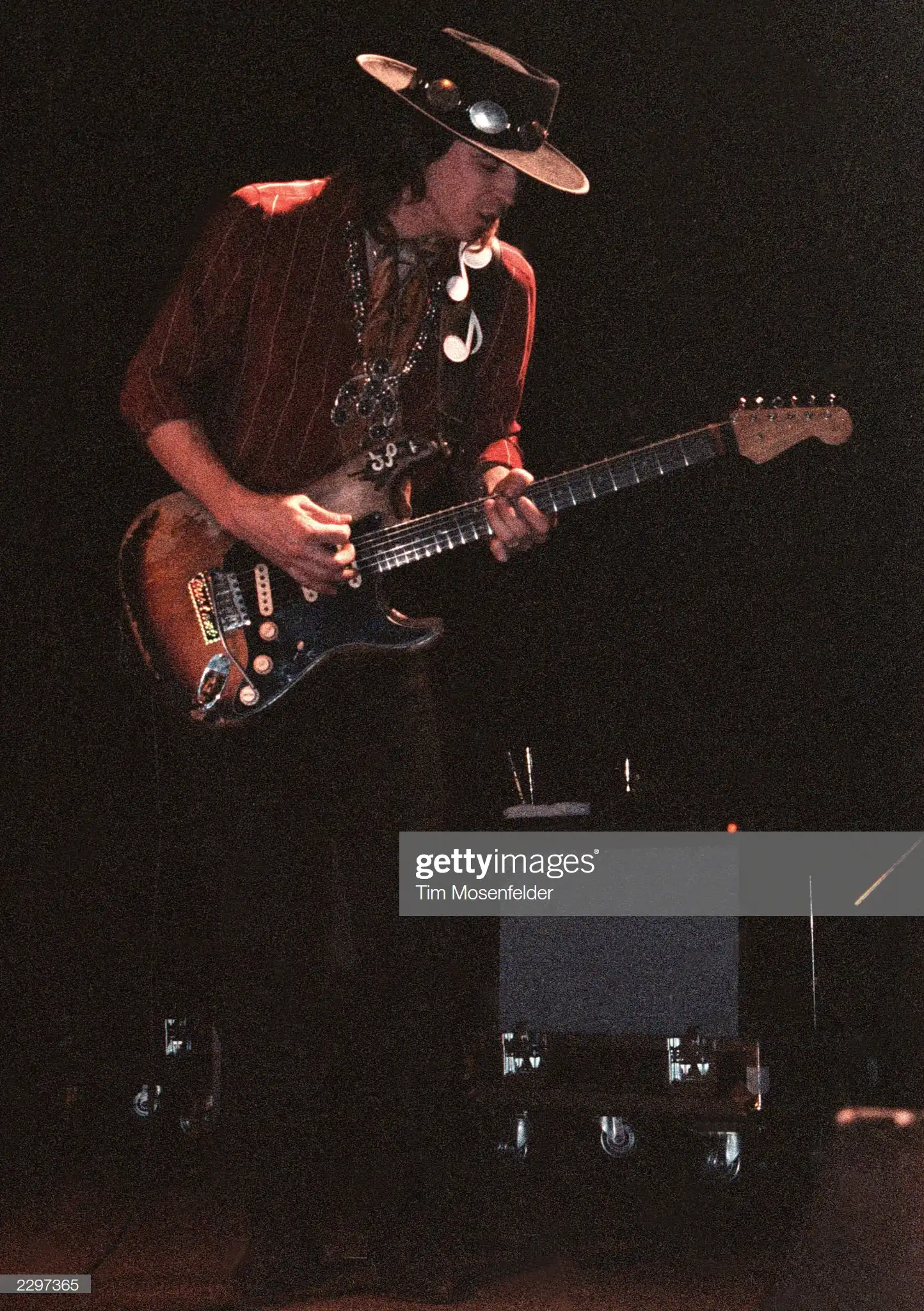
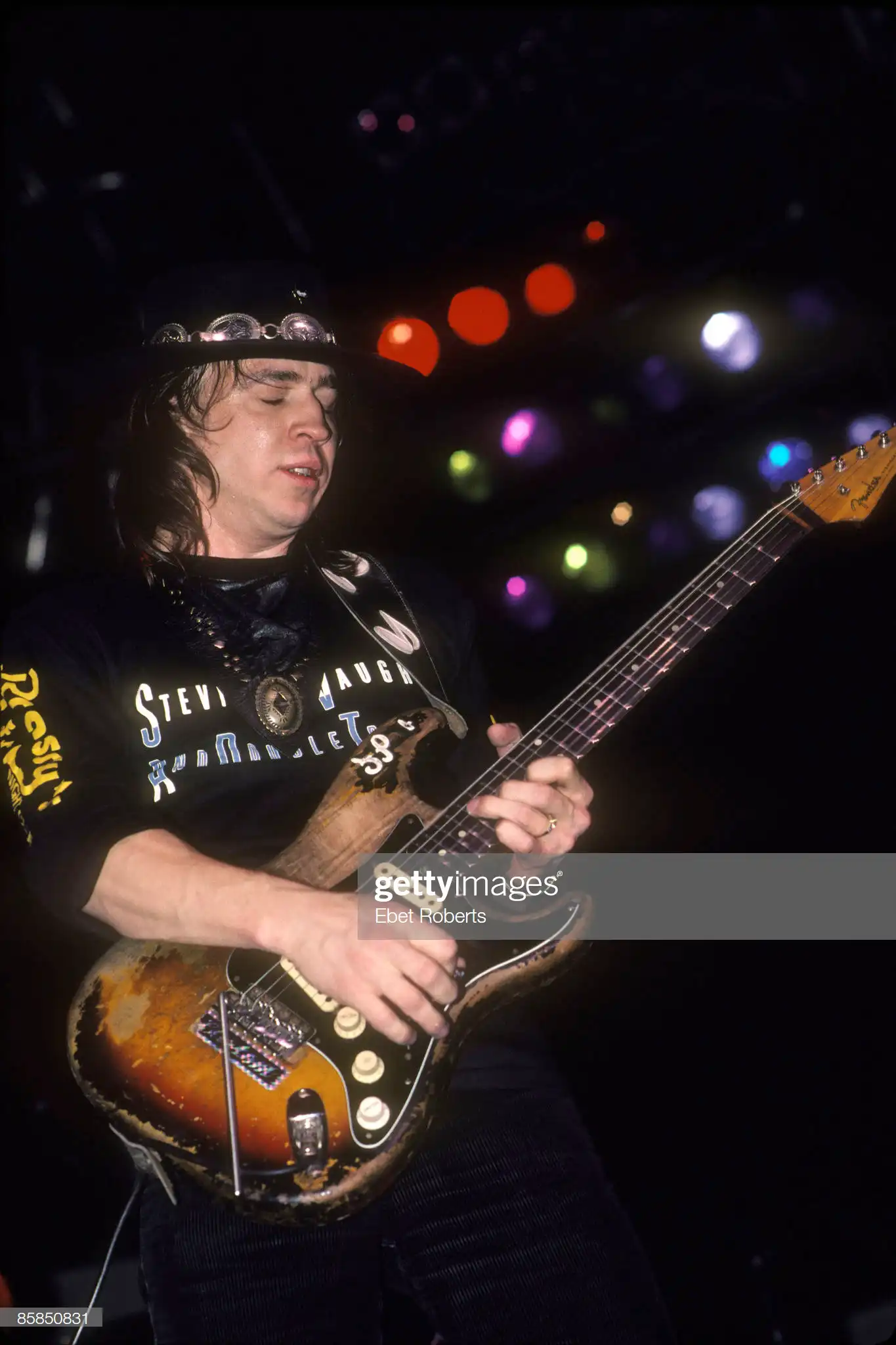
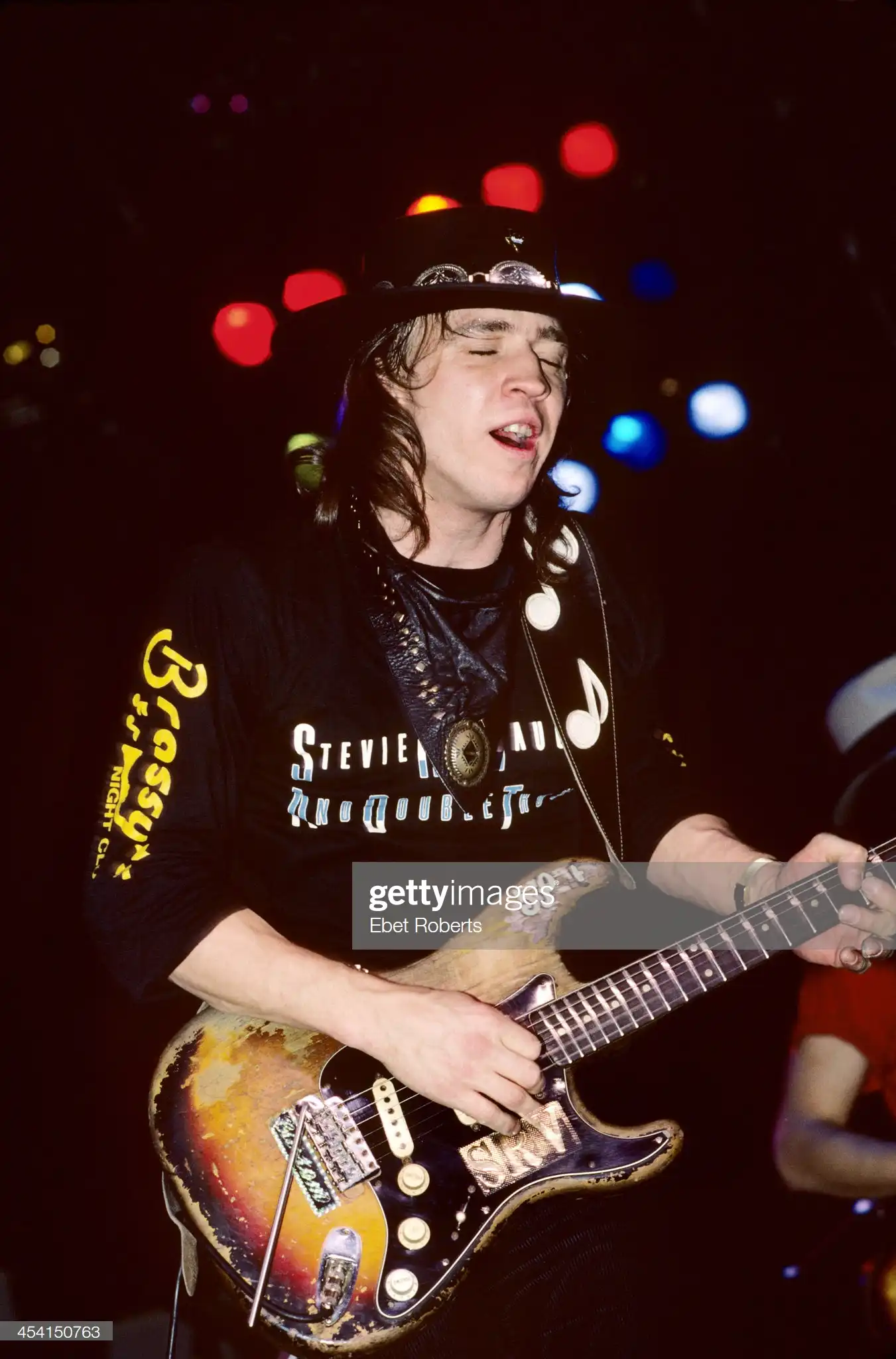
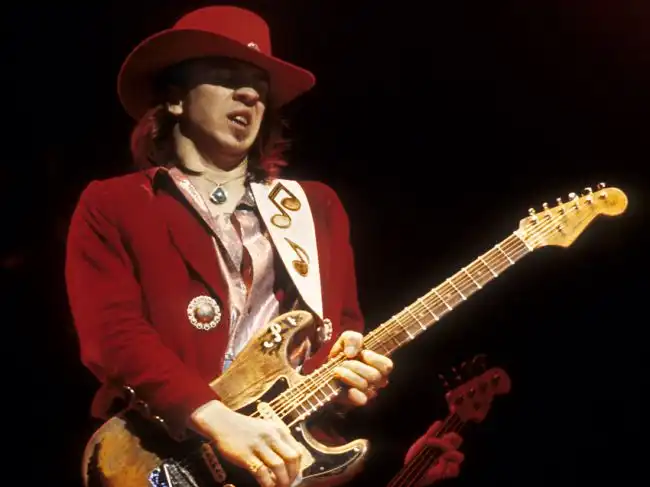
The 1992 signature model was based on Vaughan’s iconic sunburst Stratocaster, known as “Number One.”

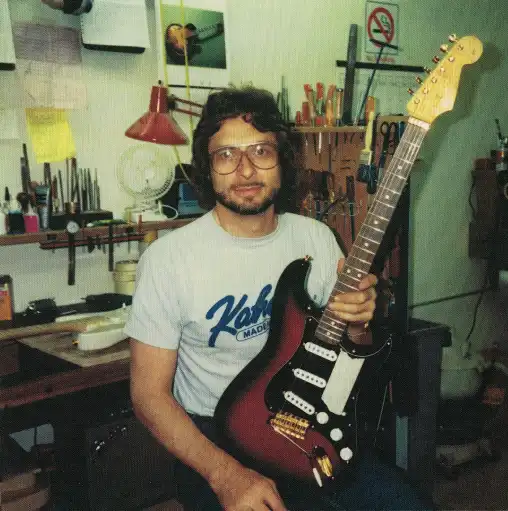
At the beginning of 1990, Custom Shop Master Builder Larry Brooks oversaw the development of the Stevie Ray Vaughan Stratocaster.

The first prototype for this signature model featured a Wilkinson roller nut—similar to the one used by Jeff Beck. Stevie’s interest in the roller nut came up during his tour with Jeff Beck in the fall of 1989. He tried Jeff’s guitars and liked how the roller nut helped with the standard tremolo tuning issues.
However, since Vaughan rarely used it in public, Fender ultimately decided to equip the production model with a traditional Stratocaster nut.

Since Stevie favored the feel of older guitar necks, Larry applied a super glue finish to the back of the neck, then used steel wool to achieve a worn, “woody” tactile feel.

He also preferred the feel and tone of rosewood, so Larry fitted the prototype with a Brazilian rosewood fingerboard.

Larry Brooks with the first SRV prototype (Photo Courtesy: J.W.Black)
Larry Brooks with the first SRV prototype (photo courtesy of J.W. Black)
Advertisement 970x250

Larry Brooks and Mark Wittenberg, then Fender’s Artist Relations Director, presented one of the first Custom Shop prototypes to Stevie Ray Vaughan during one of his final television appearances—on The Tonight Show Starring Johnny Carson on July 7, 1990.

In an interview with Hittin ’EZine, René Martinez—Vaughan’s guitar technician since 1985—recalled that the prototype’s pickguard lacked the large, reflective “SRV” initials that Stevie typically applied to Number One, a detail that disappointed him.
At that point, a member of the show’s staff reportedly said, “The graphics department is upstairs. What do you need?”

René Martinez working on Stevie Ray Vaughan’s Number One
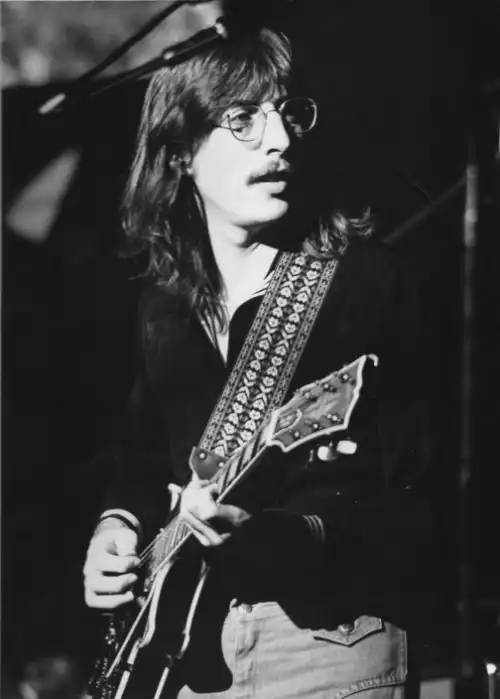
Mark Wittenberg
Mark Wittenberg
Advertisement
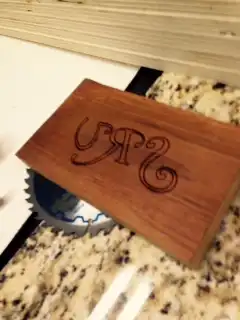
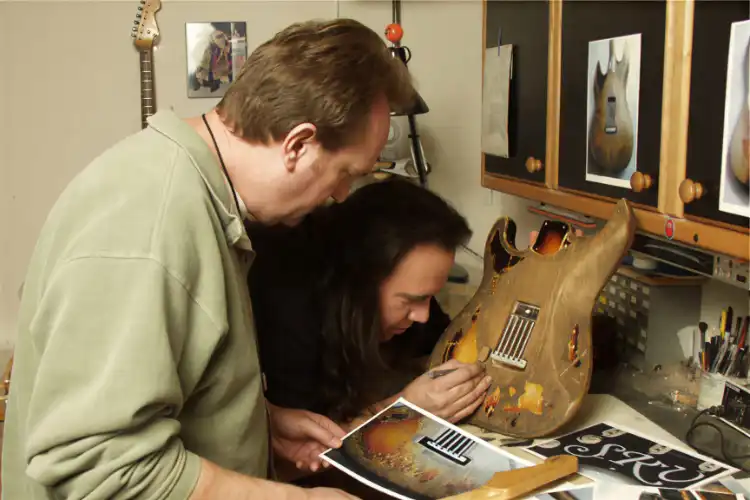
The original “SRV” template used for the pickguard design
The original “SRV” template used for the pickguard design (photo courtesy: Lifelonggtrgeek from Strat Talk)

Shortly thereafter, he returned with a sticker bearing the three iconic letters in a new style—white and calligraphic—which Vaughan immediately appreciated and ultimately adopted for the pickguard of his SRV Signature Stratocaster.

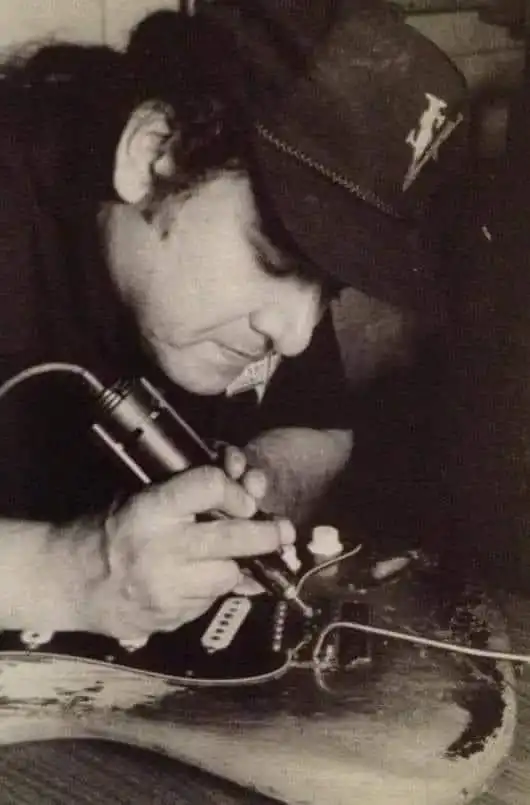
The engraving of the prototype’s pickguard was carried out by Louis Alegre, who is also known for his involvement in the Harley-Davidson 90th Anniversary Stratocaster project.

Toward the end of 1991, when Fender resumed the SRV Strat project, the Custom Shop built additional pre-production guitars, though only the earliest examples were personally crafted by Larry Brooks. These instruments featured the Custom Shop’s oval stamp on the neck heel. They were fitted with pau ferro fingerboards, finished in nitrocellulose lacquer, and equipped with a traditional melamine nut.

These guitars were likely acquired by celebrities and prominent artists who had access to the earliest examples produced before the model’s official release.

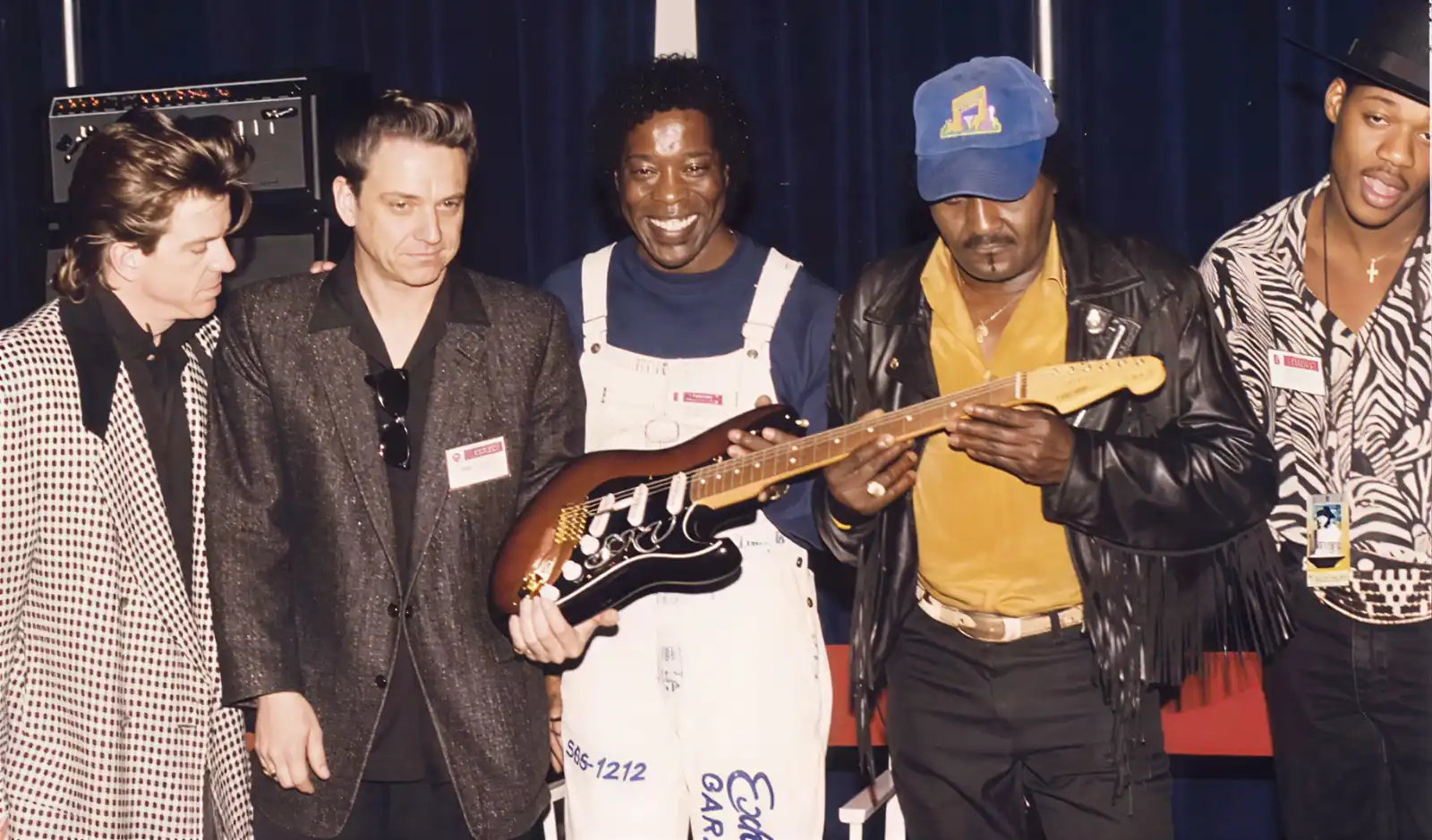
The Stevie Ray Vaughan Stratocaster was unveiled at the NAMM Show in January 1992, with Double Trouble drummer Chris Layton, Jimmie Vaughan, Buddy Guy, Albert Collins, and Eric Gales in attendance.

NAMM 1992: unveiling of the Stevie Ray Vaughan Signature Stratocaster, with Jimmie Vaughan, Double Trouble drummer Chris Layton, Buddy Guy, Albert Collins, and a young Eric Gales
advertisement

The Stevie Ray Vaughan Stratocaster specifications overview

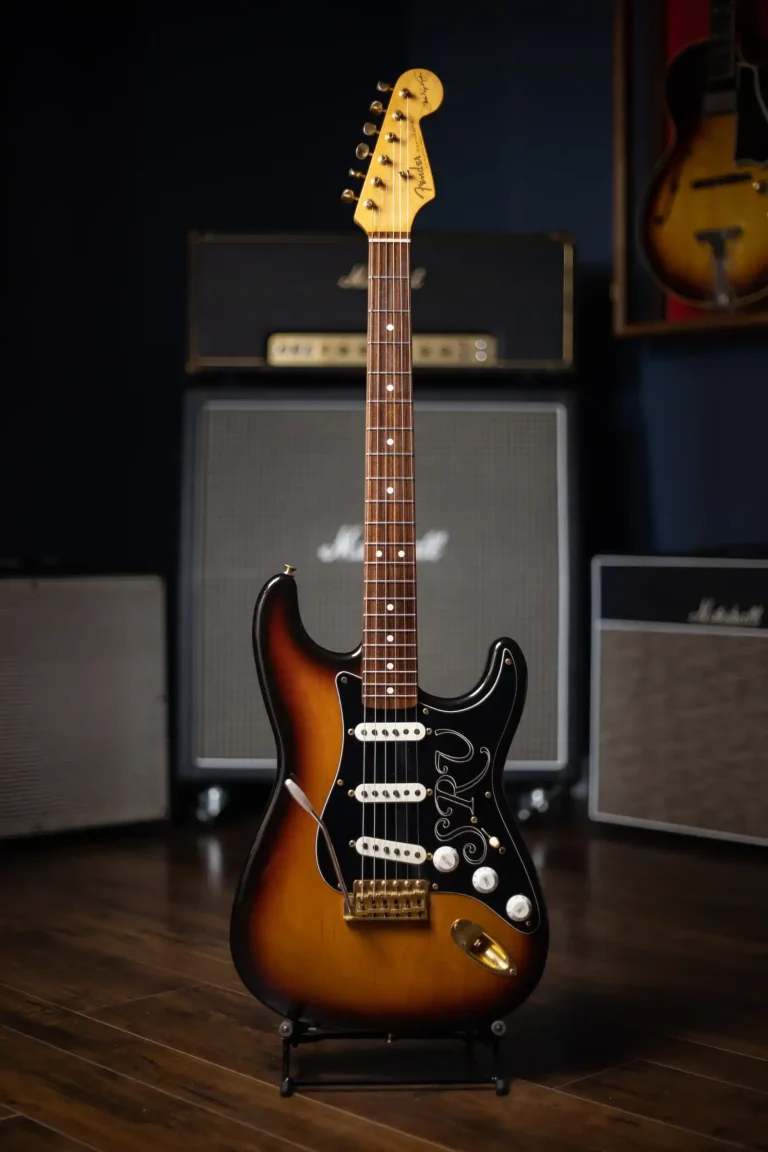
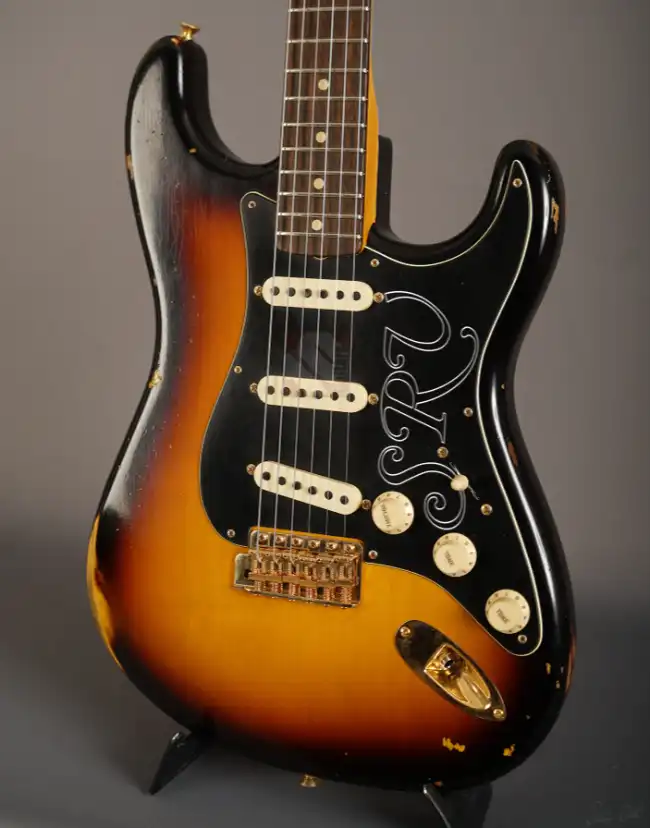
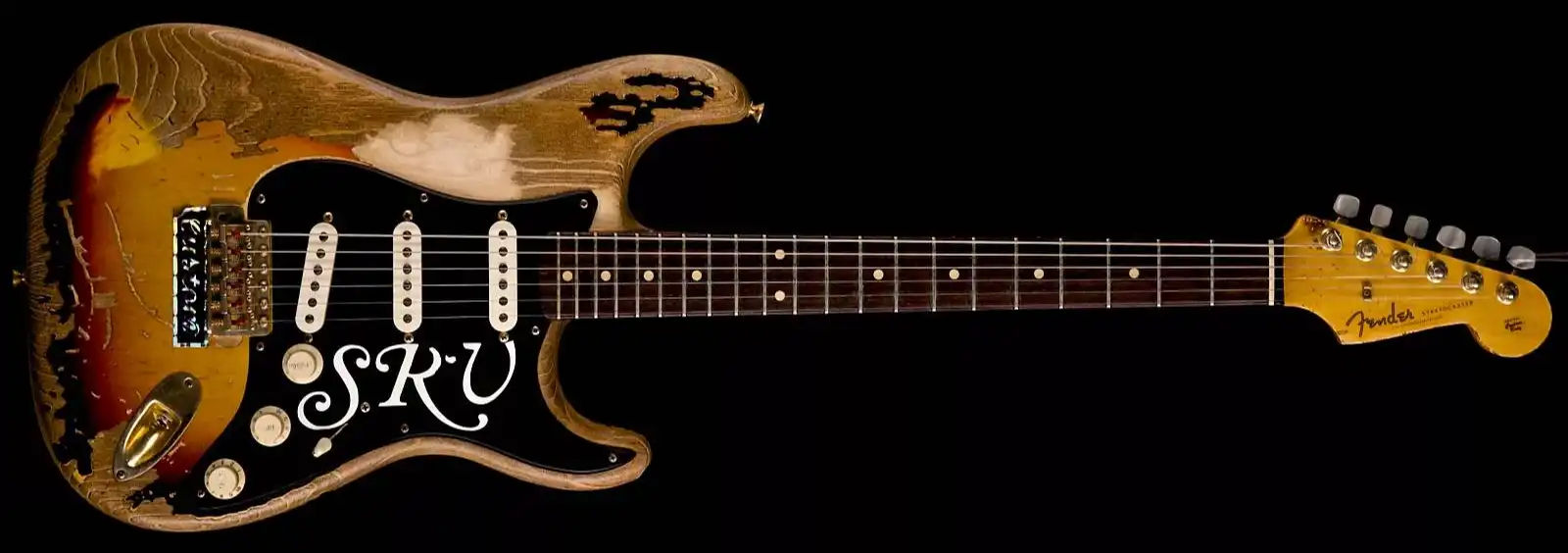
The Stevie Ray Vaughan Stratocaster featured a 3-Color Sunburst finish that subtly revealed the wood grain, complemented by gold-plated hardware, a left-handed vintage-style synchronized tremolo with a right-handed tremolo arm, and a trio of Custom Shop Texas Special single-coil pickups.
The body was crafted from two pieces of alder, precisely joined along the center seam, and finished in polyurethane.
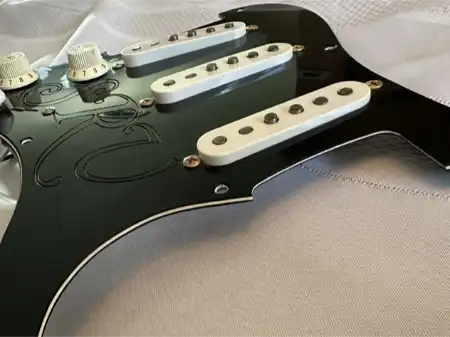
The 3-ply black/white/black 8-screw pickguard was engraved with the “SRV” initials and internally shielded with a thin aluminum plate covering the pickup cavity.
The ’50s-style headstock bore the Spaghetti logo alongside Stevie Ray Vaughan’s signature, positioned on the ball of the headstock.
The gloss-tinted maple neck featured a Thick Oval profile—unlike that of any other modern Stratocaster—recalling the neck shapes of early-1960s instruments. It was a large neck, with a slightly asymmetrical semicircular profile, more rounded on the bass side.

The SRV Stratocaster (photo: Walt Grace Vintage)
Advertisement

The fretboard: Pau Ferro vs. Brazilian Rosewood

The fingerboard was made of pau ferro and fitted with 21 narrow jumbo frets. Although often regarded as a second-choice wood, pau ferro is in fact an excellent tonewood, valued for both its tonal properties and its visual appeal.

Its color can vary considerably, ranging from reddish-orange to light hazel and dark brown with black streaking. It typically exhibits a straight grain and a fine, even texture.

In practical terms, pau ferro falls between rosewood and ebony in tonal space. It delivers a snappier attack than rosewood, with solid sustain, while retaining a warmer character than ebony. For this reason, it is often considered to combine the most desirable qualities of both woods.

However, some of the fingerboards used in the first year of production were not made of pau ferro, but of Brazilian rosewood. Following the restrictions imposed by CITES (the Convention on International Trade in Endangered Species of Wild Fauna and Flora) on the harvesting of Brazilian rosewood, Fender transitioned to the use of pau ferro.

Brazilian rosewood SRV specimens are among the most sought-after examples today, but their exact number remains uncertain. Estimates vary widely: some sources within Fender suggest fewer than 50, while others estimate closer to 100. There are even claims that no Stevie Ray Vaughan Stratocasters were ever produced with Brazilian rosewood fretboards, on the assumption that CITES restrictions predated the model’s production.

This latter view, however, overlooks two key points:

  1. Brazilian rosewood was added to the CITES list of protected species in July 1992, whereas the SRV Stratocaster was unveiled at NAMM in January 1992 and was already available in guitar shops by March of that year.
  2. CITES regulations prohibited the harvesting of Brazilian rosewood, but not the use of pre-existing stock. Wood that had been cut prior to the convention could still be legally used and traded, provided it was accompanied by certification attesting to its “pre-convention” origin.

Fender catalogs from the period further complicate the matter. Brazilian rosewood was explicitly listed in Frontline only in 1992, while pau ferro did not appear in official price lists until 1996; prior to that, the specification was simply given as “rosewood.”

The only certainty is that far more so-called SRV Stratocasters with Brazilian rosewood fretboards appear on the market—particularly online—than were ever actually produced. This is largely due to the difficulty in distinguishing between the two woods, especially as pau ferro tends to darken with age, making misidentification relatively common.

The Texas Special Pickups

Texas Special pickups occupy an interesting position in the evolution of Stratocaster design: they are neither faithful recreations of early single-coils nor attempts at modern high-output designs. Instead, they reflect a deliberate shift toward a more assertive midrange voice while retaining the fundamental architecture of a classic single-coil platform.
Developed by Michael Stevens between the late 1980s and early 1990s, they first appeared in the SRV Signature Strat.

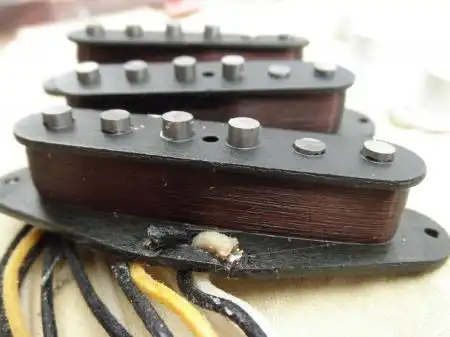
At their core, they feature AlNiCo 5 magnets with staggered pole pieces and enamel-coated magnet wire.
Much of their character is defined by the coil wind. Compared to vintage-spec Strat pickups, Texas Specials are overwound, resulting in a stronger midrange presence and a reduction in the airy, glass-like high-frequency extension associated with lower-output designs.
A key functional feature is the reverse-wound, reverse-polarity (RWRP) middle pickup configuration, which enables hum-canceling in positions two and four on a standard five-way switch.
They also feature cloth-covered lead wires and black fiber bobbins, and are wax-potted to reduce microphonic noise.

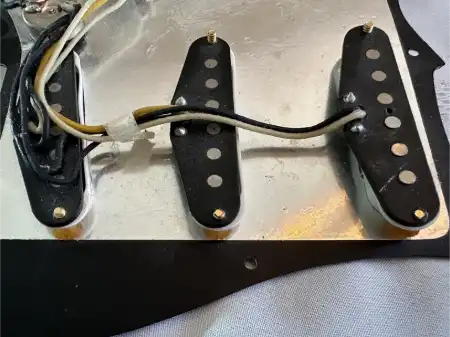
Stock Texas Special pickups installed in the Stevie Ray Vaughan Stratocaster do not carry Custom Shop stickers on the bottom plate and lack external model markings. Aftermarket retail sets include Custom Shop stickers and, in some production periods, color-coded pole pieces, though such markings were inconsistent and not a reliable distinguishing feature.

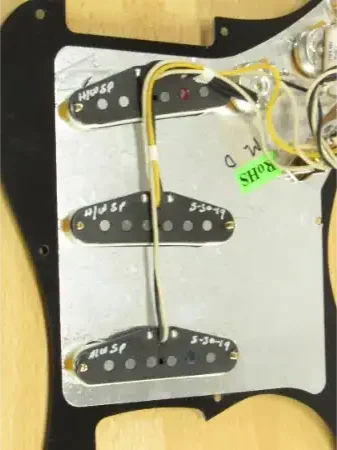
Texas Special pickups used on the Custom Artist SRV model, by contrast, featured “H/W SP” and a handwritten date in white ink on the bottom flatwork, along with color-coded pole pieces (paint dots)—a red dot on the B pole piece of the bridge pickup and a blue dot on the B pole piece of the neck pickup.

Texas Special Single Coil Strat Pickup Top
Texas Special Single Coil Strat Pickup Bottom
Texas Special Single Coil Strat Pickup Pickguard

BRIDGE
DC Resistance: 6.79 kΩ
Inductance: 3.171 H
Resonant Peak: 7.05 kHz
White/Black cloth wire

MIDDLE
DC Resistance: 6.31 kΩ
Inductance: 2.803 H
Resonant Peak: 7.46 kHz
Yellow/Black cloth wire

NECK
DC Resistance: 6.12 kΩ
Inductance: 2.578 H
Resonant Peak: 8.75 kHz
White/black cloth wire

Advertisement

SRV Guitar Serial Numbers and Fender Production Anomalies

Serial numbers represent another source of confusion. Instruments produced in 1992, 1993, and some early 1994 SRV Stratocasters carried serial numbers beginning with “SE9,” suggesting a 1989 manufacture date, even though the model was not introduced until 1992.
In the late 1980s, Fender had in fact ordered a large batch of “SE” decals, and their use on these later instruments was most likely the result of a logistical oversight. These decals continued to be applied well into 1993 across various Signature models, including the 1992 and 1993 SRV Stratocasters. Once the “SE9” stock was exhausted, around 1994, Fender transitioned to prefixes such as “SN4,” “SN5,” and “SN6.”

Advertisement 970x250

The Custom Shop Stevie Ray Vaughan Strat

In 2019, Fender introduced the Custom Shop Artist version of the SRV model, the Stevie Ray Vaughan Signature Stratocaster.
While not substantially different from the standard production model, it stood out for its nitrocellulose finish and hand-wound pickups—still Texas Specials.
The Texas Special pickups used on the Custom Shop Artist SRV model featured “H/W SP” and a handwritten date in white ink on the underside of the flatwork, along with identifying paint dots—a red mark on the B pole piece of the bridge pickup and a blue mark on the B pole piece of the neck pickup.
As with the David Gilmour signature, a Relic version was also offered for the Custom Shop SRV Stratocaster, featuring a Faded 3-Color Sunburst finish.

The Custom Shop SRV Stratocaster Relic (photo courtesy: 10 Guitars)
Texas Special Single Coil Strat Pickup - Hand Wound Version
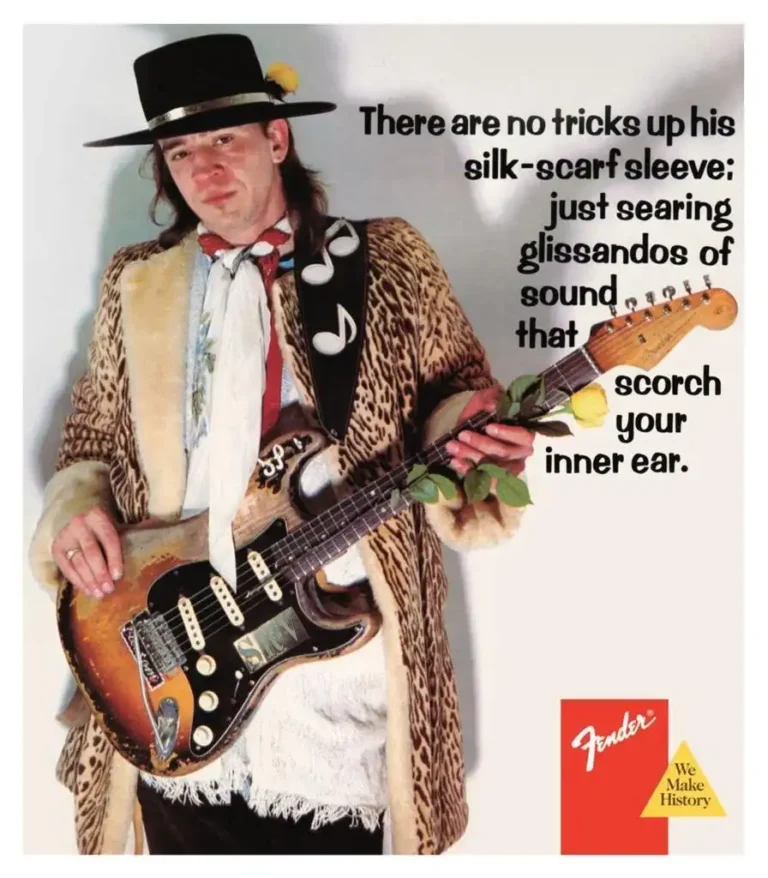
SRV Fender ad

The Fender advertisement featuring Stevie Ray Vaughan and his “Number One” perfectly encapsulated Fender’s positioning of Vaughan: a player whose sound required no artifice, only touch and intensity. By invoking both his visual identity and the visceral impact of his playing, the advertisement elevated “Number One” from a guitar to an extension of his physical and musical presence.

Advertisement

Stevie Ray Vaughan’s Number One Stratocaster: History, Mods, and Real Story

The Day Stevie Ray Vaughan Found His ‘Number One’ Strat

Few guitars in the history of electric music are as closely tied to a player as Stevie Ray Vaughan’s “Number One.” More than just an instrument, it became an extension of his identity—an essential part of his sound, touch, and musical voice. Stevie loved the guitar so much that he often called it his “first wife.”
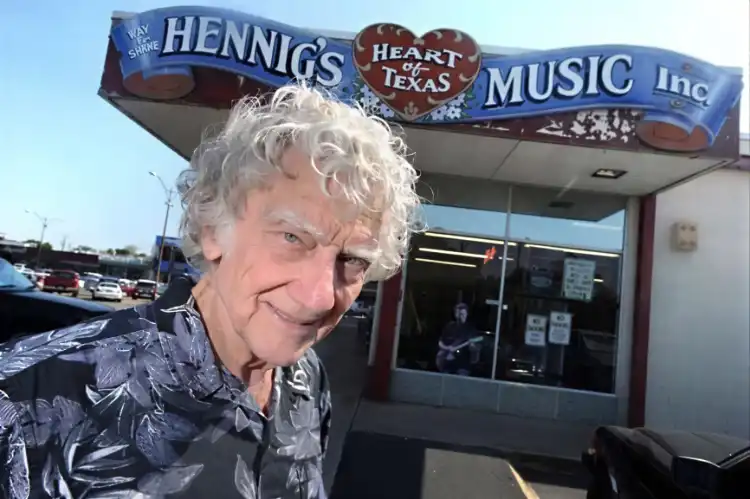
It featured a round-laminate Brazilian rosewood fingerboard, with a body dated 1963 and a neck dated 1962, and was purchased by Vaughan in 1974 at Ray Hennig’s Heart of Texas Music in Austin.

According to Ray Hennig, that relationship began almost by accident.
Stevie and his brother Jimmie had been frequent visitors to Hennig’s shop since his days in Waco. When Hennig later moved to Austin, just as the city’s music scene was beginning to flourish, the Vaughan brothers followed. Stevie soon became a daily presence—often already waiting outside when Hennig arrived in the morning.
As Hennig recalled, Stevie had a routine. He would walk slowly along the walls, where rows of guitars hung, taking each one down in turn. He did not simply play them—he felt them, as if searching for something specific, something intangible. Most days, he would move methodically from one instrument to the next without pause.
But one day, something changed.

Ray Henning and his shop
Christofer Cross and Number One
Advertisement

It was near closing time. As Hennig watched, Stevie reached an old Stratocaster hanging on the wall—a worn, unremarkable piece that Hennig himself regarded as little more than a trade-in of questionable value. Stevie stopped. He picked it up, examined it more closely, then paused again. Unlike the others, he did not move on.

He turned to Hennig and asked, “Ray, where’d you get this?”

Hennig’s answer was blunt: “Stevie, you just found the biggest piece of junk I’ve ever traded for.” The guitar, he explained, had come into the shop through a trade with Chris Geppert, a musician who would later find fame under the name of Christopher Cross.

Stevie disagreed.
Holding the guitar, he focused immediately on one detail: the neck. “Ray, this is the neck… this is what I’ve been looking for all these years… just a wide maple neck,” he said.
It wasn’t the finish, the pickups, or the condition—it was the feel. That wide, worn neck spoke to him in a way no other instrument had.

Stevie and Ray took the guitar apart together. They cleaned it, adjusted it, and set it up properly. When they were finished, it played beautifully.
Hennig traded the instrument to Vaughan in exchange for a blue Stratocaster that he had loaned to him.
“That was the beginning of his great love for it,” Hennig said.

Ray, if I hadn’t found that guitar, I’d never have played like I do,” Stevie told Hennig on multiple occasions. It was not just affection—it was attribution. Vaughan credited a significant part of his playing style to that instrument.

Offers came, as they inevitably do for such a guitar. Before his death, Vaughan had reportedly been offered as much as $80,000 for it—an enormous sum at the time. Hennig once asked him directly why he had never sold it.
The answer was simple: “Well, it wasn’t worth it.”
For Vaughan, the value of Number One could not be measured in money. It was the instrument through which he had found his voice.

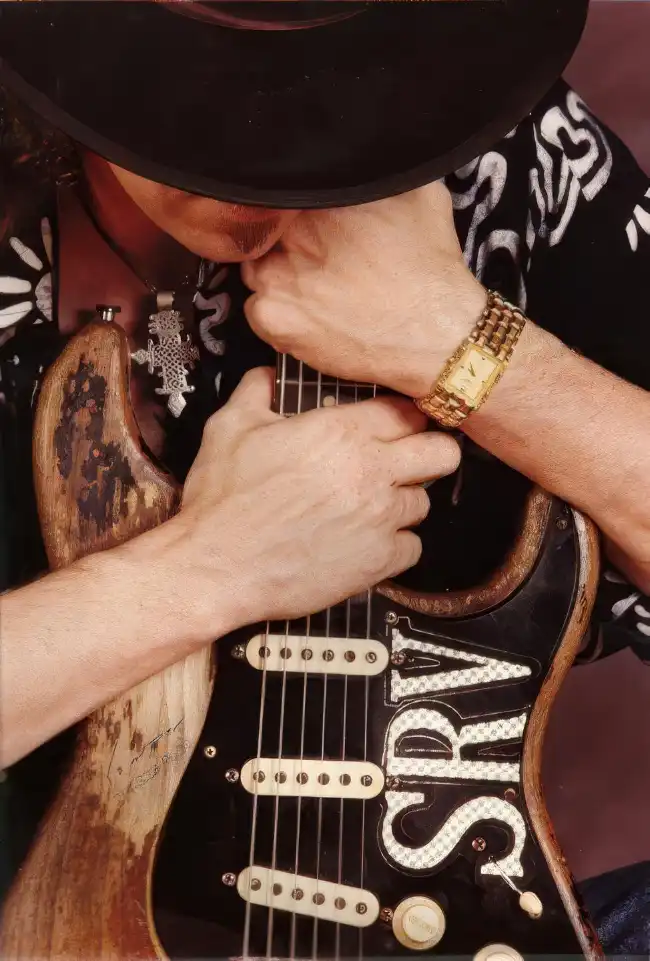
Stevie and his Number One
Advertisement

Hardware, Strings, Fretboard, and Modifications

Over time, the instrument underwent several modifications.
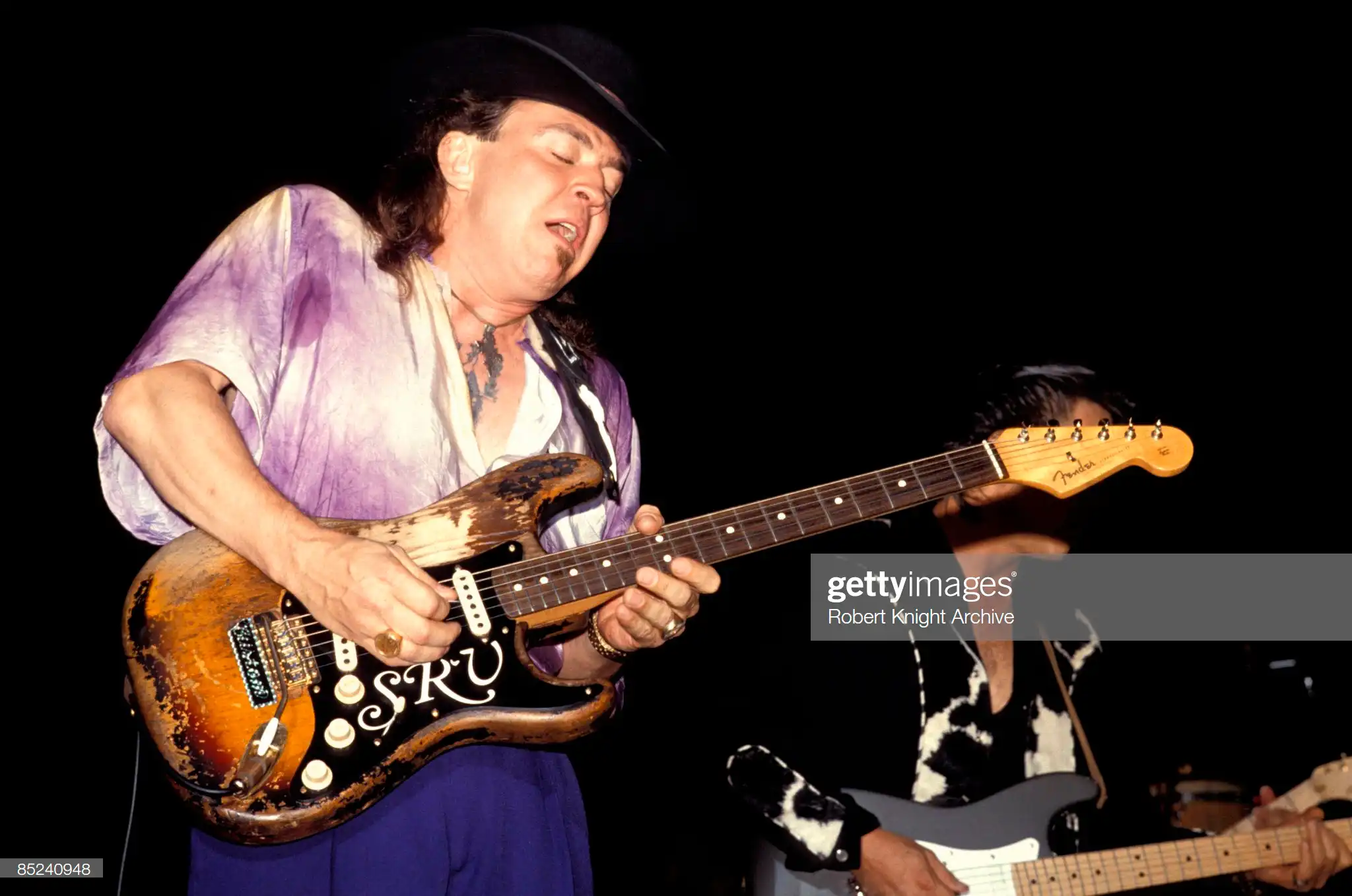
Stevie replaced the original frets—first with medium-sized wire, then with jumbo frets—and swapped the original white pickguard for a black one bearing his “SRV” initials.

César Díaz, who worked as an amp technician and gear advisor to Stevie Ray Vaughan, once told him that Jimi Hendrix positioned his tremolo arm above the strings so he could perform vibrato effects with his elbow.
Vaughan reportedly expressed enthusiasm for the idea and asked Díaz if he could obtain such a unit. Díaz did so, assuming that Vaughan would install it on a different Stratocaster. But the next time he saw him, the left-handed tremolo had been fitted to Number One.
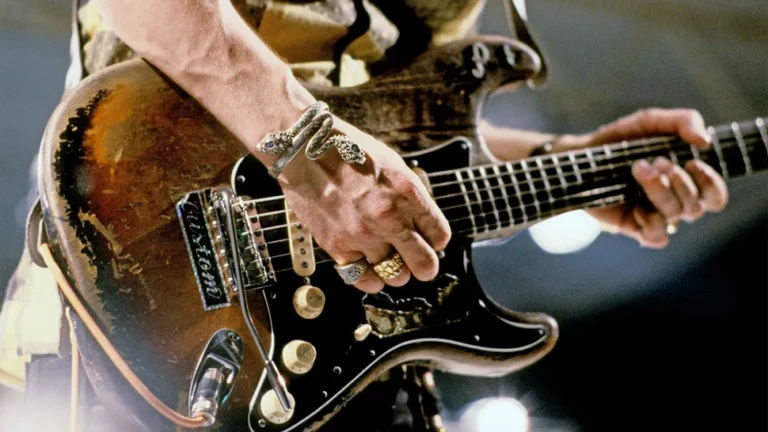
The left-handed bridge configuration required a new routing for the tremolo arm, while the original cavity was filled with a wooden dowel.

Number One with the chrome-plated left-handed bridge provided by Díaz
Number One with the chrome-plated left-handed bridge provided by Díaz (photo: Luciano Viti/Getty Images)
advertisement

Stevie replaced the tremolo arm several times, using custom-made units produced by a member of his road crew’s father. Some were straight—visible in the In Session recording with Albert King—while others were bent, as seen at the El Mocambo in 1983.

Stevie replaced the original saddles with vintage-style units modified to reduce the string break angle at the contact point, thereby minimizing string breakage. The strings were also threaded through a small piece of plastic tubing, inserted from the tremolo block hole, and extending beyond the saddle contact point, again to reduce the risk of breakage. The bridge top plate was likewise ground to remove the sharp edge where the strings contact the metal.

Around 1985, René Martinez fitted the instrument with gold-plated hardware, yet Vaughan continued to favor the left-handed tremolo setup.

The original tuning machines were replaced at least twice, with the final set consisting of gold-plated Gotoh tuners fitted with plastic buttons.

The round-lam Brazilian rosewood fingerboard exhibited a compound radius—ranging from 7.25” to 12” at the fingerboard end—resulting from the numerous refrets it had undergone.

In a 1983 interview, Vaughan stated that he used exceptionally heavy string gauges (.013–.052, and reportedly even .018–.072), making Number One virtually unplayable for most other guitarists. Ritchie Fliegler and Ted Nugent, who had the opportunity to play it, found the action extremely high and string-bending nearly impossible.
To appreciate the physical demands of such gauges, it is worth noting that when Vaughan’s fingertips became damaged, his technician René Martinez encouraged him to apply wax—or even glue—for protection. By 1989, he had reduced his string gauge to .011.

Myths and Facts: Pickup Dating and Date Marking

Over the years, a false myth emerged suggesting that “Number One” featured a 1959-dated body. This misconception likely originated from an interview with Stevie Ray Vaughan conducted by Dan Forte and published in Guitar Player magazine in October 1984. In it, Vaughan recalled noticing the inscriptions “LF – 1959” on the guitar’s body and “1962” on the neck, which initially led him to believe the instrument had been assembled by Leo Fender himself. He later realized that the “LF” initials actually stood for Louis Fuentes.

To be honest, this statement contrasts somewhat with René Martinez’s recollections in an interview with Joe Bosso for Music Radar in July 2000. Martinez stated that the guitar’s body was also dated 1962, and that only the pickups were dated 1959. He also recalled joking with Stevie: “Hey, it’s your guitar—you can call it whatever you want!”

In fact, in the video filmed by Richard McDonald, George Blanda, and Mike Eldred during their September 2003 inspection of “Number One” for the “Number One Replica” project, the February 1963 body date is clearly visible.

As Mike Eldred noted in an interview with Barry Cleveland, “The neck is dated December ’62, and the body is ’63, but nothing’s been changed—we believe the guitar came from the factory like that.” He also added, “The guitar had been re-fretted with bigger frets, probably three or four times. The tuning keys had also been changed. The pickups looked like they were stock, but they had been shielded.” Therefore, the pickups—being stock grey-bottom units—were not individually dated, as Fender only began dating Stratocaster pickups in 1964. Consequently, they could not have been marked 1959, as previously suggested by René.

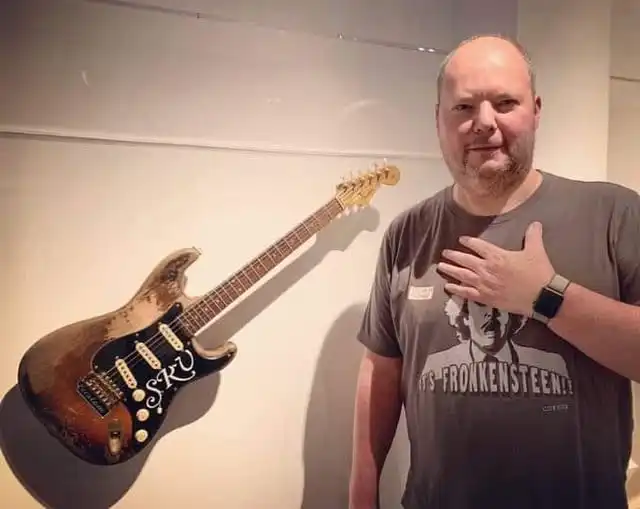
Number One” on display at the Woody Guthrie Center

Footage of McDonald, Blanda, and Mike Eldred inspecting “Number One

Advertisement
Advertisement 970x250

Myths and Facts: Neck Breakage

Many legends and myths also circulate regarding the “Number One” neck. Some even claim that the neck currently fitted to the guitar is not the original one.

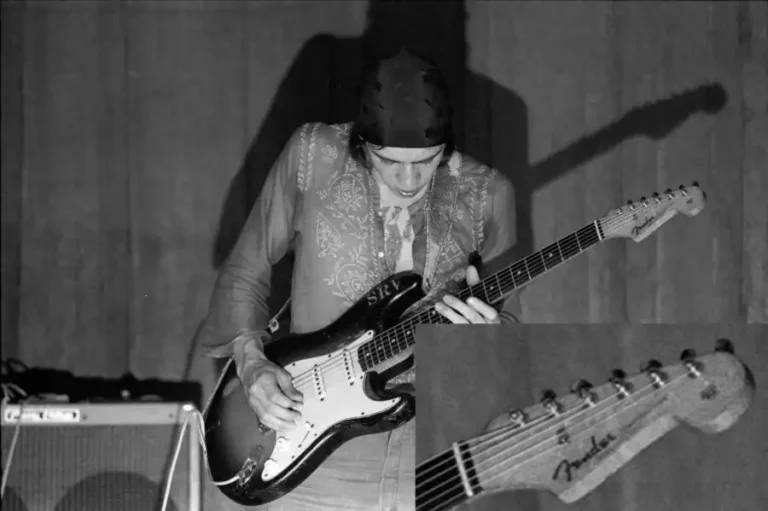
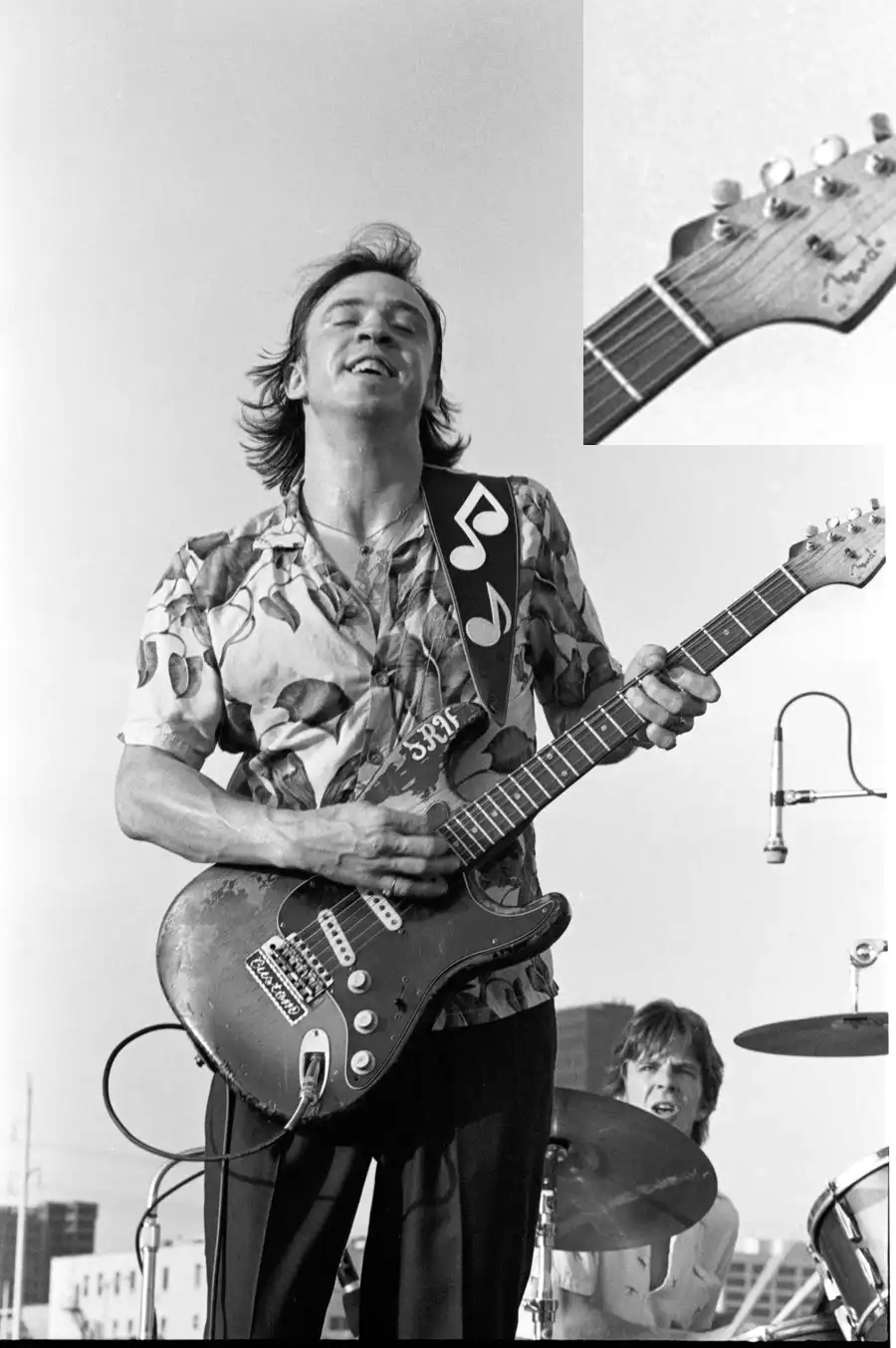
In fact, footage shot by the Custom Shop, as well as images from the Woody Guthrie Center—where the guitar has been exhibited—show the absence of patent numbers and of the “Pat. Pend.” decal immediately following the “ORIGINAL Contour Body” marking, as would be expected on a ’62-style headstock.

However, a comparison between early photographs of “Number One” played by a young Stevie Ray Vaughan and a 1981 image taken at Tuts in Chicago shows that, by 1981, the Fender logo was already beginning to deteriorate, and the “ORIGINAL Contour Body Pat. Pend.” decal had already disappeared.

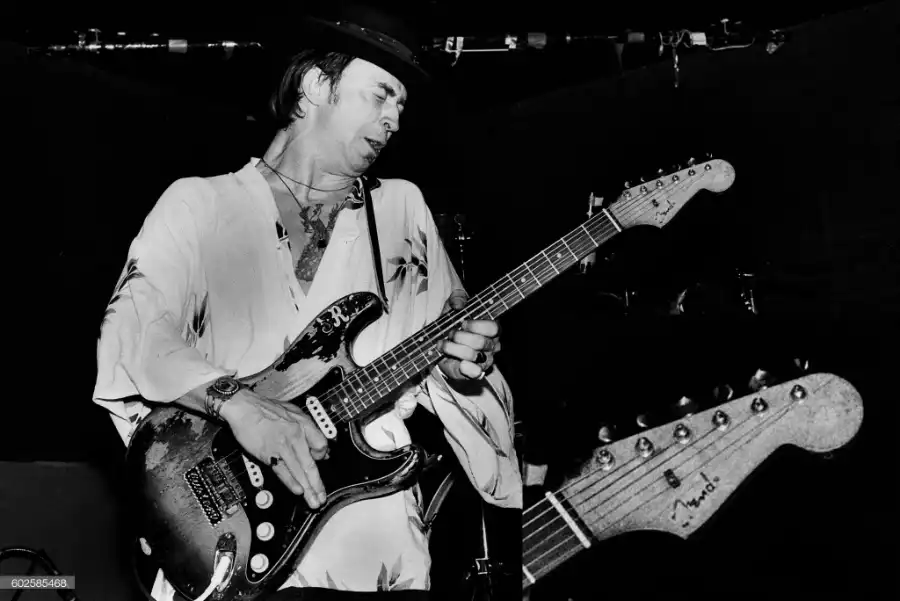
In a photograph taken a few years later, in 1983, at the First club in New York, the decals appear again. The neck is clearly the same—evidenced by the identical cigarette burn on the headstock near the low E tuning machine. It is therefore evident that new decals had been reapplied to the original neck.

A young Stevie with his “Number One,” not yet heavily worn, still featuring its original 3-ply pickguard and the “SRV” sticker on the upper horn.
Detail of “Number One”: three-ply black pickguard without stickers; “Custom” decal on the body and a newly applied “SRV” sticker on the upper horn. The original bridge has been replaced with a left-handed unit. A cigarette burn marks the headstock, the Fender logo shows early wear, and the switch tip is black.
3-ply black guard without stickers; “Custom” sticker; new “SRV” sticker on the upper horn. Original bridge replaced with a left-handed unit. Cigarette burn on the headstock, the Fender logo shows early wear, black switch tip.
June 28, 1981 — Tuts, Chicago, Illinois (photo by Paul Natkin). The decals are heavily worn, and the “Original Contour Body Pat. Pend.” marking has disappeared. The cigarette burn on the headstock is clearly visible, confirming that the neck is still the original.
1983 — The First, New York (photo by Ebet Roberts). The same cigarette burn is visible on the headstock, confirming that the neck is still the original, though new decals have been applied.

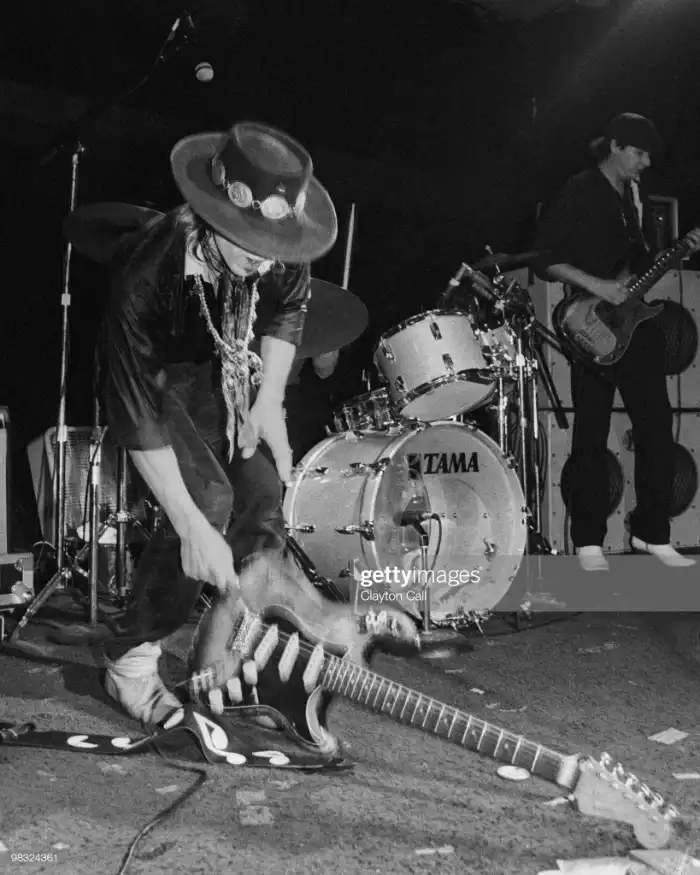
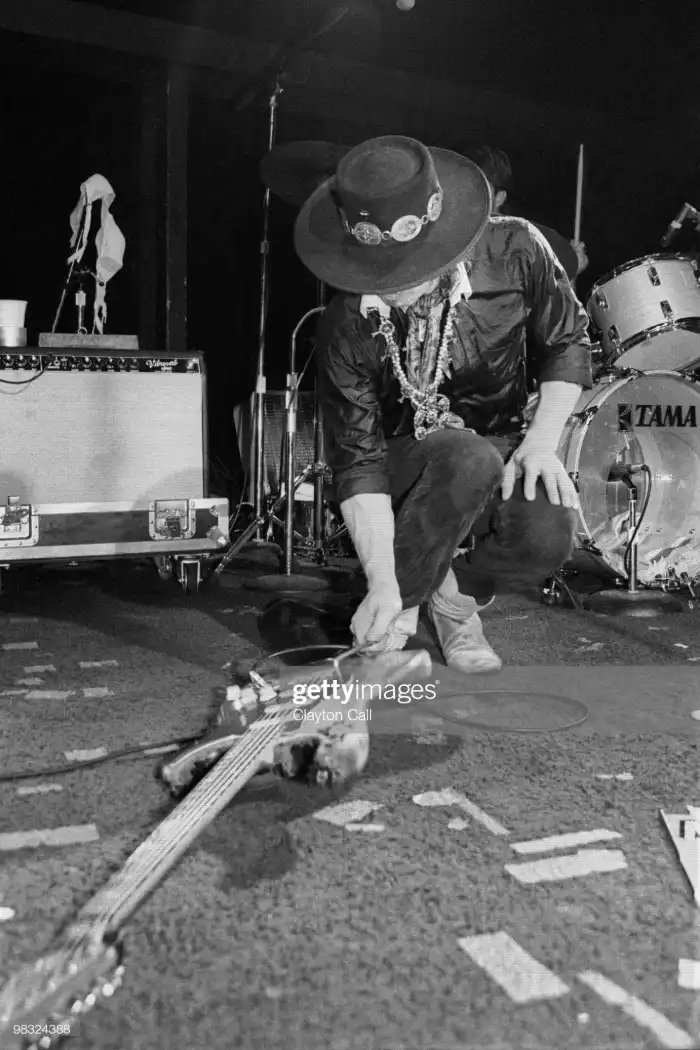
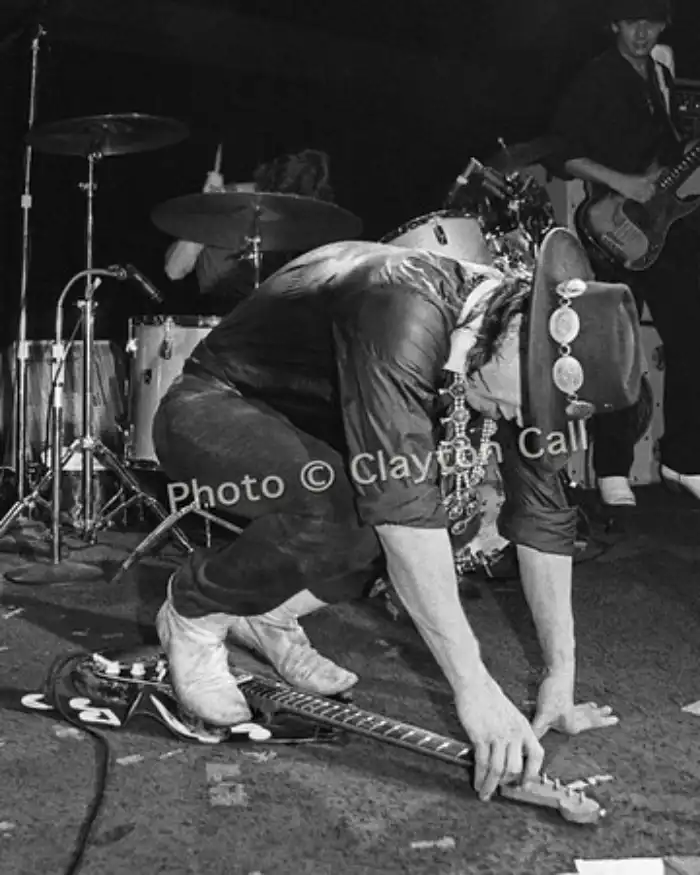
Other photographs, dated 1983, taken a month later, show Number One being thrown to the ground by Stevie, who, in one image, appears concerned about the condition of the headstock. It appears that some insulating tape had been applied as an improvised repair for minor damage at the base of the headstock.

Mike Eldred, recalling the day the guitar was examined for the replica project, noted: “We noticed some really peculiar things about the headstock, and eventually realized that the original neck had been repaired.” 

He also added: “Basically, the entire headstock was replaced, which is difficult to do on a Fender guitar because it’s all cut out from one piece of wood. It’s a very intense repair. There was a thin glue line along one side, and they had actually milled out a piece of the neck and spliced in another piece of wood.”  Hence, according to Mike, the neck had undergone a delicate restoration.

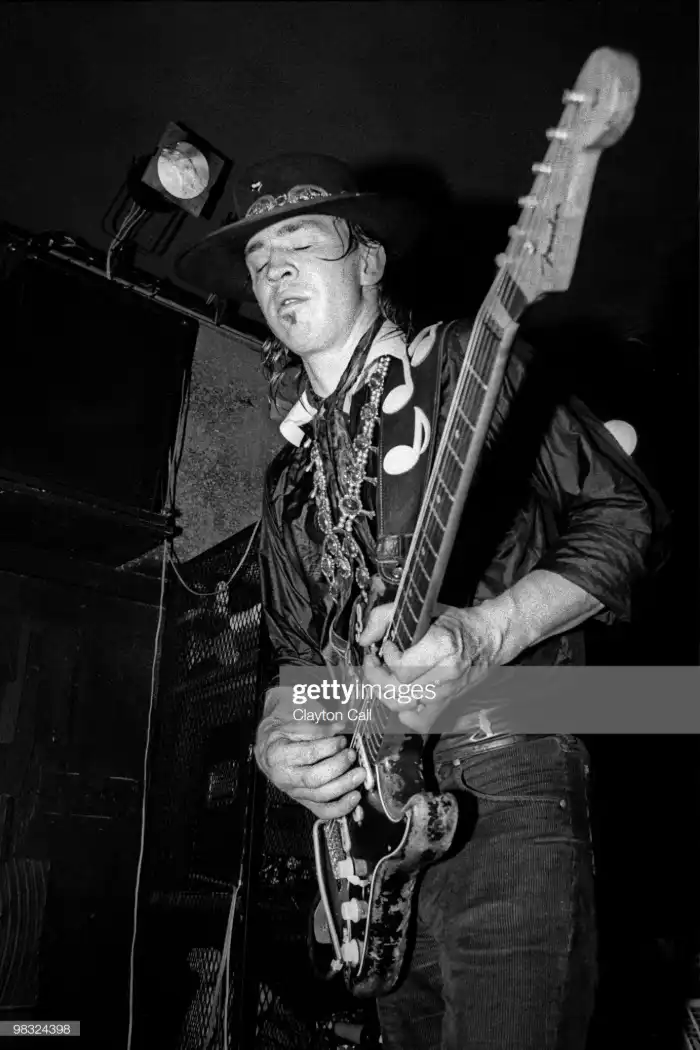
August 19, 1983 — Keystone Berkeley (photo by Clayton Call/Redferns). Several images show “Number One” being thrown to the ground. In one, Stevie appears concerned about the headstock; near the nut, what looks like insulating tape is visible. The tremolo arm lacks a tip, the switch tip is white, and the pickguard carries no stickers.

August 21, 1983 — The Keystone, Palo Alto, California (photo by Tim Mosenfelder/ImageDirect). What appears to be insulating tape is still visible on the headstock near the nut. The guitar still features a black pickguard with no stickers.
October 22, 1983 — Brendan Byrne Arena, East Rutherford, New Jersey (photo by Ebet Roberts/Redferns). What appears to be insulating tape is still visible on the headstock near the nut. The guitar still features a black pickguard with no stickers. No patent numbers are visible, and the tremolo arm lacks its tip.
October 22, 1983 — Brendan Byrne Arena, East Rutherford, New Jersey (photo by Ebet Roberts/Redferns). Small “SRV” stickers are visible on the three-ply black pickguard; the tremolo arm lacks its tip.
November 1984 — Warfield Theatre, San Francisco (photo by Clayton Call/Redferns). The insulating tape is no longer visible on the headstock, and the cigarette burn is absent—possibly indicating a different neck. This may suggest a break in the original headstock, as later reported by Mike Eldred.
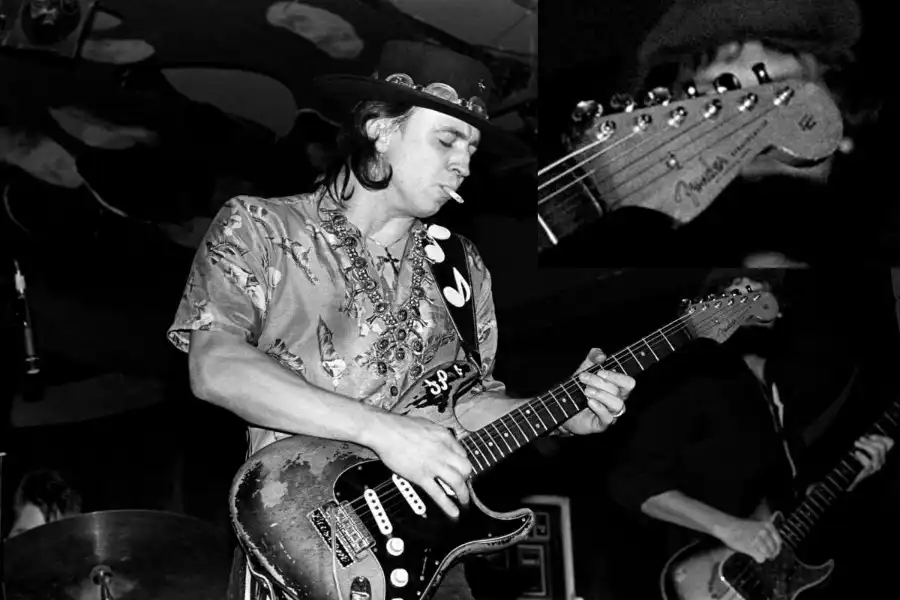
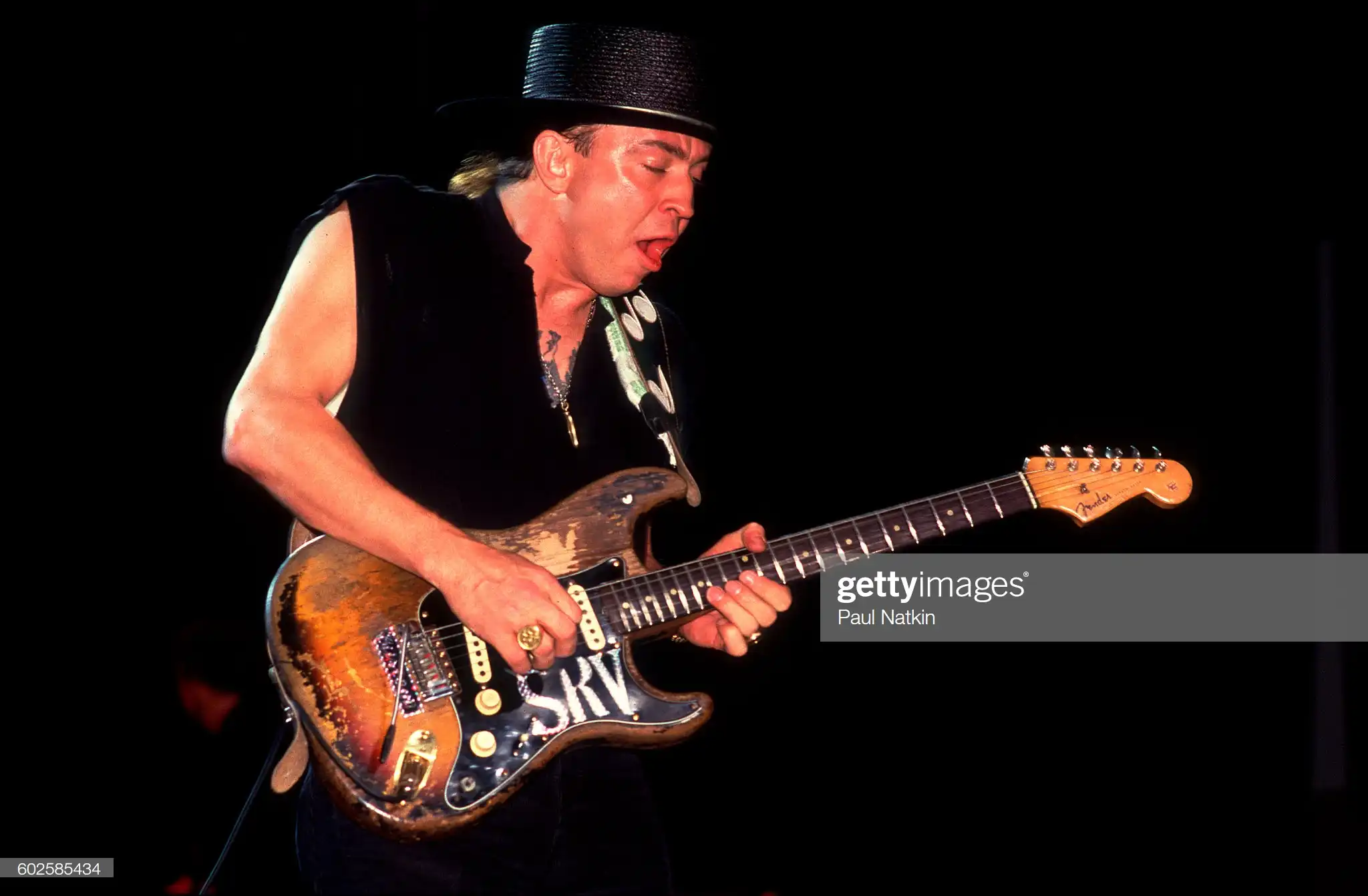
September 1, 1986 — Saratoga Performing Arts Center, Saratoga Springs, New York (photo by Paul Natkin/Getty Images). No cigarette burn is visible on the headstock. The decals are present, including the “Original Contour Body Pat. Pend.” marking, and—unlike in the October 22, 1983 photograph—the patent numbers are also visible. The three-ply black pickguard now carries a large reflective “SRV” sticker, and the tremolo arm features a black tip. The “SRV” sticker on the upper horn is nearly worn away, and the second tone knob is absent. This configuration may suggest the use of a different neck, possibly from the “Red” Stratocaster.
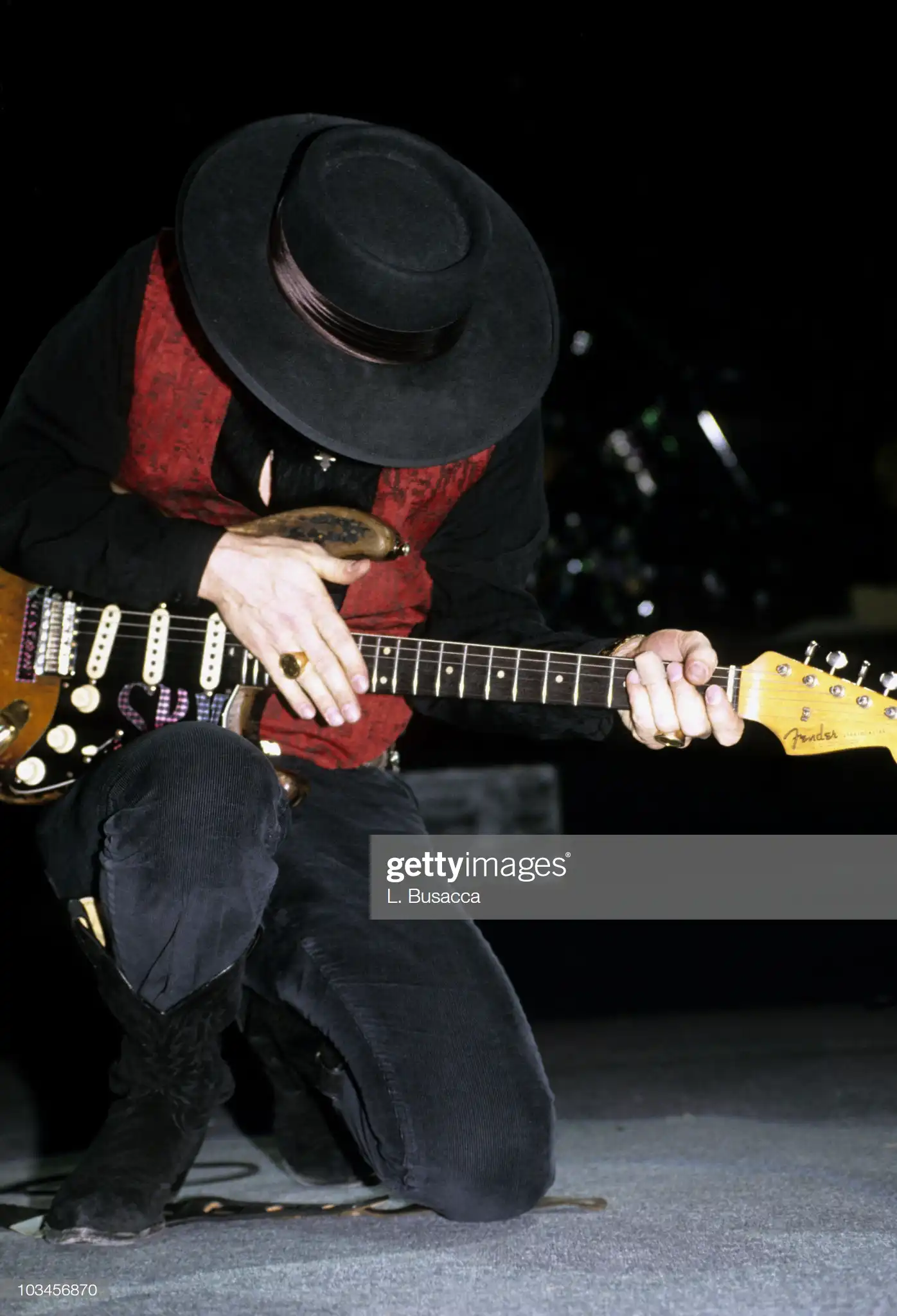
November 1989 — New York (photo by Larry Busacca/WireImage). No cigarette burn is visible on the headstock, though patent numbers are present. The upper-horn “SRV” sticker has fully disappeared, while a large reflective “SRV” sticker is visible on the pickguard.
Advertisement

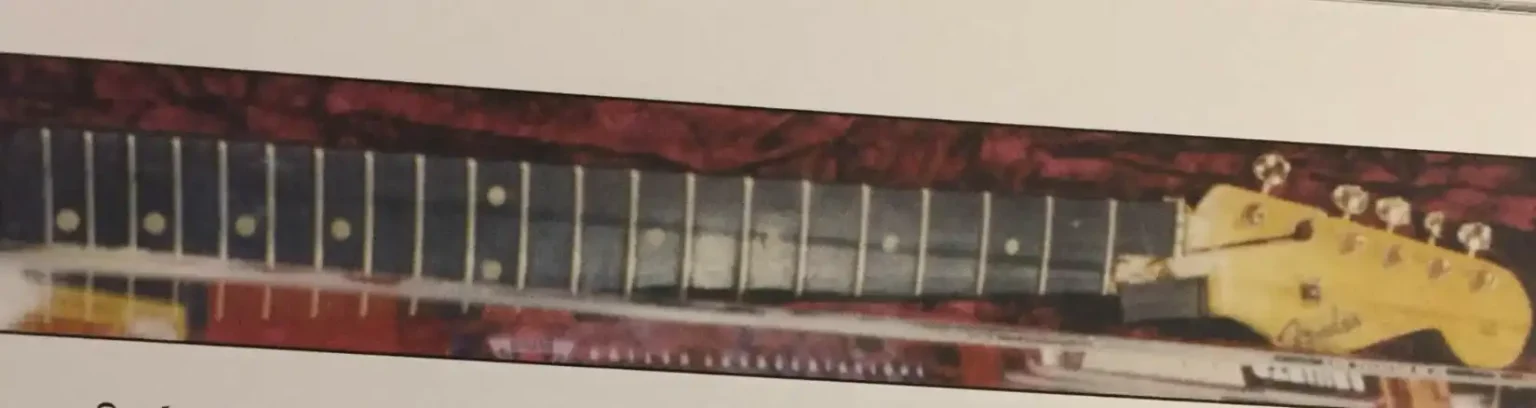
Mike was likely referring to the well-known accident at the Garden State Arts Center in Holmdel, New Jersey, on 7 July 1990, 51 days before Stevie’s death. A stage set piece for the New Jersey Symphony Orchestra (over 20 feet long), which had been leaned against the side of the stage, fell onto a dolly, snapping the neck of Number One. “It looked like a Steinberger,” René recalls.

However, Martinez stated in an interview with Music Radar that the damaged neck was not the original one: “The neck that was broken wasn’t the original Number One neck—I had put that aside to eventually fix, although I never got the time to do that before he died.” 

Indeed, in that interview, René Martinez recalls that the Number One neck had become unusable due to the number of refrets it had undergone. For this reason, he decided—together with Stevie—to remove it and temporarily fit another neck, allowing the entire fretboard of the original neck to be replaced more easily. On this basis, the neck destroyed in the accident would not have been the original “Number One” neck.

This interpretation is further supported by photographic comparisons: when the broken neck shown in Craig Hopkins’s book is compared with early-1980s images of Number One, the distinctive cigarette burn is not present.

Some have suggested that the replacement neck may have come from the “Red” Stratocaster, since in 1986 Stevie reportedly fitted a new left-handed neck to that guitar, while around the same period the three patent numbers also reappeared on the headstock of Number One. 

René did not want to attempt the complex repairs required by the original Number One neck while on tour. Following the Garden State Arts Center accident, Stevie, René, and tour manager Skip Rickert stopped at Manny’s Music in Manhattan, where Stevie picked up a ’64 Sunburst Stratocaster to complete the tour. However, Stevie reportedly never particularly liked that guitar and instead relied quite heavily on “Butterscotch” and “Lenny” during that period. He also used the vintage reissue owned by his bus driver, Mike Hall, on stage a couple of occasions.

René subsequently ordered a new neck from Fender, which Stevie would later use in his final concerts.

So, around the mid-1980s, “Number One” likely underwent one or more neck changes. However, the neck currently on the guitar is the original one: the worn fretboard, the cigarette burn, the meticulous headstock repair, and the non-original decals all appear to match.

Indeed, René did not have time to repair the neck due to Stevie’s untimely death, but—as he later stated—he fitted it back onto the guitar only after the guitarist had passed away.


The damaged neck following the accident at the Garden State Arts Center. No cigarette burn is visible, indicating that this is not the original “Number One” neck (photo from Craig Hopkins, Stevie Ray Vaughan: Day by Day, Night After Night – His Final Years, 1983–1990)
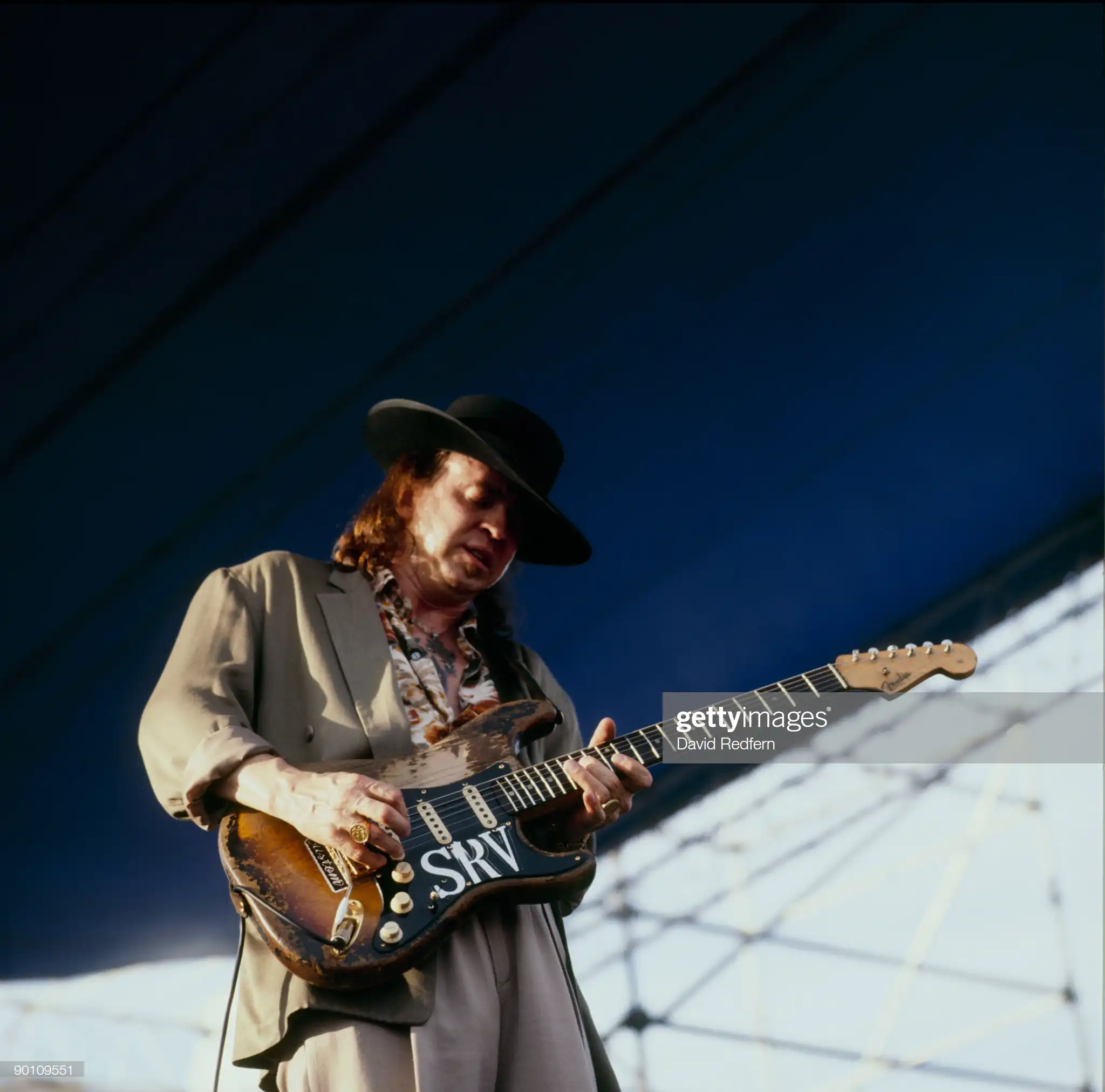
May 6, 1990 — New Orleans Jazz & Heritage Festival, New Orleans, Louisiana (photo by David Redfern/Redferns). René Martinez stated that this is not the original neck; it is the one that would later be damaged at the Garden State Arts Center on July 9, 1990. The guitar features a one-ply black pickguard with large white “SRV” lettering.
Replacement neck following the accident at the Garden State Arts Center. No cigarette burn or patent numbers are visible. The “Original Contour Body” decal appears without the “Pat. Pend.” marking. The guitar features a one-ply black pickguard with a newly styled white “SRV” sticker.
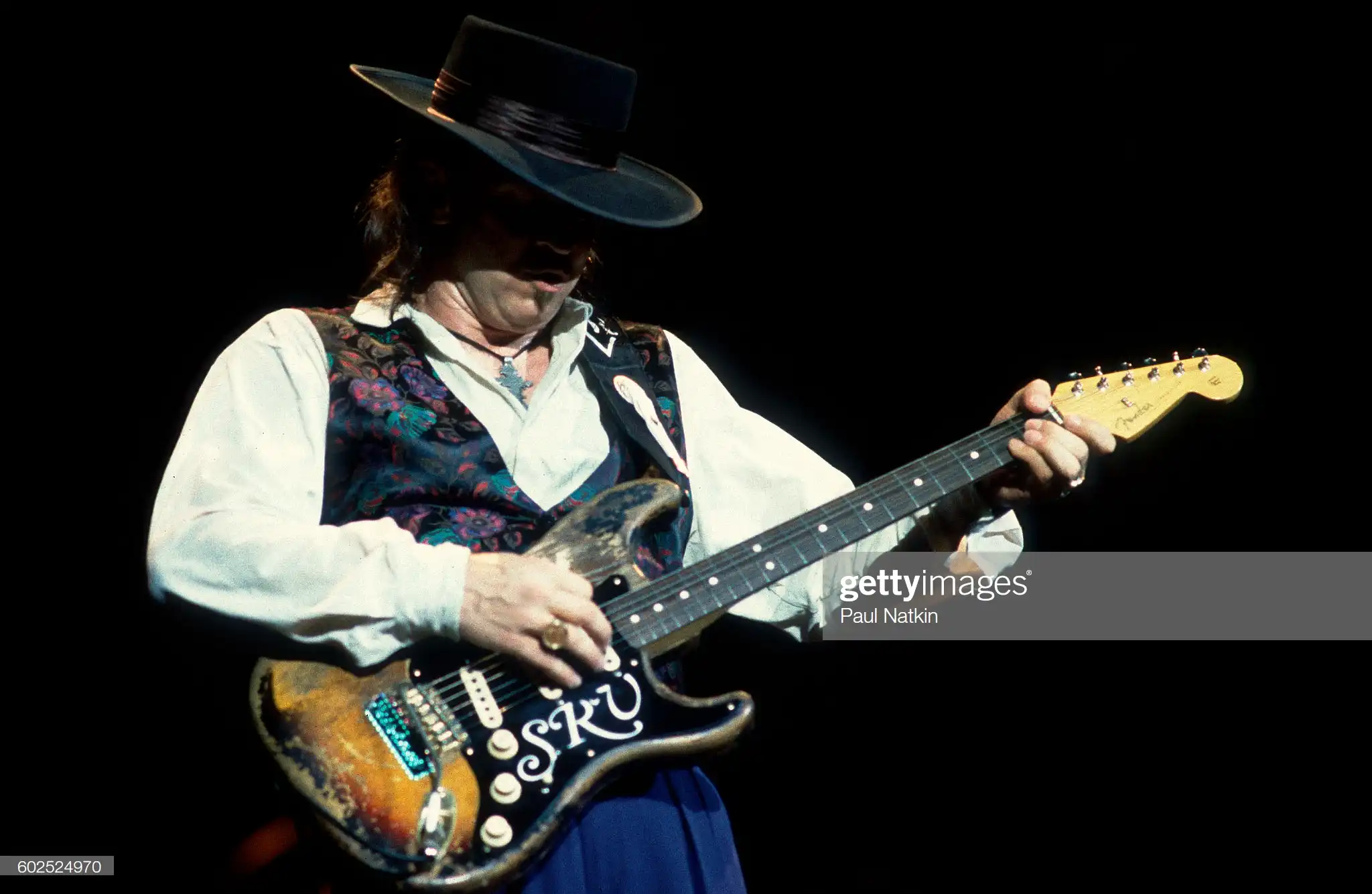
August 25, 1990 — Alpine Valley Music Theatre, East Troy, Wisconsin (photo by Paul Natkin/Getty Images). Vaughan’s penultimate show. Replacement neck: no cigarette burn or patent numbers are visible, and the “Original Contour Body” decal appears without the “Pat. Pend.” marking. The guitar features a one-ply black pickguard with a newly styled white “SRV” sticker.
Advertisement
advertisement

The Number One Replica Project

In November 2003, Fender announced that it would produce 100 replicas of Stevie Ray Vaughan’s Number One, following a detailed examination carried out by a Custom Shop team comprising Richard McDonald, George Blanda, and Mike Eldred.
On September 8, the group traveled to Austin, Texas, to meet Jimmie Vaughan, with the aim of inspecting Stevie’s guitar in the finest detail—from pickup windings to its weight and the wear patterns in the wood.

“We will be able to painstakingly reproduce Number One in every way, shape, and form,” Eldred stated, adding: “The only thing we can’t replicate is his playing—Stevie’s mojo is not included!”

Richard McDonald and Jimmie Vaughan inspecting the “Number One” Stratocaster in 2003

The 100 Stevie Ray Vaughan Limited Edition Custom Shop Stratocasters, known as “Number One Replicas,” were meticulously crafted by Master Builder John Cruz, who had previously worked on the relic Rory Gallagher Tribute Stratocaster.

“George, Mike, and Richard came back from Austin with all that data and made copies for me,” Cruz recalls. “I watched the tapes diligently, over and over. I completely absorbed myself, very deeply, in every detail of the tapes, photos, notes, and specs. I really had to think about how we would get that finish to look just like the original, and that is where my experience with the Rory Gallagher project really came in handy. That guitar was worn and mutilated as well.”

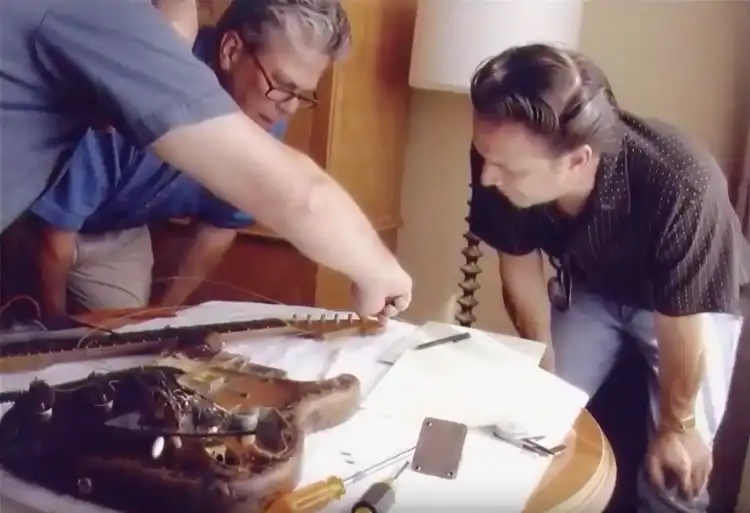
Mike Eldred and John Cruz working on the “Number One” Replica

After analyzing videos, photographs, and notes compiled by McDonald, Blanda, and Eldred, Cruz was struck by the neck profile. Contrary to widespread assumptions, it was not exceptionally large, but rather only slightly thicker than the classic early-’60s Oval “C” shape. It was also evident that the fingerboard had undergone multiple refrets and had become noticeably flatter than that of other early-1960s Stratocasters.

Cruz stated that this guitar, which he completed over approximately six to seven months, likely represented the pinnacle of his career at Fender.

Unlike other limited-edition Stratocasters, the instruments were not numbered sequentially from 1 to 100, but instead followed John Cruz’s standard numbering system, which was independent of the model being produced. It is believed that the first of the 100 “Number One” replicas bore the designation JC044, while the last was JC229, and that Jimmie Vaughan acquired three examples.
Unveiled in January 2004, all Number One Replica Stratocasters were pre-sold at $10,000 each, according to The Tone Quest Report.

The Number One Replica
Advertisement
Advertisement

Lenny: History and Fender Tribute Strat

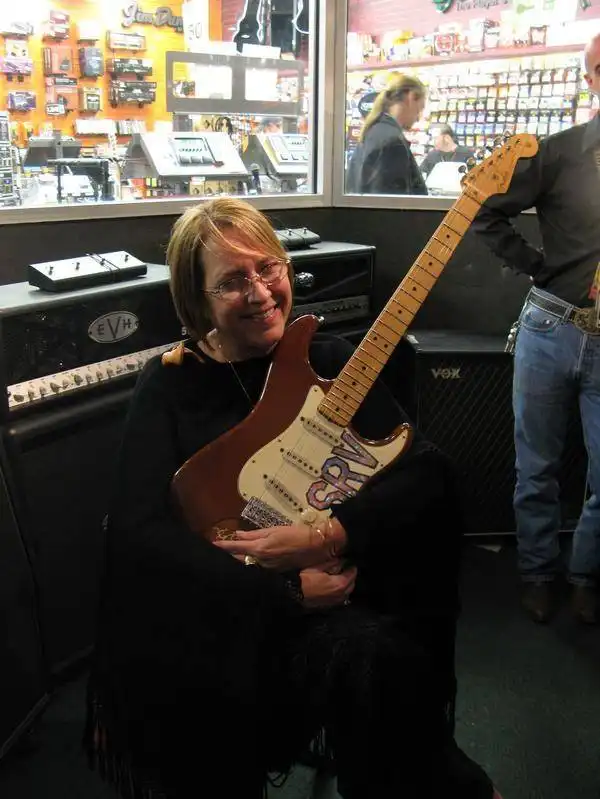
Lenora and Lenny
Lenora and Lenny

In 2007, Fender Custom Shop Master Builders produced 235 replicas of the 1965 Stratocaster that Stevie Ray Vaughan affectionately called “Lenny,” in honor of Lenora Bailey, the guitarist’s wife from 1979 to 1988.

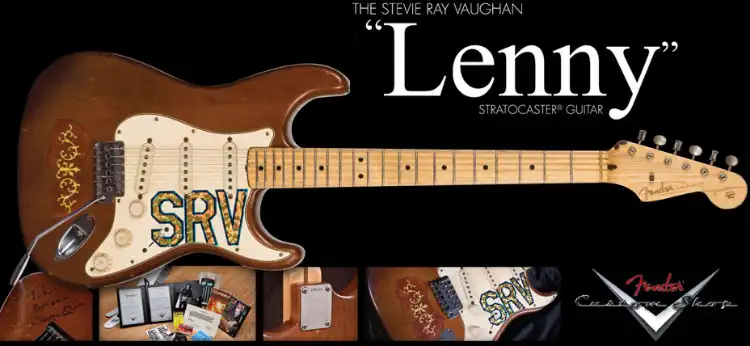
Originally, Lenny was a sunburst Stratocaster that had been amateurishly refinished in a dark reddish natural hue, with a distinctive floral inlay near the bridge.

At the time, still largely unknown, Stevie first noticed the guitar in an Austin shop and was immediately drawn to it, but he could not afford the $350 asking price. His wife, together with seven of his friends, pooled their money and surprised him with the instrument on October 3, 1980, for his 26th birthday.
That same night, while Lenora was asleep, Stevie Ray Vaughan composed the beautiful and now-famous Lenny.
“I found it at a pawnshop and didn’t have the money to buy it, and my wife and several other friends of mine put a pool together and bought the guitar. It’s always meant a lot to me. And I love what it sounds like. Riviera Paradise and Lenny are both played on the same guitar, and for some reason that guitar works for songs like that more than anything else,” Stevie said in an interview published in Guitar Player in 1990.
“For me, it was so beautiful that it was really hard to listen to him play that song,” Lenora said. “I had to go to the bathroom because I’d cry every time he played it.  It wasn’t a sad cry; it was a loving cry.”

Stevie replaced the original neck, which featured a rosewood fingerboard, with a Charvel maple neck originally made by Mike Eldred—prior to his tenure at Fender—for Billy Gibbons. Around the same period, he applied the “SRV” sticker to the pickguard.
The autograph of Mickey Mantle, the legendary New York Yankees player who met Stevie at a concert in April 1985, stood out on the back of the body, while Stevie Ray Vaughan’s signature was etched on the neck plate.

Renè Martinez modified the tremolo arm so that Stevie could pull up as well as push down on the bar, facilitating the expressive whammy bends often heard in Lenny.

On June 24, 2004—the same day Eric Clapton’s “Blackie” was auctioned—Guitar Center purchased “Lenny” for $623,500.

On October 8, 2007, Fender announced a limited run of 235 copies of the Stevie Ray Vaughan Lenny Tribute Stratocaster, unveiled on December 12, 2007, at a retail price of $17,000.

“This guitar had very special meaning to Stevie,” Mike Eldred recalls. “He had it throughout his career; he took it everywhere, and during each show, he stopped, sat down on the stage, and played that song, on that guitar. It’s like he was holding on to that very special time before he was a star, and just didn’t want to let that part of his life go.”

Lenny Replica Strat Promo
“Lenny” Replica Stratocaster promotional image

The replicas were all built by Fender Custom Shop Master Builders under the supervision of Jason Smith. “I thought, if this guitar could talk,” Jason said, “what a story it would tell! I just wonder who owned it first? And, how did it end up in a pawn shop? I was a little nervous to even pick the guitar up, let alone take it apart!  It was an honor to work on such a legendary player’s instrument.”

Jason Smith stated that the greatest challenge was reproducing the floral inlay near the bridge and the body contours, which had been further sanded in several areas. “One of the major obstacles to overcome was recreating the over-sanded body perimeter,” he said.  It’s quite difficult to oversand something accurately.”

The strap button on the upper horn was an aftermarket, diamond-shaped unit that had been out of production for a long time; for the “Lenny” Replica, it was reproduced in-house at the Fender factory.
Additional features included chrome-plated brass saddles, an enlarged middle pickup cavity to accommodate a humbucker, and reverse-mounted control pots. The headstock showed clear signs of repair, along with a cigarette burn near the low E tuner and worn string-winder marks.
The guitars were supplied in a hardshell case bearing the word “HURRICANE” on one side and “STEVIE RAY VAUGHAN” on the other. Inside were a copy of the Live from Austin, Texas DVD, a replica of the guitarist’s white shoulder strap, and various additional case accessories.

Advertisement

The Vaughan Brothers Stratocasters

The Vaughan Brothers Stratocasters

In 2018, the Fender Custom Shop honored the Vaughan brothers with 30 Limited Edition Stevie Ray Vaughan Stratocasters and 30 Limited Edition Jimmie Vaughan Stratocasters. All were crafted by John Cruz and inspired by the instruments used by the two Texas bluesmen.
Unlike the Number One Replica—which reproduced the guitar as it appeared at the time of Stevie’s death—this 2018 tribute model captured the instrument as it was in the early years of his career.

The finish was already noticeably worn, and the characteristic cigarette burn on the headstock was already visible. However, the pickguard was not the eight-hole version, but an eleven-hole guard, and it lacked the “SRV” sticker that would define Number One for most of Stevie’s career.
The “Custom” decal at the base of the tremolo was already in place. The white “SRV” sticker on the upper horn—clearly visible in the guitar’s early years—had not yet worn away, as it later did, and was therefore absent on the Number One Replica.
The tremolo was already left-handed, while the hardware had not yet been gold-plated, and the headstock no longer displayed patent numbers, which had worn off early.

Antonio Calvosa
Antonio Calvosa
Antonio Calvosa is a pharmaceutical chemist with a deep passion for electric guitars. He is a former guitarist for Lost Property Office, with whom he won the Italian edition of Emergenza Rock in 2004 and performed at the Taubertal Festival in Rothenburg, Germany. In 2014, he founded Fuzzfaced, a valuable platform for electric guitar enthusiasts, and in 2022, he contributed to the book "Stratocaster: sei corde nella leggenda."
Antonio Calvosa
Antonio Calvosa
Antonio Calvosa is a pharmaceutical chemist with a deep passion for electric guitars. He is a former guitarist for Lost Property Office, with whom he won the Italian edition of Emergenza Rock in 2004 and performed at the Taubertal Festival in Rothenburg, Germany. In 2014, he founded Fuzzfaced, a valuable platform for electric guitar enthusiasts, and in 2022, he contributed to the book "Stratocaster: sei corde nella leggenda."