Made to Perform:
The American Performer Series
AND YOSEMITES PICKUPS
Table of Contents
ToggleOverview
In late 2018, Fender phased out the American Special line and launched its successor, the American Performer Series. The series made its official debut at Winter NAMM in Anaheim, California, in January 2019.
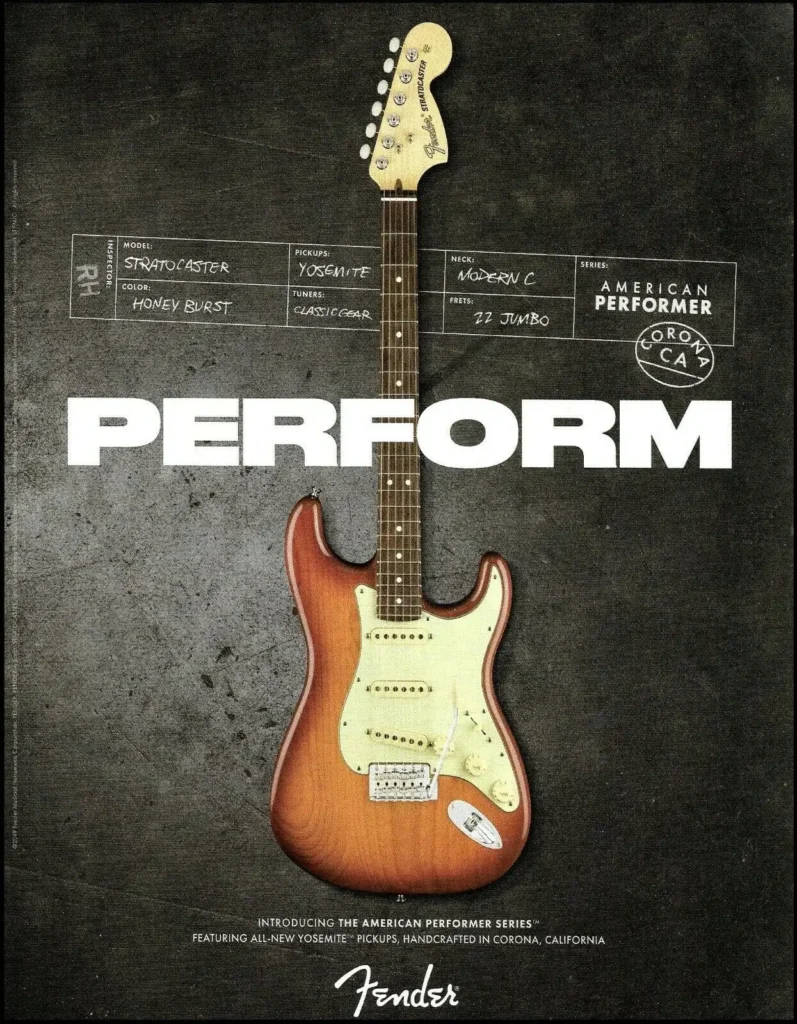
Max Gutnik, Vice President of Fender Electric Guitars and Basses, explained the origin of the name: “The American Performer sets out to make every performance seamless by creating solutions for performers, so they can deliver at their best in the moment.”
The series stood out for its new Yosemite single-coil pickups and the versatile Double-Tap humbucker. The Greasebucket circuit, which acted as both a high-pass and low-pass filter, allowed treble to be rolled off while damping low frequencies, making the tone control far more usable.
Playability and performance upgrades included 22 jumbo frets, a Modern “C”-shaped neck, and a 9.5” radius fingerboard. The new Classic Gear tuners offered an ultra-accurate 18:1 ratio for precise, smooth tuning.
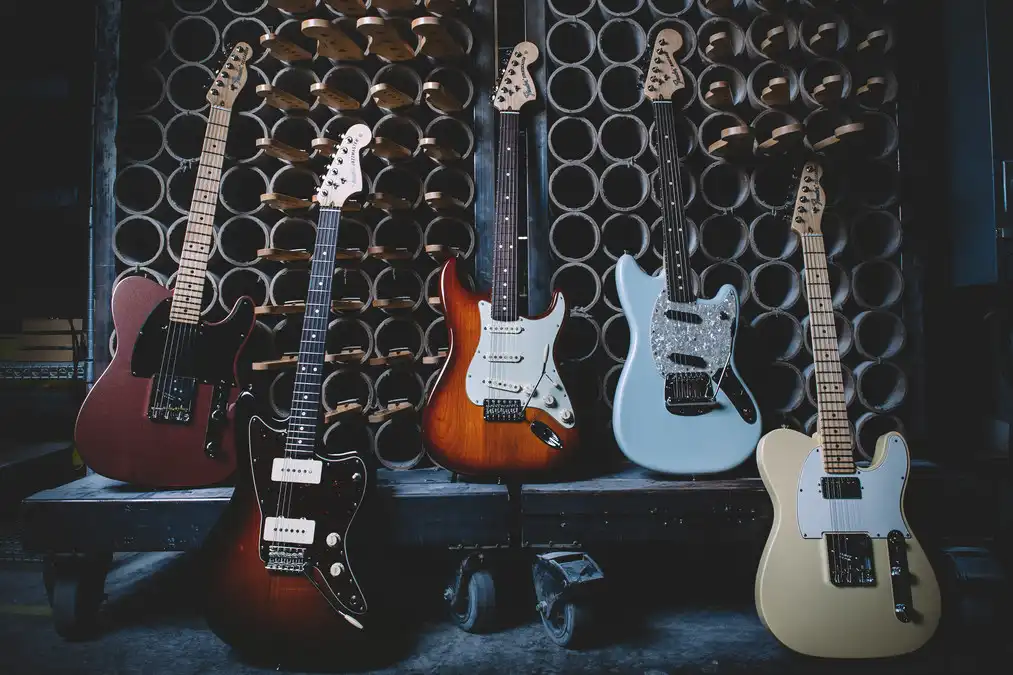
Cosmetic details included satin finishes and gloss colors such as Arctic White, Honey Burst, Penny, and Satin Lake Placid Blue, along with a large ’70s-style headstock with a black Fender logo.
Yosemite pickups
For this new range, the company collaborated with renowned pickup designer Tim Shaw to develop the Yosemite pickups, which feature AlNiCo 4 magnets. Fender describes them as delivering a punchier tone with a faster attack compared to earlier designs.
Tim Shaw, Fender’s pickup engineer, explained that the inspiration for the Yosemite pickups in the American Performer Series began with producer Dave Cobb. Cobb owned a heavily modified Esquire with a problematic pickup and asked Shaw to design something fresh. Shaw had been experimenting with AlNiCo 4 rod magnets whose tonal character sits between AlNiCo 2 and AlNiCo 5:
“For our purposes, AlNiCo 4 is between AlNiCo 2 and AlNiCo 5; it’s got more definition than AlNiCo 2 but less attack than AlNiCo 5. Pickups made with it have a unique voice; there’s a very interesting ‘hi-fidelity’ character, as if you’ve recorded a great guitar with a great rig in a great studio and are playing that guitar sound in real time.”
Tim Shaw

Tim created a custom Tele bridge pickup with AlNiCo 4 and a unique winding pattern, which Cobb liked so much that it ended up on multiple recordings. This design ultimately became the foundation for the Yosemite pickups.
Fender’s Vice President of Product Development, Joey Brasler, joined Tim Shaw for a week of testing prototype pickups, refining windings, and shaping the tonal identity of each instrument. Every guitar in the lineup received its own dedicated pickup set, with each featuring at least one unit built around AlNiCo 4 magnets.
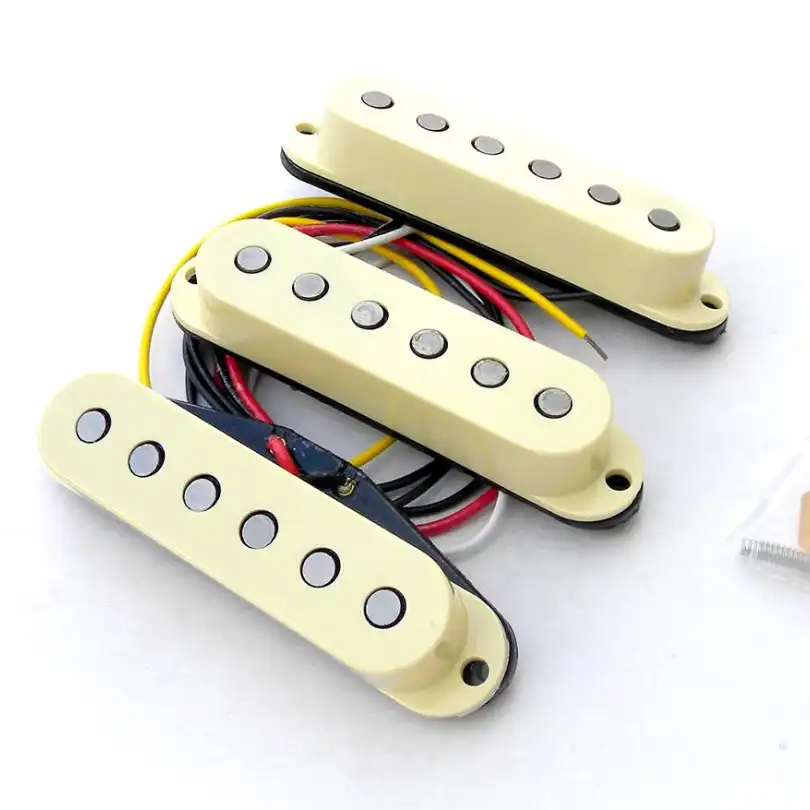
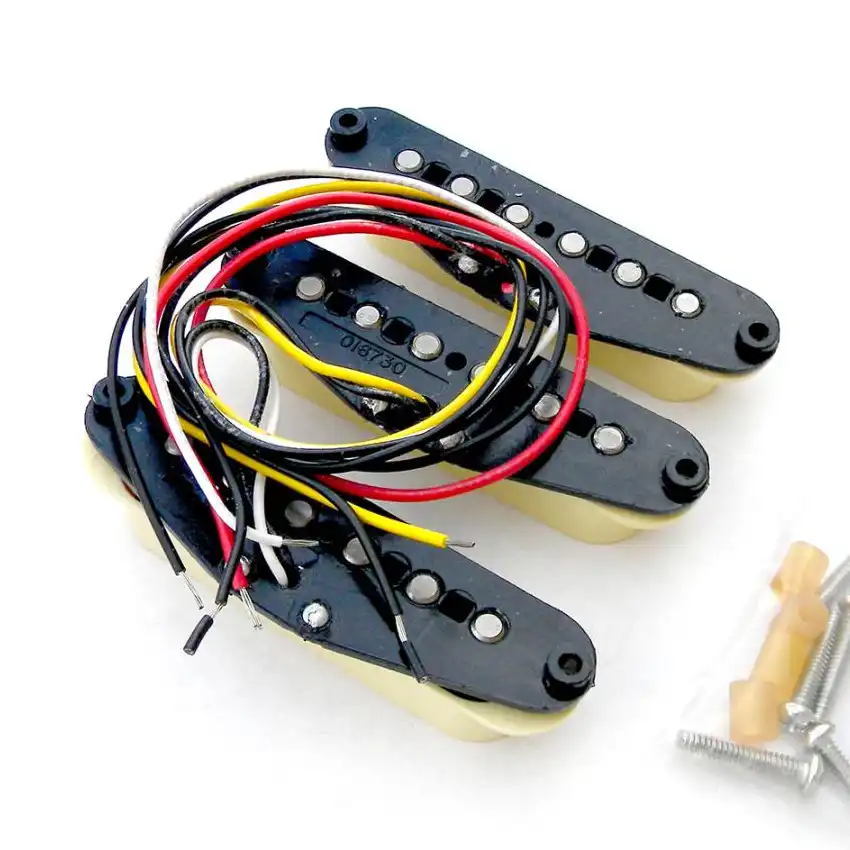
In particular, Yosemite Single-Coil Strat pickups used a combination of AlNiCo 2 magnets in the bridge position and AlNiCo 4 magnets in the neck and middle positions.
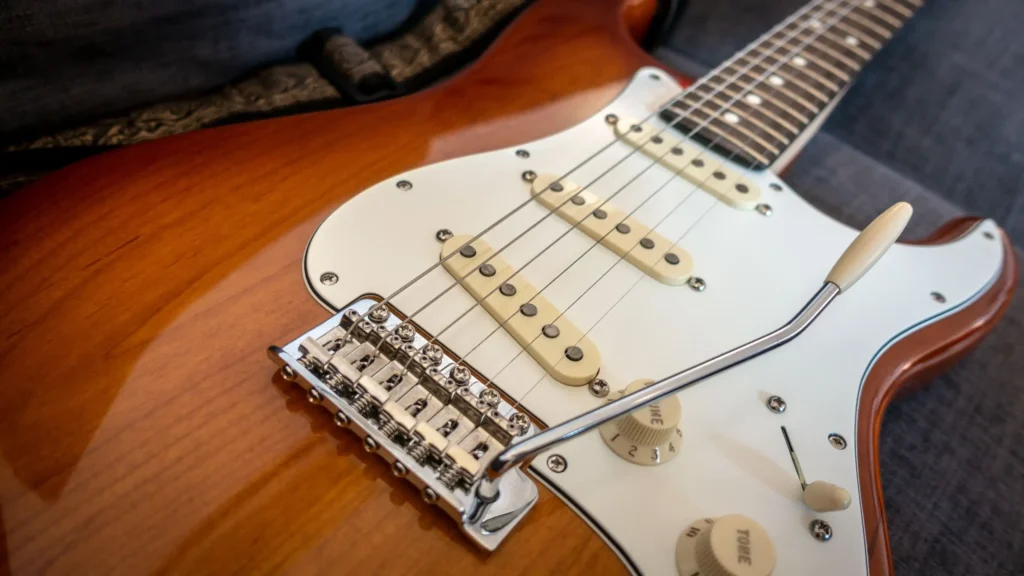
They were designed with flat pole pieces for consistent string response and increased output, and used plain enamel-coated wire, resulting in a clear and articulate tone. Each coil was treated with a thin shellac coating that stabilized the coil while moderating microphonic resonance, ensuring reduced feedback without restricting dynamic response. The reverse-wound, reverse-polarity middle pickup provided effective hum cancellation in positions two and four while preserving single-coil tonal integrity.
“Leo Fender’s workers dipped pickups in wax,” explained Tim Shaw. “But in the 1960s, many Fender pickups were dipped in shellac instead of wax, and the specific reason for that is long lost. Wax-dipped pickups are ready for production use as soon as they’re cool enough to handle, while shellac has a drying time, and that may help explain why Fender has continued to use wax most often. To my ear, shellac ‘breathes’ more than wax does; the pickups are a bit more responsive with shellac than they are with wax, and that’s an important component of the sound of the Performer Series pickups.”
DC Resistance
Neck: 7.8 K Ohms
Middle: 8.5 K Ohms
Bridge: 8.9k K Ohms
Inductance
Neck: ~3.1 Henries
Middle: ~3.53 Henries
Bridge: ~3.86Henries
Magnet Type
Neck: Alnico 4
Middle: Alnico 4
Bridge: Alnico 2
On the single-coil-only American Performer Stratocaster, players can use the push-pull pot to add the neck pickup to their tone quickly and easily, regardless of the position of the pickup selector switch.
The Double-Tap Humbuker
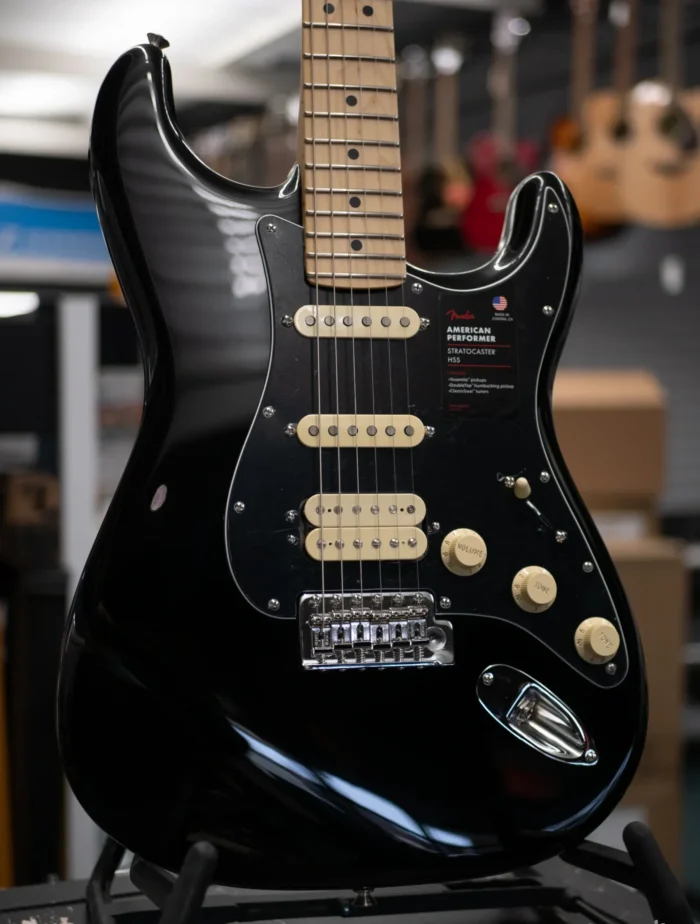
The American Performer Stratocaster HSS featured the DoubleTap push-pull pot system, developed with Shaw, which allowed players to switch effortlessly between humbucker and single-coil modes without losing volume.
This design maintained a balanced output and a strong tone in both full and split modes.
“Another thing that we have on the humbucking instruments is the double tap, which enables you to get a real single coil sound when you split the coil,” explained Justin Norvell, Senior Vice President of Products.
“A lot of people with a humbucking pickup like to be able to split the coil. But when you do, you actually have a very weak single coil. So, what the double tap does is it actually boosts the coil to be a full-sized single coil when you’re in single coil mode.”
Tim achieved this by intentionally overwinding one of the coils rather than using two identical ones.
When split, the stronger coil operated independently, maintaining the single-coil mode full-bodied and powerful while avoiding the volume drop and thinness that typically accompany coil-splitting.
Made to Perform
The “Made to Perform” slogan for Fender’s American Performer Series emphasized both practical function and aspirational identity for musicians.
- Focus on performance
- Fender highlighted that these guitars were designed for actual playing, on stage and in the studio, rather than just for display or casual use.
- The instruments featured reliable hardware, versatile pickups, and modern playability to support live and recorded performances.
- Affordability and professional features
- The series bridged the gap between higher-end American models and more affordable options, showing that players did not have to pay top-tier prices to get a stage-ready guitar.
- Features like Texas Special pickups, Greasebucket tone circuits, and jumbo frets were all “pro-level” touches.
- Brand messaging
- The slogan reinforced Fender’s image as a company that created tools for serious musicians, while keeping the instruments approachable.
- “Made to Perform” signaled intentional design and reliability, appealing to players who wanted both quality and value.
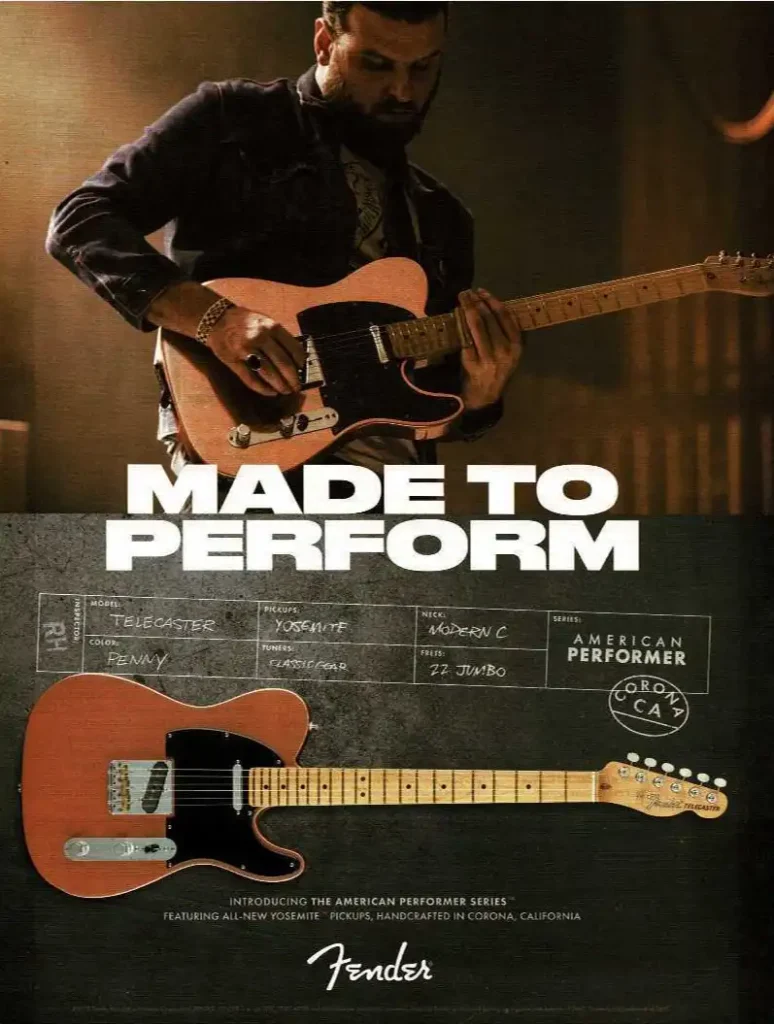
A notable example of this campaign was the video featuring artist Cautious Clay, which showcased how the American Performer Series instruments supported live performances. The video highlighted the series’ features tailored for musicians who required reliable and expressive instruments on stage.
In short, “Made to Perform” was a marketing promise: these guitars were crafted to handle the demands of real-world performance, not just look good in a catalog.
