Brand new again:
The American Vintage II Series
FENDER’S RETURN TO YEAR-SPECIFIC REISSUES
Table of Contents
ToggleWhy Fender Returned to Year-Specific Reissues
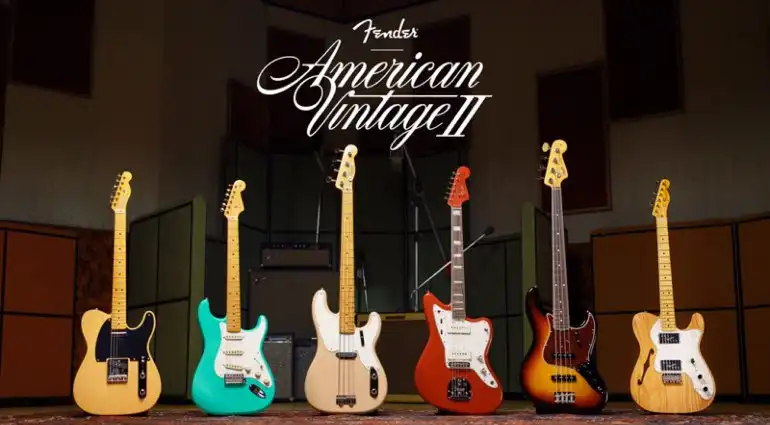
On 11th October 2022, Fender announced the American Vintage II Series, an electric guitar and bass line paying tribute to Leo Fender’s revolutionary designs that changed the course of popular music forever.
To be honest, the name “American Vintage II” led to confusion because the term “second series” was already in use when Fender refreshed the American Vintage Series in late 2012.
The fascination with vintage eras was as prominent in 2020s culture as it had ever been. Classic songs re-entered the charts decades later due to the rise of Spotify, YouTube, and TikTok, and people were drawn to the vintage look. They were constantly looking to satisfy their nostalgia.
This demand even extended to vintage instruments: if there was one thing guitarists love more than new guitars, it was old guitars. With genuine antique sought-after Fender instruments so rare and insanely expensive, the Custom Shop had been getting more and more requests to build brand new guitars as close to the vintage specifications and aesthetics as possible. Still, even Custom Shop guitars were priced out of reach for most players.
So, Fender always felt the need for vintage-inspired, high-quality US-produced guitars that were more affordable than those manufactured in the Custom Shop. The Fender American Vintage II Series followed the previous successful Fender US-made instrument lines, celebrating iconic models through the decades, a path first taken in 1982 with the introduction of the Vintage Series. With period-accurate specs and aesthetics, these instruments and basses were designed for players who loved vintage instruments but were produced with modern technologies that ensured uniform build and feel.
After the American Original line launched in 2018, highlighting features of a particular decade, many people wanted Fender to go back to year-specific reissues. Fender had to consider whether to try the same models again or take on something different.
Research and Archives
Justin Norvell, Executive Vice President of Product, FMIC, said that two years before, when they were conceptualizing the AVII to replace the American Original Series, they wanted to change the vintage line and expand it into some new things that they hadn’t done before, and pick some different years that they thought were cool.
To decide on which years to produce, Fender drew from a “huge cauldron of information” from Custom Shop Master Builders, collectors with vintage models, and former employees from the ‘50s and ‘60s, opting for 1957, 1961, and 1973.
Fender electric guitar research and design team, headed by Steven Thomas, Director of Guitar R&D, Richard Siegle, Director of Branding and the Fender Academy, and Justin Norvell, dug through the company’s archive of original drawings and designs dating back to the original Fullerton factory. They found detailed notes, including some documenting body woods that changed mid-year. Halfway through 1956, for example, Stratocaster bodies switched from ash to alder. That meant the American Vintage II 1957 Stratocaster needed to be alder, except for the Vintage Blonde finish.
“We realized that if we incorporated a little bit more pinch control on the winders, we could more effectively mimic the way pickups would have been hand-wound in the ’50s. It takes a lot of doing to go back in time and sort of uncover the secret-sauce recipes.”
Steven Thomas

The American Vintage II Stratocasters
However, this revamp of vintage-style American Fender instruments was announced as the latest lineup of ‘more accurate’ re-releases from the brand’s history. Still, the Fender American Vintage II Stratocasters, at least apparently, were not too distant from the previous American Original Stratocasters.
At first sight, the most notable difference was that every guitar in the new series sported the vintage-correct 7.25” radius fretboard, whilst American Original Strats featured a modern 9.5” radius fretboard.
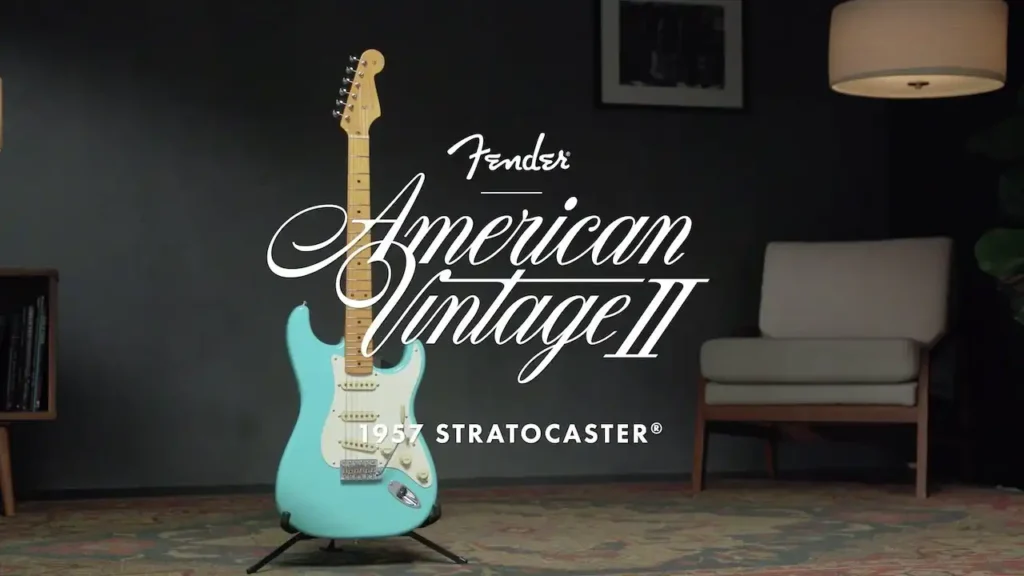
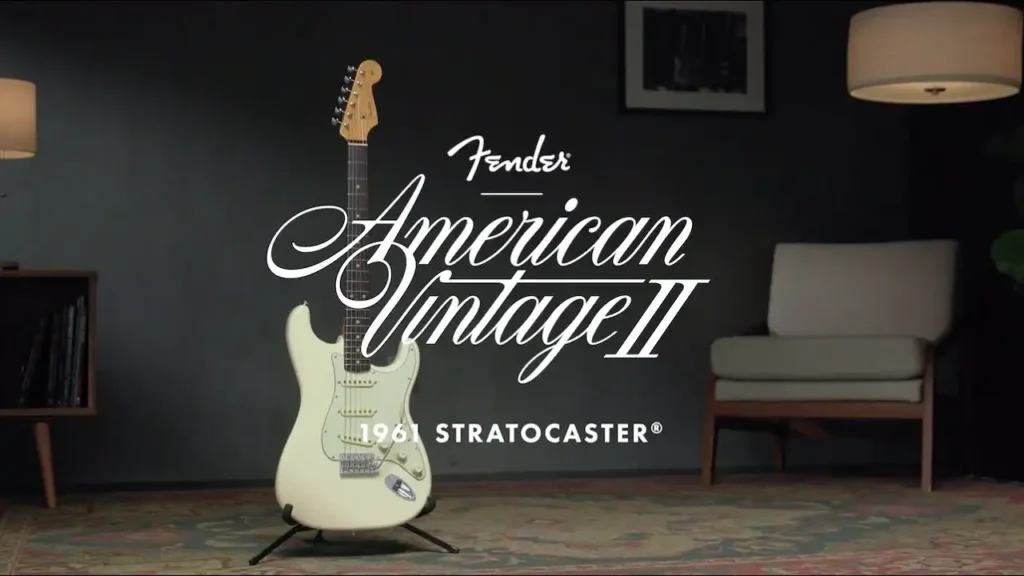
The American Vintage II 1957 Stratocaster and the American Vintage II 1961 Stratocaster featured a 1957 “V” and a 1961 “C” shaped maple neck, respectively, and new, more delicate nitrocellulose lacquer finishes, which take longer to cure and dry, that aimed to mimic a vintage guitar’s paint job, were used for these guitars.
Also, the new ’61 Stratocaster featured a slab rosewood fretboard and the Spaghetti logo, which replaced the round-lam rosewood fretboard and the Transition logo of the American Original ‘60s Stratocaster. Even the most minute details, such as the width of the 12th fret dots and the material used for them, were carefully considered.
Other premium appointments included a vintage-accurate synchronized tremolo with a cold-rolled steel block and bent steel saddles, as well as single-line “Fender Deluxe” tuners.
Also, the return of a ’70s style Stratocaster was noteworthy. Fender decided to make the American Vintage II 1973 Stratocaster because the original ’70s guitars were very underrated.
There were some bad ones, but the designs were solid. The 3-bolt neck design was a great idea, but it was executed poorly; the fixturing was off, so the bolts and two screws didn’t always line up perfectly. But when done right, those guitars were excellent.
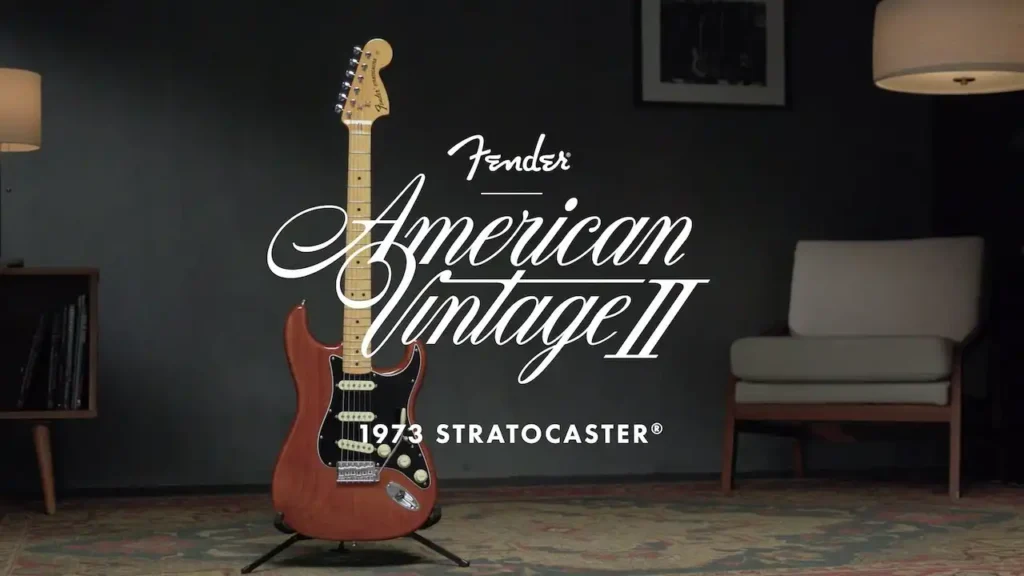
So, AVII 1973 Stratocaster was not a copy of the ‘70s guitars; it was a refinement of the designs. With the combination of CNC and handwork, FMIC achieved a level of quality comparable to the best vintage examples.
“Over the years, I had many conversations with Dan Smith and George Blanda about how the three-bolt neck design was a great idea but was executed poorly; the fixturing was off, so the bolts and two screws didn’t always line up perfectly. But when done right, those guitars are amazing.”
Richard Siegle

The guitar featured an ash body with a gloss polyurethane finish, a maple or round-laminated rosewood fingerboard, and a 1973 “C” shaped maple neck. Other features included a large headstock with two string trees, vintage-style “F” stamped keys, the bullet truss rod nut, and the 3-bolt neck plate with Micro-Tilt.
However, it was not a strict reissue because the bridge was not the vintage-correct CBS-style die-cast bridge. In fact, Fender didn’t want to spend money re-tooling a bridge that most people thought was inferior and was often switched out. Hence, they used a pre-CBS style bridge with bent steel saddles for this model, opting for playability, quality, and tone over authenticity.
In March 2025, Fender launched the American Vintage II 1965 Stratocaster. Allen Abbassi, Fender’s Director of Product, explained the significance of 1965:
“Dylan going electric, civil rights, Vietnam, Leo Fender sold the company to CBS. There were still guitars built the old Fender way. A defining feature is the small headstock paired with a new, large gold logo. You don’t see a lot of vintage models with the small headstocks and the larger ’70s logo in gold. It’s a really cool look.”
Allen Abbassi
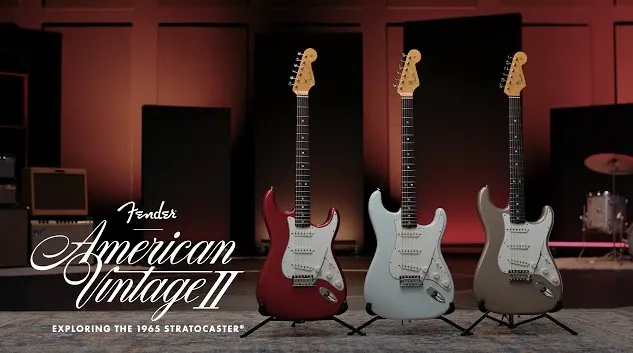
The American Vintage II 1965 Stratocaster faithfully recreates the transitional features of that year. Beyond the large Transition logo in gold on the small headstock, the guitar features a round-laminated rosewood fingerboard, Pure Vintage ‘65 Gray-Bottom pickups, and a 1965 “C” neck shape, preserving the distinctive feel and tone that defined mid‑1960s Strats.
This addition completes the AVII lineup, offering players a precise representation of a pivotal year in Fender history, bridging the late ‘50s innovations and early ‘70s refinements.
“The iconic models in the American Vintage II Series are a near 1:1 comparison with their original predecessors. Today they are built with precise, modern manufacturing processes that weren’t available in the past.”
Justin Norvell
“These original guitars and basses,” said Justin, “have long been coveted by avid players and vintage enthusiasts around the world for their aesthetic and tone that inspired some of the greatest music and most-identifiable guitar and bass lines of all time. Whether you’re after nostalgic guitar sounds in the studio, or a vintage-style instrument that can withstand the demands of the road, the American Vintage II Series harnesses the best of Fender’s legacy and craftsmanship so modern musicians can innovate today’s soundscapes.”
“Music Never Dies” and the pop-up event
The launch of the flagship American Vintage II Series was supported by an advertising campaign conceived by creative agency McGarrah Jessee, which included artists celebrating the lasting impact of these iconic instruments and showcasing how vintage sounds and styles continue to inspire new artists. Most notably, Patti Smith, one of the most influential artists from the ‘70s punk rock movement, has lent her voice to ‘Music Never Dies’, a 60-second film featuring a tailored collage of era-specific footage highlighting the enduring passion for music and its cultural impact.
In fact, according to Fender, the American Vintage II Series was not just about replicating these iconic models; it was about recreating the inspiration they generate and sharing that inspiration with a new generation of musicians.
In addition, Fender teamed up with Brothers Osborne, James Bay, and Jeff Beck for special videos that highlighted the influence the vintage instruments have had on their musical journey.
“If you’ve listened to popular music, chances are your favorite songs, guitar solos, and punchy bass lines were played on a Fender [guitar],” said Evan Jones, FMIC CMO. “It’s impossible to count the number of artists who have used these instruments to create some of the most memorable music that has spanned the last 76 years. Built to the original specs, these American Vintage II series models demonstrate both the timelessness and relevance of the Fender brand.”
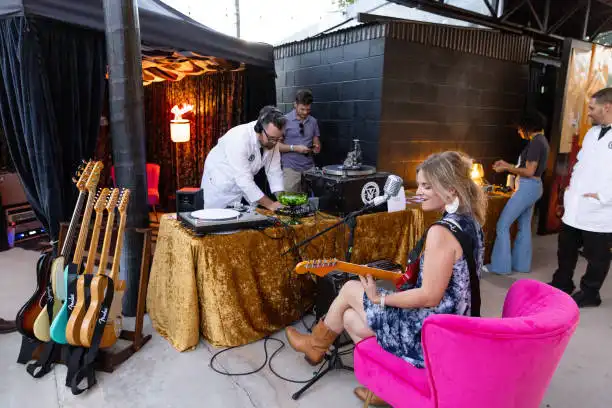
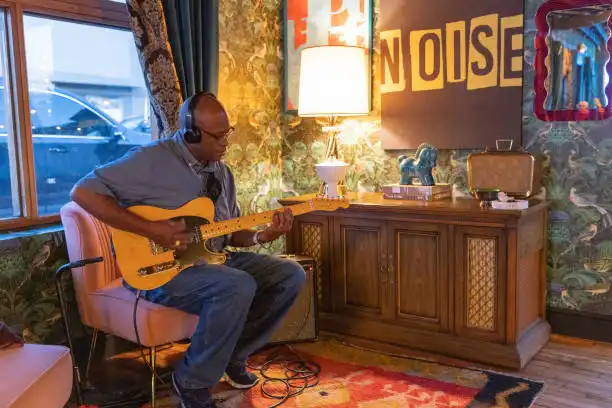
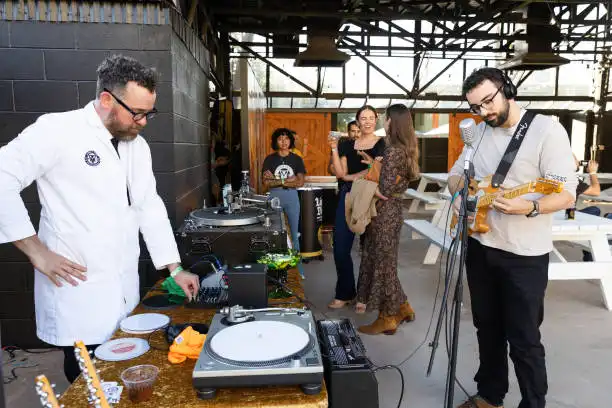
To further amplify the American Vintage II Series launch, Fender hosted an immersive 1950’s themed pop-up event at Volcom Garden in Austin, Texas, on 14th October 2022, to coincide with the Austin City Limits Festival, and guests enjoyed a direct-to-vinyl recording booth, jam sessions, plentiful photo ops and most importantly, the opportunity to purchase an American Vintage II ‘51 Telecaster at its original 1951 price, $229.90 (a fraction of today’s cost!). Fender hosted a second experiential pop-up at the Ba-Tsu Gallery, an event space near Tokyo’s Omotesando Station, on 14th and 15th October 2022, where players could purchase an American Vintage II ‘57 Stratocaster at the original $274.50 ‘57 price.