Legacy and Luxury:
The Strat and other CBS Stratocasters
THE STRAT, THE RHINESTONE, AND THE HENDRIX
Table of Contents
ToggleThe Strat
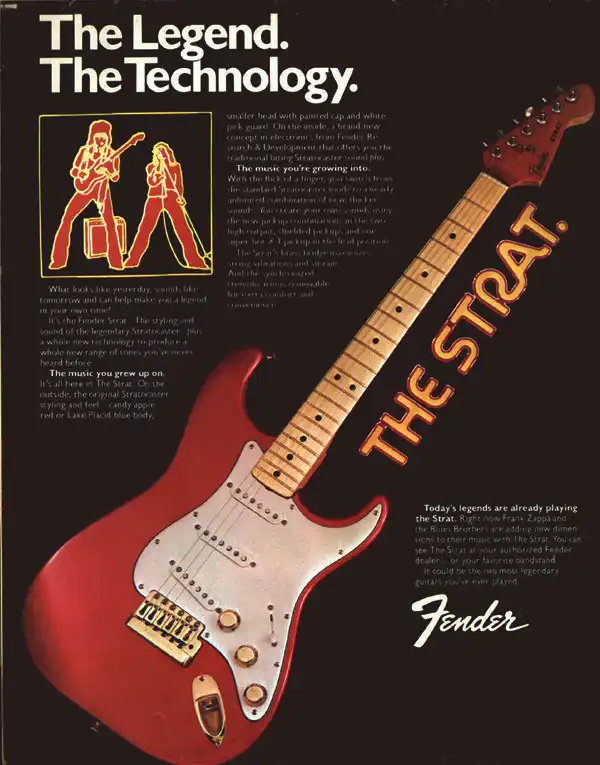
The Strat was presented at the 1980 NAMM as a new model designed by Gregg Wilson, then chief of R&D, with the help of Dan Armstrong. With this guitar, Fender aimed to blend the iconic features that had made its instruments famous with a few modern improvements. Like the Anniversary Stratocaster, it retained the four-bolt neck plate without a tilt neck but introduced a hotter bridge pickup, the X-1, which was later used on the Standard Stratocaster. Additionally, a new circuit allowed for up to nine different sound variations.
The headstock was another distinctive feature of the Strat. Fender decided to abandon the large CBS-era headstock and return to a smaller design. However, it differed from the one used during Leo Fender’s years. Designed by Gregg Wilson, this unique headstock is often described as “atrophied” and not particularly attractive, frequently referred to as the Lead II headstock.
A common belief is that Fender couldn’t replicate the original ‘50s shape because no one had the correct blueprint. However, many people at the time, including Freddie Tavares—the very man who designed it—could have accurately redrawn the original shape. This confirms that the new Strat headstock design was a deliberate choice.
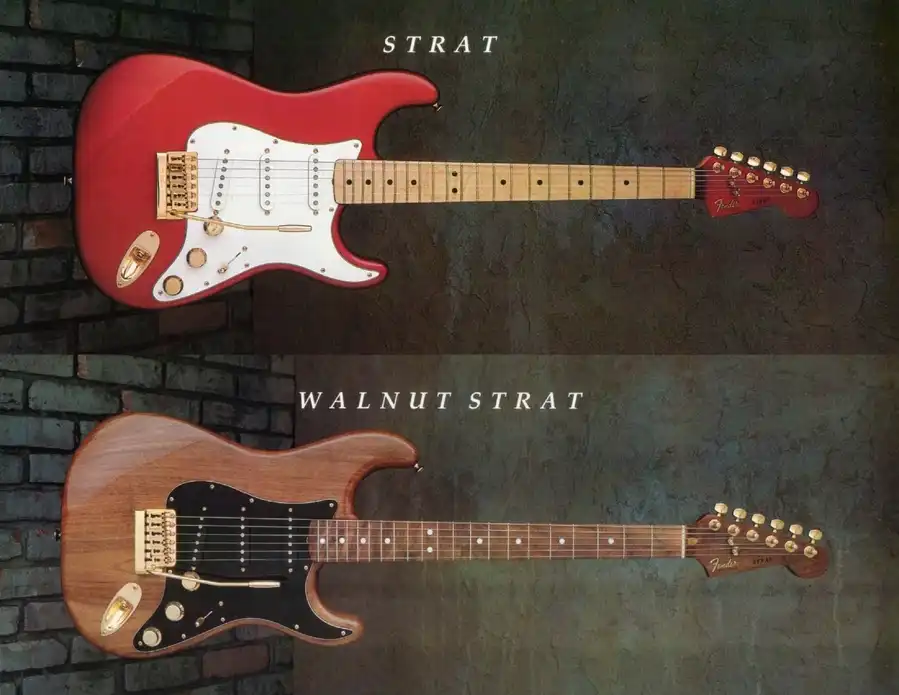
The new guitar’s hardware and knobs were gold-plated brass, following the trend of the time. However, the tuning machines—the Deluxe Schaller Keys—weren’t initially gold-plated. Legend has it that this delay was due to availability issues. However, the numerous changes made to the Strat in 1982, including a new small matching headstock (which no longer looked “atrophied” and became known as the Smith headstock), a new neck plate, a different contour, a new logo, and new finishes, suggest that the delay was a deliberate choice.
Initially, only two finishes were offered: Candy Apple Red and Pacific Blue. However, Arctic White became available in 1981, and many more followed.
It wasn’t an exceptional guitar, but it marked the first time Fender introduced a new Stratocaster line into standard production.
In 1981, Fender released a special edition of the Strat, the Walnut Strat. Its body was made of American walnut, reflecting the growing trend of using exotic woods and the belief that heavier woods improved resonance and tonal quality.
The Hendrix Stratocaster
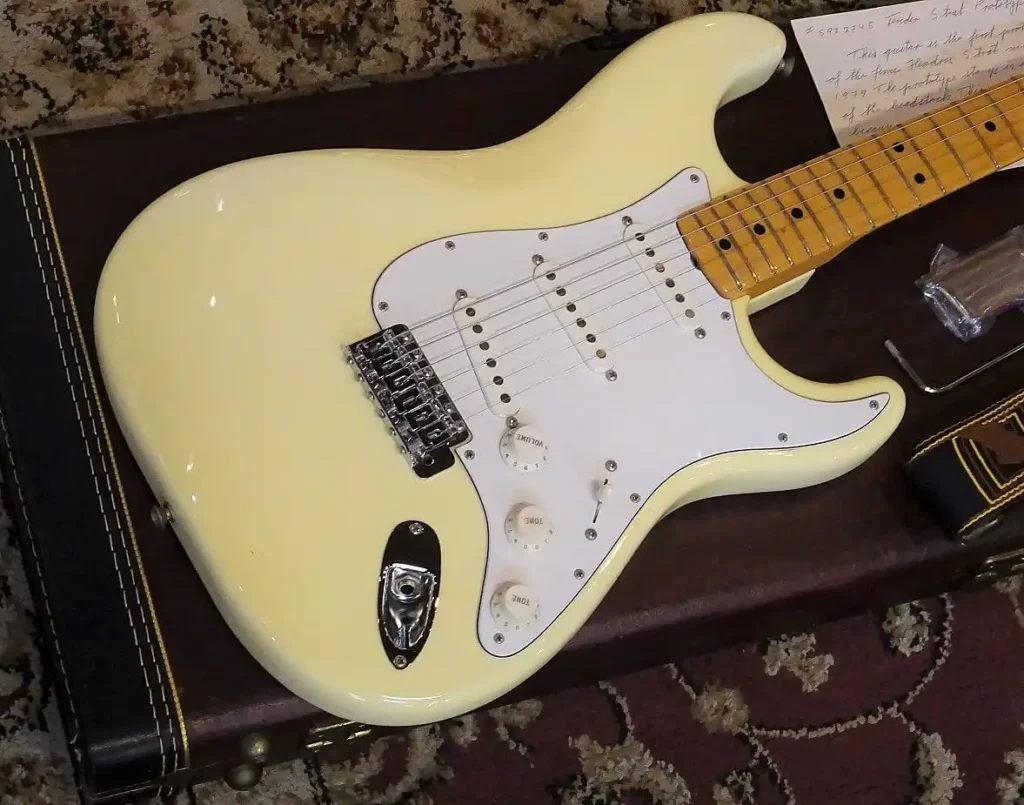
In 1980, Fender also released the Hendrix Stratocaster, a model unrelated to the later versions dedicated to the legendary guitarist. Available exclusively in Olympic White, it was similar to the Anniversary model but featured a reverse headstock and an additional contour on the front of the body.
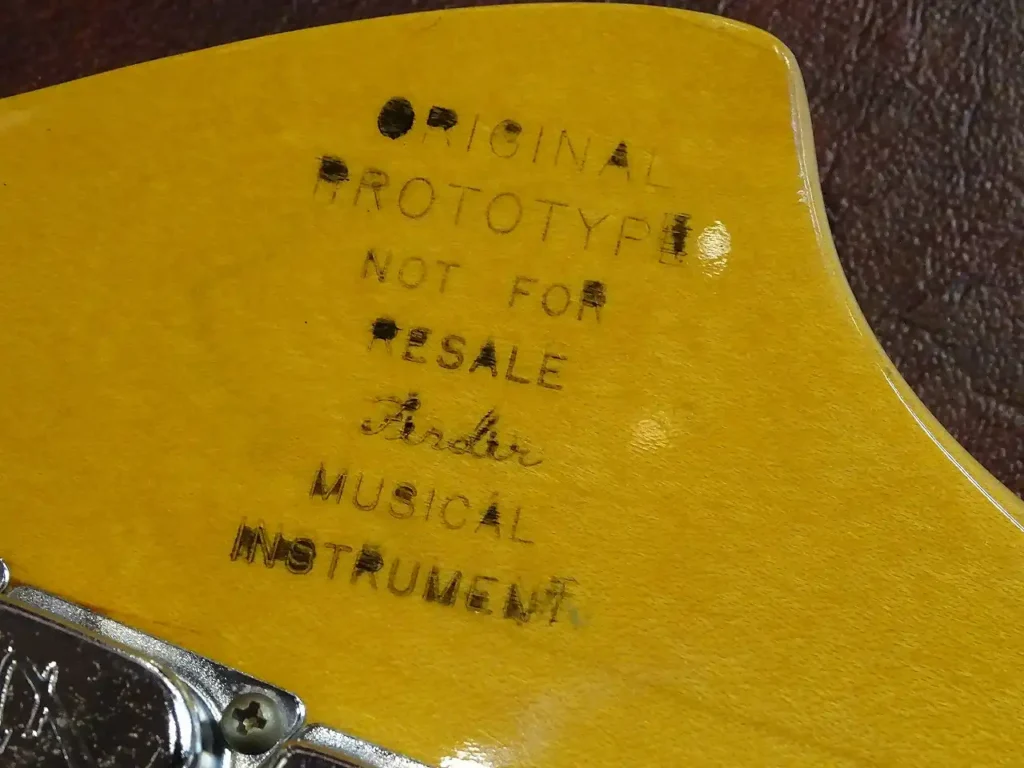
The Hendrix Stratocaster was strongly advocated by Mudge Miller, then VP of Sales and Marketing at Fender, and was developed in the R&D (Research and Development) department. John Page handled most of the work; he recalls that Miller initially wanted an additional decal—never applied—on the headstock: a circled “M” meant to stand for “modified” (or, as some of the more malicious suspected, for “Miller”).
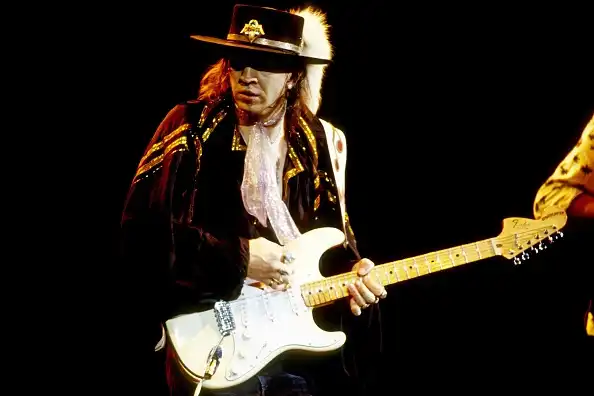
It seems that only twenty-five of these instruments were manufactured, likely all or mostly prototypes, with only five officially certified. One was owned by Stevie Ray Vaughan, who occasionally used it in his shows, while another—owned by John Mayer—was inspected by Custom Shop Master Luthiers in 2005 to produce a limited run of one hundred replicas.
Over the years, other Hendrix Stratocasters with slightly different features have appeared here and there: rosewood fretboards, bodies in different colors, or made with different woods. However, these guitars were probably not true Hendrix Stratocasters, but rather “custom” Stratocasters built with parts originally intended for the Hendrix Stratocaster.
The Rhinestone Stratocaster
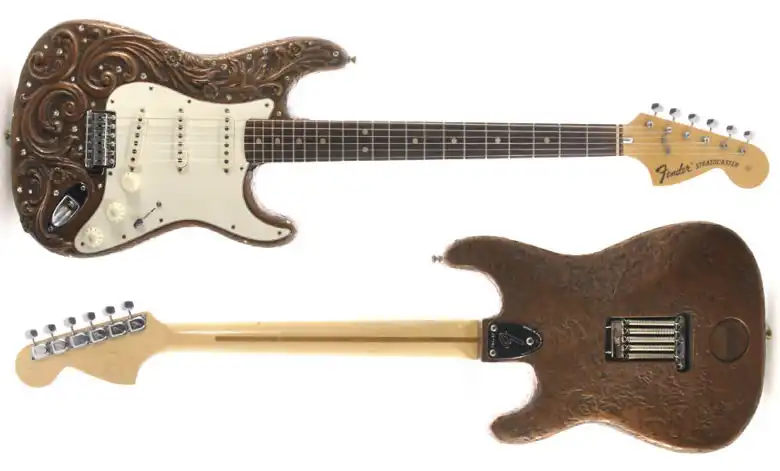
The 1975 Rhinestone Stratocaster might be considered the first Fender “art” guitar, long before the birth of the Custom Shop.
At that time, the British distributor of Fender was CBS/Arbiter, a joint venture between CBS and Ivor Arbiter. Toward the end of 1973, Arbiter opened a large musical instrument store in London, the Fender Soundhouse.
When the sculptor Jon Douglas visited the store and remarked that the displayed guitars were boring, Ivor challenged him to do better. In response, Douglas created a fiberglass body covered with a layer of cold-worked bronze. A prototype was produced, followed by six models of the Rhinestone Stratocaster, each featuring uniquely carved reliefs. At Arbiter’s suggestion, Douglas added rhinestones to the bodies of these instruments—giving rise to the guitar’s distinctive name.
In 1975, the Rhinestone Stratocasters were put up for sale at the Fender Soundhouse. Unfortunately, a fire broke out in the store, destroying almost all the guitars—it is believed that only two had been sold before the fire.
In the early 1990s, Jon Douglas created twenty-five unauthorized replicas of the Rhinestone Stratocaster, incorporating original parts from the 1970s. Each replica can be identified by a numbered plaque on the back of the body.
The Gold Stratocaster
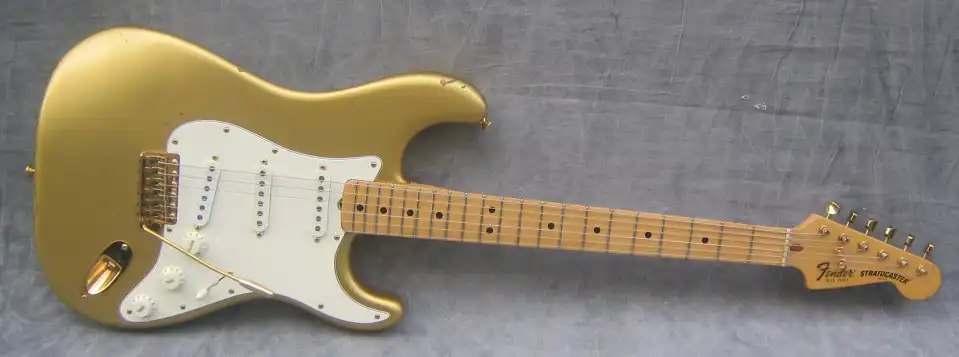
The Gold Stratocaster, also known as the Gold-Gold Stratocaster, was similar to the Standard Stratocaster—introduced about a year later.
It featured a 4-bolt neck plate and a small headstock, and it lacked the Micro-tilt neck.
Its distinctive body boasted a Deluxe Gold Metallic finish, while the tuning machines were made of 100-micron gold-plated brass, the same material used in jewelry. Due to high production costs, the guitar proved unprofitable for the company, leading to its discontinuation in 1984.