Signature & Iconic Strats

The Fender Jeff Beck Stratocaster

THE STORY BEHIND THE BECK SIGNATURE MODEL

advertisement

advertisement

Departing from Orthodoxy

The origins of this story go back to the late 1980s, when Jeff Beck became one of the first major artists to work directly with the newly formed Fender Custom Shop. Those early collaborations were not only about signature branding, but also about solving practical problems for a highly individual player whose approach to the Stratocaster was anything but conventional. Beck’s heavy reliance on the vibrato system, his extreme control of pitch and dynamics, and his preference for absolute tuning stability pushed Fender toward solutions that were increasingly removed from vintage specifications.
This process eventually led to the first production of a Jeff Beck Signature Stratocaster in the early 1990s, but even then, the instrument was already moving away from traditional Stratocaster orthodoxy.

Advertisement

The Graffiti Yellow Stratocaster

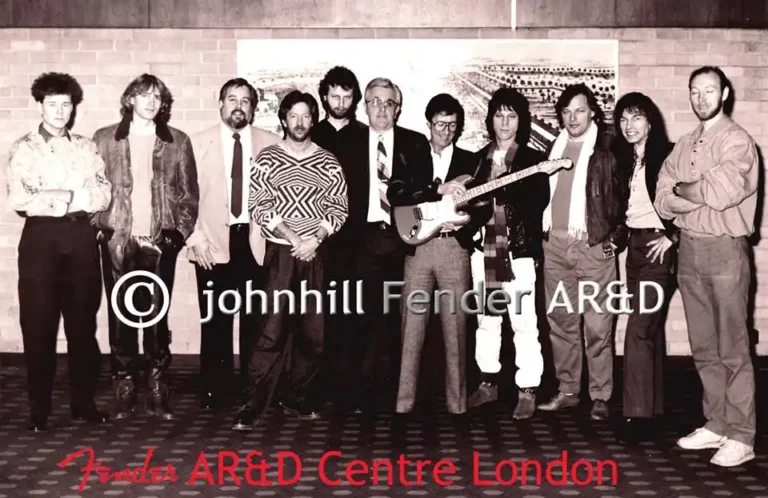
On February 12, 1986, John Hill, Fender’s Brand and Artist Relations Director, organized a party in a Hilton Hotel in London to celebrate the first Stratocaster to come to the UK. This was the Fiesta Red Strat of the Shadows guitarist, Hank Marvin. John’s aim was to change perceptions of Fender with the help of a group of the world’s most important guitarists (whom he called “britpack”). He wanted to get them all on board for a relaunch and rebrand of Fender.
Eric Clapton, David Gilmour, Hank Marvin, and Jeff Beck were just some of those who attended, with John Hill in the background, and of course Bill Schultz and Dan Smith.
This was the first time Smith and Schultz discussed the Signature Series with the guests.
A few months after the event, Jeff asked for a new Stratocaster with a huge neck for his upcoming tour in Japan.

1986 party for Hank Marvin at the Hilton, London. From left: Stuart Adamson, Hal Lindes, Dan Smith, Eric Clapton, John Hill, Bill Schultz, Hank Marvin, Jeff Beck, David Gilmour, Steve Howe, Richard Thompson (Courtesy of John Hill)
Advertisement 970x250

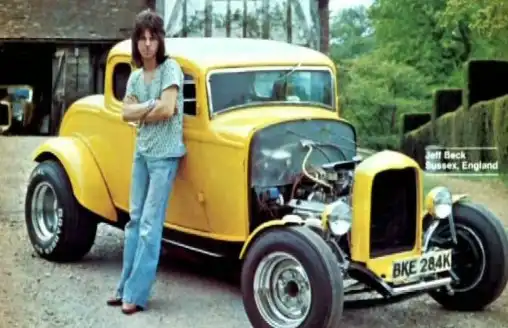
As John Hill knew Jeff’s passion for the 1932 Ford Chopped Deuce Coupe featured in the American Graffiti movie, he suggested painting the guitar in the color of the car, which he named Graffiti Yellow. So, it wasn’t the guitarist’s request, as is often reported.

Jeff Beck with his 1932 “Graffiti Yellow” Ford Chopped Deuce Coupe

Many guitars were made by a select group at Fender, and Jeff ended up taking a yellow Vintage ’62 Strat serial number V016129 stamped on the neck plate.
At this time, the guitar was fitted with a vintage-style bridge, a 3-ply white 11-hole pickguard, and vintage reissue pickups, but not the Wilkinson Roller Nut.
Its oversized raw wood neck was left unfinished in order to get the profile Jeff wanted, but the guitarist wanted it just as it was, as told by Dan Smith: “We took it into a rehearsal, and he [Jeff, Editor’s Note] liked it so much he insisted to take it on tour to Japan as is, and [with the back of the neck, Editor’s Note] unfinished.”

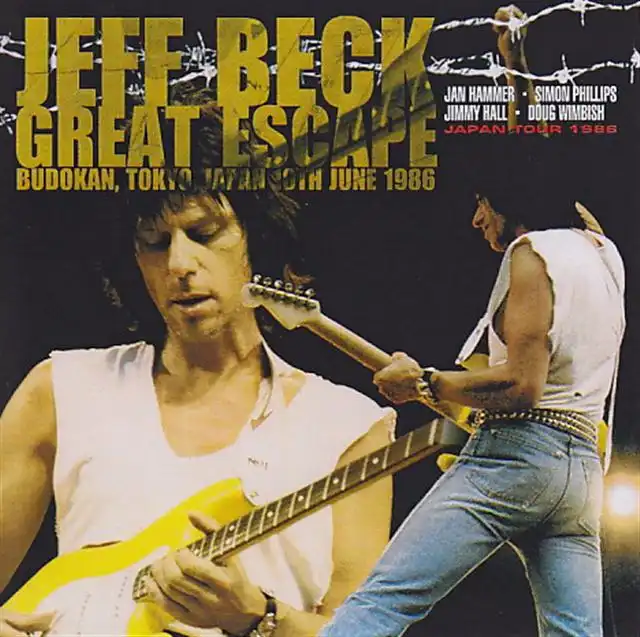
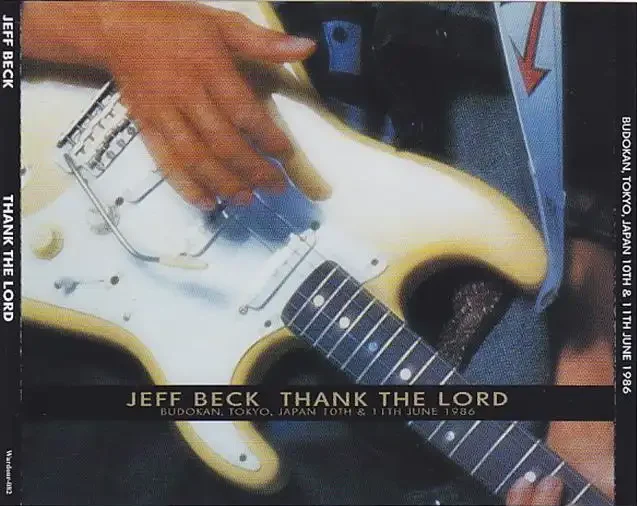
The vintage-style bridge and the original nut are clearly visible on the covers of the CDs associated with the Japanese tour.

Cover artwork for “The Great Escape” by Jeff Beck. The guitar retains its original nut.
Jeff Beck’s “Thank the Lord” cover. Note the six-screw bridge and the original single-coil pickups with staggered pole pieces.
Advertisement
advertisement

First Updates

After the tour of Japan in the Summer of 1986, the guitar was returned to Fender and underwent several important modifications. The vintage-style bridge was removed and replaced with a very rough prototype of the two-pivot tremolo pulled from the American Standard prototype. A new oversized neck with a Brazilian rosewood fingerboard was installed, and the 3-ply 11-hole pickguard was replaced with a 3-ply 8-hole one.

The neck featured a headstock with then-still-in-development Sperzel Star locking tuners and the first-generation Trevor Wilkinson roller nut, enhancing its tuning stability and playability.  “Feels like an early Stratocaster, but without the tuning problems,” Jeff stated.
Lace Sensors were in development at this time; they were not quite ready yet, and so it may have been that the guitar kept its ’60s pickups, even though George Blanda declared that the guitar was equipped with three stacked-coil pickups.
This new combination later evolved into the factory’s upscale Strat Plus, introduced in 1987.
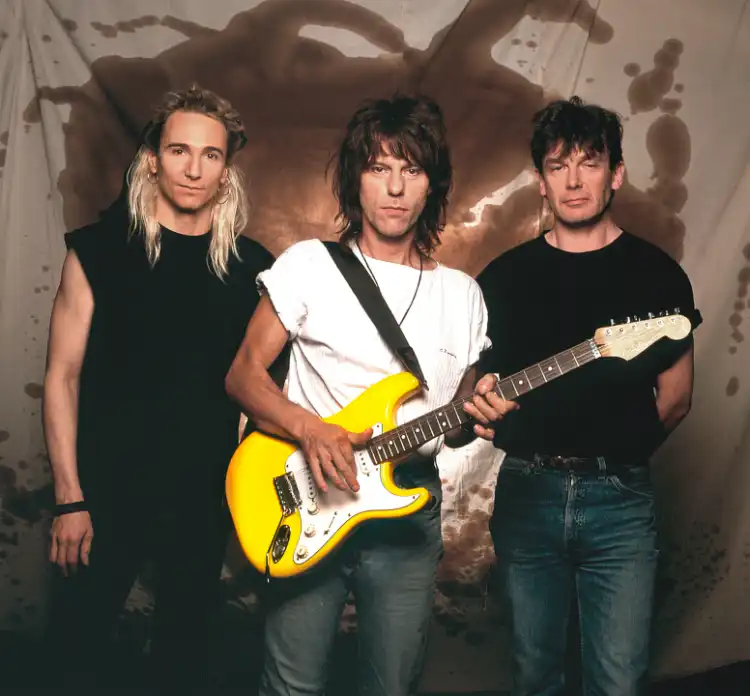
The guitar, fitted with the American Standard bridge and the roller nut, can be seen in the photo of Jeff Beck, Terry Bozzio, and Tony Hymas, taken in May 1989, and on the cover of the November 1989 issue of Young Guitar magazine.
Jeff used the modified guitar during another tour of Japan, in 1989, before deciding (for the time) against developing a signature guitar and sending it back to Fender.

Jeff Beck, Terry Bozzio, and Tony Hymas at Paisley Park Studios, May 1989. Note the bridge, the 3-ply 8-hole pickguard, and the Wilkinson Full-Roller nut. Click to enlarge. Courtesy of Robert M. Knight
Advertisement
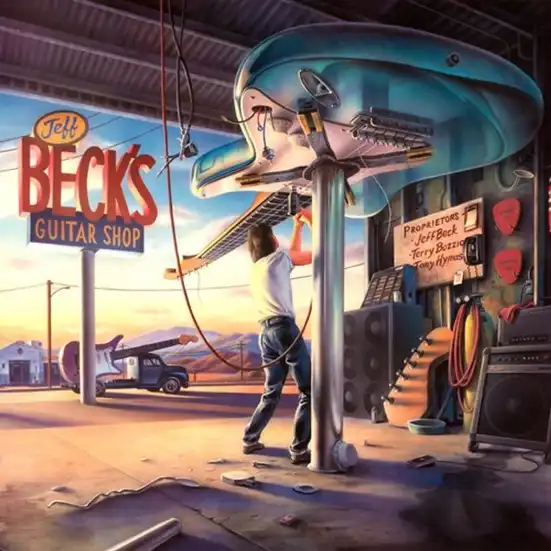
Jeff Beck's "Guitar Shop" Cover

In that year, Beck’s landmark Guitar Shop album came out.  According to Dan Smith, the Strat Plus became Beck’s guitar of choice: “That record had all those amazing harmonic tones and techniques on it.  When Jeff tried to get those sounds live, the only guitar that worked was the Strat Plus, a model he hadn’t originally cared for. Since the Lace Sensors had little magnetic attraction, very little string pull, plus a wider magnetic field, they were great for harmonics.”

When Fender repaired the neck of the modified yellow Strat (due to finish issues) and installed a trio of Lace Sensor pickups, essentially turning it into a Strat Plus model, they again aroused Jeff’s interest in his signature project.

Advertisement 970x250

More Prototypes

In October 1989, at the direction of Dan Smith and John Page, J.W. Black built two revised prototypes. One featured a blue finish like that of the Stratocaster on the Guitar Shop album cover.

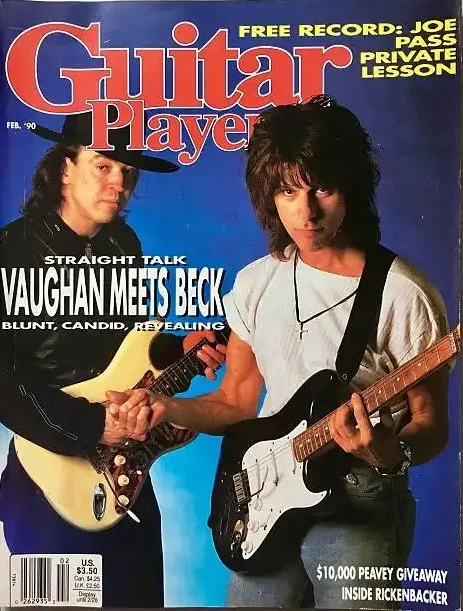
Another was dark purple, with a Brazilian rosewood fretboard and three Gold Lace Sensors, which Jeff posed with, together with Stevie Ray Vaughan, for the cover of the February 1990 edition of Guitar Player.

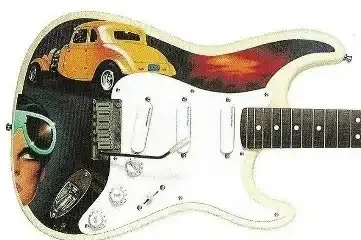
At this time, Fender presented Jeff Beck with a Strat Plus featuring a body hand-painted by Pamelina Hovnatanian, depicting Beck’s Ford. This was not a prototype, despite occasional claims to the contrary.

The Stratocaster Fender gave to Jeff Beck, whose body was painted by Pamelina Hovnatanian

In March 1990, J.W. Black made three additional prototypes: another purple one, a green one, and another graphic guitar.  
As J.W. Black explained, at first Jeff Beck didn’t want his name on the headstock: “He wanted to play a Fender, not a Jeff Beck Fender.” Eventually, the guitarist relented, and the model did appear with his signature, which had been scanned from a Guitar Shop poster.

Stevie Ray Vaughan and Jeff Beck with Beck’s signature blue prototype, featured in the February 1990 issue of Guitar Player.
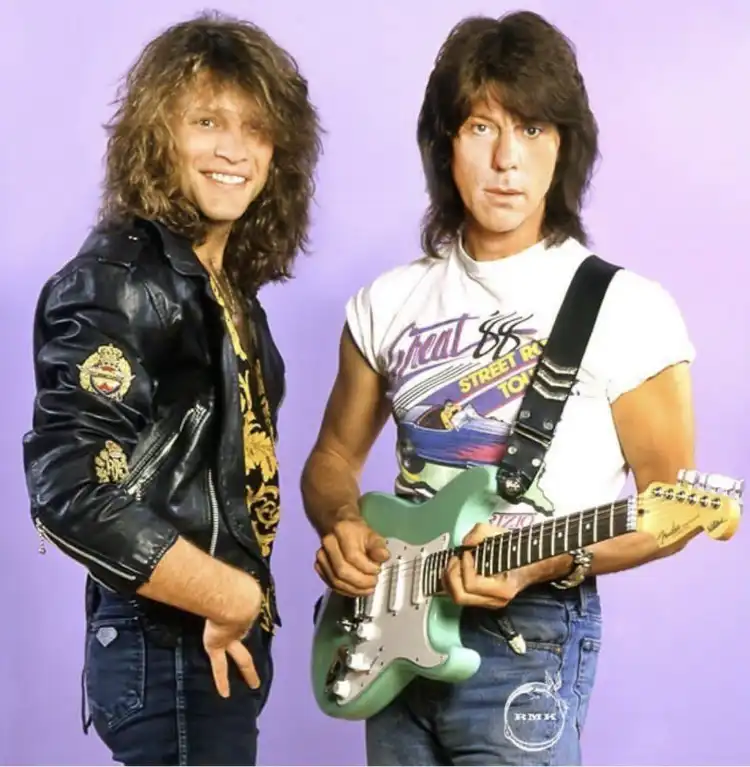
Picture from the photo session for the October 1990 issue of Guitar Magazine, featuring Jeff Beck and Jon Bon Jovi.
Picture from the photo session for the October 1990 issue of Guitar Magazine, featuring Jeff Beck and Jon Bon Jovi. The green Stratocaster features a roller nut and Beck’s signature on the headstock, but lacks the dual Lace Sensor bridge pickup and push/pull switching system. This raises the question of whether it corresponds to the green prototype built by J. Black.
Advertisement
Advertisement

The Fender Jeff Beck Stratocaster

The First Series

The first official Jeff Beck Stratocaster was finally released about a year after its official announcement on the January 1990 Fender price list, with the note “Final specification to be announced!”  

It sported a very thick Special Deep ’50s-shaped neck and four Gold Lace Sensors, two of them adjoined to resemble a humbucker at the bridge. A push-pull switch near the tone controls kicked in the second bridge unit, providing a “thicker sound.”
The original Sperzel locking tuning machines were replaced by Schaller locking tuners in 1994, while the LSR Roller Nut superseded the Wilkinson Roller Nut in 1993.

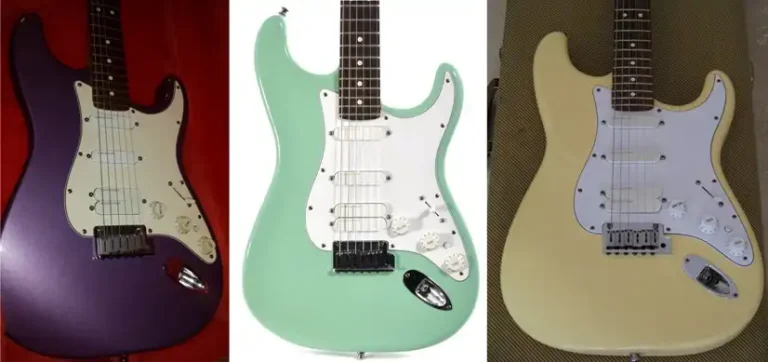
Available finishes of the Jeff Beck Stratocaster (first series)
Advertisement

Paradoxically, when the first Jeff Beck Stratocasters were released, the Graffiti Yellow finish was not offered, and the signature was available only in Midnight Purple, Surf Green, and Vintage White. And the first Strats Plus Graffiti Yellow, unlike what many believe, were not Jeff Beck prototypes!

It is interesting to note that pau ferro was chosen for the fretboard. However, almost immediately, Fender opted for rosewood, though many ’90s Frontlines continued to report it as pau ferro.

The Second Series

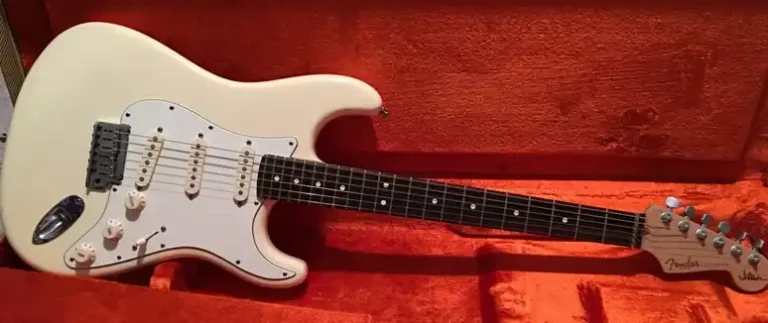
In 2001, Fender updated this signature model. The second series, available in the Olympic White and Surf Green finishes, featured three Ceramic Coil Dual Noiseless pickups instead of Lace Sensors, a thinner “C”-shaped neck, not as large or deep as Jeff’s previous choice, a sculpted heel for easier access to the higher registers, and a classic tone control instead of the TBX used in the first series.

2003 Jeff Beck Stratocaster in Olympic White

The Custom Shop Model

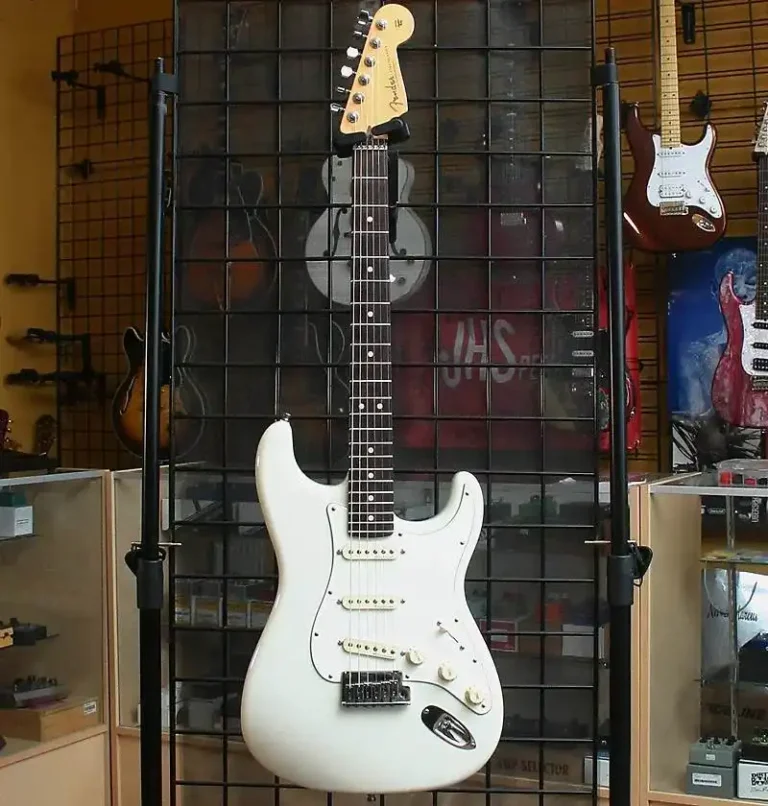
Finally, in 2004, the Fender Custom Shop unveiled the Jeff Beck Signature Stratocaster, available in Olympic White and Surf Green.
It retained the core identity of the Jeff Beck Stratocaster but elevated its execution through higher-grade construction.

Fender Custom Shop Jeff Beck Stratocaster
Fender Custom Shop Jeff Beck Stratocaster (Courtesy of Reverb)

The placement of the signature on the back of the headstock is particularly telling in this context, aligning with Beck’s long-standing preference for restraint and avoiding unnecessary visual emphasis.

From a technical standpoint, the instrument remained defined by its commitment to stability and responsiveness.

The LSR roller nut reduced friction at the critical point of string contact, the Sperzel Trim-Lok staggered tuning machines reinforced tuning reliability under aggressive vibrato use, and the noiseless pickup system provided a modern, controlled interpretation of traditional Stratocaster tone.

None of these elements was nostalgic; they are functional responses to a player whose technique demands absolute consistency.

End note

In May 2023, the original yellow Strat was sold at Bonhams for £76,600.

Antonio Calvosa
Antonio Calvosa
Antonio Calvosa is a pharmaceutical chemist with a deep passion for electric guitars. He is a former guitarist for Lost Property Office, with whom he won the Italian edition of Emergenza Rock in 2004 and performed at the Taubertal Festival in Rothenburg, Germany. In 2014, he founded Fuzzfaced, a valuable platform for electric guitar enthusiasts, and in 2022, he contributed to the book "Stratocaster: sei corde nella leggenda."
Antonio Calvosa
Antonio Calvosa
Antonio Calvosa is a pharmaceutical chemist with a deep passion for electric guitars. He is a former guitarist for Lost Property Office, with whom he won the Italian edition of Emergenza Rock in 2004 and performed at the Taubertal Festival in Rothenburg, Germany. In 2014, he founded Fuzzfaced, a valuable platform for electric guitar enthusiasts, and in 2022, he contributed to the book "Stratocaster: sei corde nella leggenda."