From radios to guitars:

Leo Fender

THE EARLY YEARS

Clarence Leonidas Fender was born on the 10th of August, 1909, to Clarence “Monte” and Harriet Fender, in the barn of a farm located between Anaheim and Fullerton, in southern California. During his teens, he took piano and saxophone lessons and played saxophone in the school band, but his passions were Hawaiian music and stringed instruments, and electronics, which he cultivated on his own.  
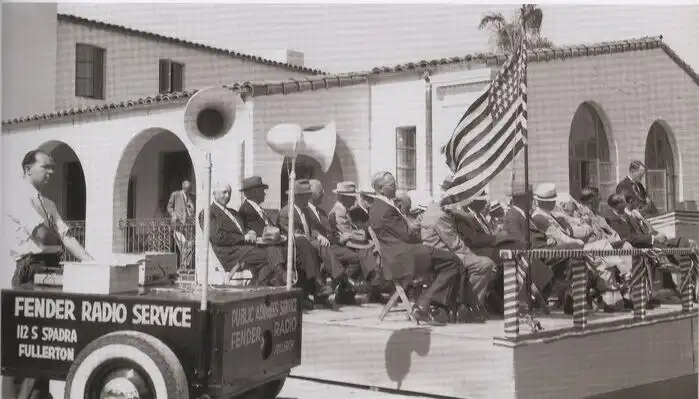
He was still a young boy when he built a small radio, which he called W-6-DOE, and first started implementing some of his own amplification systems which he rented for money. In 1938 he opened a shop in Fullerton, the Fender Radio Service, which soon became famous for its quality and reliability, establishing itself as a reference point for local musicians and music lovers in general. 

Leo Fender with the Fender PA system in 1941
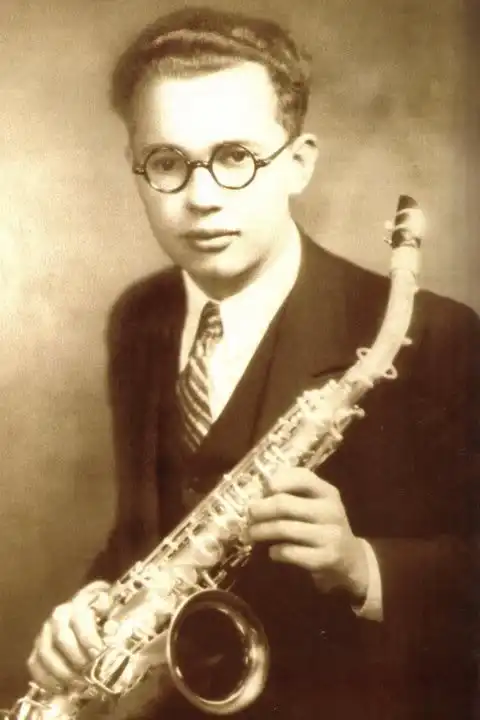
A young Leo Fender with his sax
A young Leo Fender with his sax (photo credit: Paul Kelly)

Donald “Don” Randall was among the regulars of the store. Don and Leo shared the same interest in radio and electronics and they frequently talked about starting a business together. However, due to the United States entry into the war after the attack on Pearl Harbor in 1941, the two friends had to separate. Don was drafted, unlike Leo, who was not suitable for military service due to the earlier loss of an eye caused by a tumor. 

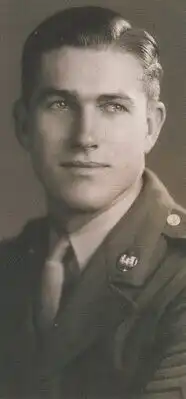
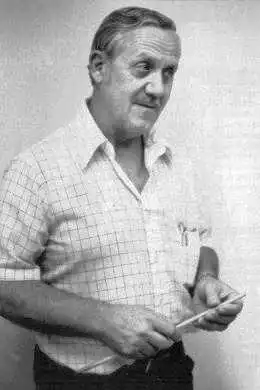
Don Randall
Don Randall
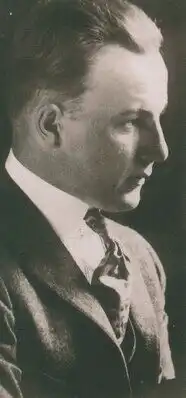
Clayton Doc Kauffman

In that same period Clayton “Doc” Kauffman also visited the Fender Radio Service to have an audio amplifier repaired. A musician and inventor, Doc had collaborated with Paul Barth and George Beauchamp and had patented an excellent pickup which had been used in the Rickenbacker Frying Pan lap steel.
In the beginning, Kauffman worked in a small lab he’d built inside his home. He subsequently went to work at the Douglass aircraft factory in Los Angeles. 
Due to the war, new electronic products were scarce, and as a result the demand for repairs increased so much that Leo asked Doc to assist  him with his work. They soon became friends and planned a new type of pickup which they called Direct String Pickup, and they filed a patent application on September 26, 1944, which was approved on December 7, 1948, with the number 2,455,575.

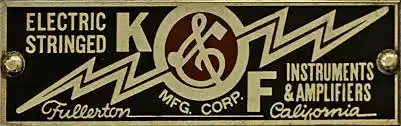
Leo and Doc began to produce lap steel guitars and the related amplifiers under the K&F (Kauffman e Fender) Manufacturing Corporation brand. The future looked bright to them. However, Kauffman, less optimistic than Fender and fearful of losing some money which he had recently inherited, left the business a few months later. The separation was formalized at the end of 1945 and Doc officially abandoned the company at the beginning of 1946.
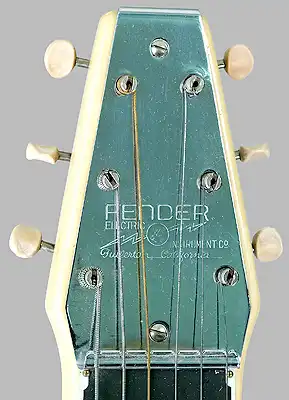
Leo used up to the last of the old plates to save money and, after having exhausted them all, then began to produce his instruments with the new brand ​Fender Electric Instruments Co – Fullerton, California. Kauffmann died in Fullerton on June 26, 1990, at the age of 89. He never envied Leo’s success and they remained close friends until his death. 

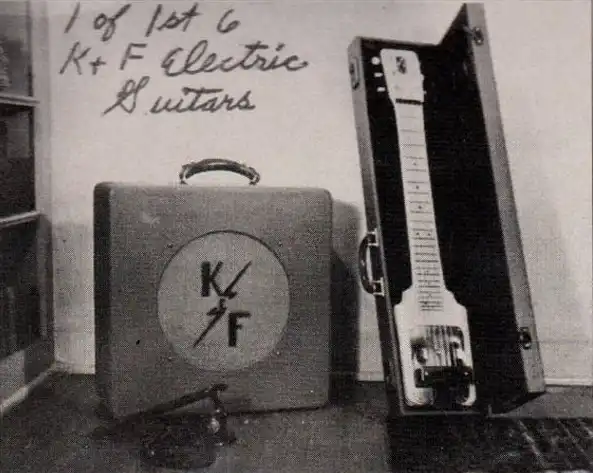
A K&F Lap Steel
A K&F Lap Steel

Francis Hall’s Radio-Tel

The old K&F plate
The old K&F plate
The new "Fender Electric Instruments Co - Fullerton, California" plate

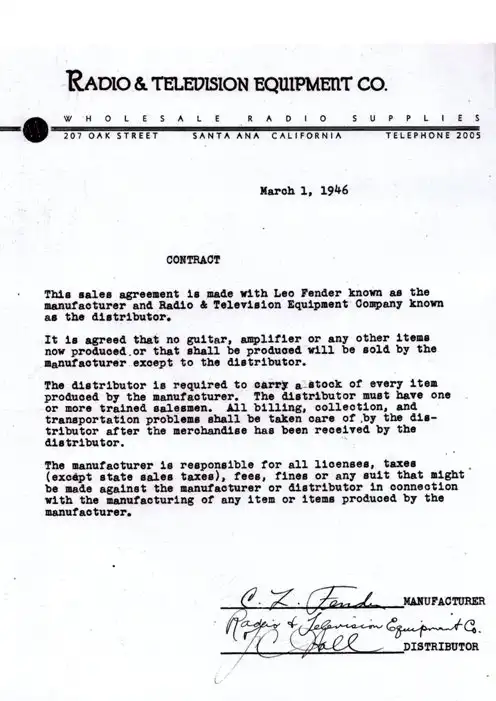
In 1946, Don Randall returned from the war and was appointed General Director of Francis Hall’s Radio and Television Equipment Co. (Radio-Tel).  Hall was a distributor of electronic components who had been supplying Leo since 1945.  Don was enthusiastic about the K&F guitars and proposed to the two men a very advantageous agreement for him to have exclusive distribution rights. 
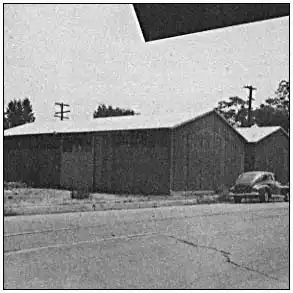
In the same year, Leo opened his first factory, consisting in two buildings on Santa Fe Avenuein Fullerton. Business was good and the increase in orders made expansion necessary.  This caused economic stress for Leo, whose finances were limited. In order not to stop the production and to buy the two buildings, he had to ask Francis Hall for a loan, which subsequently led to a deterioration of Leo’s relationship with him. Leo, anxious to get rid of his debt, accused Francis of paying the sums of the distribution agreement too slowly, and Francis, who felt his investment was very risky, pushed Fender to increase production. Consequently, the two men began to quarrel often.
Leo also reproached Francis for not promoting Fender enough: “Those years were absolute hell. I think I worked from six in the morning ’til midnight every day of the week. A new trademark is a hard thing to get accepted. With no advertising, no one knew who we were and there was nothing to pep up sales. It took every penny I could get my hands on to keep things together. I was unhappy with our distributor, who was a former shipping clerk and never advertised.”

Francis Hall with a Rickenbacker
Santa Fe Avenue buildings, 1946 (photo: Leo Fender)

There was also the matter of 500 lap steel guitars which had been returned to the factory because of termites and had to be burned: “During this time, they didn’t sell hardly any of our guitars. They just sat there in this garage, and termites got into them and ate through the bodies. We never found out the termites until dealers started calling us about holes in the guitars.”  For this loss Leo blamed Francis, but he was probably wrong because the bodies of the guitars were covered with an acetate plastic coating which didn’t allow the termites to penetrate the wood, and, likely, the termites were already inside. 

Under this agreement, Leo Fender and Francis Hall specified that any and all Fender products would be sold directly - and only - to Radio Tel

At the end of 1947, Leo realized that, if he wanted to keep on producing guitars and amplifiers, he had to give up the radio portion of the business and he left the direction of his shop to his collaborator​ Dale Hyatt. The Fender Radio Service subsequently closed in 1951. In the factory, Dale was replaced by ​George Fullerton, a truck driver with a passion for electronics who was also the guitarist of The Gold Coast Rangers. In 1953 George was promoted to Production Director. Despite his surname, he wasn’t born in Fullerton, and many years later he would become Leo’s partner in G&L

George Fullerton
George Fullerton (photo courtesy Guitare et Clavier)
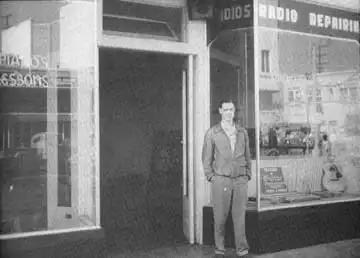
Dale Hyatt and the Fender Radio Service shop, 1949

The Esquire and the Telecaster

In the late Forties, Fender guitars and amplifiers had earned a reputation for “Quality Electric Instruments”, as the motto, which soon appeared soon on many advertising inserts, said. 
It was time to resume an old project which Leo had discussed with Doc Kauffmann in the early Forties: build a solid-body electric guitar, something different from the lap steels and the Spanish electric guitars used by the musicians after the war, all of which had a hollow body which gave them a tendency to generate feedback and distortions at high volume. Although many inventors had already conceived of this idea, no one had invested in such a project.  
Thanks to the collaboration with George Fullerton, Leo developed the line of the new guitars, completing the first prototype in 1949.  This prototype still lacked the Bigsby style headstock and the neck was fixed to the body by four screws. Leo believed that this simplified product could allow the neck to be replaced easily, if needed.
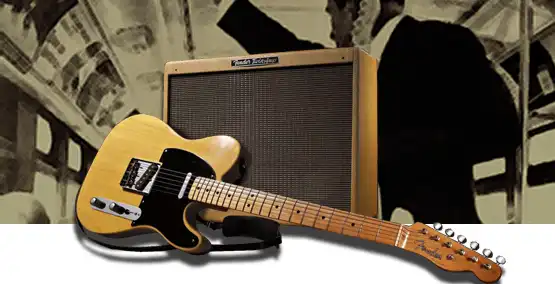
Don Randall called this first solid-body Fender, equipped with only one pickup, the Esquire. But the advantage given by the use of a second pickup was so evident that in 1950 the Esquire variant with two pickups came to light, and it was initially called by Don Randall Broadcaster. After Gretsch sent them a cease-and-desist letter, which informed the Fender that it had already registered the Broadcaster name in relation to some drums it had been marketing since the 1930s, Don changed the name of his guitars to Telecaster. As for those already produced with the name of Broadcaster, he simply removed the decal from their bodies. These few instruments made between the Broadcasters and the Telecasters and without a name on the headstock are known today with the term Nocaster

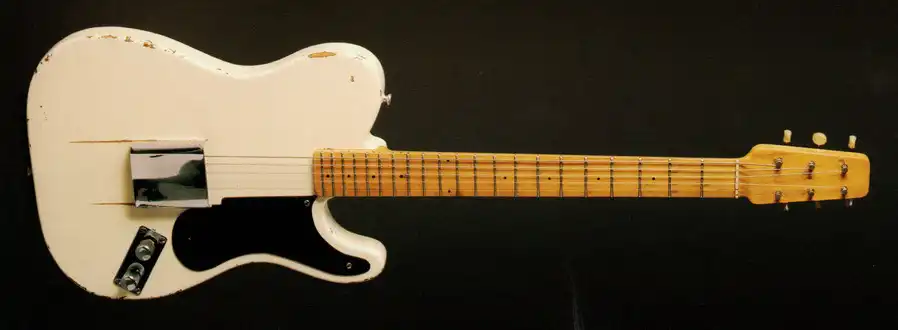
The first Esquire prototype with the snakehead headstock
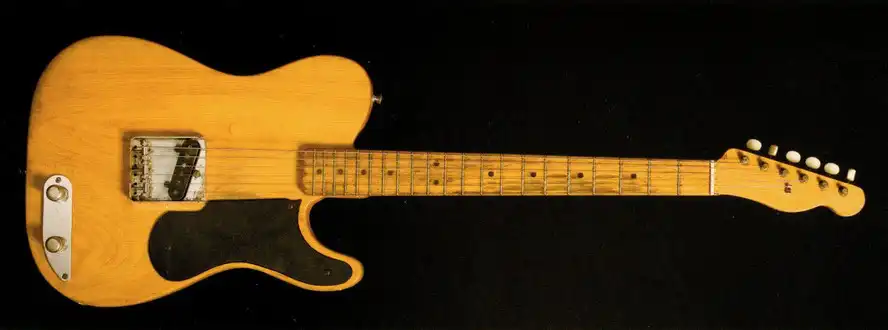
The second Esquire prototype had the well-known Telecaster headstock. Neck and control plate are not original, and the body was completely stripped.
The second prototype had the well-known Telecaster headstock. Neck and control plate are not original, and the body was completely stripped.

At this point it was clear to Fender that the two buildings in Santa Fe Avenue were no longer sufficient, so he built a new one on Pomona Avenue, adjacent to his already existing operation. 

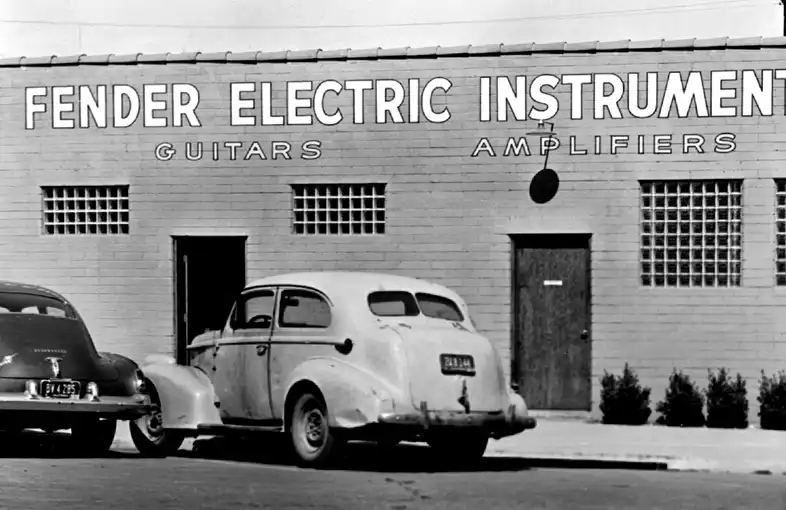
The new Fender factory in Pomona Avenue, Fullerton

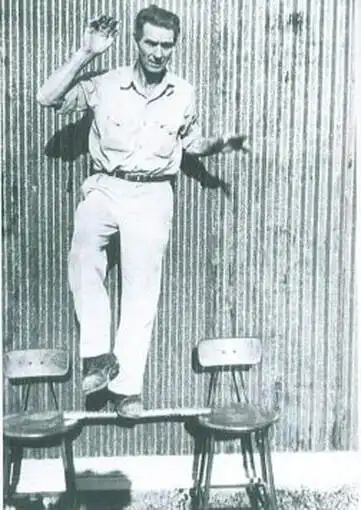
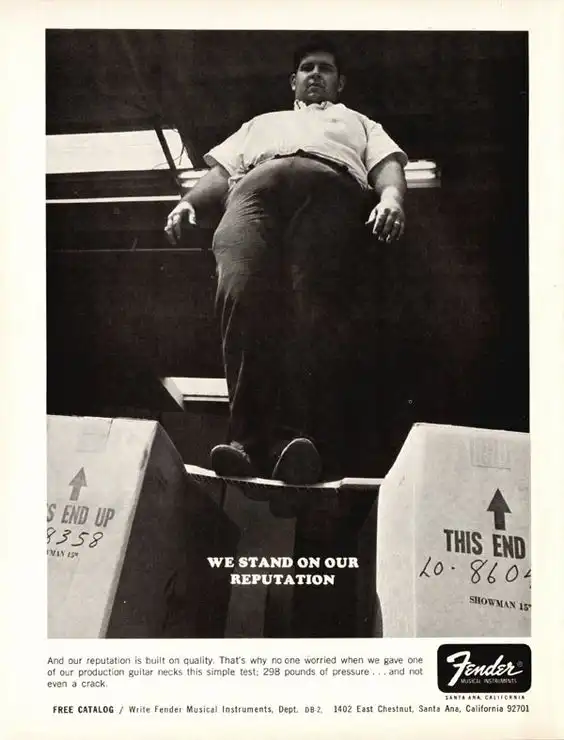
It is interesting to note that Don was criticized by many musicians and traders because, according to them, the Esquires needed to have a truss rod.  At first Leo did not agree, asserting that the maple of the neck was quite resistant and it did not require any modification. In support of his belief he used to put the necks between two chairs so that his workers could stand on them.  Leo eventually changed his mind due to market pressure and his guitars have all been fitted with truss rods since October 1950. The anecdote about the resistance of Leo’s guitar necks inspired, around 1967, an advert for Fender in which a worker climbed over a neck suspended between two boxes, with the quote “We stand on our reputation”.

Fender employee Hugh Garrlott stands on an Esquire neck without the truss rod to prove that Fender neck would never wrap
The 1967 advert "We stand on our reputation"

The Precision Bass

In 1951, Leo, for years focused only on guitarists, developed the first solid-body bass: the Precision Bass. It was Fender’s most groundbreaking creation. The Precision Bass wasn’t just a revolutionary instrument design; it transformed the music landscape.
Before its inception, bassists were bound to their large, upright basses. Playing the upright bass was challenging, requiring not only physical strength to press down and pluck 1/8”-thick strings but also musical skill or at least sharp intuition. Musicians needed to precisely place their fingertips on the lengthy, fretless fingerboard to produce the right note.
In contemporary bands, the upright bass was being drowned out by saxophones, trumpets, and electric guitars. Bassists could barely hear themselves.
Additionally, the upright bass was awkward to transport.
Leo Fender realized that a guitar-shaped electric bass could solve many problems. Players could freely dance and move around, and if a bass guitar had a solid body and frets like a Telecaster, it could be thin, lightweight, and powered by its own amplifier to reach whatever volume the player desired. Bassists, once relegated to the background, suddenly found themselves in an exciting new role.
Fender spent two years developing the Precision Bass, a name he chose because its frets eliminated any guesswork about note placement.
The electric bass quickly became a cornerstone of rock ‘n’ roll, jazz, and blues. Thanks to the Precision Bass, the musical landscape was forever changed.

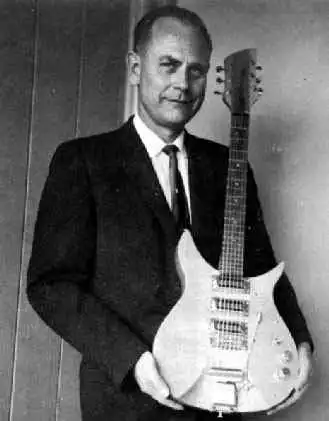
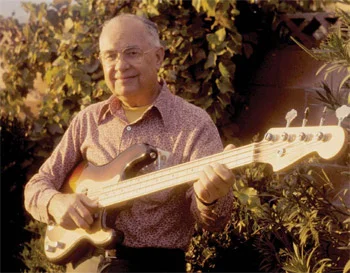
Leo Fender with a ‘58 Precision Bass, 1973.
Leo Fender with a ‘58 Precision Bass, 1973. (Photo Credit: Robb Lawrence)

“We needed to free the bass player from the big doghouse, the acoustic bass. That thing was usually confined to the back of the band, and the bass player couldn’t get up to the mic to sing. And guitar players would have an advantage if they could have an instrument with frets that would make doubling on bass easier for them.”

Leo Fender

Fender Sales and the Stratocaster

Fender instruments were sold with great ease, with sales quickly exceeding expectations and competing in the marketplace. However, the frictions between Fender and Francis Hall persisted even though by that time Fender had paid off the debt to Hall.
In 1953 Don Randall, in order to overcome these conflicts, proposed the creation of a new distribution company, Fender Sales, based in Santa Ana, at 308 East Fifth Street, ten miles from the plant in Fullerton. Randall himself assumed the position of President of the company and in this way he got rid of the obligations to Radio-Tel. ​Charlie Heys, a valued salesman and old friend of Leo’s, became Vice President, while Fender and Hall, respectively, assume the positions of Secretary and Treasurer. However, this did not quell Francis’s feelings of animosity Leo, in 1953 Francis bought Rickenbacker, a company that produced lap steel and amplifiers which couldn’t compete with the Telecaster and with the Precision Bass.  In a short time Francis developed a line of excellent guitars which he would promote through Radio-Tel, rousing the anger of Leo and Don Randall.
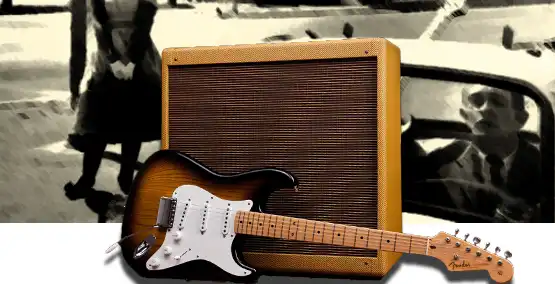
On June 9, 1955, a year after the birth of the Stratocaster, the guitar born from the evolution of the Telecaster and which most of all influenced the music of the second half of the 20th century, Charlie Heys lost his life in a car accident; the widow decided to sell her 25% to the other three partners. Pressed by Leo and Don Randall, a reluctant Francis Hall sold his shares to his partners. Leo and Don now had 50% each of Fender Sales shares.

Forrest White

The success of the Stratocaster led Leo to hire a manager. His company employed forty people and the quality control had become crucial in order to keep standards high. His choice fell on ​Forrest White, an old acquaintance who had visited Fender’s factory several times in the past and who had built in 1938 a lap steel, in 1942 a solid-body guitar and in 1944 a ten string lap steel equipped with preset switch and locking nut.

Forrest was born in 1920 in Copen, West Virginia. In 1939 he started working for Goodyear Aircraft, in Akron, Ohio.  In 1944 he first moved to California, where he collaborated in the construction of the war plane Lockheed P-38, and later to the Food Machinery Corporation. An expert in management and industrial engineering, he was the right man to rationalize the production of Leo’s factory. Forrest began working for Fender as plant manager on 20 May 1954 and remained until the end of 1967, when he resigned because he didn’t approve of CBS’s mass production methods. CBS had bought Leo’s factory in 1965. Forrest soon became Leo’s right hand man, and this probably made George Fullerton a little envious. 
In 1958 the company was rapidly expanding and Forrest White planned the construction of other four factories in South Raymond Avenue; in the same year, Fender Sales also moved to a larger location, at 1536 East Chestnut, Santa Ana.

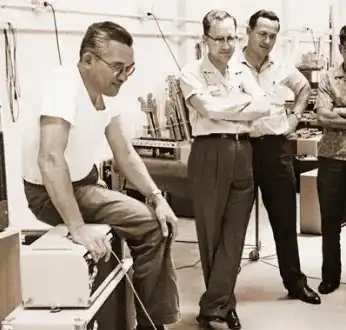
Freddie Tavares (left), who became a close Leo's friend, Forrest White, and George Fullerton at Fender factory
Freddie Tavares (left), who became a close Leo's friend, Forrest White, and George Fullerton at Fender factory (Photo by Torres/White)

1959 8mm Film by Forrest White. Digital Film Restoration by CinePost. Edited by Ross Lenenski. 

Learn more about the history of the Telecaster

Learn more about the history of the Telecaster

Learn more about the history of the Stratocaster

Learn more about the history of the Stratocaster

Antonio Calvosa
Antonio Calvosa
Antonio Calvosa is a pharmaceutical chemist with a deep passion for electric guitars. He is a former guitarist for Lost Property Office, with whom he won the Italian edition of Emergenza Rock in 2004 and performed at the Taubertal Festival in Rothenburg, Germany. In 2014, he founded Fuzzfaced, a valuable platform for electric guitar enthusiasts, and in 2022, he contributed to the book "Stratocaster: sei corde nella leggenda."
Antonio Calvosa
Antonio Calvosa
Antonio Calvosa is a pharmaceutical chemist with a deep passion for electric guitars. He is a former guitarist for Lost Property Office, with whom he won the Italian edition of Emergenza Rock in 2004 and performed at the Taubertal Festival in Rothenburg, Germany. In 2014, he founded Fuzzfaced, a valuable platform for electric guitar enthusiasts, and in 2022, he contributed to the book "Stratocaster: sei corde nella leggenda."