Signature & Iconic Strats
The Richie Sambora Signature Stratocaster
FROM PROTOTYPES TO PRODUCTION GUITARS


Table of Contents
ToggleThe origin of the US-made Richie Sambora Stratocaster
The Prototypes and the First Series
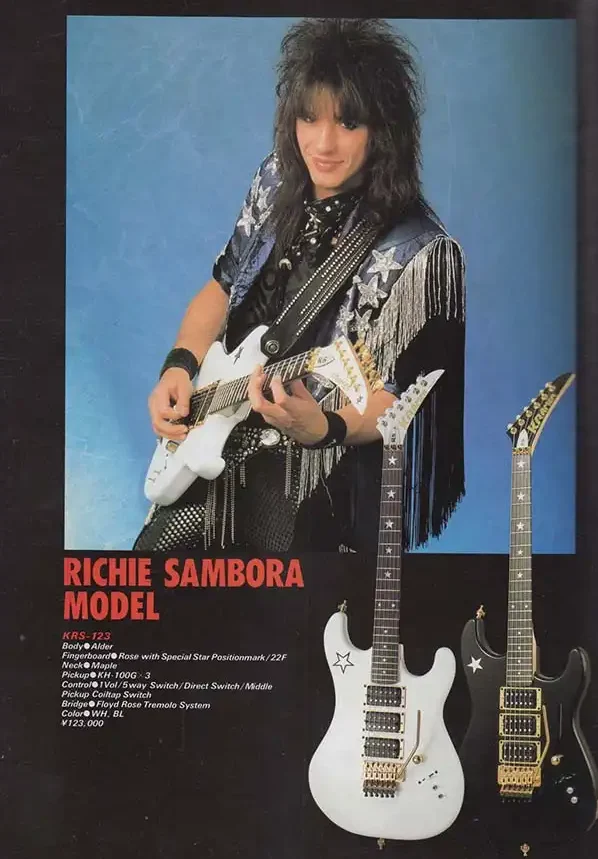
Before his collaboration with Fender, Sambora was closely associated with Kramer Guitars during the peak of its “superstrat” era.
In 1986, Dennis Berardi, then President of Kramer Guitars, approached Sambora to develop a signature model.
The first Kramer Richie Sambora signature guitar appeared in 1987. It featured a Strat-style double-cutaway body with aggressive 1980s contours, a Floyd Rose locking tremolo system, three humbuckers, and distinctive star-shaped inlays.
It became a key part of Sambora’s visual and sonic identity during Bon Jovi’s global breakthrough years.
By the end of 1989, Richie Sambora ended his relationship with Kramer Guitars and entered into a new collaboration with Fender.
Rather than starting from scratch, Fender’s approach was to translate an already established “Kramer language” into its own vocabulary.

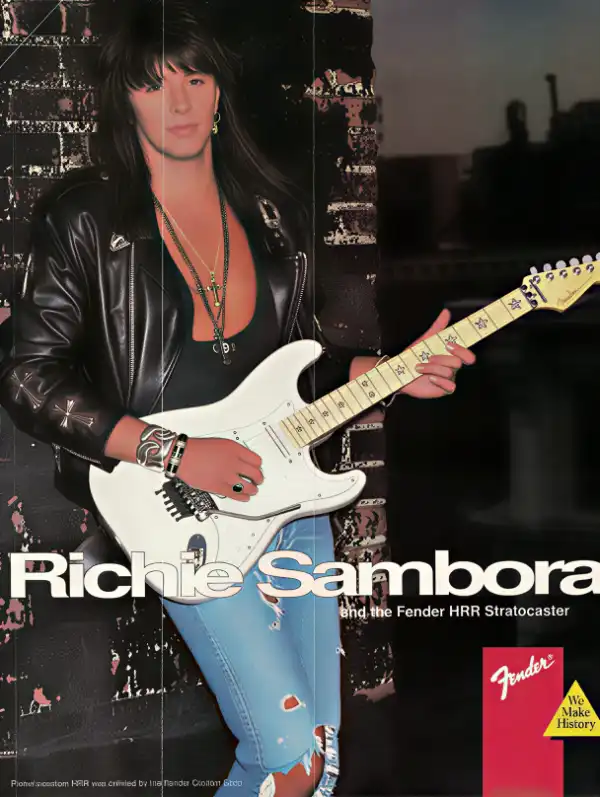
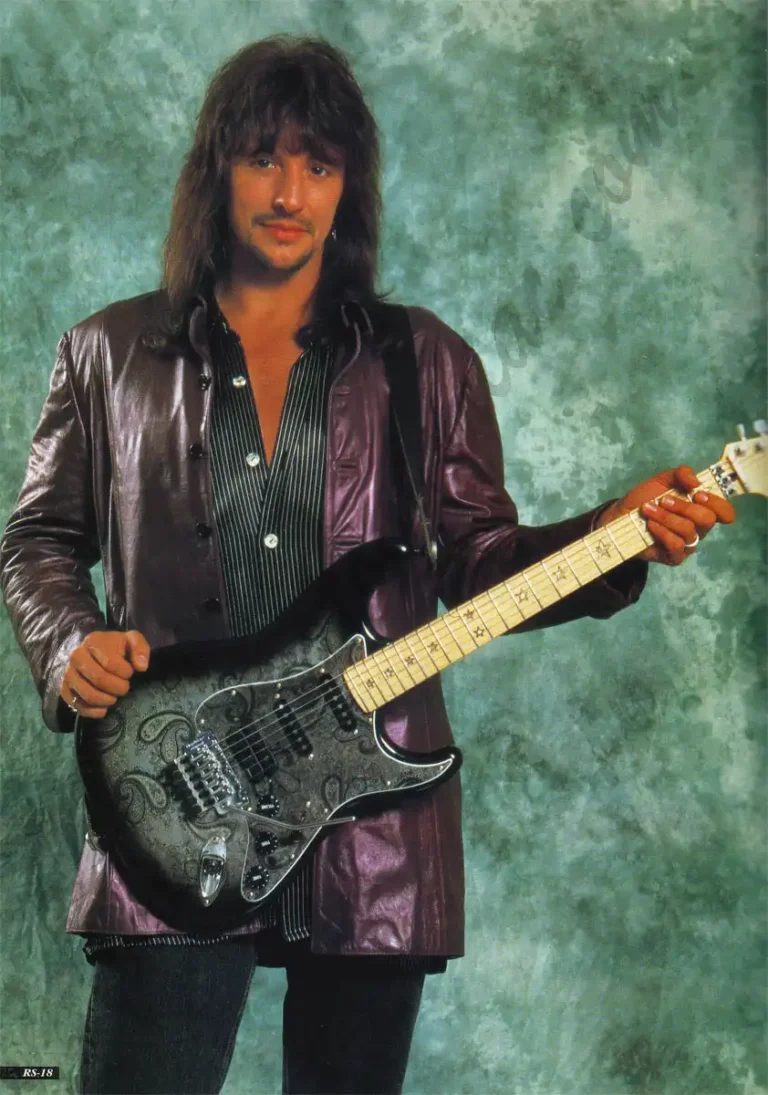
In the 1991 Fender Frontline catalog, Richie Sambora was shown holding a Stratocaster that, at first glance, could be mistaken for his later signature model. In reality, it was a custom HRR ’50s Stratocaster.
While HRR (Hot Rod Reissue) models were typically produced in Japan, the instrument pictured was a Custom Shop-built example. It featured a Floyd Rose tremolo system and distinctive star-shaped inlays, and it bore no signature on the headstock.
Additionally, the neck and middle positions were equipped with rail-style, single-coil-sized mini humbuckers—specifically DiMarzio Fast Track 1 units—while the bridge position housed a DiMarzio PAF Pro humbucker.
However, despite the existing endorsement agreement, Fender took some time to finalize a deal for a signature model.
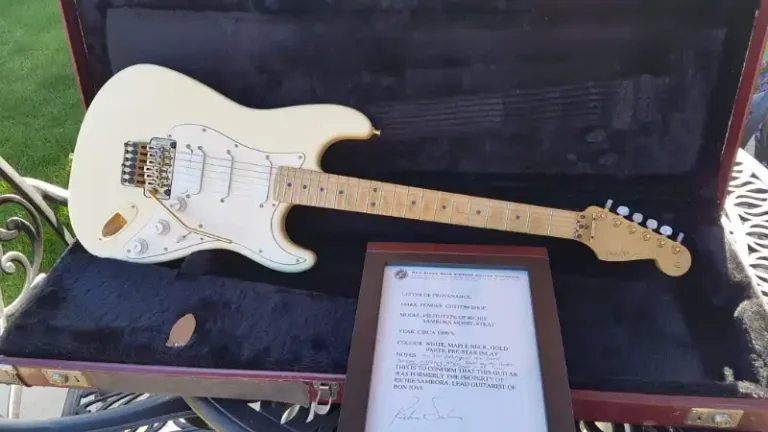
In 1993, Master Builder J. W. Black created two prototypes: one equipped with a vintage-style bridge, and another featuring a Floyd Rose double-locking tremolo system.

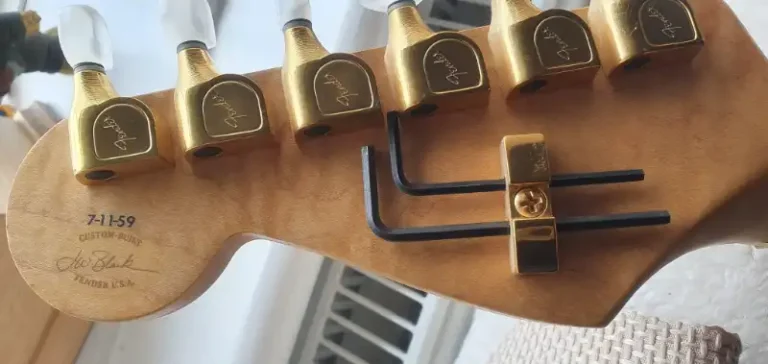
The latter was also fitted with a TBX tone control, gold hardware, a soft “V”-shaped one-piece maple neck, and four Lace Sensor pickups—two of them, positioned near the bridge, placed side by side to emulate a humbucker configuration.
This prototype was frequently used by Richie Sambora during live performances in 1993 and was easily recognizable by its serial number, which corresponded to his date of birth.
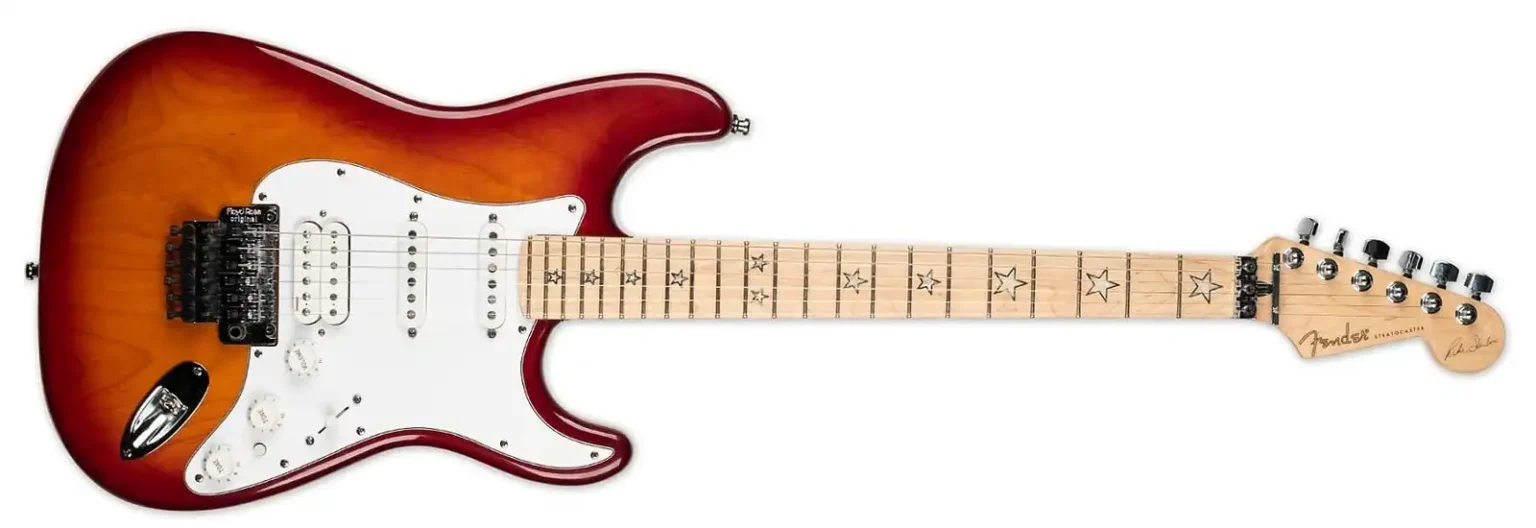
In 1993, Fender unveiled its official signature model, the Richie Sambora Stratocaster, clearly based on his earlier HRR guitar. It featured a Floyd Rose Original double-locking tremolo system, a DiMarzio Custom PAF Pro humbucker in the bridge position, a TBX tone circuit, and two Texas Special single-coil pickups.
The instrument’s 22 jumbo frets, 12”-radius maple fretboard, and contoured neck plate with Micro-Tilt adjustment made it particularly well-suited to the emerging generation of hard rock and more aggressive guitar styles that relied heavily on vibrato use.
Other distinctive features included Sambora’s signature on the headstock and, most notably, star-shaped abalone inlays.
Unlike standard Stratocasters of the period, the American-made Sambora models appear to feature a subtly contoured neck heel, resulting in a smoother transition between the neck pocket and the lower horn.
While never officially documented by Fender as a design feature, this sculpted area suggests an early attempt at improving upper-fret access and playability.
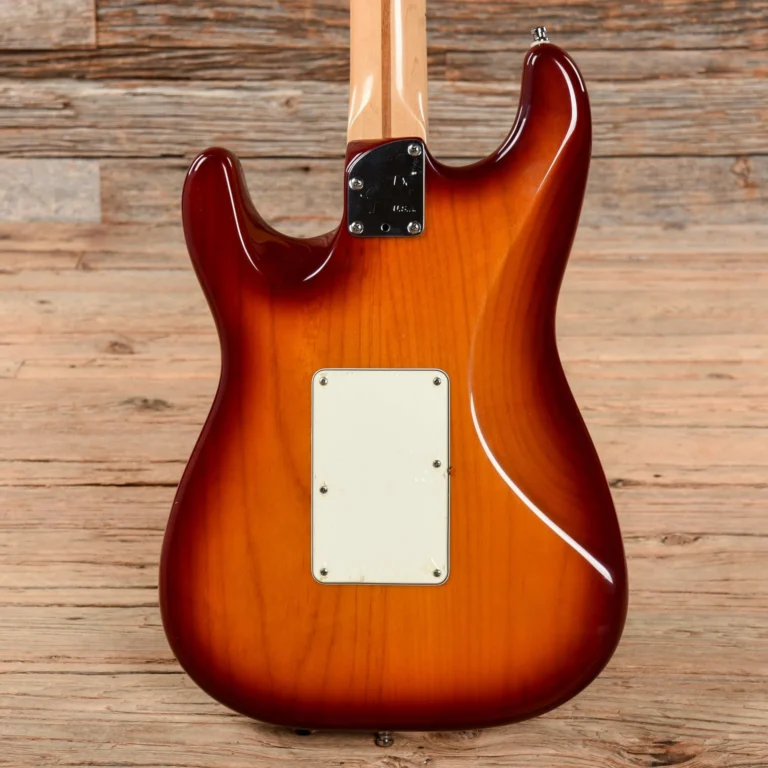
The model was available in two finishes: Cherry Sunburst and Arctic White.

“My goal was a versatile, comfortable guitar which would be well balanced—physically and electronically—and functional. This model meets all my needs: smooth and buttery, but very much a classic Strat—the best of both worlds.”
Richie Sambora
However, the guitar underwent significant changes almost immediately. The fretboard was replaced with a slightly rounder 9.5” radius fretboard, fitted with medium jumbo frets. More importantly, the electronics were revised: a small push-button activating an MDX (25 dB) circuit replaced the original TBX control.

The Second Series
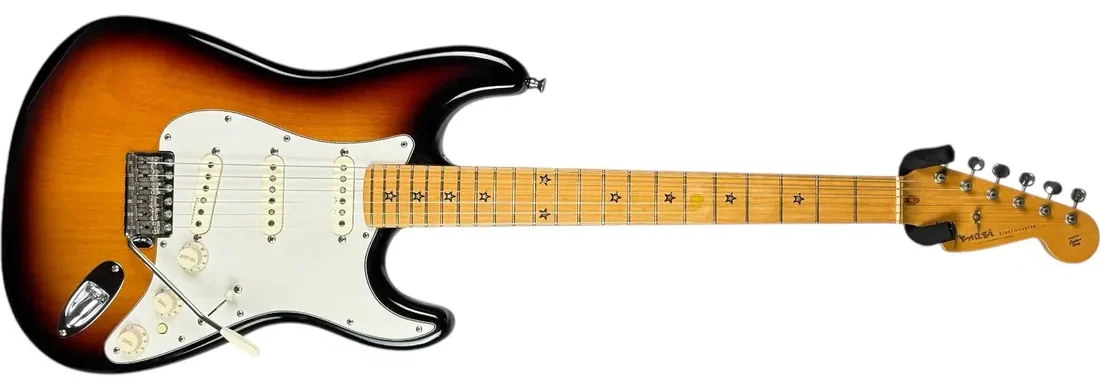
The Richie Sambora Stratocaster was redesigned in mid-1999. The updated model featured vintage-style frets, a Custom Soft “V”-shaped neck, and slightly smaller star-shaped fret markers.
Most importantly, the Floyd Rose system was replaced with a traditional six-screw synchronized tremolo bridge, and the pickup configuration was changed from HSS to SSS, featuring three Hot Noiseless single coils paired with a less-aggressive MDX circuit (12 dB).
The guitarist’s signature was moved to the back of the headstock, and the available finishes expanded to three options: 3-Color Sunburst, Fiesta Red, and Vintage White.

The Made in Mexico Richie Sambora Stratocaster
The Richie Sambora Standard Stratocaster was produced in Mexico between 1994 and 2002. It was equipped with a Floyd Rose II double-locking two-point tremolo system. In the bridge position, it featured a DiMarzio Custom P.A.F. Pro humbucker.
Compared to the American-made Sambora Stratocasters, it featured a 21-fret rosewood fingerboard without the star-shaped inlays.
It was also fitted with two Special Design single-coil pickups in place of the Texas Specials, and a standard four-bolt neck plate without Micro-Tilt adjustment.
Additionally, it lacked both the mini-switch and the MDX circuit found on the American-made models.

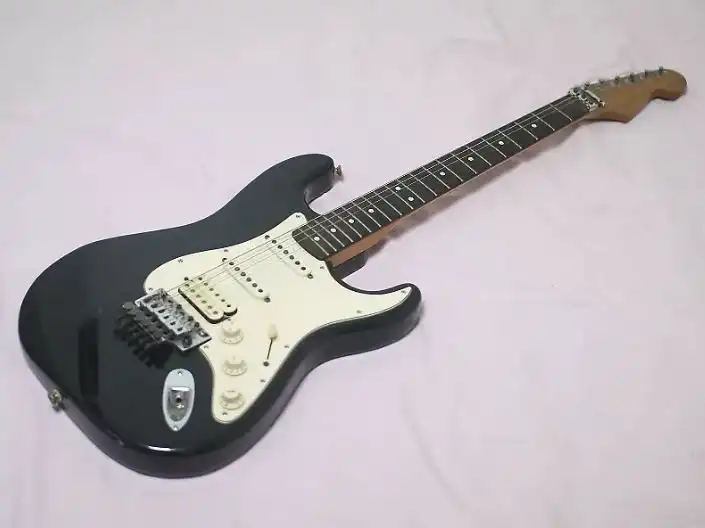
Between 1996 and 2000, Fender Japan produced the paisley-finished Richie Sambora Black Paisley Stratocaster STR-140RS. It was primarily intended for the Japanese domestic market.
In 1996, a limited number of units were also exported to the United States and Europe, where the instrument was marketed as the Richie Sambora Black Paisley Stratocaster.
The paisley pattern is derived from the boteh (or buta), a teardrop-shaped floral motif of Persian origin. The design returned to popularity in the 1960s, partly due to its visual affinity with the psychedelic aesthetics of the counterculture of the period.
Fender had previously used this finish—most notably in its pink variant—on a Telecaster model made famous by James Burton, longtime guitarist for Elvis Presley, as well as on a Stratocaster produced by Fender Japan.
Fender Japan produced additional Richie Sambora Stratocaster variants between 1996 and 2002, intended exclusively for the Japanese domestic market and not officially marketed abroad. These domestic models featured an alder body, 22 frets, a one-piece maple neck, and distinctive star-shaped fret markers.
The STR-135RS featured a DiMarzio PAF Pro humbucking pickup in the bridge position, along with two RS-Special single coils in the neck and middle positions. It also included a TBX tone circuit, a contoured neck plate, and a Floyd Rose Original double-locking tremolo system. The model was available in Cherry Burst and Snow White finishes.
The STR-160RSH was equipped with two Hot Noiseless single-coil pickups and a DiMarzio PAF Pro humbucker at the bridge. It featured a vintage-style bridge and an MDX switch, and was offered in Vintage White and Gold finishes.
The STR-160RSS came with three Hot Noiseless single-coil pickups, an MDX switch, and a vintage-style bridge. It was available in 3-Tone Sunburst.