Signature and Iconic Strats
Rory Gallagher Stratocaster
INSIDE RORY GALLAGHER’S LEGENDARY 1961 STRATOCASTER AND ITS TRIBUTE MODEL


Table of Contents
ToggleInside Rory Gallagher’s Iconic 1961 Stratocaster
An Open Book in Sunburst
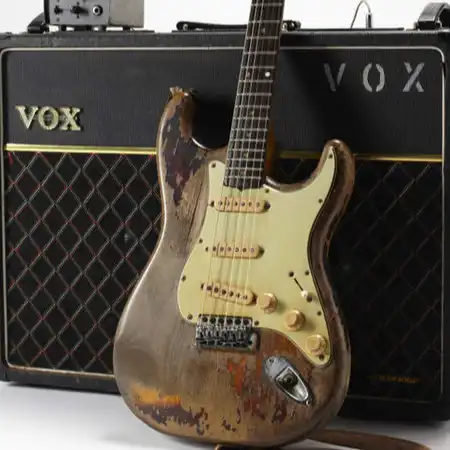
Few guitars in rock history are as deeply intertwined with the identity of a single musician as Rory Gallagher’s 1961 Fender Stratocaster. Worn to the bare wood after years of relentless touring, sweat-soaked performances, and endless miles on the road, the battered sunburst Strat became far more than a mere instrument—it was an extension of Gallagher himself. Every scratch and missing patch of finish told the story of a guitarist who lived entirely for the music.
Richard McDonald, who held numerous key positions within Fender between 1993 and 2018, defined Rory Gallagher’s Stratocaster as “an open book, like a diary of the journey his music had taken him on.”
Today, Rory Gallagher’s Stratocaster stands as one of rock music’s most revered symbols—a true relic in the original religious sense of the word, regarded by guitarists around the world as if it carried the very essence of Rory’s mojo.
Yet by the late 1970s, Fender executives were reportedly bewildered that one of the company’s most prominent artists continued to rely on such a heavily worn instrument. In 1979, Fender presented Gallagher with a brand-new 25th Anniversary Stratocaster in the hope that it would replace his battle-scarred 1961 model. The newer guitar, however, never replaced the original, which remained inseparable from Rory both onstage and off.
Yet Rory was never intentionally abusing his Stratocaster. On the contrary, he was deeply distressed when the instrument first began to deteriorate, especially considering the substantial amount of money he had paid for it.
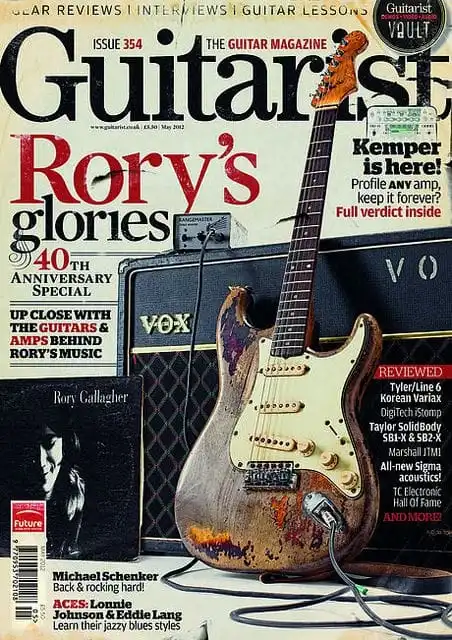

Following a show at London’s Marquee Club while performing with Taste, Rory noticed flakes of paint beginning to come away from the body as he cleaned the guitar. As Dónal Gallagher, Rory’s brother, later recalled, “He was actually really upset about that. It was losing the paint. It was never intentional. Nor did he take a hammer, chisel, and a saw, as most people used to think. That’s when it really started.”

The story behind Rory Gallagher’s 1961 Stratocaster
The Day Rory Gallagher Found His Stratocaster
Dónal Gallagher recalls that Rory had been drawn to the guitar from an early age and, still a student at 15, was already performing in a professional band. However, he soon felt the need for a higher-quality instrument than his Rosetti Solid 7 in order to progress further.
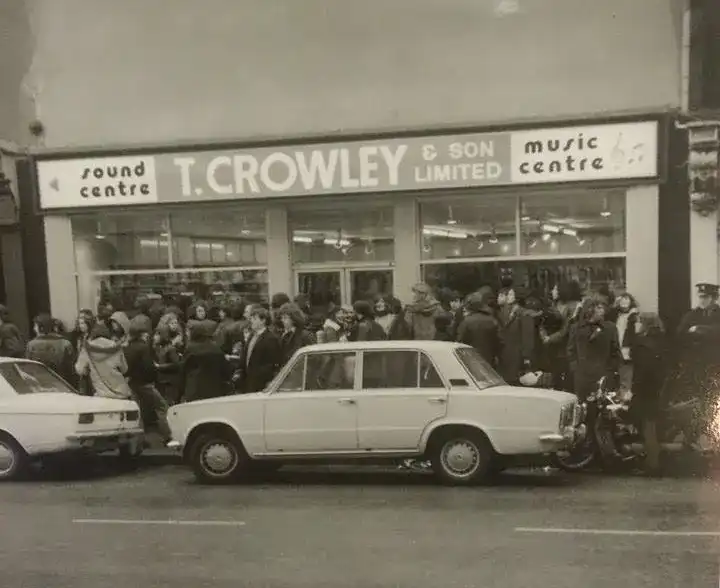
In 1963, while passing the window of Cork’s only guitar shop at the time—Crowley’s Music Centre on McCurtain Street—he noticed a striking 1961 Fender Stratocaster, similar to that played by Buddy Holly, though in reality a very different model of the Stratocaster. It immediately captivated him, and he fell in love with the instrument on sight.
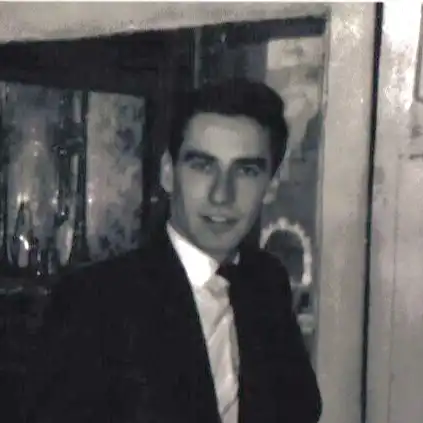
The guitar—serial number 64351—had originally been ordered for Jim Conlon, guitarist of the Royal Showband. However, Conlon had requested a Fiesta Red finish, similar to Hank Marvin’s, rather than the sunburst model that arrived at Crowley’s shop. As a result, he used the Stratocaster for around six months while waiting for the Fiesta Red Stratocaster to arrive from Fender.
Once the correct instrument finally reached Ireland, the sunburst guitar was placed on sale at Michael Crowley’s music store.
It was offered for sale as a second-hand instrument for £100, a price well beyond what someone like Rory could afford at the time. However, he was determined to own the Fender so much that, after some negotiation, the shop’s owner, Michael Crowley, agreed to sell it to him for £80 along with his Rosetti.
The two brothers brought the guitar home and hid it under Dónal’s bed.

When Rory Gallagher’s Strat Was Stolen—and Became a Relic
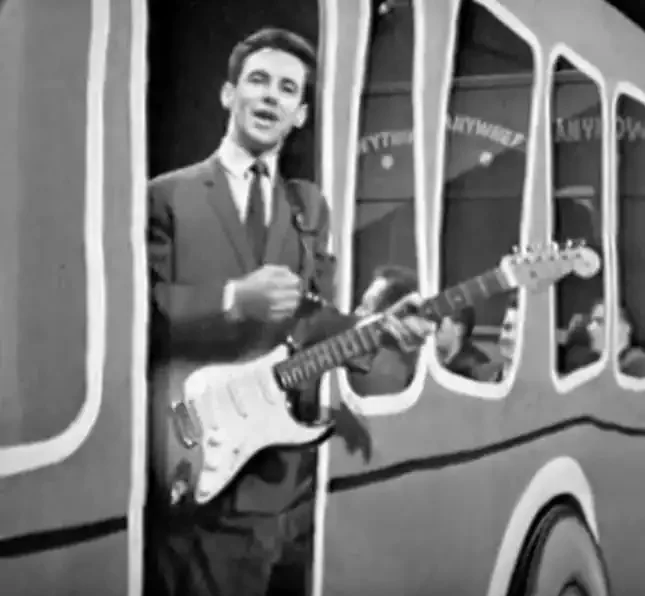
Unfortunately, in 1967, the Stratocaster was stolen, along with a Telecaster that Rory had borrowed and kept in the van used to transport his instruments. Deeply upset, Rory contacted the producers of the Garda Patrol TV program on RTÉ, then the only Irish television station, asking for help, and they subsequently broadcast a report on the incident.
As a result, the guitar—now considered too recognizable and “compromising” for thieves and fences—was abandoned in a moat, where it remained exposed to the rain for several days before it was eventually found and recovered.
“I had it stolen one time, following a brief appearance at the Five Club to visit Pat Egan about the Dublin scene, and it got very beaten up then. I had borrowed a Telecaster, and it and the Tele were nicked. […] Both guitars were found behind a front garden wall on the South Circular Road, with some of the strings missing and the bodies knocked about, but thankfully, they were OK,”
Rory Gallagher
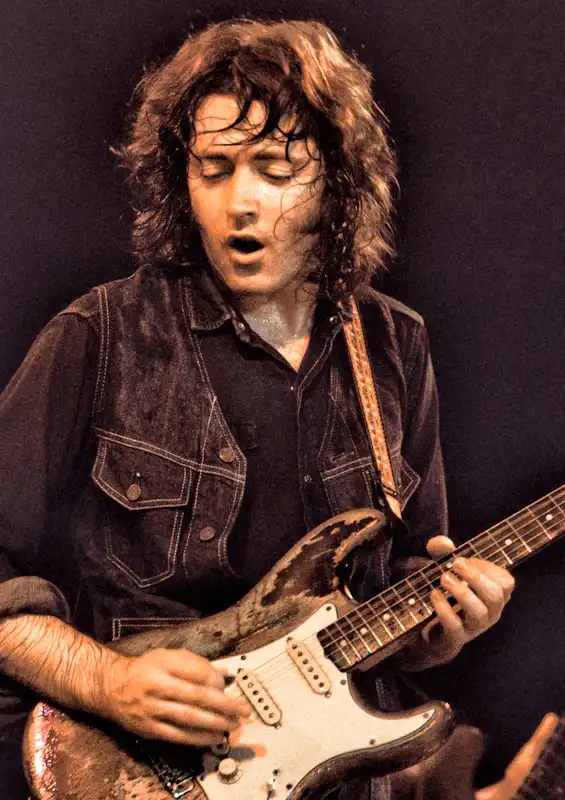
In the meantime, the Stratocaster was exposed to the harsh Irish climate, which is likely when the wear of its original finish first began.
However, the primary factor in this process was arguably Rory himself. His right-hand strumming was so aggressive that it eventually carved a visible groove above the pickguard, clearly marking his preferred picking position.
Furthermore, according to some accounts, he may have had unusually acidic perspiration linked to a rare blood type, also said to have affected his liver, and he was known to sweat heavily during performances.
Together with the countless concerts he performed over the years, these factors helped transform his Stratocaster into what Fender would later refer to as a “battle axe.”
Pickups and Electronics
Originally, Gallagher’s guitar was a typical 1961 Stratocaster, featuring an alder body, a nitrocellulose three-tone sunburst finish, a three-ply pickguard, and a “C”-shaped neck with a 7.25-inch radius slab rosewood fingerboard.
However, it was extensively modified over the years.
Rory regularly experimented with different pickups on his Stratocaster, driven by both necessity and curiosity.
During the 1970s, Rory replaced the Stratocaster’s neck and bridge pickups after both failed within a week of each other, reportedly due to moisture. “Recently, two pickups went belly-up at the same time; they just cut out when I was playing. I was terrified that I wouldn’t be able to get new pickups to sound the same, but fortunately, they matched perfectly,” Rory recalled in an interview with Ray Hammond for International Musician and Recording World in April 1975.
Unfortunately, Rory never specified which pickups ultimately replaced the originals. However, it is interesting to note that by the mid-1970s, the bridge pickup cover appeared virtually new, while the other two had already yellowed with age. For reasons that remain unclear, the neck pickup retained its original cover while the bridge pickup received a replacement, despite both pickups reportedly failing around the same time. It has never been clarified whether this change involved only the cover or a full pickup replacement.
From 1982 to 1984, the bridge pickup featured a black cover—clearly visible, for example, in photographs of Rory performing at the Ripley Music Hall in 1982—although it remains unclear whether this was simply a replacement of the cover or an entirely different pickup.
Rory later returned to a white cover, but there is no way of knowing how many times the Stratocaster’s pickups were repaired, rewound, or replaced over the years.
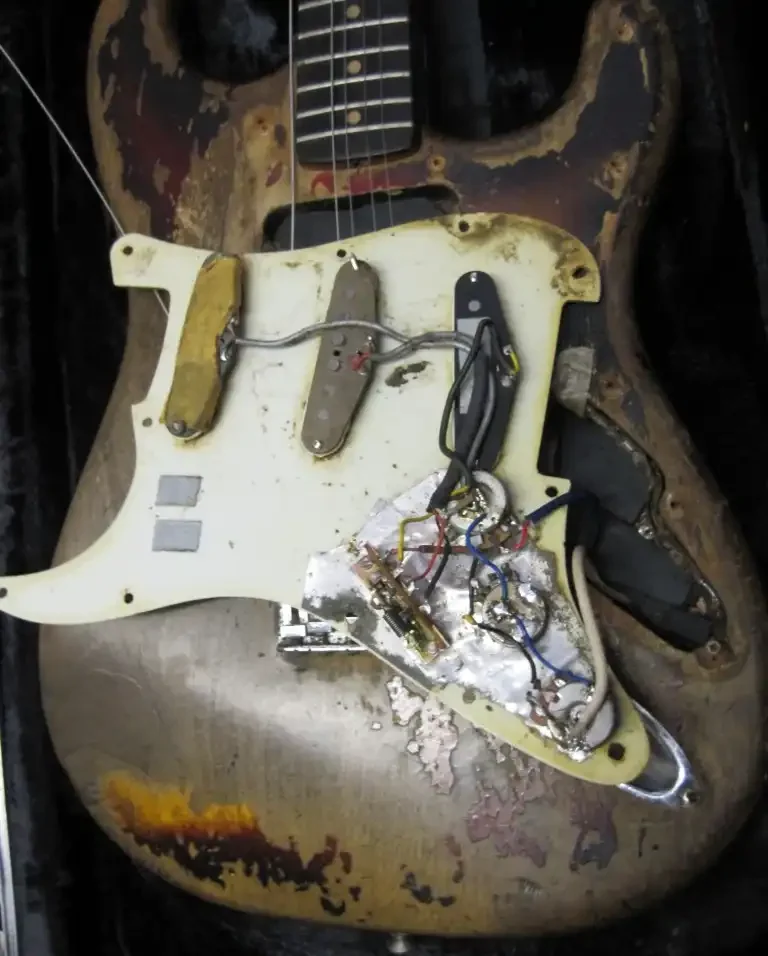
Following Rory’s passing, the pickups were examined by Kent Armstrong, who had been asked by Dónal Gallagher to recreate Rory’s original pickup setup. Armstrong stated that the neck and middle pickups were standard 1970s Fender units.
According to Armstrong, the bridge pickup was one of the earliest DiMarzio FS-1 models. “FS” stood for “Fat Strat,” reflecting the pickup’s slightly higher output and fuller low-end response compared to a traditional Fender single-coil.
For a period, Rory also experimented with a Fender X-1 bridge pickup, which he referred to as the “Hot X100” in the February 1985 issue of Guitarist magazine. He eventually returned to the FS-1.

Hardware Modifications and Structural Changes
Beyond the pickups themselves, several other components of the Stratocaster were modified or replaced over the years. The original three-way selector was replaced with a five-way switch, and the first tone control was disconnected, with the second serving as the master tone control.
The pickguard was replaced with an identical one in the second half of the 1960s, as the original had shrunk due to heat exposure during live performances with Taste.
The original Kluson tuning machines were first replaced with Schaller tuners, and later with a set of six Sperzel tuners with split shafts. At some point, the low-E string tuner broke, and Rory replaced it with a Gotoh tuner.
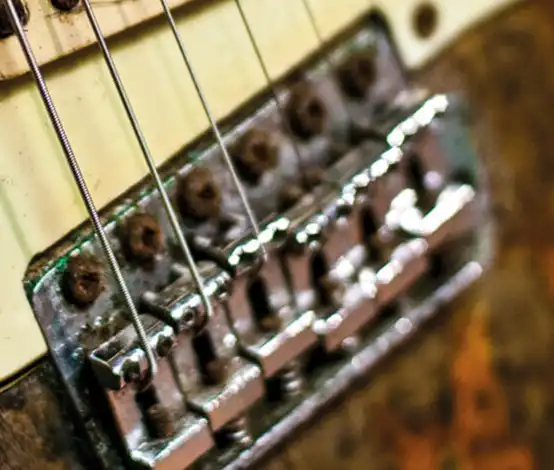
A white plastic fret marker replaced one of the clay dots at the twelfth fret, while the bridge was swapped for a ’70s-style unit (likely by Stars Guitars), which the guitarist then blocked with a piece of wood.
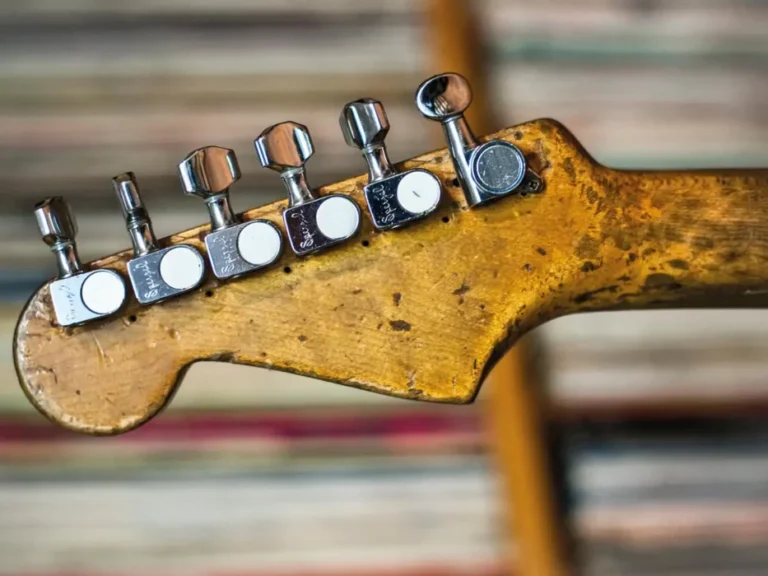
In an interview with Strat Masters Interview, Rory stated that the neck—by then stripped of all finish and with a back so dark and stained that it no longer resembled maple—was removed and left to dry for six months. This was due to the large amount of moisture and sweat it had absorbed during performances.
However, it is likely that the original neck was replaced on more than one occasion, as Rory explained in the February 1985 issue of Guitarist: “I’ve had to take the neck off occasionally and dry it out—it was getting damp with doing so many gigs, and I started to have tuning problems”.
The replacement neck, selected by his technician Chris Eccleshall, who worked with him from 1971 to 1985, could be identified by the absence of the white fret marker at the twelfth fret.
Rory occasionally added and removed a string tree from the guitar. However, the presence of the white fret marker at the twelfth fret makes it possible to distinguish the original neck from the replacement.
Over the years, repeated refrets—at least 18, according to Chris Eccleshall—gradually flattened the fingerboard radius to approximately 9.5 inches.
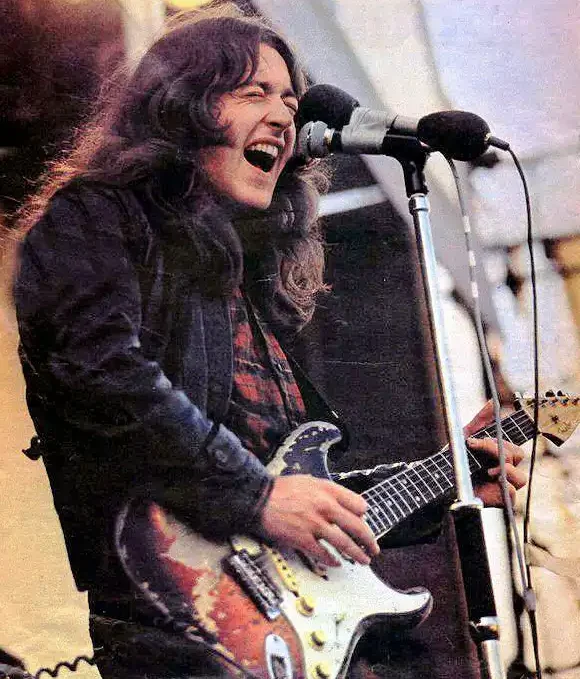
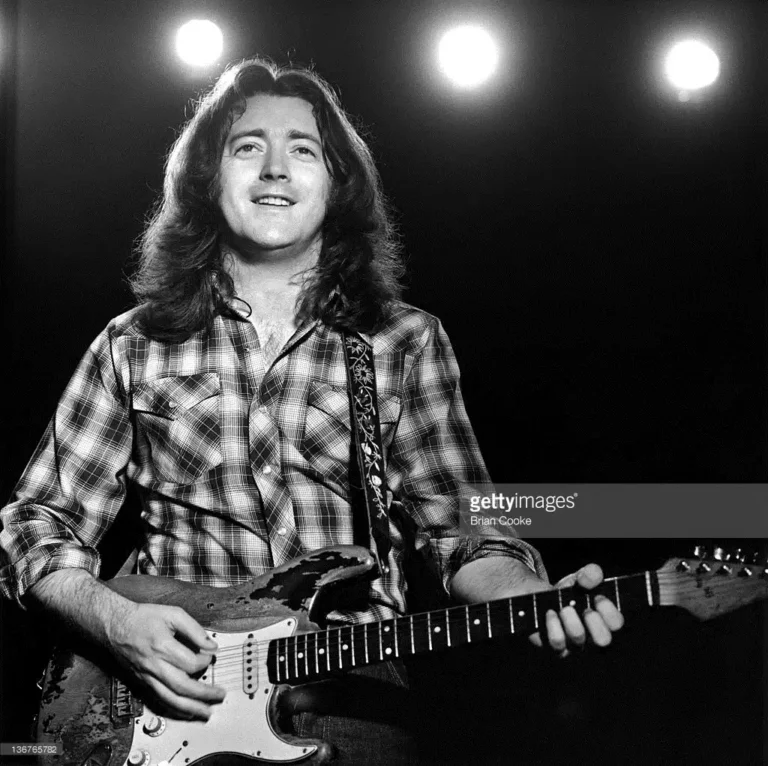
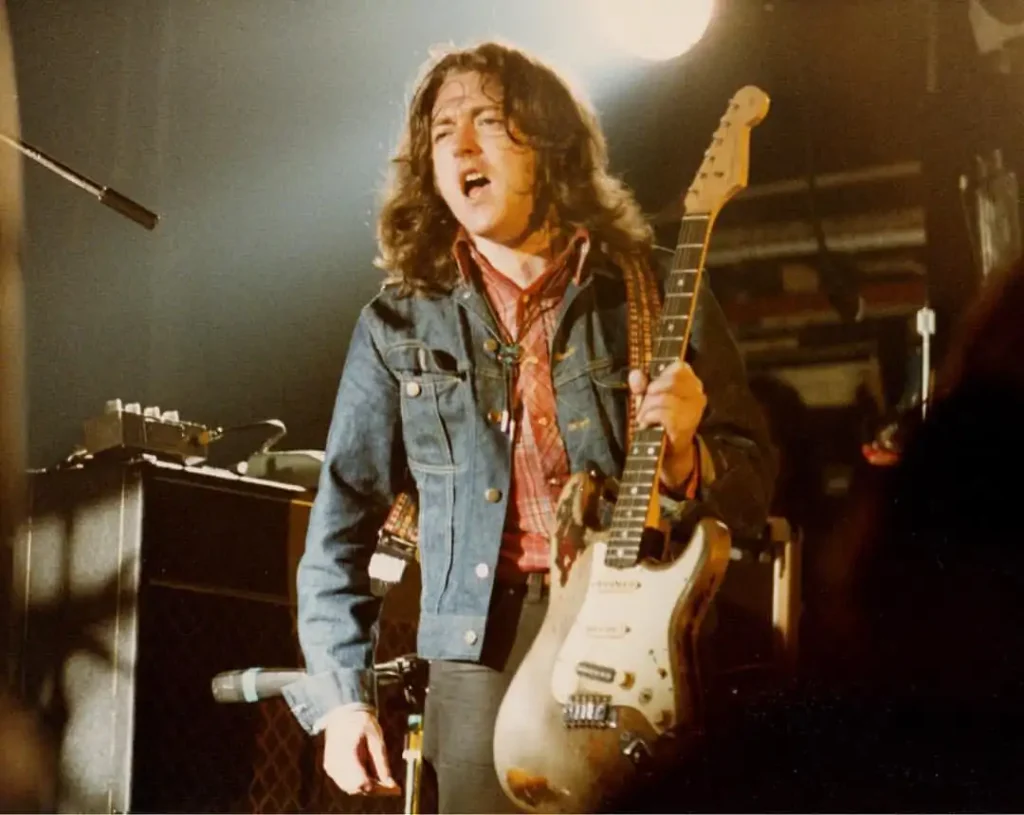
From top to bottom: 1) Rory Gallagher at the Isle of Wight Festival, 1970. The guitar is not yet heavily worn and features only one string tree. 2) Rory at Covent Garden, 1979. Original neck with the replacement white fret marker at the twelfth fret and two string trees. (Photo: Brian Cook/Getty Images) 3) Rory at the Ripley Music Hall, Philadelphia, 1982. Original neck, a single string tree, and the black bridge pickup cover. (Photo: Jon Hahn)
From left to right: 1) Rory Gallagher at the Isle of Wight Festival, 1970. The guitar is not yet heavily worn and features only one string tree. 2) Rory at Covent Garden, 1979. Original neck with the replacement white fret marker at the twelfth fret and two string trees. (Photo: Brian Cook/Getty Images) 3) Rory at the Ripley Music Hall, Philadelphia, 1982. Original neck, a single string tree, and the black bridge pickup cover. (Photo: Jon Hahn)

A Guitar That Became a Legacy
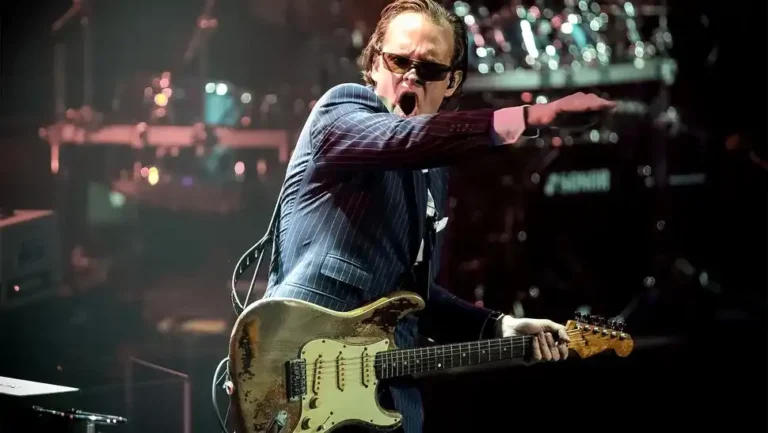
Joe Bonamassa had the opportunity to play Rory’s Stratocaster in 2011 and later recalled: “Rory played a bunch of guitars in his time, but the ’61 is the guitar. There is no other. When it came out of the gig bag, I was floored. There I was, looking at a piece of history. The contours, the heel, the fretboard… You could really feel that he’d played it and made it his own.”
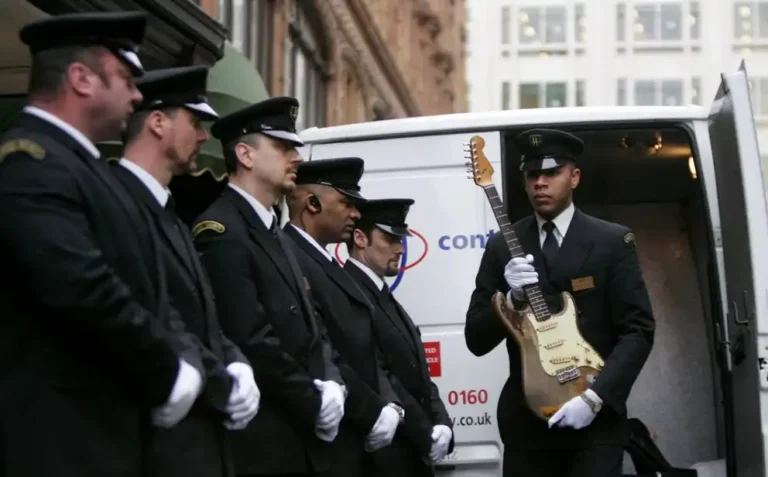
Since Rory Gallagher’s passing in 1995, the guitar — aside from several museum exhibitions — has remained in the care of his brother and former manager, Dónal Gallagher.
Considerable public debate followed the announcement of its sale in July 2024, with Irish politicians and Sheena Crowley—daughter of Michael Crowley, the man who originally sold Rory the instrument—campaigning to keep the Stratocaster in Ireland.
“This guitar means so much to us in Cork, and we need to become the custodians of that magical guitar,” Crowley stated at the time. “We feel tied to him, and the guitar is a symbol of what he represents for us.”
Joe Bonamassa also supported the campaign and later described the news that the guitar would be donated to the National Museum of Ireland at Collins Barracks in Dublin as “the best news I’ve heard all year.”
Purchased by Live Nation Gaiety Ltd for approximately $1.16 million, the Stratocaster became one of the most expensive Fender Stratocasters ever sold at auction.
More than six decades after Rory first carried it home from Crowley’s shop in Cork, the battered Stratocaster remains not merely a guitar, but a physical document of an entire musical life—every scar, modification, and worn patch of wood bearing witness to the intensity with which Gallagher lived and played.


Rory Gallagher Tribute Stratocaster
As Rory Gallagher’s Stratocaster had become a true cult object, particularly among Fender employees, the tribute project emerged as a highly significant undertaking with strong media resonance and emotional impact.
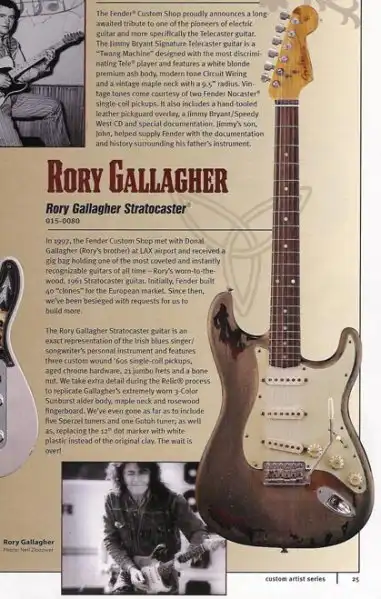
John Cruz was not yet a Master Builder when, in 1997, he was asked to produce several copies of the instrument for Fender’s German distributor.
Mike Eldred of the Custom Shop met Dónal Gallagher at Los Angeles International Airport in order to borrow Rory’s original guitar. “It was a big honor just to hold something that such a great artist had played so much blazing music on,” Eldred recalled.
The day after, Master Builder John English took the Stratocaster and began analyzing it; there were so many “strange” details and small modifications beneath the pickguard that every time he discovered a new one, he would call out: “Cruz! Come here! Take a look at this!”
It took John Cruz two or three days just to strip the finish from the prototype and replicate the features of Rory’s guitar body.
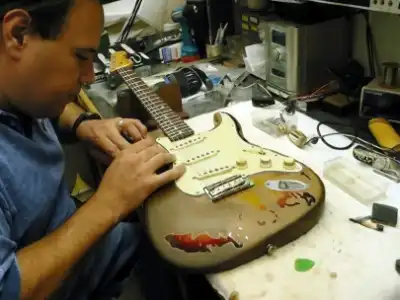
“It was so cool […]. One night, after everybody went home, I plugged it in and just really cranked it. What a great experience to play that guitar!” John Cruz recalled in an interview. “To be honest, Rory’s Strat wasn’t the easiest guitar to play.”
Perhaps the appeal of the Irish musician’s Stratocaster lay precisely in this: it was a kind of “stallion” that had to be tamed, and to which a player needed to adapt. For this reason, Cruz decided to make the replica more player-friendly by shaping a more comfortable neck.
Once completed, the prototype was sent to Dónal Gallagher, who was impressed by how faithfully it replicated the original and granted permission to produce 40 Rory Gallagher Tribute Stratocasters.
That said, the differences between the Tribute model and Rory’s original Stratocaster were numerous. Several hardware and electronic details also differed from the original instrument, including the bridge, which featured a vintage-style six-screw unit with “FENDER” stamped on the saddles.
Most significantly, Fender chose to apply the patent numbers “PAT 2,573,254 2,741,146 2,960,900” on the headstock—markings that only began appearing on Stratocasters in 1962 and were therefore not historically correct for Rory’s 1961 instrument.
The first 40 units were built by John Cruz in 2000. At the time, he had not yet attained Master Builder status, which explains why these initial 40 guitars did not bear his signature on the back of the headstock.
The project proved so successful that, in 2004, Fender resumed production as a Team Built Custom Artist model under John Cruz’s supervision. Cruz subsequently trained the entire Custom Shop staff in the techniques and specifications he had used for the original run of 40 guitars.
Initially, Team Built production was relatively limited before gradually increasing over time. Early Rory Gallagher Stratocasters were equipped with a five-way switch; later, a three-way switch was first included in the accessory kit and subsequently installed as standard on production models.
In 2010, the model was renamed the Rory Gallagher Signature Stratocaster.