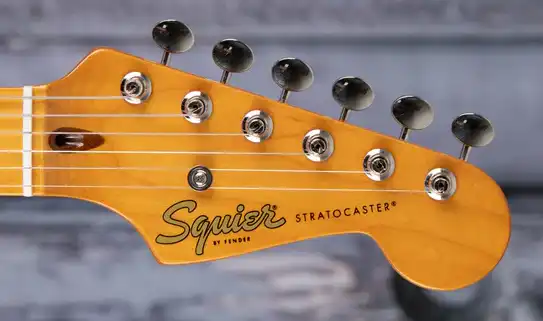
Squier Made in China and Indonesia #5
Squier Classic Vibe Series
THE FIRST AND THE SECOND SERIES


Table of Contents
ToggleFirst Series
The Classic Vibe Series was introduced in 2008 under the direction of Chris Gill, who became Squier’s Product Manager after Justin Norvell left in 2005 for a Fender marketing role. The goal was to “impart the vibe of classic Fender designs.” Originally planned for Squier’s 25th anniversary in 2007, development setbacks delayed the launch by a year.
Classic Vibe Stratocasters were built in China at Grand Reward and recreated the look and feel of 1950s and 1960s Stratocasters, though not strictly to vintage specifications.

The Classic Vibe ‘50s Stratocaster was presented as delivering the unmistakable tone of the 1950s—clear, brilliant, authentic, with remarkable sustain thanks to the Fender STA5 Alnico III Custom Staggered pickups, designed for better volume balance across the strings. It was initially available in 2-Color Sunburst with a tortoiseshell pickguard.
The Classic Vibe ‘60s Stratocaster evoked the sound of 1960s Stratocasters, offering rich tone and strong attack thanks to the Fender STA3 Alnico V Custom Staggered pickups. It was first available in 3-Color Sunburst with a tortoiseshell pickguard.
Both models featured an alder body and a gloss maple neck with a modern 9.5” radius fingerboard and 21 frets. The ‘60s model came with a rosewood fretboard, replaced by Indian laurel in 2018. The ‘50s had a maple fretboard.

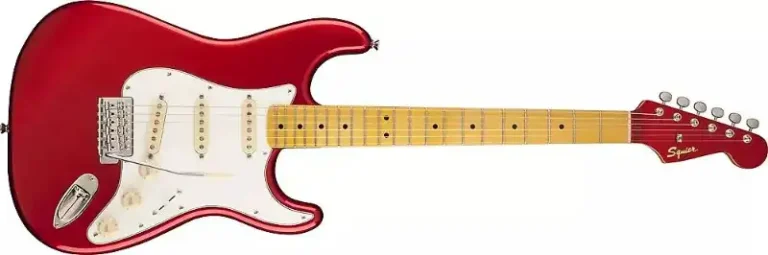
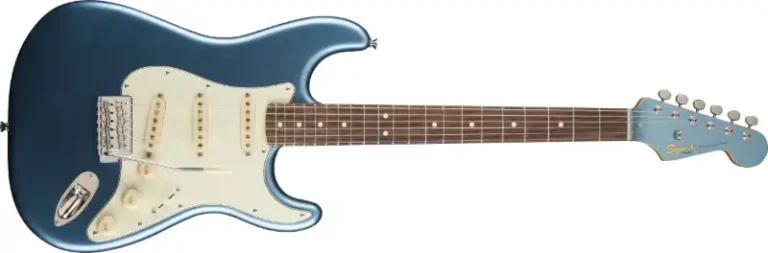
Over the years, the Classic Vibe series has undergone several updates, including new finishes and limited-edition models. Notable examples include the 2013 FSR ‘50s Candy Apple Red and ‘60s Lake Placid Blue Stratocasters, both featuring matching headstocks, and the introduction of a left-handed version in 2012.

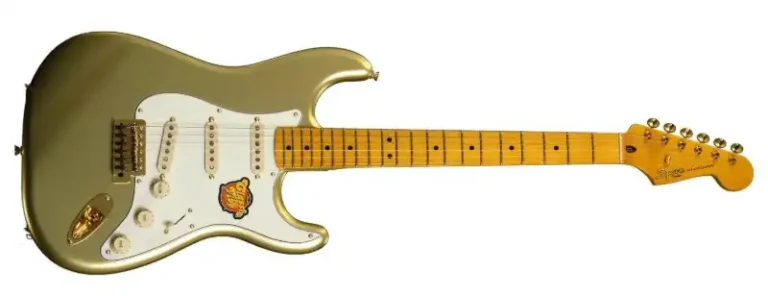
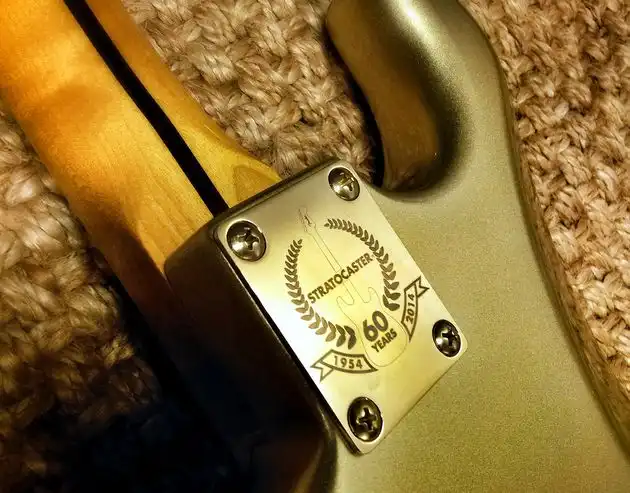
In 2014, to commemorate the 60th anniversary of the Stratocaster, Squier released the 60th Anniversary Classic Vibe ‘50s Stratocaster, finished in Aztec Gold and featuring a commemorative neck plate.
There is a widespread belief that these guitars were equipped with Tonerider pickups, but this is not entirely accurate. While the Grand Reward factory manufactured pickups for both Tonerider and Squier, pickups for the Classic Vibe Stratocasters were designed specifically for them. The Classic Vibe ‘50s Strat STA5 and Tonerider Surfari TRS5, as well as the Classic Vibe ‘60s Strat STA3 and Tonerider Classic Blues TRS3, share similar construction and tonal qualities but are not identical.
The Classic Vibe series quickly gained a reputation for delivering high-quality tone at an affordable price. For many players, it marked a revival of Squier’s credibility as a maker of instruments that could stand proudly beside their Fender counterparts. Even years after their release, early Classic Vibe models continue to be praised for craftsmanship, playability, and enduring appeal.

Second Series
In 2019, the Classic Vibe series was revamped, and production was moved to Indonesia due to rising manufacturing costs and import taxes in China. However, as Fender encountered difficulties getting all their orders fulfilled by the Indonesian factories, some Classic Vibe models produced between 2020 and 2021 were once again manufactured in China. These Chinese-made instruments, though, were built to the same specifications as the second-generation Indonesian models, ensuring consistency across the series.
The new Classic Vibe ‘70s Stratocaster was introduced in both SSS and HSS configurations, while the ‘50s and ‘60s Stratocasters were completely redesigned. A new Squier Modern Logo appeared for the first time on these guitars—black on the ‘70s models and gold on the others.
At first, the new Classic Vibe line was perceived as slightly lower quality than the previous series, despite the addition of Fender-Designed Alnico pickups and a bridge with double-stamped “SQUIER” saddles.
The body woods also changed, with materials such as nato (nyatoh), soft maple, pine, and poplar replacing the alder used in earlier versions. Often referred to as ʽEastern Mahogany,’ nato offers similar looks and characteristics to mahogany, but it is a cheaper and lower-quality wood due to its mechanical-acoustic characteristics.