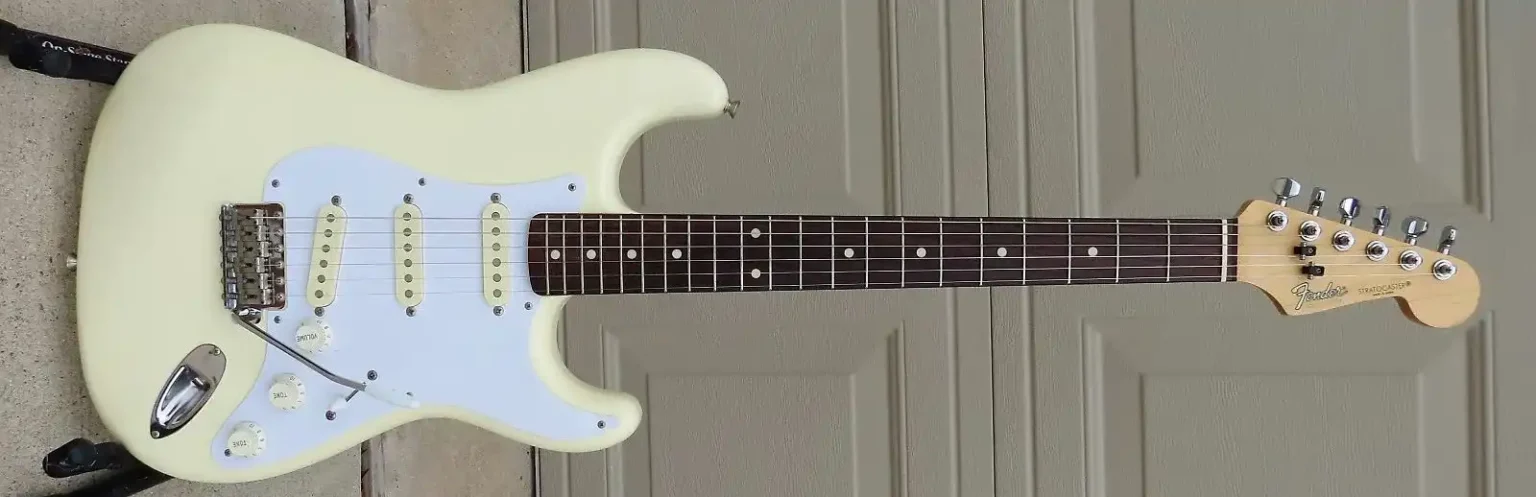
Fender Japan Part #4
Standard Stratocasters Made in Japan
VINTAGE JAPANESE STANDARD STRATOCASTERS GUIDE
Table of Contents
ToggleStandard vs Reissues
Fender Japan used the Standard line to offer affordable, performance-focused guitars that appealed to a wide range of players.
While the reissue models were intentionally styled after classic ’50s and ’60s Fenders, featuring a 6-saddle bridge, bent steel saddles, and the traditional “Spaghetti” logo, the Standard line reflected a more modern approach.
These guitars had a silver CBS-style logo on the headstock, indicating Fender Japan’s effort to create a modern instrument that matched the look and functionality of the American-made Standard Stratocasters from the same era.
A common mistake is to label these guitars as ’50s and ’60s, or ’57 and ’62, if they have a maple or rosewood fingerboard, respectively. However, that terminology refers specifically to the reissues, and it is incorrect to use it for the Standard models.
Like their popular reissue counterparts, Japanese Standard Stratocasters can be categorized into two main groups: instruments made exclusively for the domestic Japanese market and those designed for export to Western markets.
Domestic models
The first Japanese Standard Stratocaster, the ST83-80, debuted in 1983 and was available for only a single year. Visually and functionally, it closely mirrored the U.S.-made Standard Stratocaster of the same era—known as the “2-Knob Strat” because its output jack replaced the second tone control. The primary distinguishing feature was the 22-fret fingerboard of the Japanese model, compared to the 21-fret fingerboard of the American version.
Both featured a Bi-Flex truss rod, Freeflyte tremolo system, a 12-inch-radius fretboard, Micro-Tilt adjustment, and American flat-pole pickups.
Numerous other Japanese Standard Stratocasters followed, most featuring basswood bodies, polyester finishes, and ceramic pickups.
An intriguing detail about the Standard Stratocasters keeps collectors talking. After 1997, all Japanese Standard models, such as the ST-38, sported a silver CBS-style headstock logo paired with a “Made in Japan” decal, despite being produced during the “Crafted in Japan” era.
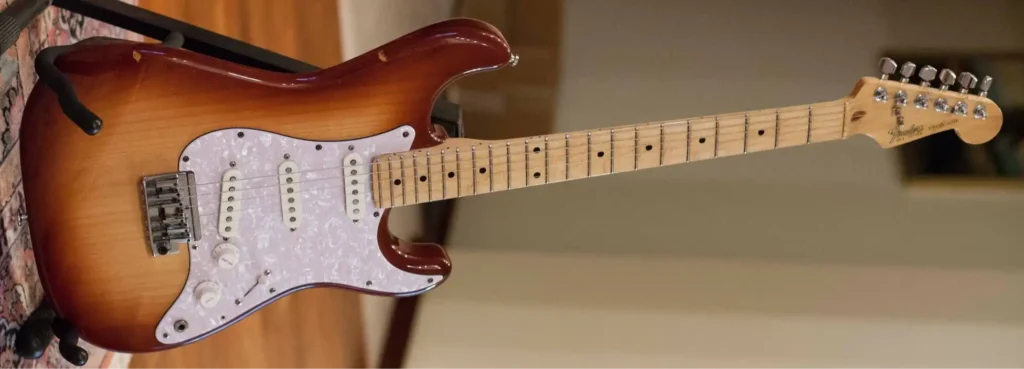
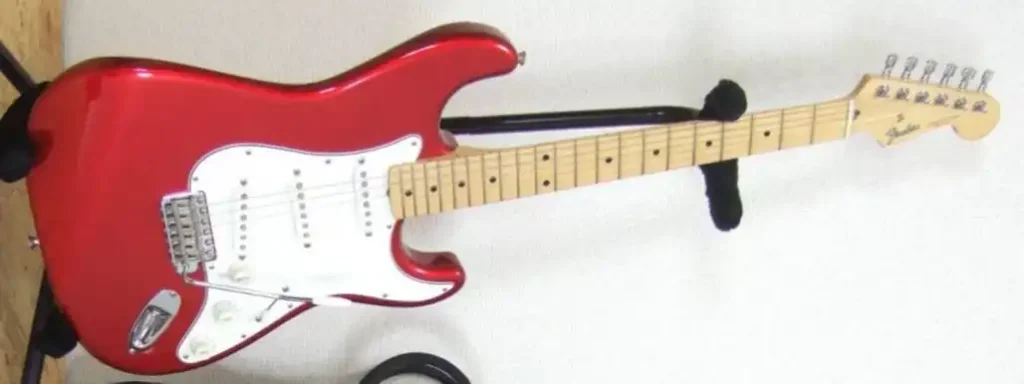
Export models
Export Japanese Standard Stratocasters were built with basswood bodies and often varied widely in appearance, offering something for nearly every player. They could carry either the Fender or Squier brand and were available with either a fretted maple neck or a rosewood fretboard, catering to different tastes.
Squier-branded
Two Squier Standard Stratocaster models had been made:
The 27-8800/2, produced between 1987 and 1988, boasted a bolder, more aggressive look, featuring a Fender Tremolo System I bridge paired with a string clamp for extra stability.
The 27-4600/2, produced from late 1984 to 1988, adopted a more traditional approach, featuring the classic vintage-style tremolo. Players sometimes mistakenly label these as Squier ’50s Stratocasters (maple-neck) or Squier ’60s Stratocasters (rosewood-fretboard). With its basswood body and approachable price, the 27-4600/2 became the ideal choice for players drawn to the Vintage series but without the means to own one, offering the feel and spirit of a classic Strat at a fraction of the cost.
In 1988, when production of the Squier brand was moved to Korea, the model was effectively “promoted” to Fender. The fourth iteration of the Fender Standard Stratocaster, produced from late 1988 to 1990, was virtually identical to this Squier Standard—the only difference being the headstock decal—so much so that the model number remained unchanged.
Full guitar
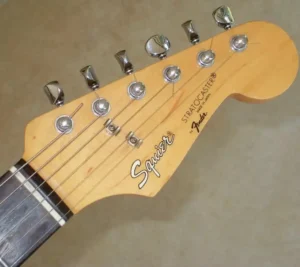
Headstock
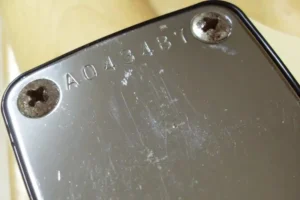
Neck Plate
Squier Standard Stratcaster, model 27-4600, “A” Series
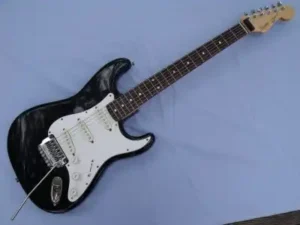
Full Guitar

Decal
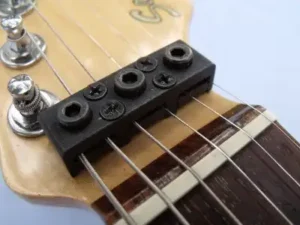
String Clamps
Squier Standard Stratocaster, model 27-8800 (photo credit: axesboldaslovejimidavis)
Fender-branded
Fender Standard Stratocasters differed from Japanese reissues in their silverish ’70s-style logo and their flat-pole pickups.
Over the years, four models were released. The first three followed a consistent design approach, while the final model represented a noticeable shift in direction.
Common features among the first three Standard Stratocasters included a flat fretboard and smaller dot inlays compared to both American models and the earliest Japanese guitars.
Model 27-4300/2
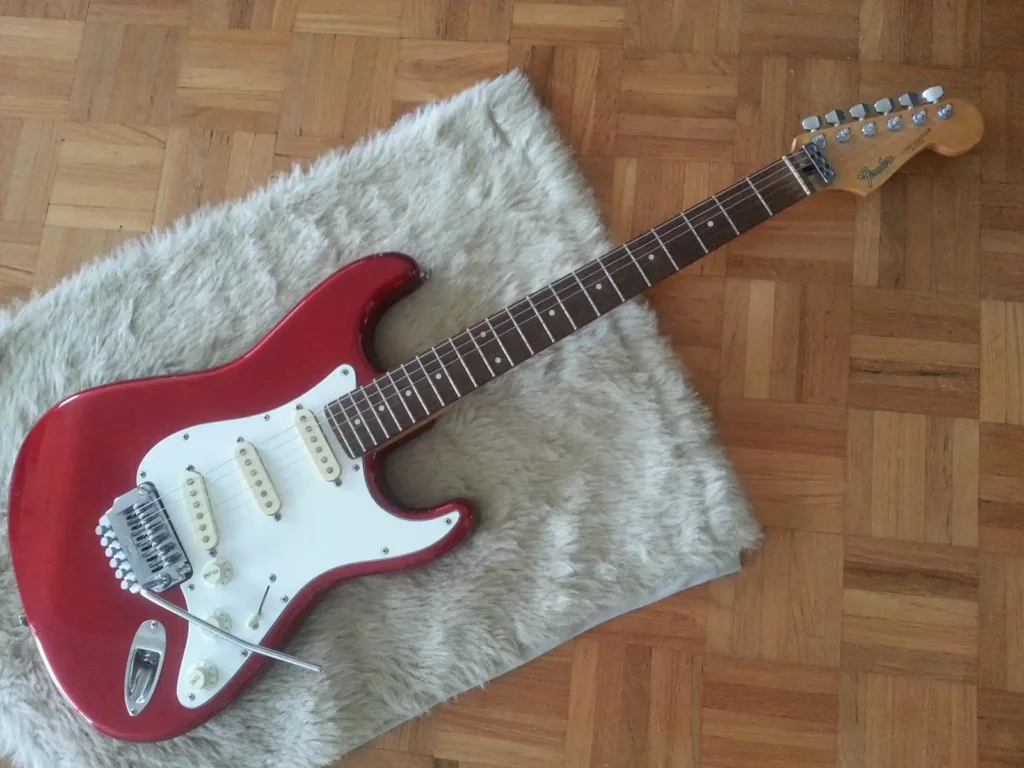
The first model, the 27-4300/2, produced between 1985 and 1987, was sometimes mistakenly grouped with the Contemporary series models due to its more aggressive look. It featured 22 frets and was equipped with a Fender System I bridge.
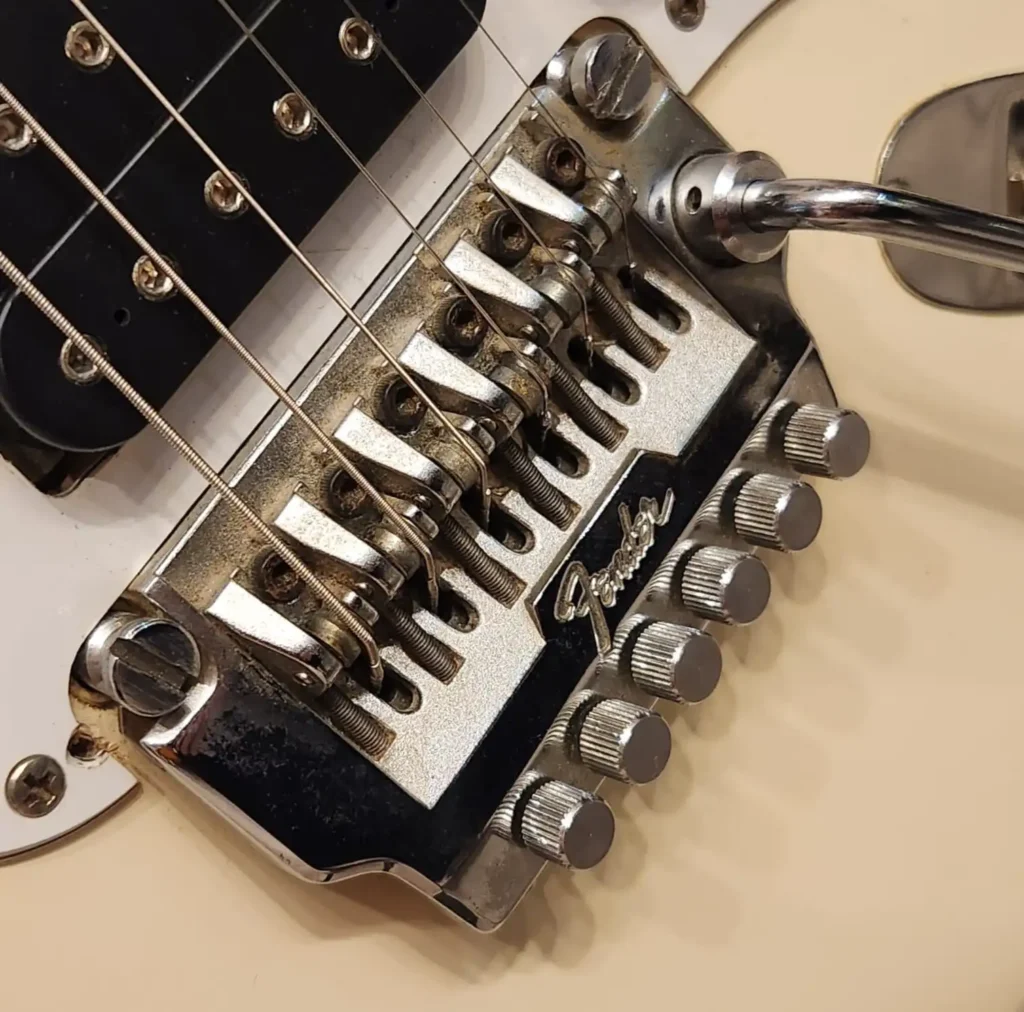
The System I used a behind-the-nut string locking mechanism. Saddle heights were not individually adjustable, but intonation could still be set, and the bridge height could be adjusted using the two pivot screws that secured it to the guitar.
The advertisement said, “System I with a conventional headstock locking system behind the nut is a 3-vise system that uses an allen wrench. The fine-tuning, floating bridge had two knife-edge pivots, height-adjustable pivot posts, roller saddles, and a snap-in adjustable tremolo arm.”
Model 28-4300/2
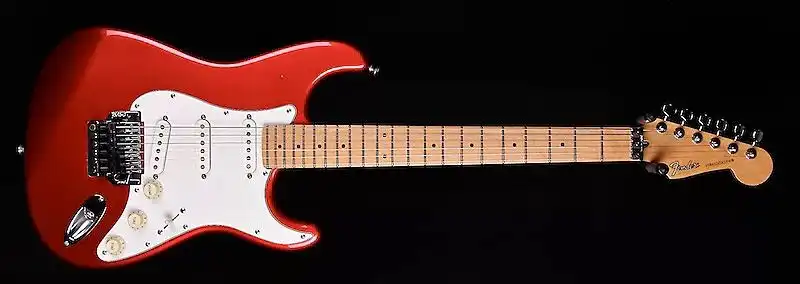
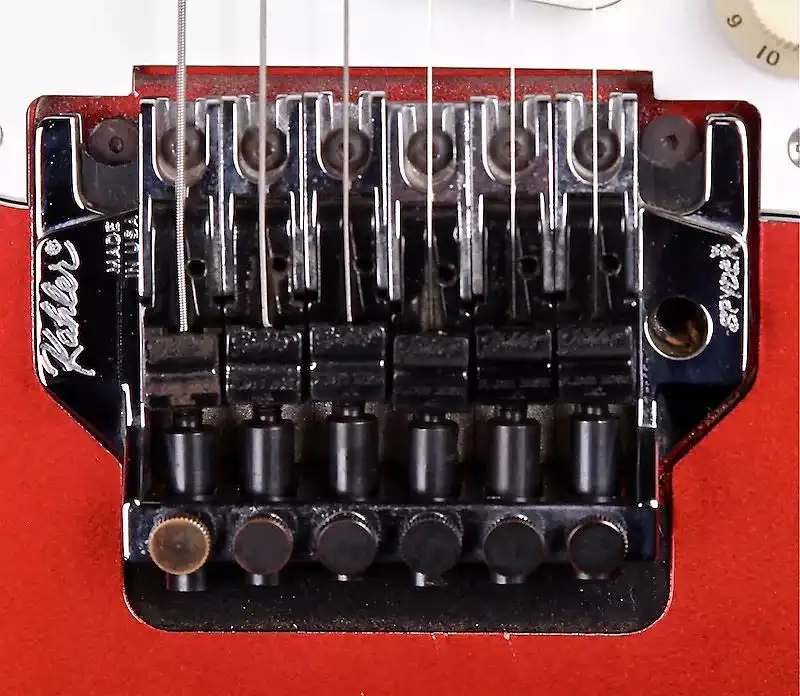
The second model, the 28-4300/2, was released in 1987 and differed from its predecessor by featuring a Kahler Traditional 2520 Fulcrum Tremolo, a fulcrum-based system designed as an alternative to the standard Fender tremolo.
The “Kahler Traditional Series fulcrum tremolos adjust to you and your style (not the other way around). Our new bridge saddles allow you to set intonation and string spacing all independently. Now you don’t lose control of feel and sound. Our new roller saddle locks solidly on the tremolo mounting plate to ensure solid harmonic transfer for superb tone and sustain. You can also lock out any roller movement you prefer. Separate screw adjustment allows you to choose easy or resistant tremolo arm rotation,” said the advertisement.
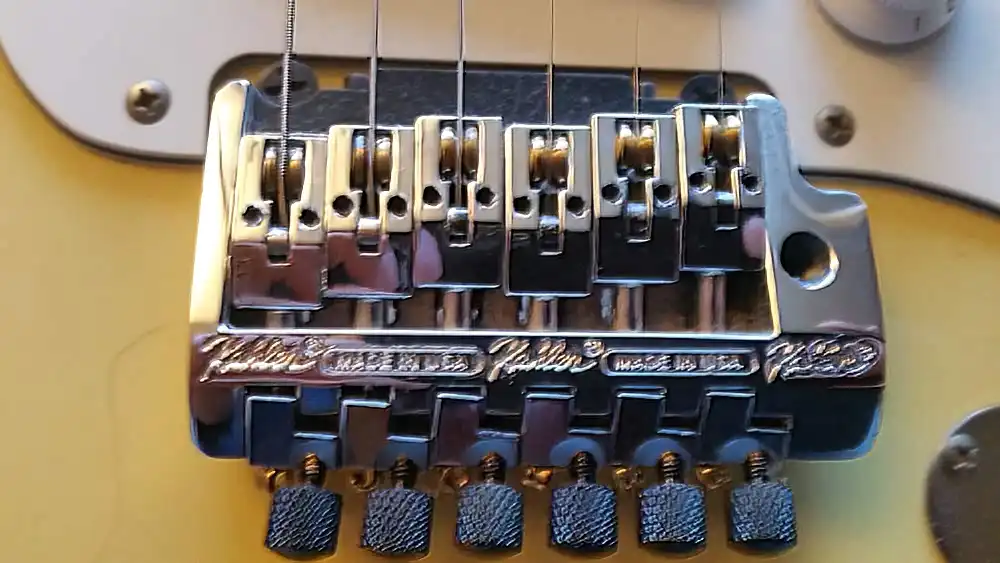
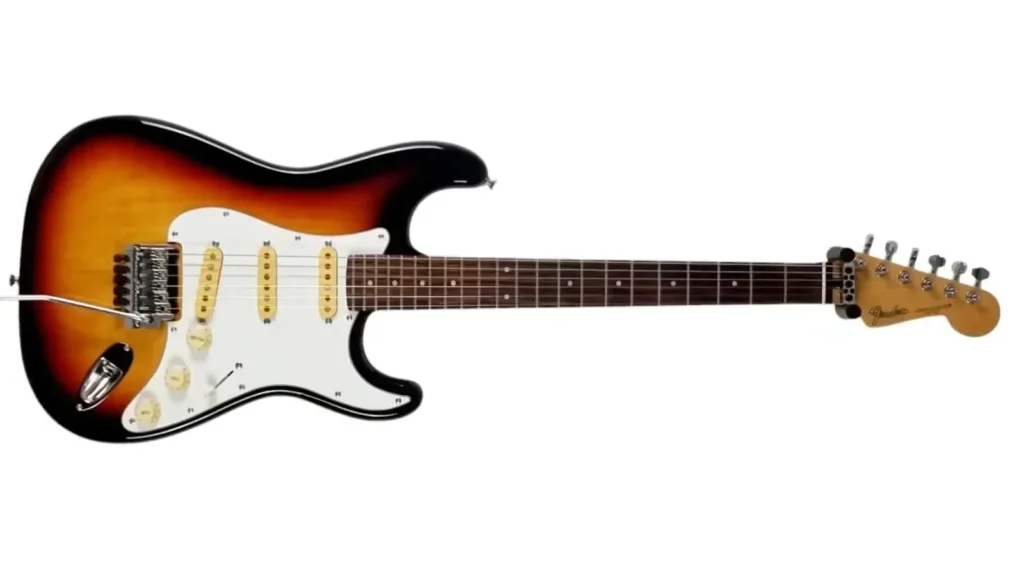
This wasn’t a typical high-quality Kahler unit. For example, the machining and plating weren’t the best. However, the design was neat and, for the most part, ingeniously executed. The bridge was a solid, heavy cast-alloy block, with a spring system identical to that of a Strat. The fulcrum was achieved using two hefty screws that anchored into the front edge of the block.
The system was designed as a direct retrofit for a standard Strat tremolo with no additional routing required. However, the two large screws anchoring it to the body were of a larger diameter than a Stratocaster’s stock holes, so the existing holes had to be enlarged.
Model 25-4300/2
Between 1988 and 1989, a third model, the 25-4300/2, was released, featuring a Kahler Spyder Tremolo and a locking nut.
“The Spyder is one of our most innovative bridges. This Double Locking fulcrum style bridge offers maximum sustain with steel witness points and Kahler’s own patented knife bolt hinging system. Wider stud spacing allows for easy retrofit to many guitars. The Spyder is Auto-Latch ready, and other options include finger-locking and non-locking saddle sets. The Spyder is durable and economical yet flexible enough to meet every player’s needs.”
Oddly enough, this guitar is almost always missing any “MADE IN JAPAN” label, whether on the headstock or at the base of the neck, even though its Japanese origin is obvious. Guitars bearing that decal are very rare.
Model 27-4600/2
The fourth and final Fender Standard Stratocaster made in Japan, the 27-4600/2, was produced between late 1988 and 1990 and featured a more traditional design. It featured two string trees, 21 frets, a 7.25” fretboard radius, truss rod adjustment at the heel, a single-layer pickguard, and a vintage-style bridge.
While fundamentally different from the first Japanese Standard models, it was virtually identical—apart from the headstock decal—to the last Squier Standard Stratocaster previously made in Japan. With the transfer of the Squier brand to Korean factories, Fender effectively continued producing the Japanese Squier Standard under the Fender name rather than the Squier label.
In 1991, following the opening of the Ensenada facility, this model was discontinued and replaced by the Standard Stratocaster made in Mexico.