Fender Custom Shop #3
Set-Neck, Contemporary, and Carved Top Stratocasters
THE TRUTH BEHIND FENDER’S CUSTOM SHOP HUMBUCKERS


Table of Contents
ToggleThe Set-Neck Stratocaster
The Set-Neck Stratocaster Revolution
The Custom Shop Set-Neck Stratocaster of the 1990s represents one of the most ambitious departures from traditional Stratocaster architecture undertaken by Fender Custom Shop during its formative years.
Introduced in the early 1990s, the Set-Neck Stratocaster was conceived when the Custom Shop was still defining its identity.
Rather than pursuing strict vintage replication (a philosophy that would dominate later), Fender experimented with hybrid designs aimed squarely at contemporary professional players. They were reimagined Stratocasters aligned with 1990s performance expectations.
The set-neck construction marked a decisive break from Leo Fender’s bolt-on paradigm. By adopting a glued-in neck joint—more commonly associated with Gibson—the Custom Shop sought to deliver: increased sustain, a smoother neck-to-body transition, a more “modern” tonal response, and enhanced perceived prestige in the high-end market.

Innovating the Set-Neck: Pioneering Design and Production Techniques
The first set-neck Fender guitar produced in the United States was the Custom Shop LJ1, which appeared for the first time on tin the November 1, 1989, price list. It was designed by Michael Stevens. It was not a Stratocaster but featured a distinctive original design. Notably, although it was a Fender instrument, it did not feature the Custom Shop logo on the headstock; instead, it bore the “Stevens” logo.
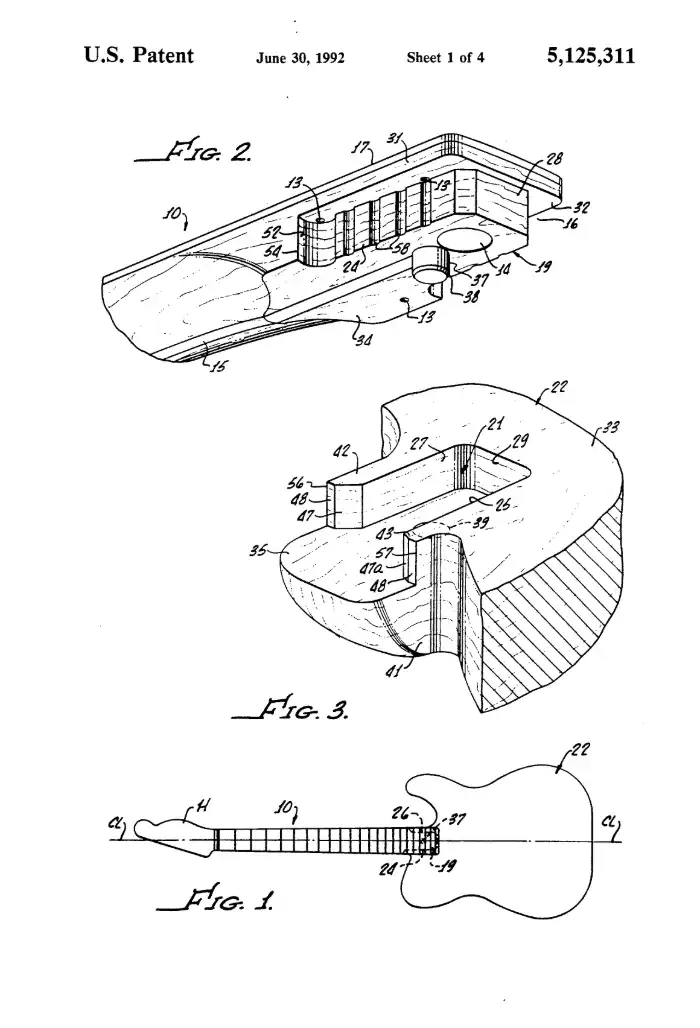
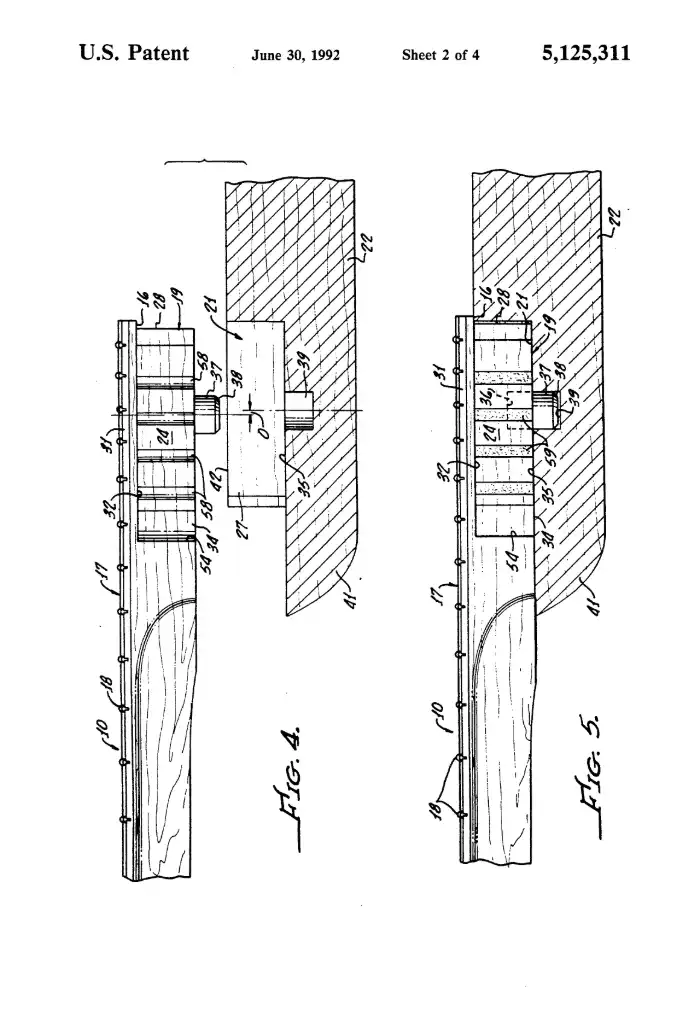
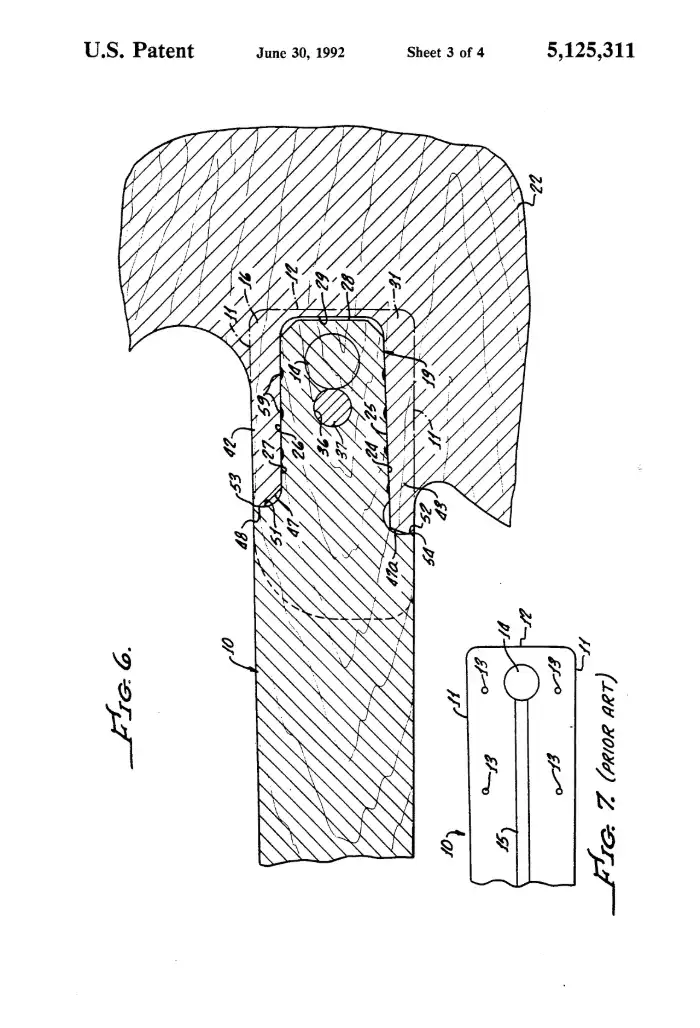
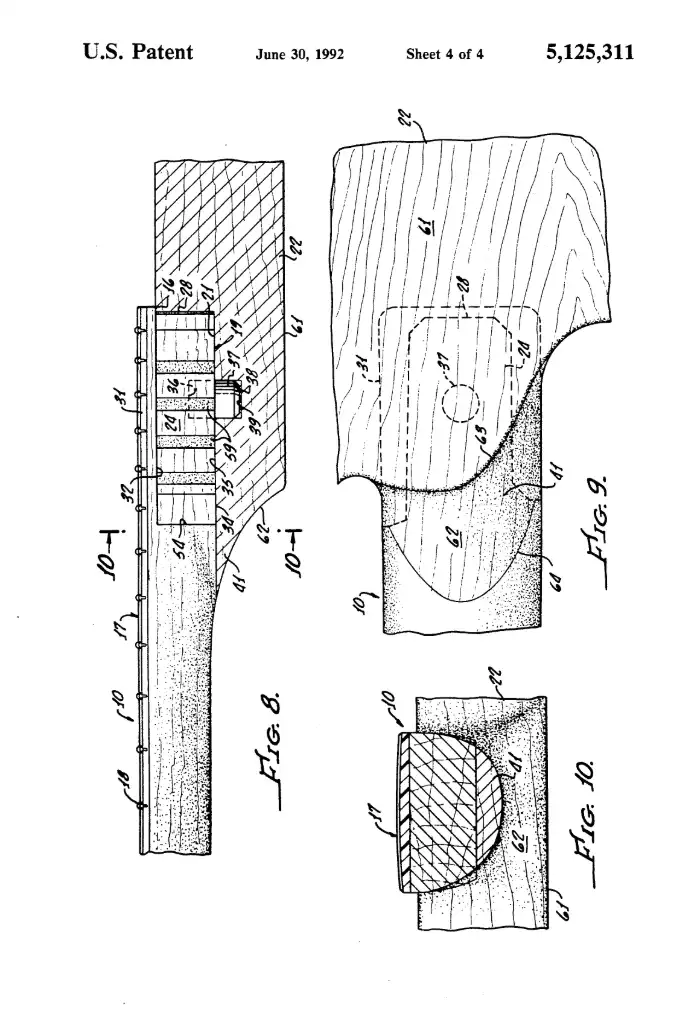
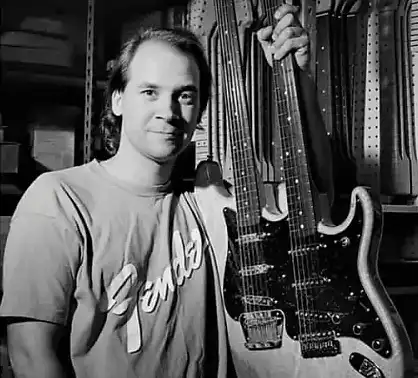
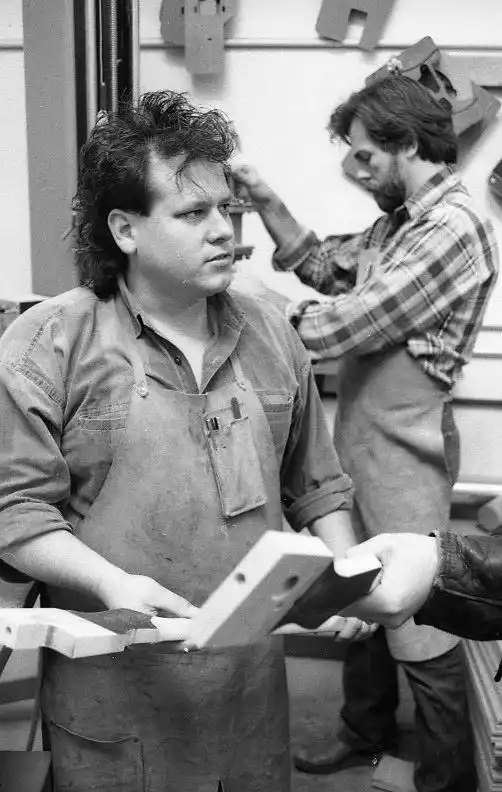
Starting in 1990, the Custom Shop began developing a line of set-neck guitars. J.W. Black remembers crafting a pair of set-neck Telecaster prototypes for John Page that June. One of John Page’s goals was to design a Custom Shop instrument that could also be produced on the main factory line. Together with J.W. Black and Steve Boulanger, he developed a unique neck joint that integrated seamlessly with Fender’s existing neck-production process. This innovation enabled the production of relatively large numbers of non-traditional Fender guitars for the Custom Shop.

The new design marked a significant departure from the Stevens neck joint. Its goal was to allow the continued use of standard Fender neck blanks, as well as body blanks and truss rods—John Page modified the anchor of the BiFlex truss rod to meet the manufacturing process of the new set neck. The design proved so distinctive that in 1991, John Page, J.W. Black, and Steve Boulanger applied for a patent, which was granted the following year.


Design, Specs, and Evolution
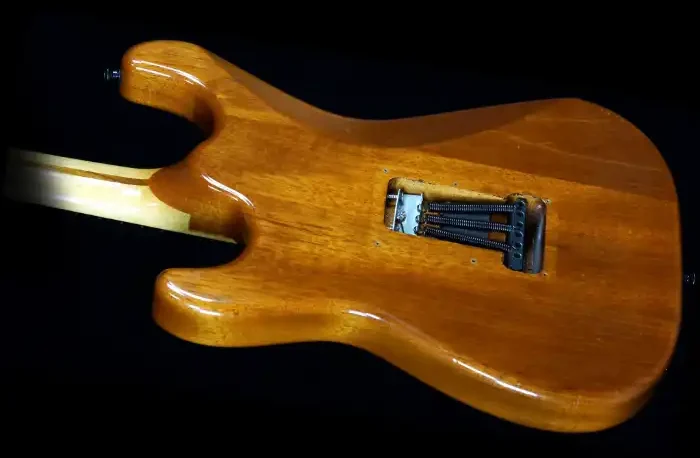
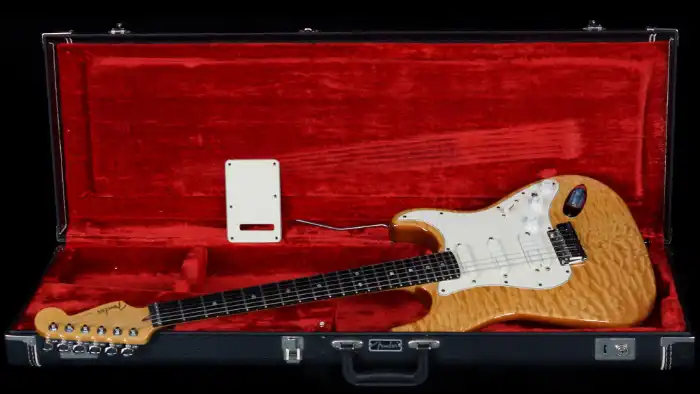
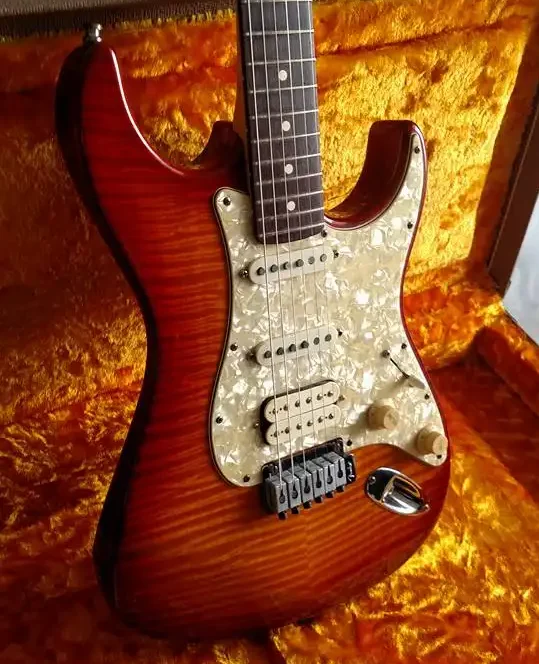
The first Set-Neck Stratocasters were introduced in 1992. These models featured a mahogany body with a flame maple top and a 22-fret ebony fingerboard. Standard specifications included locking tuners, a roller nut (initially Wilkinson, later LSR), and a Deluxe Tremolo System bridge, later replaced by the Fender/Floyd Rose Tremolo System. They were fitted with Lace Sensor pickups: a Blue in the neck position, a Red in the middle, and a Dual Red at the bridge.
The Floyd Rose Set-Neck Stratocaster featured a reverse headstock and was equipped with two American Standard single-coil pickups and a DiMarzio humbucker, paired with a Floyd Rose Pro locking tremolo.
The redesigned 1996 Set-Neck Strat featured an ash body with a maple top, a 22-fret rosewood fingerboard, Schaller locking tuners, a Deluxe Tremolo bridge, two Texas Special single-coils, and a Seymour Duncan JB humbucker—which was actually an Allan Holdsworth pickup.


Contemporary Series
Contemporary Stratocaster
By the early to mid-1990s, the “superstrat” movement of the late ’80s had reshaped player expectations. Locking tremolos, higher-output pickups, flatter radii, and refined ergonomics were no longer niche features. The Custom Shop’s Contemporary Stratocaster emerged within this climate as a premium, USA-built instrument that retained the Strat identity while integrating modern specifications. They were produced between 1995 and 1998.
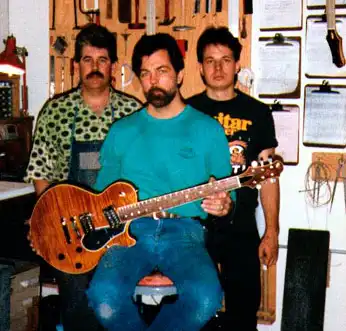
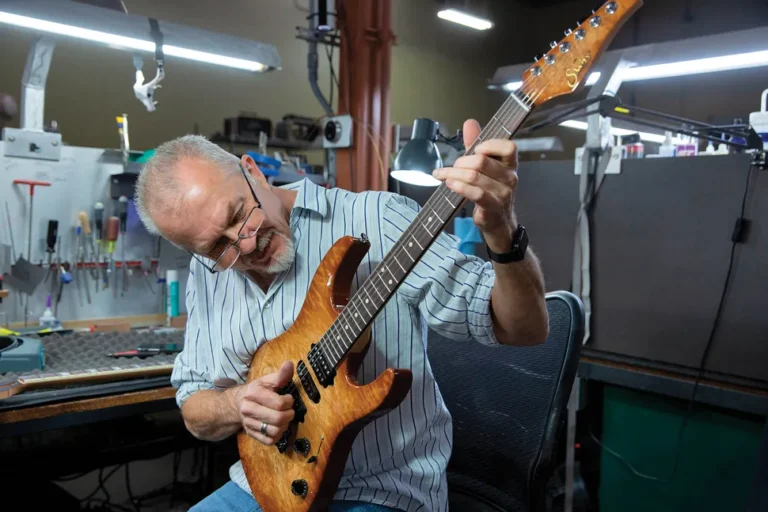
Custom Shop Contemporary Stratocasters were conceived by John Suhr. Before joining Fender, Suhr built guitars at Rudy’s Music Shop in New York. His Pensa-Suhr instruments, favored by renowned players including Mark Knopfler, featured modern, slightly downsized Strat-style bodies—sleeker and more refined than the heavier, metal-oriented designs of brands like Jackson.
He left Rudy in early 1991 and went to California to build amps with Bob Bradshaw (the Custom Audio Electronics amps); then he joined Fender for a few years before going out on his own.
When he joined the Fender Custom Shop, he brought his dinky design with him.

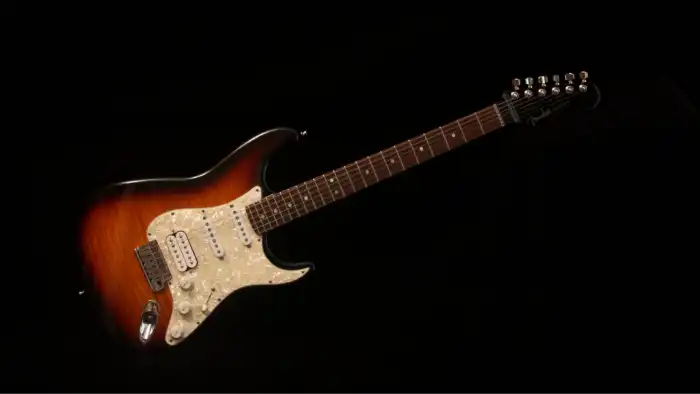
Custom Shop Contemporary Stratocasters featured a slightly downsized body with sharper horns, fitted with two Texas Special single-coils and a Seymour Duncan JB humbucker, which was actually an Allan Holdsworth pickup.
The controls were pared down to just two knobs—master volume and master tone—even though some 1996 literature still mentioned the traditional three-knob layout.
Beyond the standard alder-body version, players could also opt for a striking flame maple top, adding a touch of visual flair to the modern design.
Unlike the Set-Neck models, the Contemporary Stratocaster featured a bolt-on neck secured with a four-bolt asymmetrical plate. Early examples came with a Fender/Floyd Rose tremolo system, while from 1996 onward, Fender also offered a Deluxe Tremolo bridge.
Carved Top Stratocaster
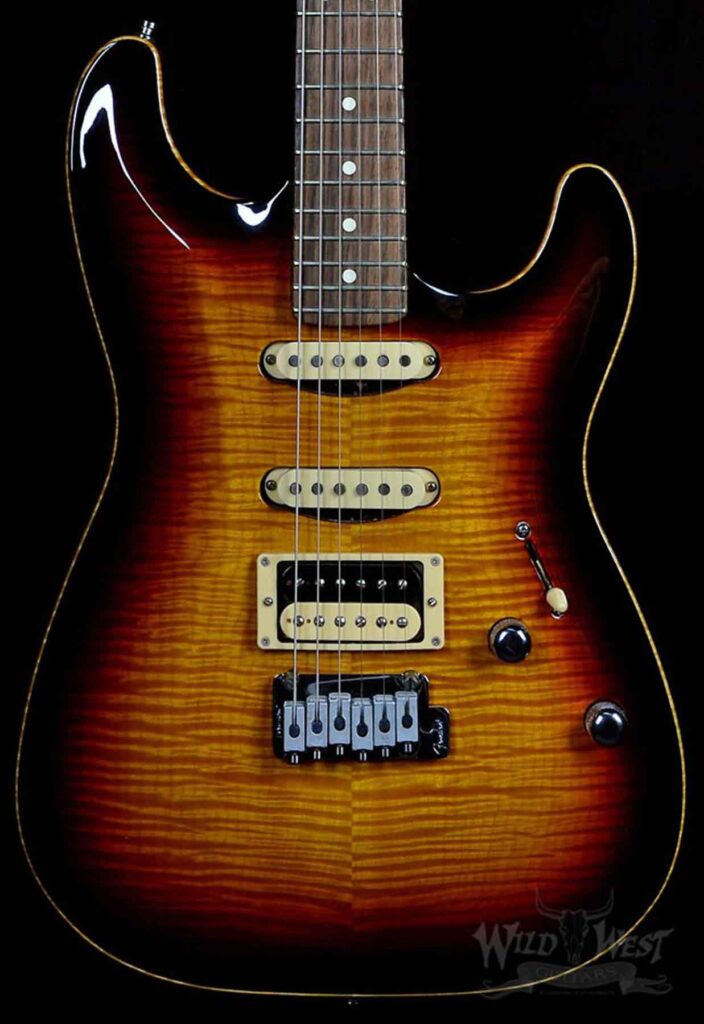
The Carved Top Stratocaster was another guitar in the Custom Shop Contemporary Series. It emerged around 1995–1996 from the Fender Custom Shop during a period when Fender was actively responding to the “super-Strat” market.
The Carved Top Stratocaster was designed by Gene Baker, John Suhr, and John Page, and was built by Gene Baker.
Suhr’s influence is especially evident in the carved-top geometry, pickup routings, and overall modern execution. However, the concept of fitting a carved top onto a full-size Stratocaster body became a point of debate between Suhr and Page.

John Page was committed to preserving the Strat’s full-body perimeter to maintain its iconic silhouette. According to Suhr, the carved top on the traditional Stratocaster body didn’t look right. The full-size body featured a large edge radius—the rounded transition between the top and sides. The absence of a sharper edge visually reduced the instrument’s perceived size when viewed from the front.
“To mount a carved top, you need more of a defined edge. But if you reduce the radius while keeping the overall body dimensions, it starts to look oversized.”
John Suhr
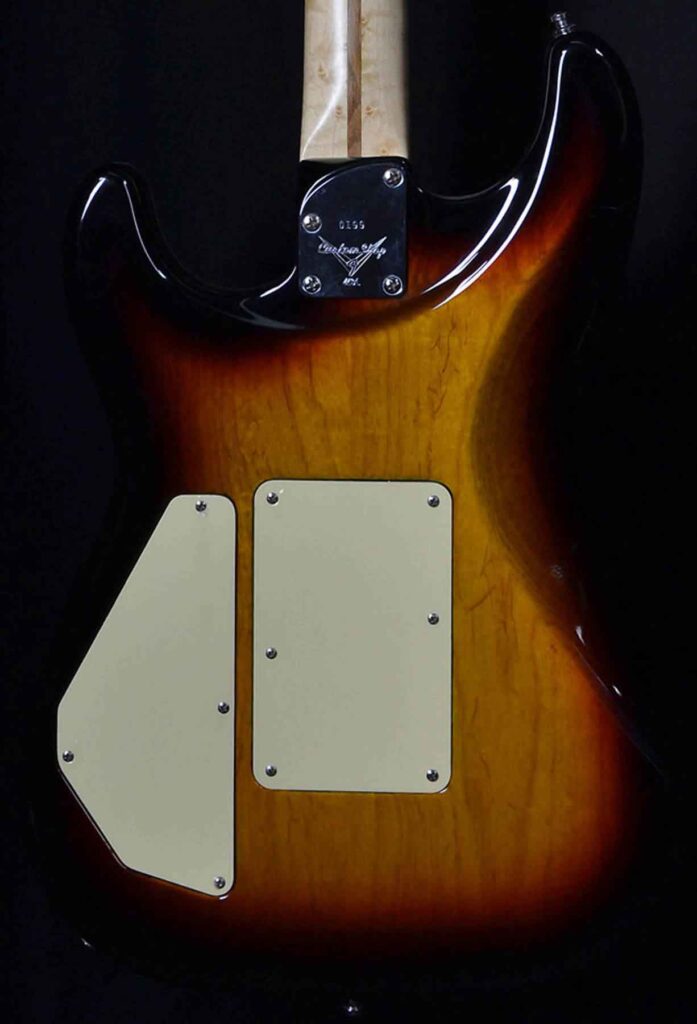
The Carved Top Stratocaster featured two Texas Special single-coil pickups and a Seymour Duncan JB humbucker (which was actually an Allan Holdsworth pickup), had no pickguard, and was equipped with just two chrome control knobs—a master volume and a master tone.
The Carved Top Stratocaster featured two Texas Special single coil pickups and a Seymour Duncan JB humbucker. It didn’t have a pickguard and sported only two chrome knobs: a master volume and a master tone.
Decoding the humbucker: When a ‘JB’ isn’t a JB
It’s interesting that, according to Fender catalogs, the humbucking pickup specified for the Set-Neck, Contemporary, and Carved Top Stratocasters was a Seymour Duncan JB.
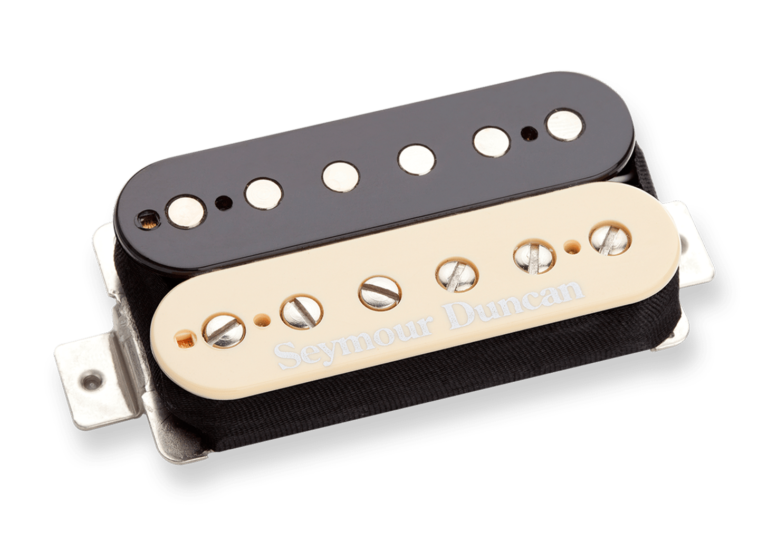
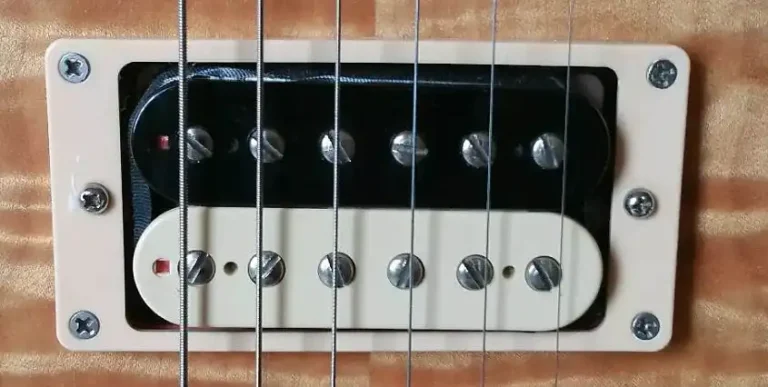
However, many examples of these guitars actually feature bridge humbuckers with two rows of fully adjustable screw pole pieces (fillister screws) on both coils.
A standard Seymour Duncan JB (SH‑4) typically has slugs on one coil and adjustable screws on the other. In contrast, the Seymour Duncan Allan Holdsworth Signature pickup (AH‑1B)—a boutique, overwound, high-output humbucker produced briefly in the mid‑1990s with a more open harmonic response than a typical JB—has adjustable screw pole pieces on both coils, matching the physical appearance of the pickups found in many of these Custom Shop HSS guitars.
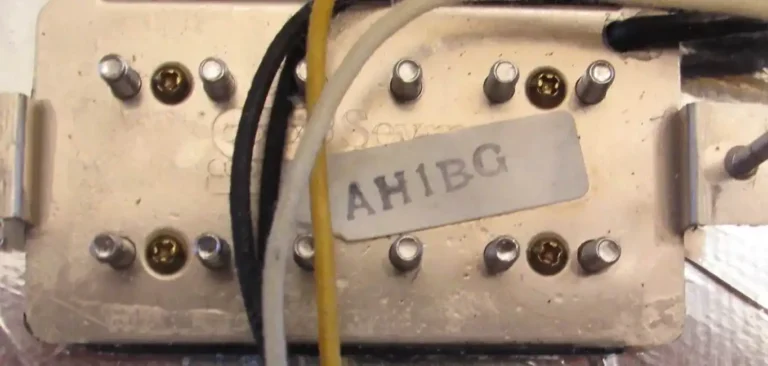
Furthermore, inspection of the humbucker bottoms on these Fender Custom Shop models reveals a sticker labeled “AH1BG” rather than the typical “JBL” found on JBs, supporting this hypothesis.