Fender Made in Mexico #6
Fender Road Worn Series
OUT THERE ON THE ROAD


Table of Contents
ToggleThe origin of the Road Worn finish
The Road Worn Series was Fender’s attempt to capture the mojo of a vintage instrument without the price tag or the decades of sweat it usually took to get there. Built at Fender’s Ensenada factory, the line introduced nitrocellulose finishes, subtly aged hardware, and a naturally worn-in feel.
It was a bold move, but the idea didn’t come out of thin air. By the mid-2000s, Fender’s Custom Shop relics had become both a sensation and a source of debate. Some players adored the aged finishes and worn necks that mimicked decades of use. Others dismissed them as a kind of artifice—a ‘fake history.’ Yet no one could deny how good they felt to play. The problem was the price. A hand-aged Custom Shop Strat could cost several thousand dollars, far beyond the reach of most working musicians.
That’s when the Ensenada factory in Mexico entered the picture.

When Fender began planning a Joe Strummer Telecaster model, the original idea was to create a meticulously detailed Custom Shop Tribute edition.
However, the team soon realized that such an approach ran counter to the raw, unpolished spirit of Strummer’s work with The Clash.
In response, Fender produced a more affordable, Mexico-made guitar—notable for its catalogue description of a “Custom Road Worn” finish. This marked the Ensenada factory’s distinct approach to the famed Custom Shop “Relic” aging process.

The next step was to create a production-line equivalent—something that carried the same spirit and tactile comfort, but at a price a gigging guitarist could actually afford. It was a delicate balancing act. Too clean, and it would feel lifeless. Too heavily aged, and it would look forced.
As Justin Norvell explained, “Joe’s guitar was really, really rough and rusty. So, we said to the Mexico factory, ‘Can you make it look like this, but dialed down and more refined?’”
The Ensenada crew studied vintage finishes, experimented with nitrocellulose lacquers, and learned to distress hardware by hand. The goal was subtlety—not the dramatic relics of the Custom Shop, but guitars that looked as if they’d spent years on stage under hot lights and calloused hands.
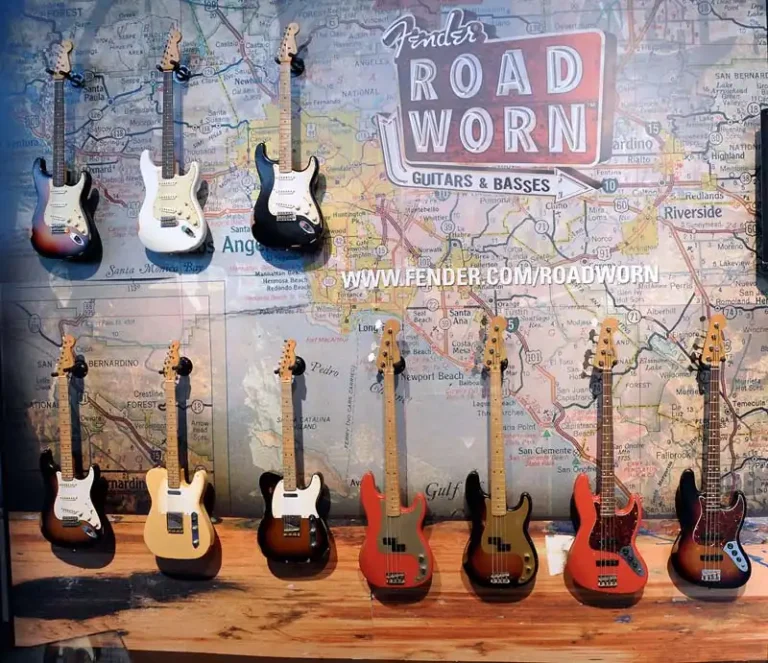
A few years later, Fender introduced the Road Worn series at the 2009 Winter NAMM Show. The Fender catalog described Road Worn instruments as “Beaten, bruised, and even burned.”


Road Worn Stratocasters
The Road Worn ‘50s Stratocaster and Road Worn ‘60s Stratocaster featured nitrocellulose finishes and aged hardware and plastics. They also included period-correct neck profiles, narrow jumbo frets, and a trio of Tex-Mex pickups.
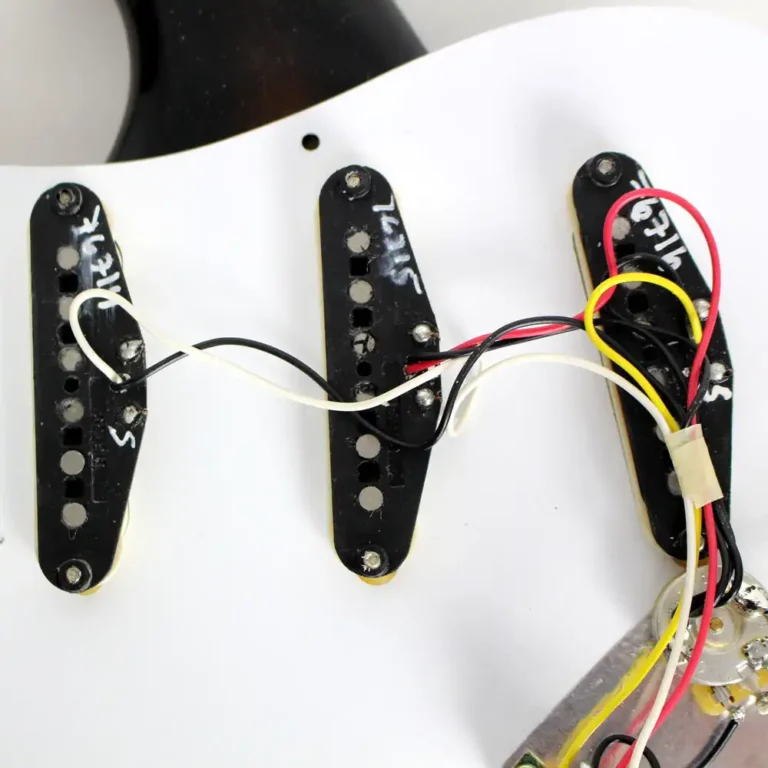
It’s worth noting that the Tex-Mex pickups used in the Road Worn Stratocaster featured distinct white markings on the bottom plate, “76714” for the neck, “76715” for the middle, and “76716” for the bridge, while also showing the same molded plastic bobbin part number, “016730,” on the plate.
A few years later, in 2011, Fender introduced the more player-friendly Road Worn Player Stratocaster. While it retained the lived-in look, this model offered a flatter fretboard and a slimmer neck profile. The HSS version combined two Texas Special single-coils with a Seymour Duncan Pearly Gates Plus humbucker.


The Road Worn Series was discontinued in 2020. However, Fender later updated and expanded the concept, integrating the Road Worn aesthetic into the Vintera I and Vintera II lines, as well as the Mike McCready Stratocaster made in Mexico.
Vintera II Road Worn Stratocasters remained nitro-finished, but with lighter aging—subtle checking, gentle dulling, and no deep wear-throughs.