Fender Japan Part #8

Superstrats

CONTEMPORARY, BOXER, PRO FEEL, AND HM STRATS

How Fujigen Shaped Fender’s Super Strat Era

In the years after the Fullerton factory shutdown and before the American Standard series made its debut, Fujigen quietly became a key player in Fender’s story. Not only did they produce a large number of guitars for the American market, but they also helped push the Stratocaster into new territory. With the rise of rock music and the increasingly daring use of the vibrato bar, Fujigen introduced “super strat” models that catered to the demands of players seeking more extreme performance.
Interestingly, Fender initially released these instruments under the Squier brand, allowing them to innovate and test new designs without the risk of affecting the established Fender reputation.


Contemporary Stratocasters

Domestic

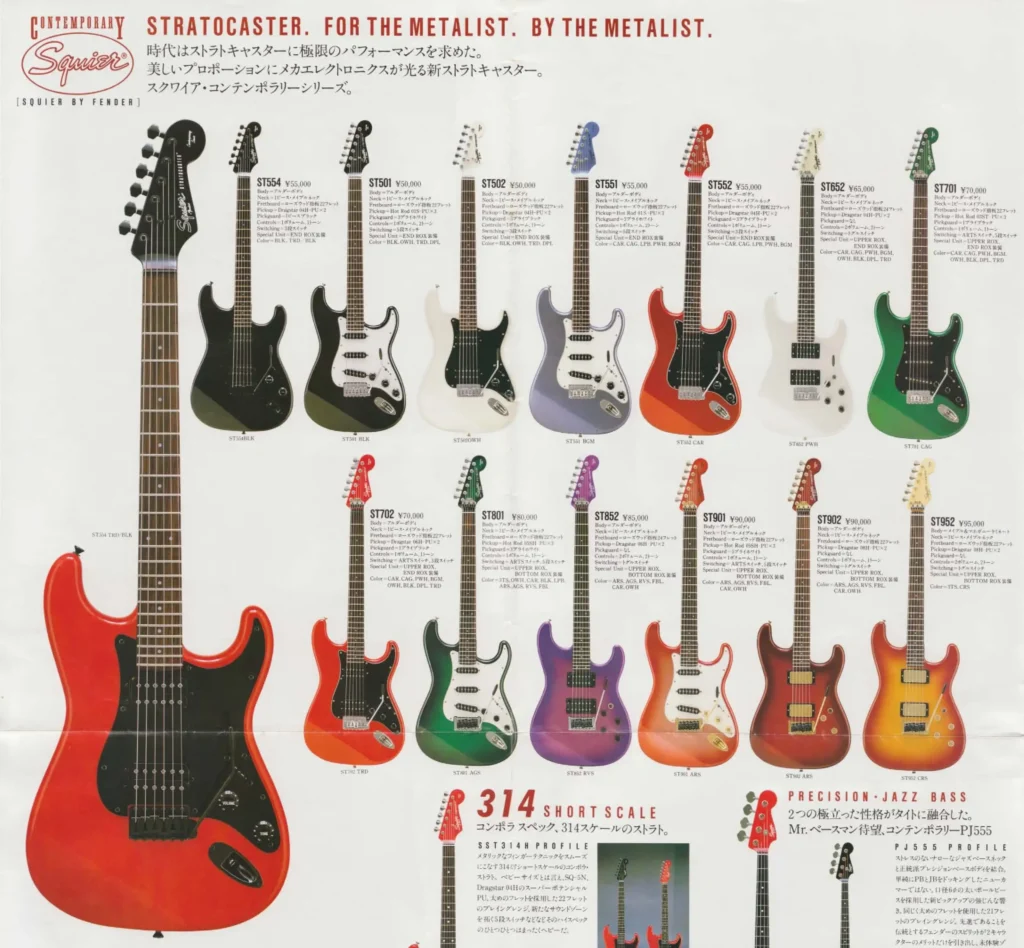
Contemporary Stratocasters first appeared in the 1983 Japanese Twang catalog under the Squier brand, produced exclusively for the domestic market.
The earliest models carried a “JV7xxxxx” serial number—though collectors and enthusiasts generally do not consider these true JV Stratocasters—followed by instruments with serial numbers beginning with “E.”
All shared a distinctive painted headstock, proudly carrying the “Squier” and “Contemporary Series” logos, along with bold “STRATOCASTER” and “by Fender” lettering.
Unlike the classic Stratocasters everyone was familiar with, these guitars had a strikingly different appearance. They were actually designed with metal players in mind—“For the metalist,” as the catalog boldly declared.
In total, there were at least thirteen different models, all featuring a flat fretboard, medium jumbo frets, and a variety of pickup configurations, ranging from Dragster humbuckers to Hot Rod single coils. Some even came fitted with butterfly string trees, while others omitted them entirely.
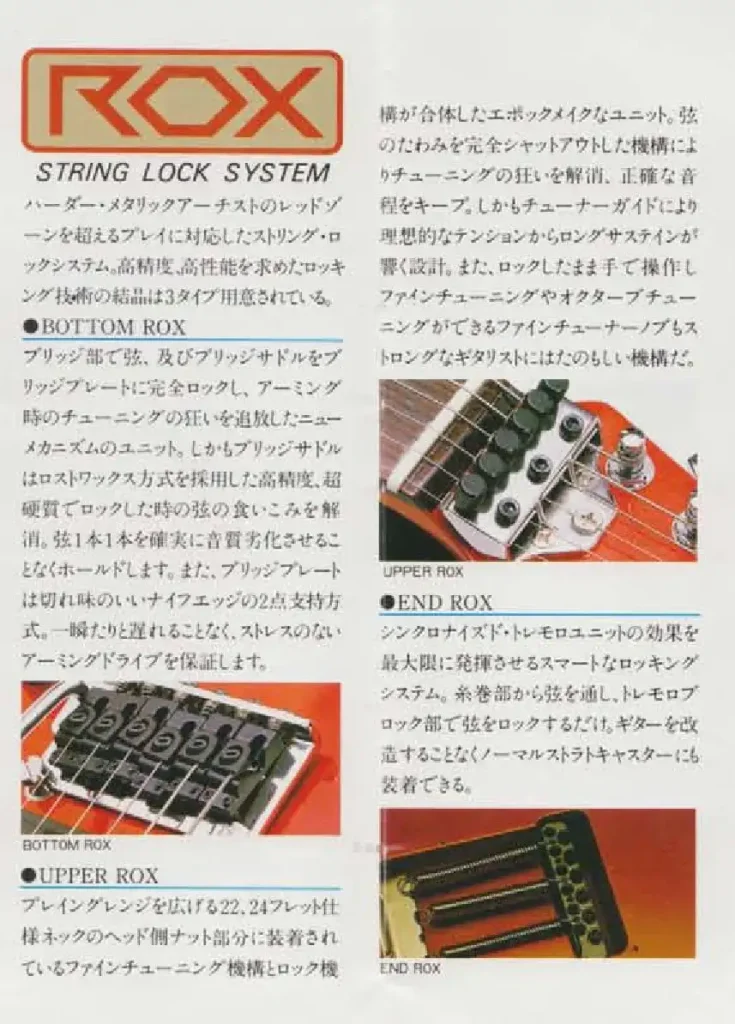
In addition to the familiar 6-screw bridge with block saddles, this series also introduced a Floyd-inspired tremolo system known as the Rox System. It combined the Upper Rox string clamp with the Bottom Rox bridge, fitted with roller saddles, and used a unique End Rox tremolo block that locked the strings in place.
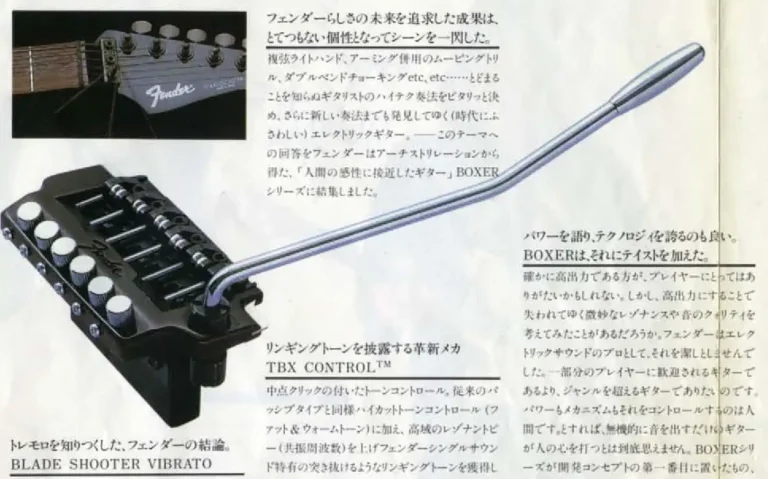
By 1984, the Rox System was phased out and replaced with the Blade Shooter Tremolo. While this design did not allow for individual saddle height adjustments, players could still set intonation, and the overall bridge height was adjustable through the two mounting screws, which acted as pivots.

1983 Japanese catalog, Squier Contemporary Strats
1983 Japanese catalog featuring Squier Contemporary Strats
Rox System
Rox System

Export

Due to the closure of the Fullerton factory in 1985—and with American Stratocasters temporarily unavailable—the Japanese-made models began appearing more frequently in European and U.S. stores. Until 1984, the Contemporary Stratocasters had been Squier-branded and intended solely for the Japanese market. However, in 1985, the first export models were introduced into the catalog, offered under both Squier and Fender brands, all of which were equipped with at least one humbucker.
The export Squier Contemporary Stratocasters, though numbering five in total, were relatively rare. Each one featured at least a single humbucker and came fitted either with a vintage-style bridge or a Kahler Fulcrum tremolo.
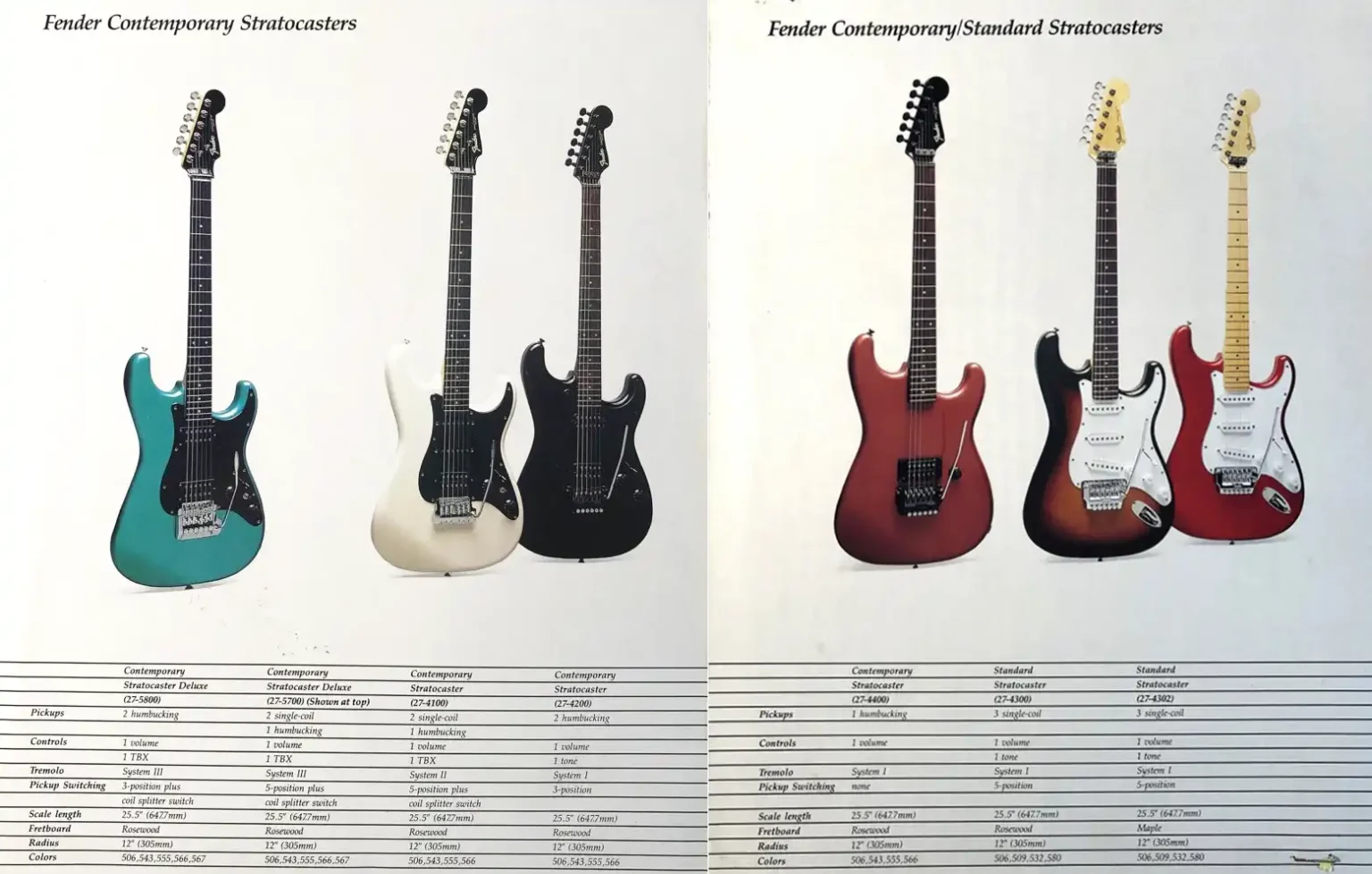
The Squier-branded Contemporary Strats were soon joined by Fender-branded versions aimed at the international market. Among these were the Fender Contemporary Stratocasters and the higher-spec Fender Contemporary Deluxe Stratocasters, both of which were produced for export between 1985 and 1988.
A defining feature of the Contemporary series was the black-painted headstock, which set them apart visually. Japanese-made Stratocasters equipped with a Fender System I or Kahler bridge but lacking the painted headstock, however, were not part of the Contemporary line—they were classified as Standards.
These “Fender” Contemporary models were fitted with large, Floyd Rose–style bridges: the Fender System I (FS1), Fender System II (FS2), and Fender System III (FS3), all manufactured by Schaller, and later the Kahler Fulcrum.

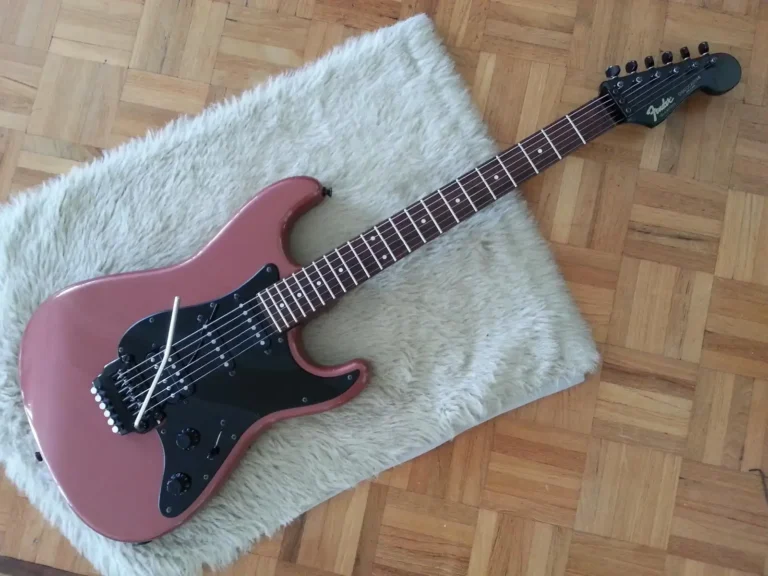
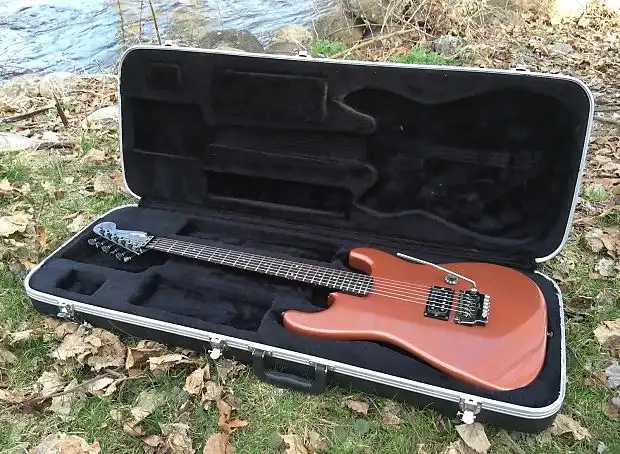
Contemporary Stratocaster 027-8100
Contemporary Stratocaster 027-4400
Contemporary Stratocaster 027-4400 (© Copyright 2016-2022 Mystic Guitar)
Contemporary Stratocaster 027-4100
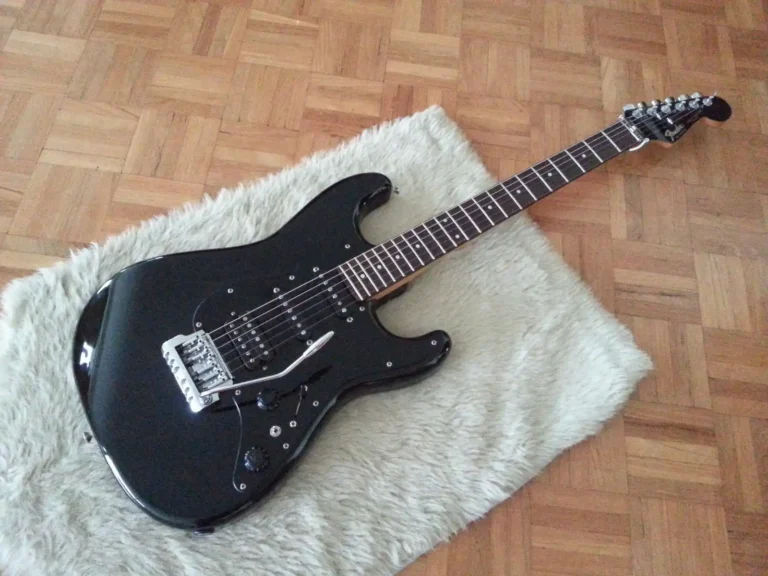
Contemporary vs. Standard — Black headstocks marked the Contemporary series; unpainted ones with Fender System bridges were Standards.
Contemporary vs. Standard — Contemporary Stratocasters had black-painted headstocks, while Japanese models with Fender System bridges but unpainted headstocks were listed as Standards

Boxer and Pro Feel Series

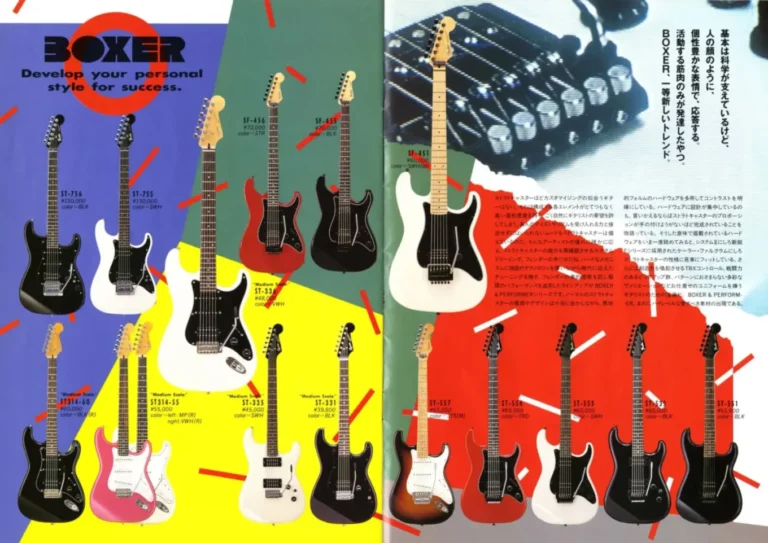
In 1984, Fender introduced the new domestic Boxer Series, which evolved from the Contemporary Series and was intended to usher Fender into a new era. While the Contemporary Series continued to be exported, it was replaced in Japan by the Boxer line. Unlike the earlier domestic Contemporary models, the Boxer Series carried the Fender logo, just like the exports.
These guitars featured modern specifications, including high-output pickups, a TBX tone control, and 22 frets. Some models also adopted a medium-scale length. Depending on the version, bridges ranged from the traditional vintage-style unit to the Blade Shooter Tremolo (identical to the Fender System I), the Fender System II or III, or the Kahler Traditional Fulcrum Tremolo.

Boxer Series, Twang catalog
Blade Shooter System explained in the 1984 Japanese catalog

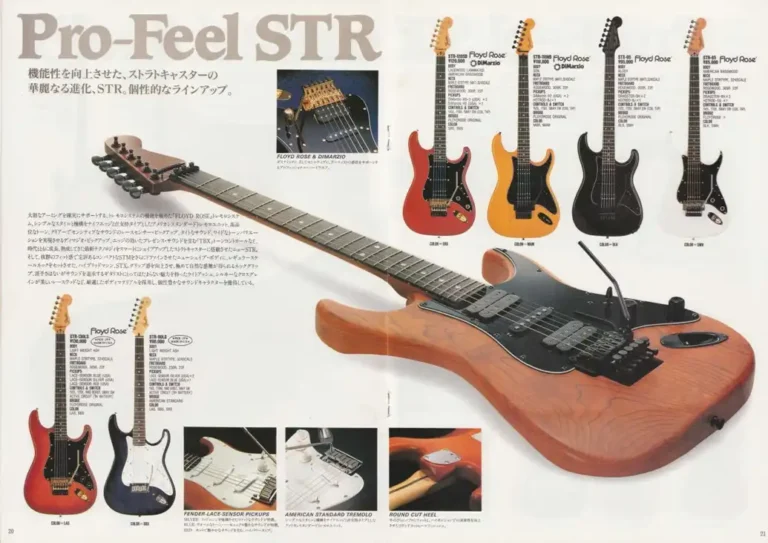
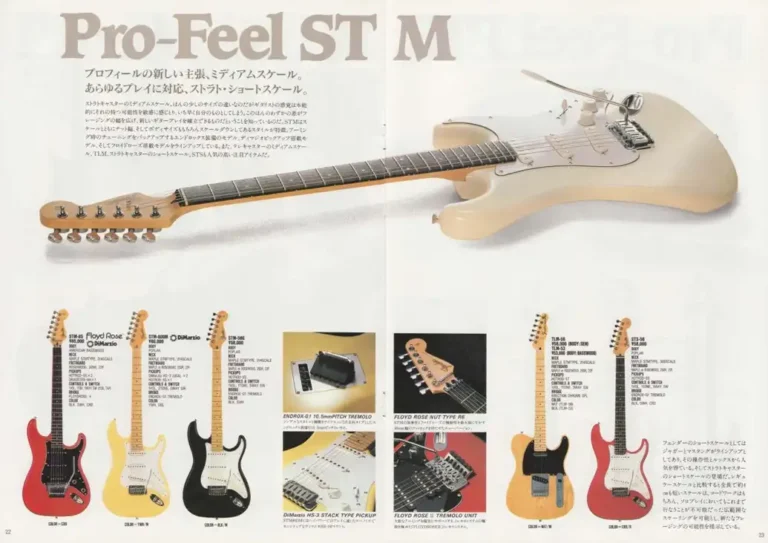
The Boxer Series was discontinued in 1988, and the following year, it gave way to the new Pro Feel Series, which carried forward Fender’s push toward modern design. Building on the innovations of the Boxer line, the Pro Feel models further improved playability by featuring 22 frets, a sculpted deep neck heel, and an asymmetrical neck plate for easier access to higher registers. Bridges also reflected this modern approach, with options including the Kahler, End Rox, and the Floyd Rose–licensed ExTrem.
Pro Feel Stratocasters continued to evolve away from vintage-style Strats by incorporating modern features, such as Lace Sensors, Hot Rods, Dragsters, and the DiMarzio HS-3 pickups. Some models introduced medium and short scale lengths, expanding Fender’s options. Notably, the first HM Strats appeared within this series, marking another step in Fender’s development in the Japanese domestic market.

Pro Feel, 1992 Japanese Twang catalog

HM Strats

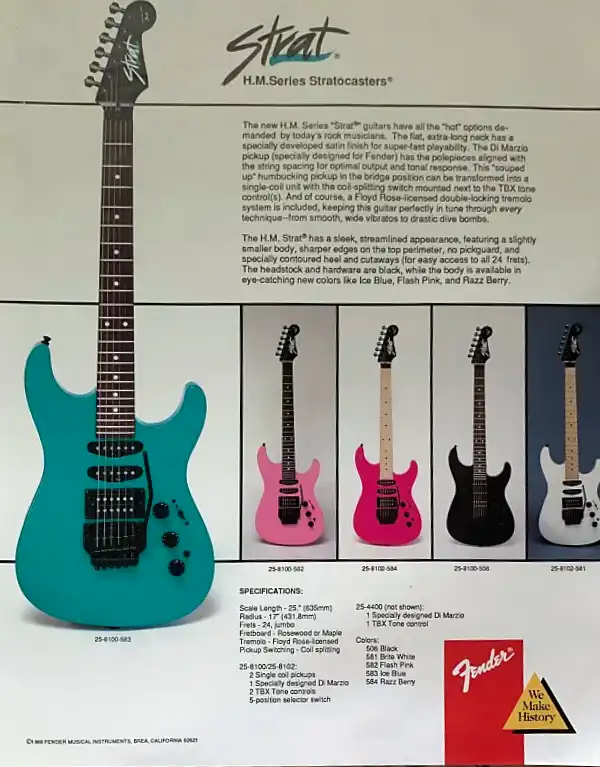
In 1988, Fender introduced the HM Series, bringing a distinctly metal-oriented aesthetic. Aimed at the export market, these “Heavy Metal” Strats featured a slightly smaller basswood body, black hardware, a black headstock and plastics, and were usually built without a pickguard.

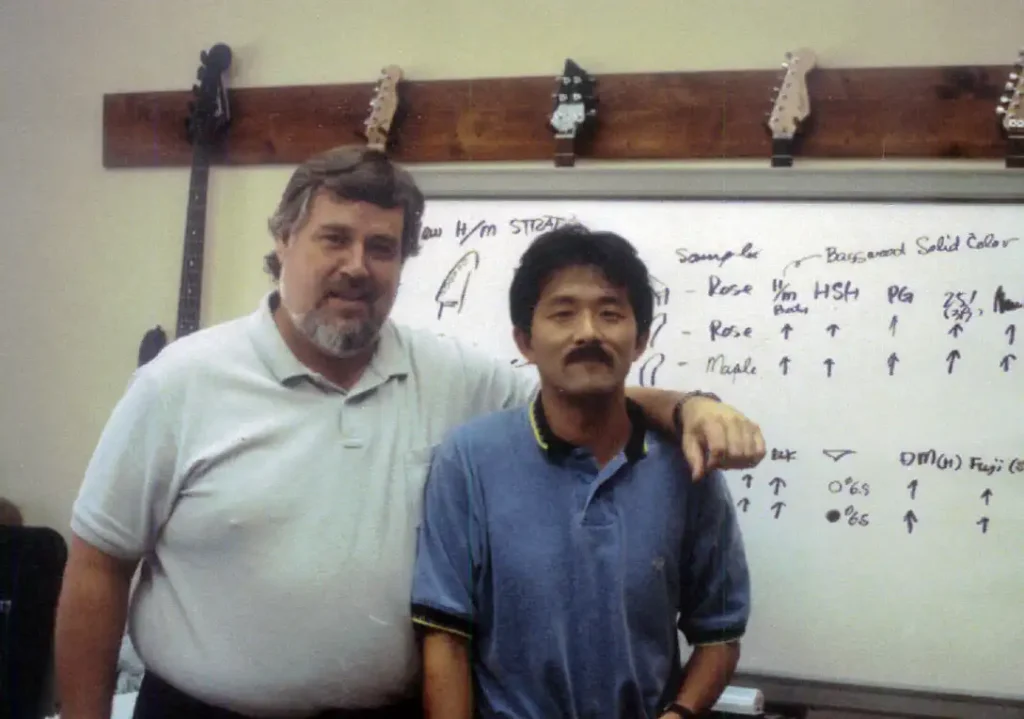
The series was designed by Dan Smith in collaboration with Nick Sugimoto, a Japanese luthier who spent twenty-three years at the Fujigen factory working in R&D, custom guitar building, and engineering. The Strat logo for these models was created by Yuichi Kimura, an industrial engineer closely involved in guitar R&D at Fujigen.
Several HM Strat variants were produced, each with a different pickup configuration, although they always included one or two humbuckers. 

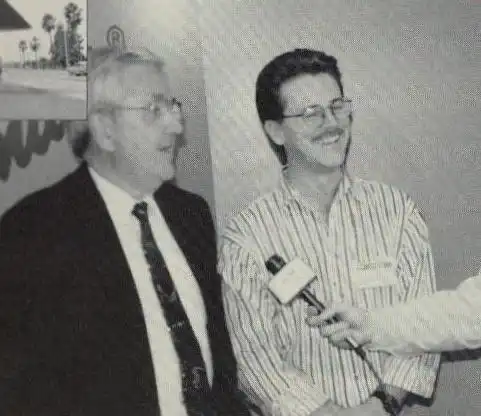
Dan Smith and Makoto Sugimoto
Yuichi Kimura
Yuichi Kimura

They were fitted with locking tremolo systems, designed to withstand extreme use of the vibrato bar.
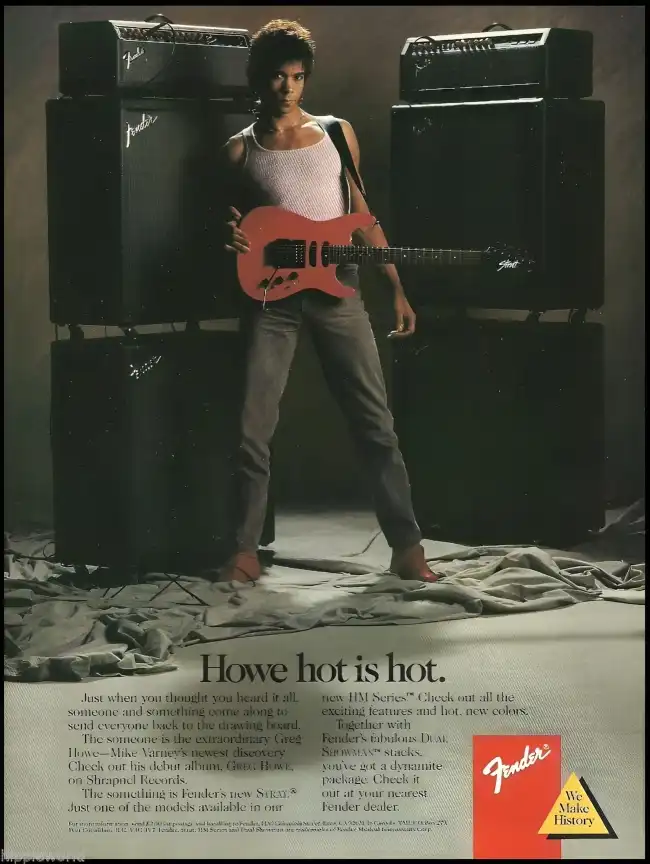
The Fender HM Strats were prominently featured in promotional materials during their run from 1988 to 1992, with notable endorsements from virtuoso guitarist Greg Howe. In 1988 and 1989, Fender released striking print advertisements showcasing Howe with his HM Strat, emphasizing the guitar’s suitability for high-speed, technical playing. This ad highlighted the HM Strat’s features, such as its DiMarzio humbucker pickups, the TBX, the 24-fret fingerboard, and the locking tremolo system, aligning with the growing demand for instruments tailored to the heavy metal and shred guitar scenes of the late ‘80s.

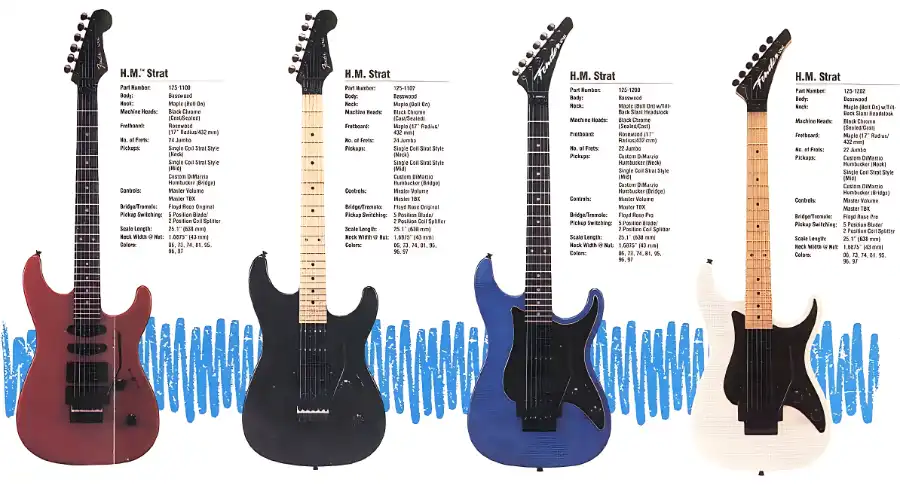
HM Stratocaster — as featured in the UK catalog
1988 Greg Howe HM Series ad

Howe’s endorsement was significant, as he was an influential figure in the guitar community, known for his exceptional technique and musicality. His association with the HM Strat helped position the instrument as a serious tool for advanced guitarists seeking precision and versatility.

The first models to be introduced in the Fender catalog were the Japanese HM Strats in 1988, followed a year later by the U.S. HM Strats, and then, in 1990, by new Japanese versions. All were available in a wide range of finishes, often in striking, bright colors.

First-Generation HM Strats

The first HM series, launched in 1988, featured Specially Designed DiMarzio humbuckers, flat-pole single coils with black and white leads, and a TBX tone control. Other standout features included a 17” fingerboard radius and a Kahler Spyder Tremolo bridge. Their neck plates bore a “Fender USA” engraving, a detail that caused plenty of confusion since it misleadingly suggested they were American-made. The confusion was compounded by the fact that their serial numbers often started with an “E,” just like Fender’s U.S.-made instruments from the 1980s.

US HM Strats

The following year, Fender introduced the U.S. HM Strats. Despite the name, these guitars were not truly American-made; they were assembled in the United States from Japanese-made parts.

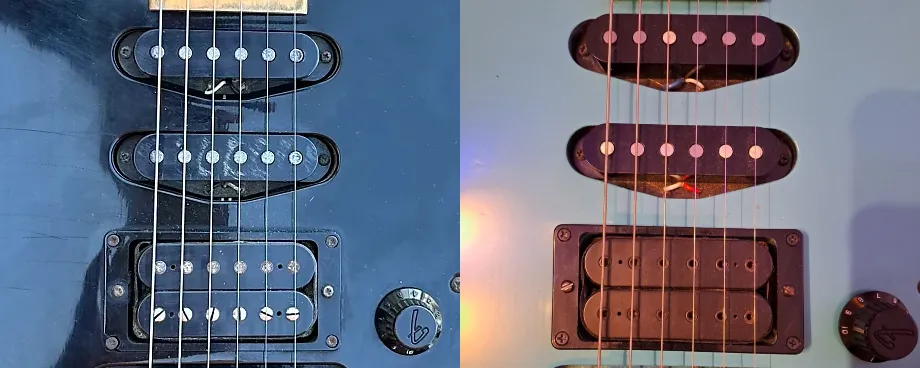
Left: First-generation HM Strat with DiMarzio humbucker and single coils with black/white leads. Right: U.S. HM Strat with revised DiMarzio humbucker (note the different pole pieces) and American Standard Strat single coils with red/blue/white leads

Distinguishing the U.S. HM Strat HSS from the earlier HSS model can be difficult, as the two were nearly identical. The main differences lay in the pickups and a handful of finish options.
While the bridge humbucker was still a Specially Designed DiMarzio, its construction differed from that of the first-generation HM Strats, featuring all hex pole pieces. The single coils, meanwhile, were the same type used on the American Standard Stratocaster, identifiable by their flat poles and red, blue, and white leads.

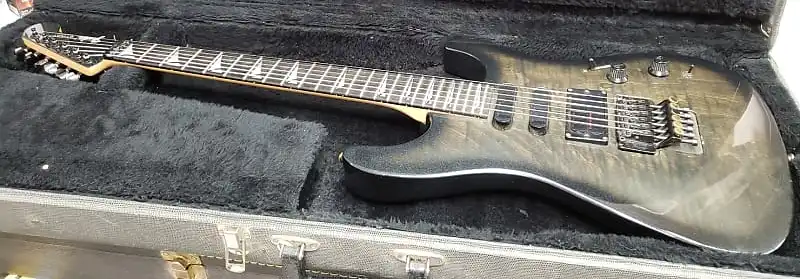
Among the U.S. HM Strats, the most distinctive was the HM Strat Ultra.
Designed as the top-tier model of the series, it featured an ebony fretboard with striking triangular inlays, Lace Sensor pickups for a cleaner, more modern tone, and a Kahler Spyder Tremolo for advanced tremolo work.

HM Strat Ultra
HM Strat Ultra

Final-Generation HM Strats

At the 1991 NAMM Show, Fender announced an exclusive partnership with Floyd Rose, the inventor of the locking tremolo system. Around the same time, production of the HM Strat returned to Japan. The updated models retained the DiMarzio humbucker but were now equipped with Floyd Rose Original and Floyd Rose Pro bridges.
The HSS model featured a new “Digital Logo” on the headstock, while the HSH model had a Heartfield Talon–style headstock with a “Streamlined logo” and a flat-laminated black pickguard.

HM Strat last gen catalog

In a magazine interview during the event, Floyd reflected on his innovation: “The first Floyd Rose tremolo system was invented and installed on my favorite guitar, a ‘57 Strat.  Like so many of my friends at the time agreed, we didn’t like our Fenders any less after installing my locking system.  In fact, we liked ‘em even more.  Because of my love for the original Fender product, I’m the last guy in the world who would want to make any broad, sweeping changes to such a time-proven winner.”
Floyd also recalled that Fender was the first company that he approached after getting his first patent: “The people there at the time just weren’t interested. But in the past few years, Fender has changed hands and, in the process, has recaptured the quality and innovation that made me go to them in the first place. I couldn’t be happier that we are finally together.”

Fender President Bill Schultz with Floyd Rose at the 1991 NAMM Show
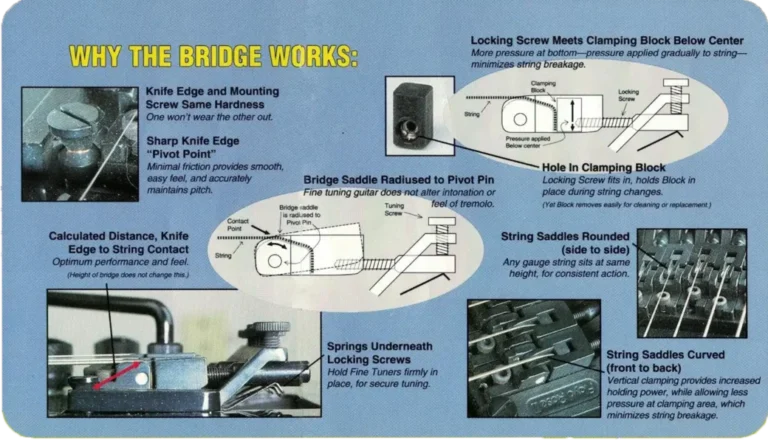
Floyd Rose explained
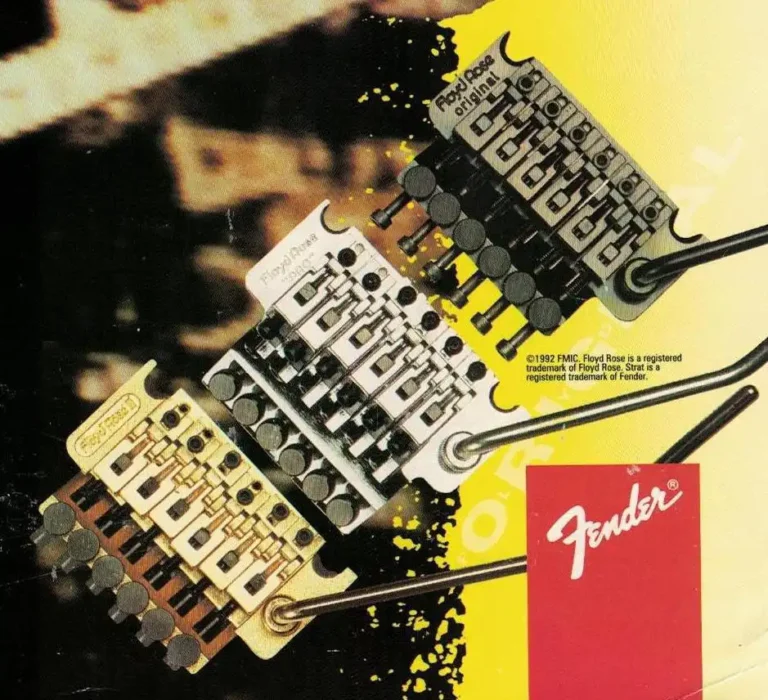
Floyd Rose II, Pro, and Original tremolo systems as featured in Fender Frontline

​“There’s a real difference between a tremolo designed by Floyd Rose himself, and the rest. The most popular tremolo bridge ever created,” as Fender advertised Floyd Rose systems. The Pro bridge had the same construction as the Floyd Rose Original, but the bridge plate is die-cast, rather than case-hardened steel, which provided a mellower tone. Also, the advert pointed out that it had a modified shape: “a lower profile to accommodate the right hand” and “wrenches and screws featured large SAE threads, for increased strength and longer life.”​

US Contemporary Stratocasters

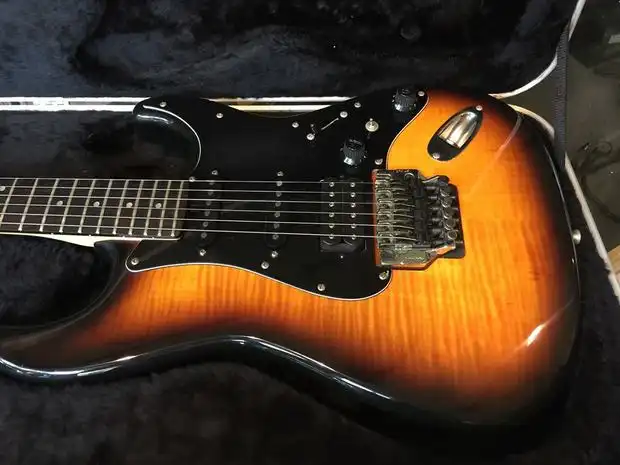
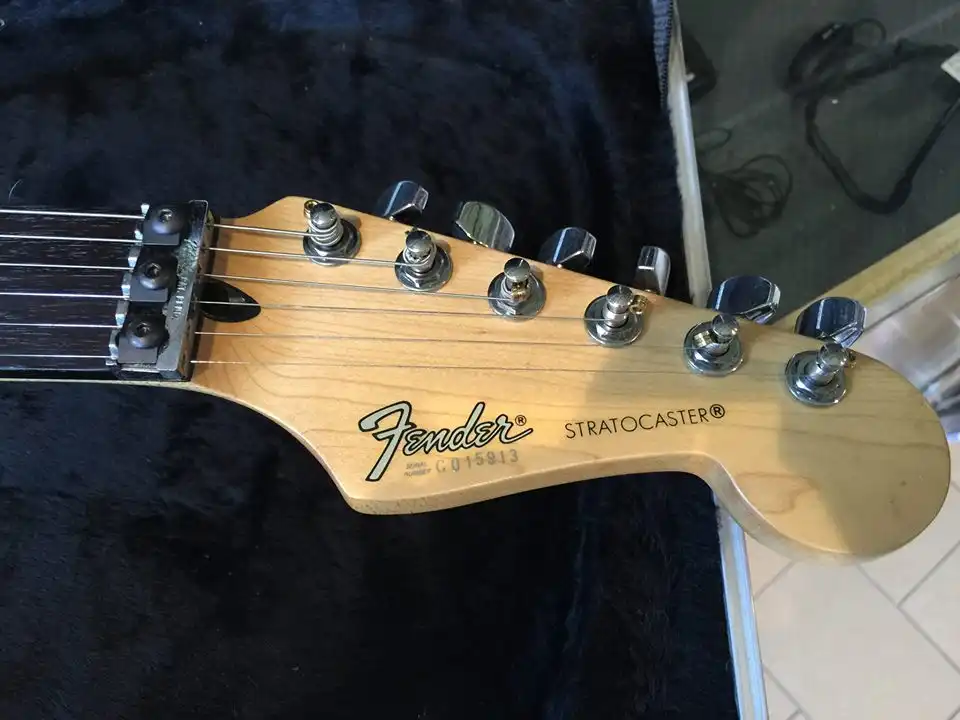
The U.S. Contemporary Stratocasters were designed by Fender as a modern take on the classic Strat. Not much is known about these guitars. They were assembled in the United States, mainly from Japanese-made parts. In fact, both the neck—without any decal to indicate its origin—and the figured maple top-and-back body strongly suggest Japanese origin.
These models featured a 22-fret fingerboard, Gotoh tuning machines, and a contoured neck plate engraved with ‘Fender U.S.A.’ and fitted with a micro-tilt adjustment. They also included a Kahler bridge and locking nut, along with a splittable bridge humbucker combined with two single coils.

US Contemporary Strat body
US Contemporary Strat headstock

Fender Tremolo Systems and Kahler Bridges

FS1

Fender System I

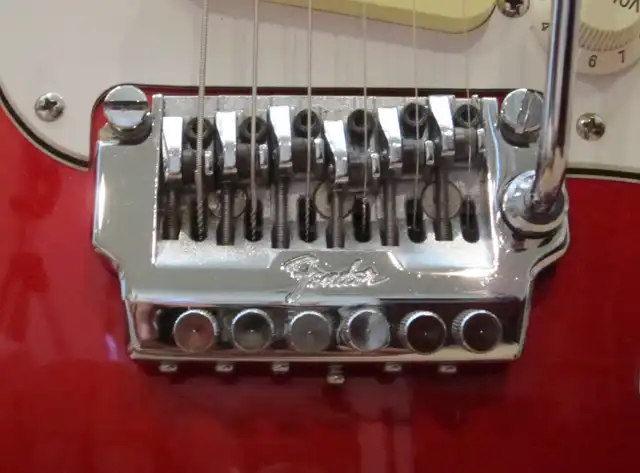
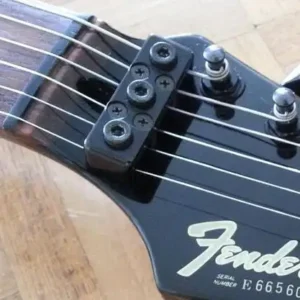
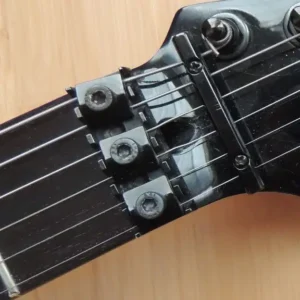
The Fender System I was essentially identical to the Blade Shooter used on the 1984 domestic Boxer Series Stratocasters and was always paired with string clamps. While the saddle heights could not be adjusted individually, intonation was still adjustable, and the overall bridge height could be modified via the two mounting screws, which acted as pivots.
An ad stated: “System I with a conventional headstock locking system behind the nut is a 3-vise system that uses an allen wrench. The fine-tuning, floating bridge has two knife-edge pivots, height-adjustable pivot posts, roller saddles, and a snap-in adjustable tremolo arm.”​

FS2

Fender System II

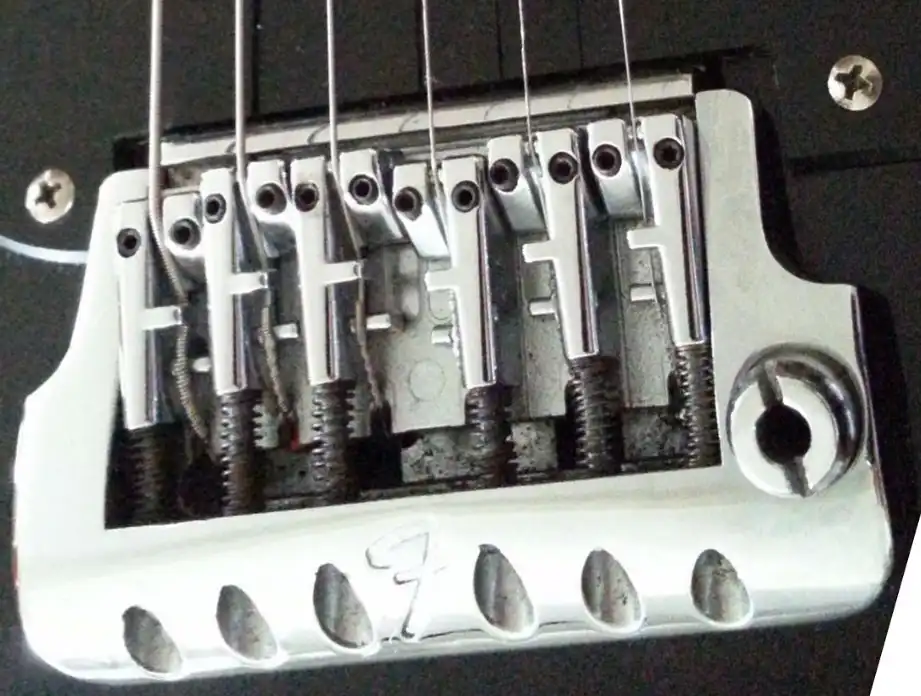
The Fender System II was the same Freeflyte Tremolo designed by Chip Todd previously used on the Elite Stratocaster bridge—though amusingly, the manual referred to it as a “vintage” bridge.
An advertisement stated:
“System II, like System III, does not require any tools to lock the strings.  It has the patented cam-actuated nut with a side-to-side locking action that does not affect the tuning when locked and is also height adjustable. The bridge features a true knife-edge pivot, specially designed, hardened steel saddles that are individually height adjustable and snap-in, adjustable tremolo arm.”

FS3

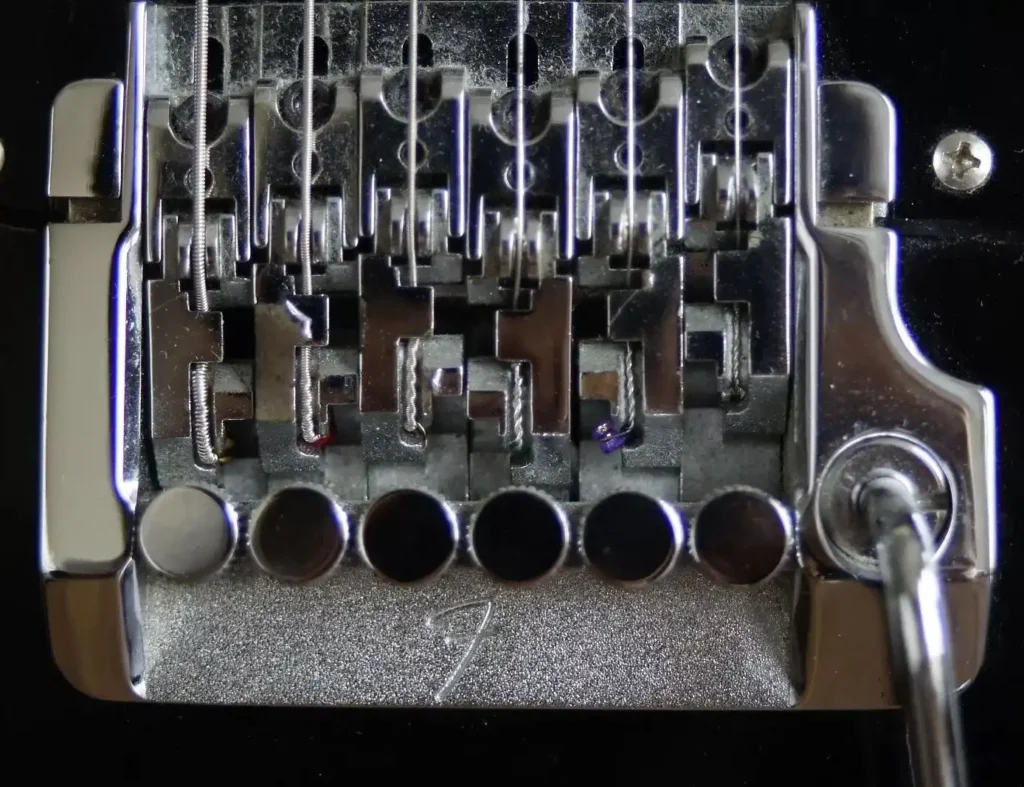
The Fender System III, designed by John Page, Dan Smith, Charlie Gressett, and John Carruthers, was the most advanced of the series. It allowed each saddle to be individually adjusted and could also function as a fixed bridge.

Fender System III

As the manual described, System III was the “System III… the ultimate, state-of-the-art, ‘no tools to lock’ system has a patented, cam-actuated nut with a side-to-side locking action that does not affect the tuning when locked and is also height adjustable. A new, free-floating bridge design incorporates smooth, centered pivot points to enhance accurate string bending. The low-profile tuners can’t get in the way. Specially designed saddles are individually adjustable and keep the strings on the saddles at all times. The snap-in tremolo arm also locks the bridge to make it non-tremolo. Allen Wrenches for height and intonation adjustments are hidden in the tremolo arm.”

Kahler Traditional 2520 Fulcrum Tremolo

Kahler Traditional Fulcrum Tremolo 2520

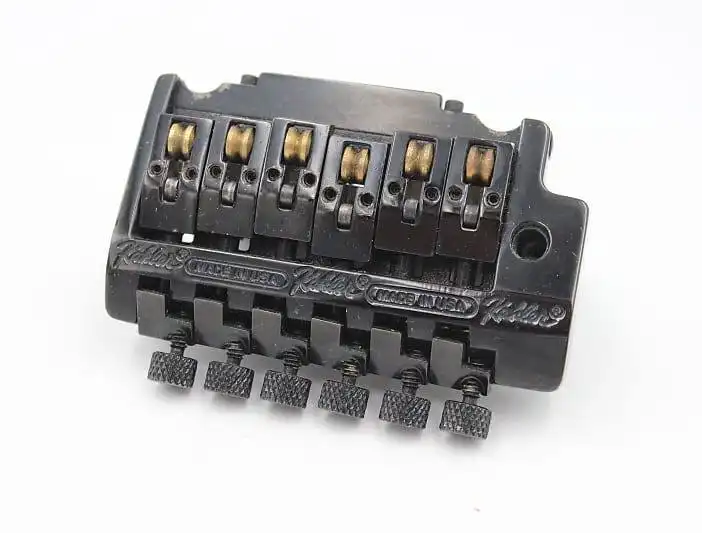
The Kahler Traditional Fulcrum Tremolo 2520 was a two-point fulcrum vibrato unit developed as a direct replacement for Fender’s synchronized tremolo system. An ad said: “Kahler Traditional Series fulcrum tremolos adjust to you and your style (not the other way around). Our new bridge saddles allow you to set intonation and string spacing all independently. Now you don’t lose control of feel and sound. Our new roller saddle locks solidly on the tremolo mounting plate to ensure solid harmonic transfer for superb tone and sustain. You can also lock out any roller movement you prefer. Separate screw adjustment allows you to choose easy or resistant tremolo arm rotation.”

This wasn’t a typical high-quality Kahler unit. For example, the machining and plating weren’t the best. However, the design was neat and, for the most part, ingeniously executed. The bridge was a solid, heavy cast-alloy block, with a spring system identical to that of a Strat. The fulcrum was achieved using two hefty screws that anchored into the front edge of the block.
The system was designed as a direct retrofit for a standard Strat tremolo with no additional routing required. However, the two large screws anchoring it to the body were of a larger diameter than a Stratocaster’s stock holes, so the existing holes had to be enlarged.

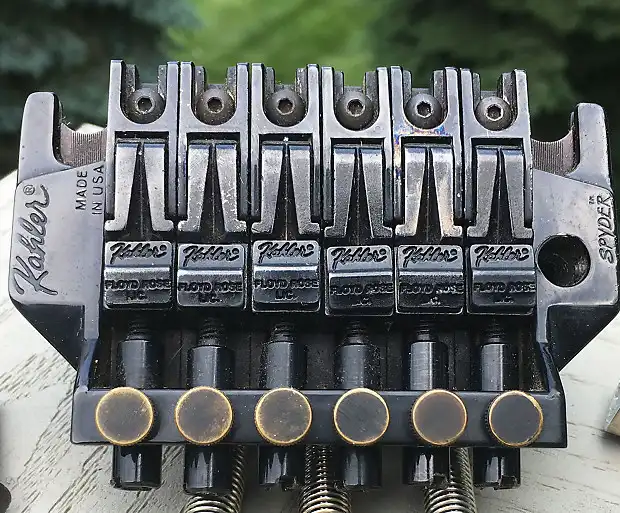
Kahler Spyder 2720 Double Locking Tremolo System

Kahler Spyder Tremolo

It was a double-locking, fulcrum-style system, designed as a direct competitor to the Floyd Rose. The 2720 combined Kahler’s engineering quirks (such as the patented knife-bolt hinge and wider stud spacing) with the performance demands of “super strats” of that era—stable tuning under heavy vibrato use, strong sustain, and compatibility with the needs of high-gain rock and metal players.
An advertisement stated: “The Spyder is one of our most innovative bridges.  This double-locking fulcrum-style bridge offers maximum sustain with steel witness points and Kahler’s own patented knife-bolt hinging system. Wider stud spacing allows for easy retrofit to many guitars. The Spyder is Auto-Latch ready, and other options include finger-locking and non-locking saddle sets. The Spyder is durable and economical yet flexible enough to meet every player’s needs.”

Comparison between string lock systems

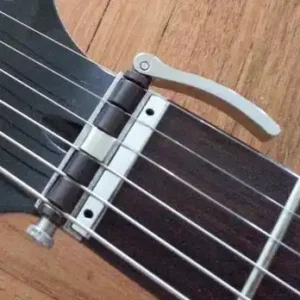
The leveler-actuated locking nut, also called the Cam Arm nut lock, used on Fender’s System II and III tremolo models
Fender System I String Clamp
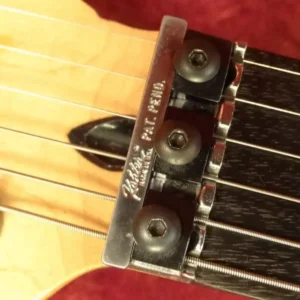
Kahler Spyder Locking Nut
Floyd Rose Locking Nut

Additional Remarks

This overview does not include the Contemporary Strats made by the U.S. Custom Shop in the 1990s, which are discussed in a separate chapter, nor the 2020 Limited Edition HM Strat ‘reissue’.

Antonio Calvosa
Antonio Calvosa
Antonio Calvosa is a pharmaceutical chemist with a deep passion for electric guitars. He is a former guitarist for Lost Property Office, with whom he won the Italian edition of Emergenza Rock in 2004 and performed at the Taubertal Festival in Rothenburg, Germany. In 2014, he founded Fuzzfaced, a valuable platform for electric guitar enthusiasts, and in 2022, he contributed to the book "Stratocaster: sei corde nella leggenda."
Antonio Calvosa
Antonio Calvosa
Antonio Calvosa is a pharmaceutical chemist with a deep passion for electric guitars. He is a former guitarist for Lost Property Office, with whom he won the Italian edition of Emergenza Rock in 2004 and performed at the Taubertal Festival in Rothenburg, Germany. In 2014, he founded Fuzzfaced, a valuable platform for electric guitar enthusiasts, and in 2022, he contributed to the book "Stratocaster: sei corde nella leggenda."