Fender Custom Shop #2
Fender Custom Classic Series
THE EARLY CUSTOM SHOP CORE LINE


Table of Contents
ToggleThe Philosophy Behind the 1992 Custom Classic Series
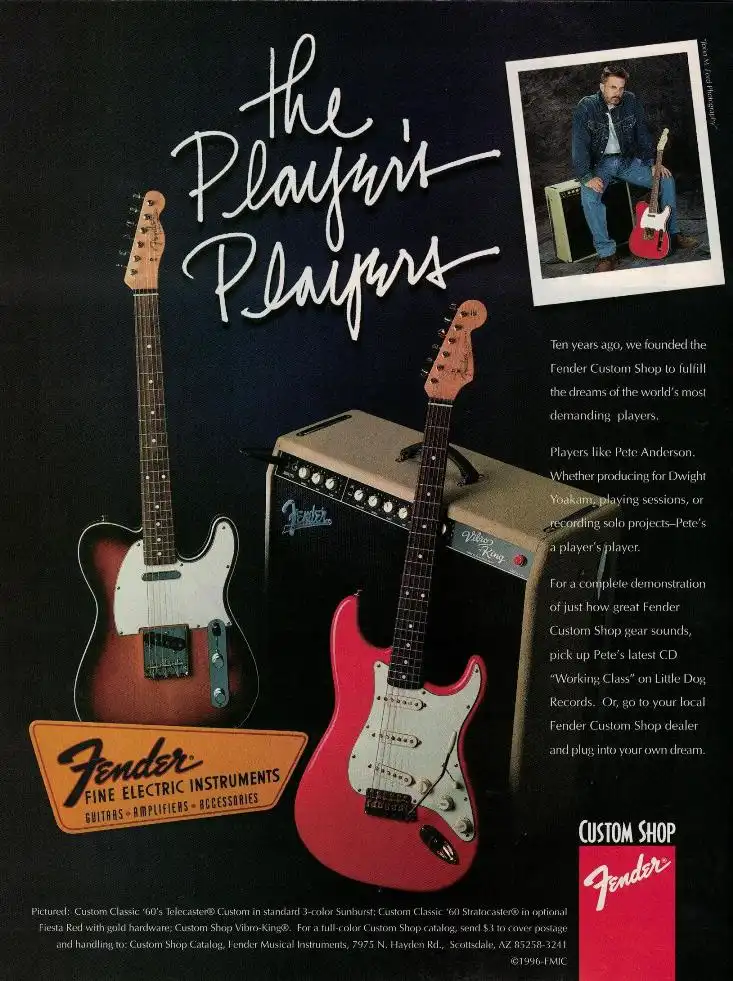
The Fender Custom Classic Series emerged in 1992 as part of the earliest structured lineup of the Fender Custom Shop. At that time, the Custom Shop was transitioning from a small, semi-experimental workshop (founded in 1987 under figures such as John Page and Michael Stevens) into a formalized premium division with catalogued models and pricing.
The Custom Classic Series represented the “core” vintage-inspired offering of the early 1990s Custom Shop catalog—distinct from the Set-Neck Series and from the emerging Artist/Signature models. They were described as “classic renditions of the legendary instruments that laid the groundwork for the sound, feel, and urgency of rock and roll today.”

Unlike the later Time Machine Series (introduced in 1999), the Custom Classic instruments were not ultra-strict historical replicas. Instead, they combined selective vintage cues with contemporary build precision, offering upgraded woods, modernized neck profiles, and premium cosmetic appointments that reflected early-1990s tastes as much as 1950s or 1960s precedent.
They were conceived as player-oriented instruments rather than museum-grade reproductions.
In the early 1990s, Fender had not yet fully embraced the concept of forensic vintage accuracy. That shift would occur later in the decade as the vintage market became more academically documented and commercially influential.

Custom Classic Reissues
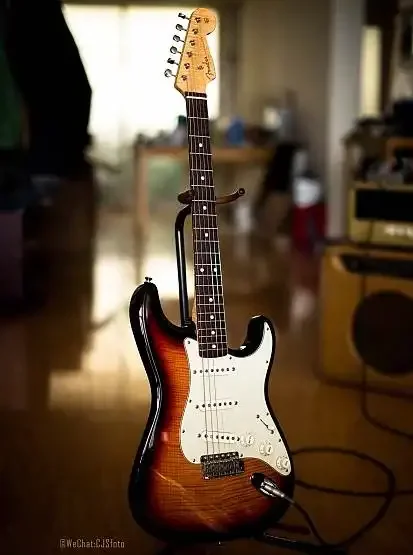
Among the vintage-inspired Stratocasters were the 1954 and 1960 models, modern reinterpretations of historic instruments featuring a 9.5” fretboard radius. Starting in 1995, both were offered in standard configurations as well as upgraded versions with gold hardware and/or a flame maple top, combining classic aesthetics with subtle modern refinements.
Over the years, the Custom Classic Series expanded with additional reissues, including the ’69 (available with either a rosewood fingerboard or a maple cap neck), the ’58, and the left-handed ’57 and ’62 Stratocasters, ensuring that players of all preferences could experience the early Custom Shop’s craftsmanship.
In 1998, the Custom Shop introduced the NOS Stratocaster, which, according to the catalog, captured the defining features of mid-1960s Stratocasters. It was equipped with three Custom Shop ’65 pickups, hand-wound and signed by Abigail Ybarra.


Custom Classic Stratocaster and Classic Player Stratocaster
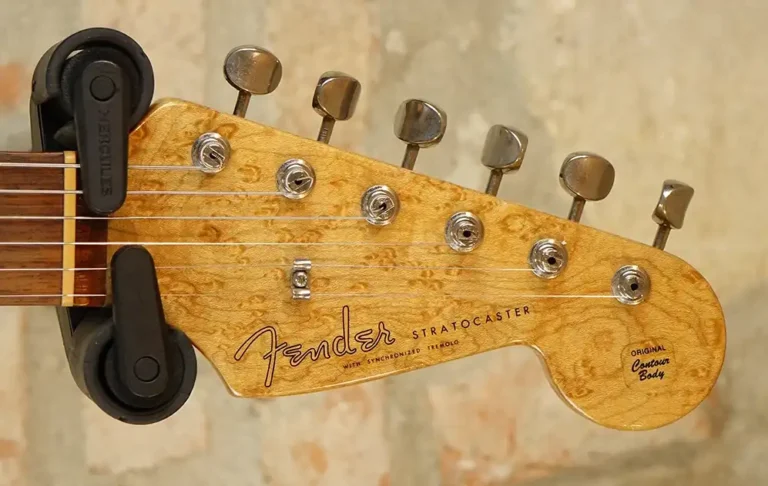
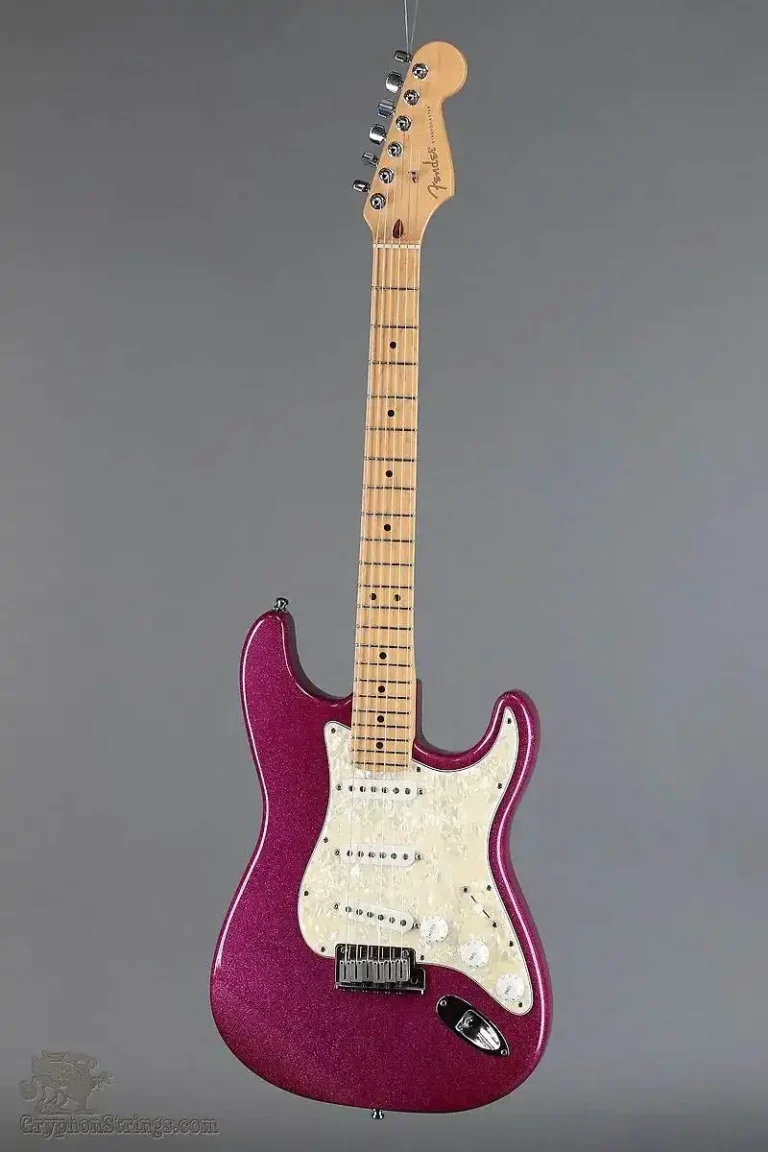
However, the Custom Classic Series also included Custom Shop renditions of some of Fender’s most significant guitars of the 1990s. The American Classic Stratocaster served as the Custom Shop counterpart to the American Standard Stratocaster. In 2000, it was replaced by the Custom Classic Stratocaster, offered in both “C”- and “V”-neck profiles and featuring either an alder or ash body, depending on the finish.
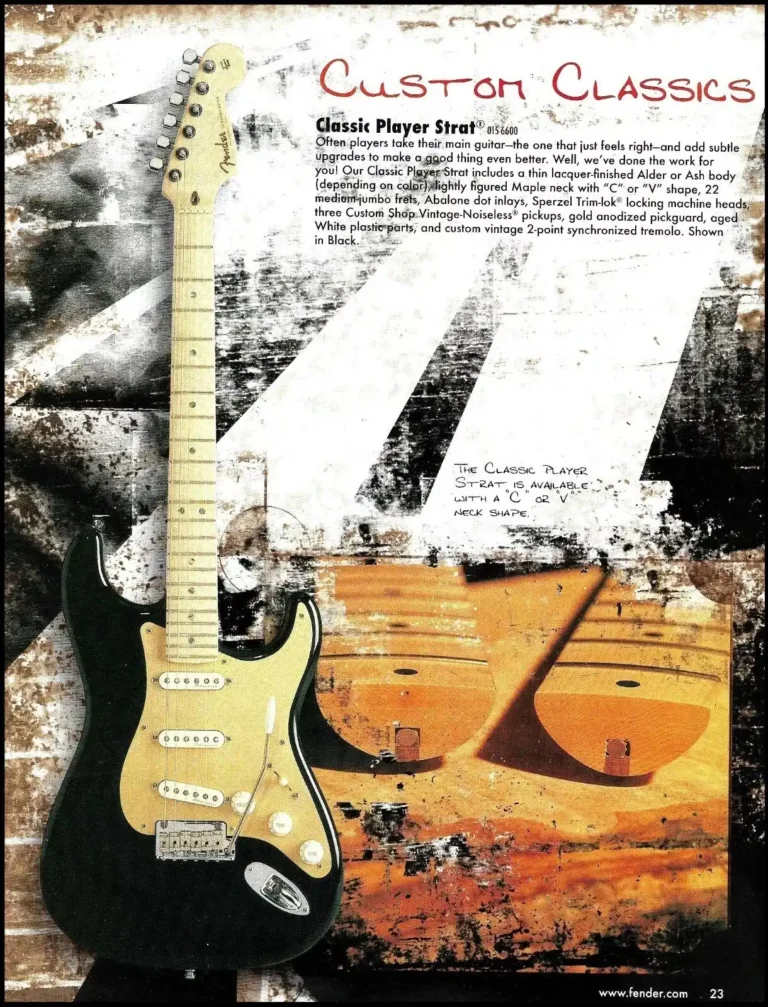
In 1998, the Classic Player Stratocaster was introduced. It can be considered either the Custom Shop version of the American Deluxe or an enhanced iteration of the American Classic Stratocaster, and it should not be confused with the Mexican Classic Player models. The Classic Player featured a 2-point tremolo bridge with vintage-style saddles, Sperzel Trim-Lok staggered tuning machines, abalone fret markers, a plastic or anodized metal pickguard, and Noiseless pickups, which at the time were regarded as premium. Like the Custom Classic, it was available in both “C”- and “V”-shaped neck profiles and could be built with either an alder or ash body, depending on the color.