Superstrats: Contemporary, Boxer, Pro Feel and HM Strats
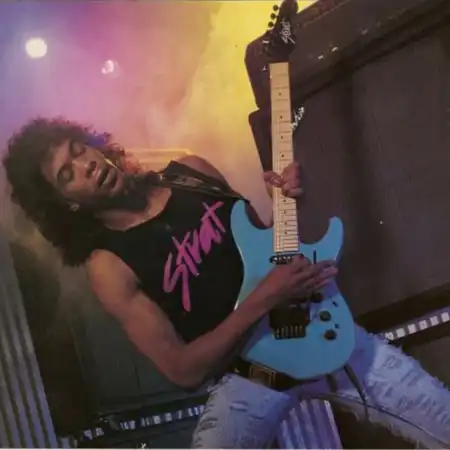
After the closure of Fender’s Fullerton factory in 1985 and before the launch of the American Standard, Fujigen became central to Fender’s output and innovation. Responding to the rise of hard rock and heavy metal, the Japanese factory introduced modern “super strat” models, first under the Squier brand and later as Fender exports.
The Contemporary Stratocasters debuted in 1983 for the Japanese market, with painted headstocks, flat fretboards, jumbo frets, and options ranging from Dragster humbuckers to Hot Rod single coils. Their early Rox System tremolo was soon replaced by the Blade Shooter and Schaller-made Fender System bridges. By 1985, export models appeared under both Squier and Fender names, often featuring Kahler units.
In 1984, the Boxer Series replaced the domestic Contemporary line, introducing modern features such as TBX tone controls, 22 frets, and high-output pickups. This evolved into the Pro Feel Series (1989), which refined playability with sculpted neck heels, asymmetrical plates, Lace Sensors, and Floyd-licensed ExTrem systems.
The peak of Fujigen’s superstrat era came with the HM (Heavy Metal) Strats of 1988–92. Designed with Dan Smith and Nick Sugimoto, they featured 24 frets, DiMarzio humbuckers, locking tremolos, and bold finishes, cemented by endorsements from shred virtuoso Greg Howe.