Squier Production in China & Indonesia
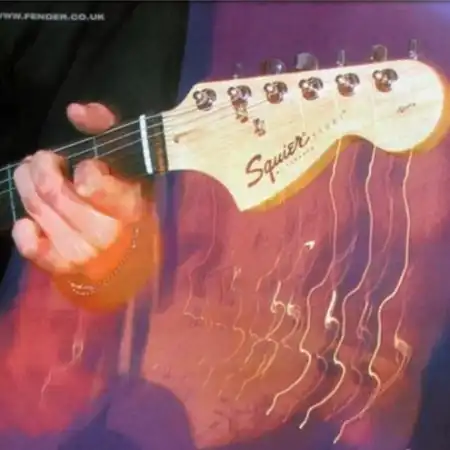
Cover - Squier China and Indonesia ad

In the early 1990s, Squier shifted production from Korea to China and Indonesia to cut costs and revive its struggling brand. China offered affordable hardwoods, while Indonesia provided solid craftsmanship at lower prices. Key Chinese factories included Yako, AXL, and Grand Reward, which built iconic models like the Classic Vibe and Modern Player series. In Indonesia, P.T. Cort and P.T. Samick handled most production. By the mid-2000s, Squier’s image improved through marketing innovations such as the beginner-friendly “Pak” sets and the “Team Squier Garage to Glory” contest, reinforcing its identity as an accessible, entry-level gateway into the Fender world.

Squier Pro Tone Series

Cover - Squier Pro Tone Skater ad

The Squier Pro Tone Series, launched in 1996, was Fender’s bold effort to revive Squier’s reputation after declining Korean-made models and fierce competition in the early ’90s. Designed in Scottsdale and built by Cort in Korea, the Pro Tone guitars featured solid ash bodies, alnico pickups, quality hardware, and eye-catching transparent finishes. They also introduced a refined gold Squier logo, symbolizing pride and independence. Despite their success and strong appeal among players, Pro Tone models overlapped in price with Mexican-made Fenders. To protect its main line, Fender discontinued the series in 1999—ironically ending Squier’s most acclaimed revival.

Made in Japan Modern Series

Cover - MIJ Modern Series

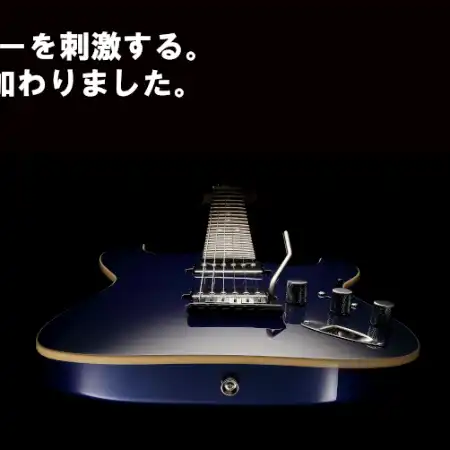
Launched in 2019, Fender Japan’s Made in Japan Modern Series reimagined classic Fender designs for contemporary players. Blending tradition with innovation, the lineup included Stratocaster, Telecaster, Jazzmaster, and Jazz Bass models, all featuring sleek, aerodynamic curves inspired by sports cars. The series embraced Fender’s “Fly Beyond” motto, symbolizing progress in tone, versatility, and craftsmanship. Highlights included compound-radius necks, asymmetrical heels, and locking tuners for modern playability. HH models with Modern Modified Humbuckers delivered a powerful, focused tone, while HSS and SSS versions offered noiseless classic sounds. The result was a fusion of elegance, comfort, and cutting-edge design—distinctly modern yet unmistakably Fender.

Made in Japan Hybrid Series

Cover - MIJ Hybrid

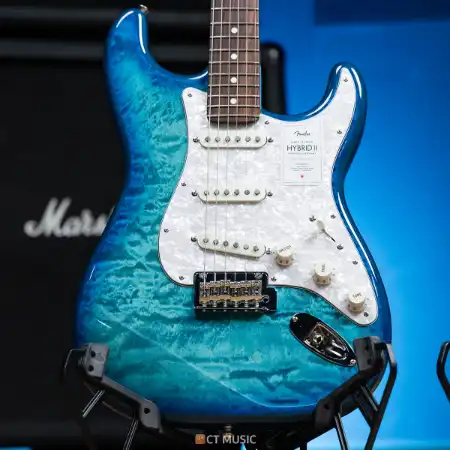
The Made in Japan Hybrid Series, launched in 2017 under Chris Fleming’s direction, combined vintage Fender aesthetics with modern playability—featuring U.S.-made pickups, satin necks, and medium-jumbo frets. Building on its success, Fender introduced the Hybrid II Series in 2021, refining ergonomics with U.S.-based body contours, rounded neck edges, and narrow-tall frets. New Hybrid II Custom Voiced Pickups and orange-drop capacitors delivered balanced tone and clarity. With unique finishes like Modena Red and Forest Blue, the Hybrid II embodied the perfect blend of American Fender DNA and Japanese precision, offering versatile, high-quality instruments celebrated by artists and players worldwide.

Made in Japan Heritage Series

Cover - Made in Japan Heritage Series

Launched in March 2020, Fender Japan’s Made in Japan Heritage Series aimed to faithfully recreate the company’s vintage DNA through Japanese craftsmanship. Overseen by Master Builder Mark Kendrick, the project combined data from Fender’s U.S. archives with Japan’s precision manufacturing to achieve unmatched authenticity. Each of the eleven models shared a single price point and period-correct details—such as lacquer finishes, Formvar-wound pickups, 7.25” fingerboard radius, and era-specific neck shapes. Rather than copying American Fenders, the Heritage Series expressed what Japanese builders could achieve as equals, blending tradition, accuracy, and pride into a lasting chapter of Fender’s global story.

Made in Japan Traditional Series

Cover - Made in Japan Tradition Series

ChatGPT ha detto:
Launched in 2017 to celebrate 35 years of Fender Japan, the Made in Japan Traditional Series blended Fender’s heritage with Japanese craftsmanship, replacing the Japan Exclusive Series. Under Chris Fleming’s supervision, improvements were made to truss rod installation, fretwork, and finishing, while aesthetic updates included vintage-style decals, redesigned knobs, and a sharper Telecaster body contour. In 2020, the second series introduced modern playability upgrades—narrower nut width, 9.5″ radius—and eco-friendlier materials. Guided by Mark Kendrick’s U.S. design standards, it incorporated American body and neck data, aligning Fender Japan’s precision with global specifications while preserving its unique character.

Fender Aerodyne Series

Cover - Aerodyne

Launched in 2004 by Fender Japan, the Aerodyne Series introduced sleek, carved-body Stratocasters blending vintage and modern features. The domestic AST-75 and export Aerodyne Standard Stratocaster featured basswood bodies, 7.25” fretboards, vintage-style hardware, and side-mounted jacks, though only the Japanese model had a pickguard. The line expanded in 2006 with the Aerodyne Classic Stratocaster for Western markets and medium-scale AST-75MDS/MDH models for Japan, offering diverse pickups and flatter fretboards. The high-end Aerodyne Special featured alder bodies with carved maple tops and premium DiMarzio pickups. Later limited editions included Koa and Flame Maple Top models, with new Aerodyne II and Special Stratocasters arriving in 2022.

12-String Stratocasters

Cover - 12-string

The Fender Electric XII, introduced in 1965, was Leo Fender’s innovative 12-string design, featuring a unique offset body, large “hockey stick” headstock, split pickups, and a revolutionary 12-saddle bridge for perfect intonation. Used by Jimmy Page, Pete Townshend, Eric Clapton, and during Bob Dylan’s sessions, it became iconic despite being distinct from the Stratocaster. In later decades, Fender Japan produced several 12-string Stratocaster models, starting with the ST-XII (1987–1993) and followed by export versions like the Stratocaster XII and Strat-XII. Later models introduced the advanced GTC-12 bridge, unique finishes, and vintage-style details, culminating in the 2018–2019 Made in Japan Traditional Stratocaster XII.

Squier Silver Series

Cover - Squier Silver Series

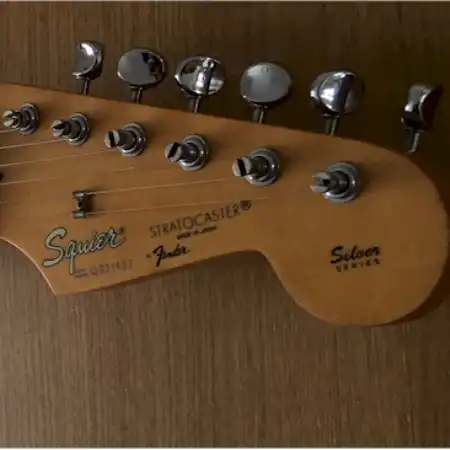
The Squier Silver Series was launched in 1990 to revive Japanese production after Korean Squiers suffered poor quality and declining sales. Early small runs appeared in 1988–1989, with official production continuing until 1996. Recognizable by their silver Squier logo and headstock decal, the guitars featured inconsistencies in wood (basswood, alder, or P.A.F.), tuners, and finishes. Notable technical changes included the adjustment of the headstock truss rod. Models like the SST-33, SST-36, and SST-39 were sold in Japan. A unique highlight: George Harrison’s Silver Series Stratocaster, customized with a mint-green pickguard, was later sold at auction for $29,384, making it the most expensive used Squier ever.

Paisley and Blue Flower Stratocasters

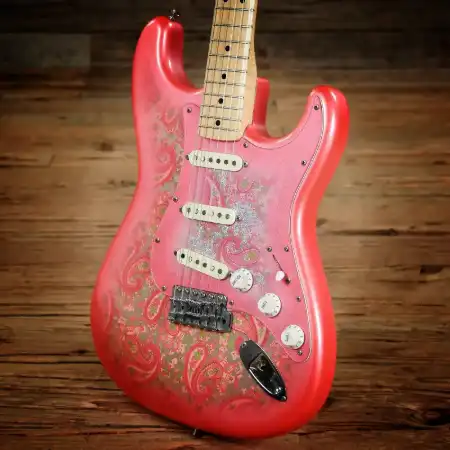
Cover - Paisley Stratocaster

Paisley is a decorative Persian-inspired motif that gained popularity in the 1960s, leading Fender to release Paisley and Blue Flower Telecasters in 1968–69, famously played by James Burton. In the 1980s, Fender Japan extended these finishes to Stratocasters, using printed paper or fabric designs sealed with clear coats. Prototypes were created in 1986 when Dan Smith asked Fujigen to test the concept, with Nick Sugimoto improvising patterns from Indian shirts. Production began in 1987, starting with the Telecaster, then the Paisley Stratocaster ST72-125PRD and later the Blue Flower ST72-75BFL. Fender reissued these models in limited runs in 2002–03 and 2008.