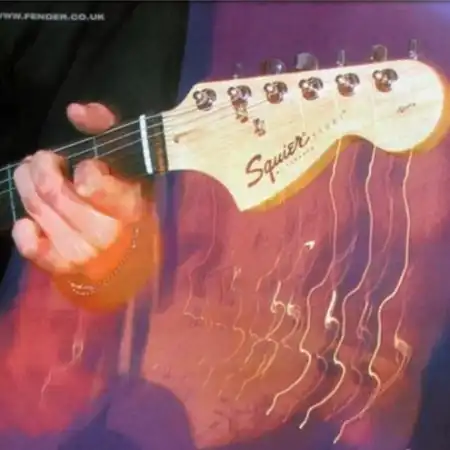
The first Chinese Squiers

The first Chinese Squier Stratocasters appeared in late 1994, built at the Yako factory and sold in 1995 as the Squier Bullet SRS. These guitars mirrored earlier Korean Bullets, with low-grade hardware and occasionally plywood bodies, identified by NC-prefix serials. Alongside them emerged an undocumented, odd “PV-4” Strat, lacking serial numbers and featuring a Peavey-style bridge and body, adding confusion to the lineup.
In 1996, Fender formalized Chinese production with the Squier Tradition Series: inexpensive, structurally improved guitars with ceramic pickups, thin hardware, NC or YN serials, and limited finishes. In 1997, this model was renamed the Affinity Series, which later split into Chinese standalone guitars and Indonesian Pak-only versions.
From the late 1990s onward, Affinity Strats evolved through thinner bodies, revised neck profiles, changing woods, new logos, and Pak bundles. By the 2010s, production stabilized between China and Indonesia, with poplar bodies, updated aesthetics, and clear differentiation across configurations and markets.