Squier Production in China & Indonesia

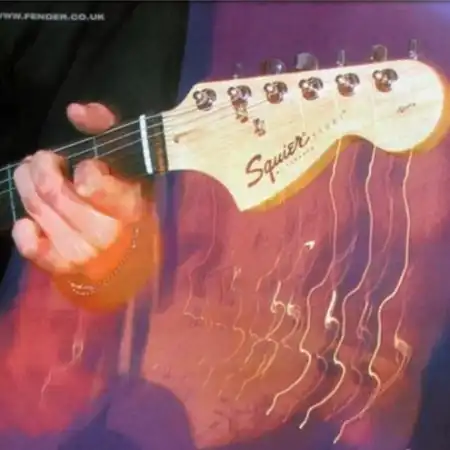
Cover - Squier China and Indonesia ad

In the early 1990s, Squier shifted production from Korea to China and Indonesia to cut costs and revive its struggling brand. China offered affordable hardwoods, while Indonesia provided solid craftsmanship at lower prices. Key Chinese factories included Yako, AXL, and Grand Reward, which built iconic models like the Classic Vibe and Modern Player series. In Indonesia, P.T. Cort and P.T. Samick handled most production. By the mid-2000s, Squier’s image improved through marketing innovations such as the beginner-friendly “Pak” sets and the “Team Squier Garage to Glory” contest, reinforcing its identity as an accessible, entry-level gateway into the Fender world.

Squier Pro Tone Series

Cover - Squier Pro Tone Skater ad

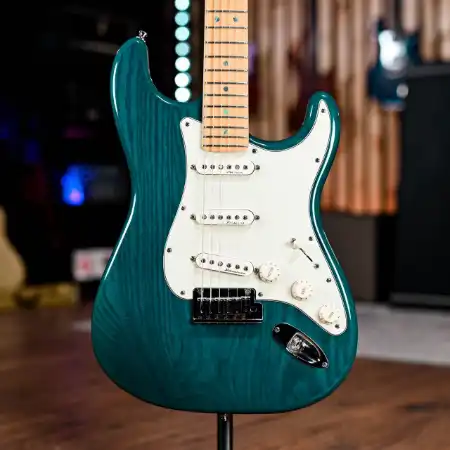
The Squier Pro Tone Series, launched in 1996, was Fender’s bold effort to revive Squier’s reputation after declining Korean-made models and fierce competition in the early ’90s. Designed in Scottsdale and built by Cort in Korea, the Pro Tone guitars featured solid ash bodies, alnico pickups, quality hardware, and eye-catching transparent finishes. They also introduced a refined gold Squier logo, symbolizing pride and independence. Despite their success and strong appeal among players, Pro Tone models overlapped in price with Mexican-made Fenders. To protect its main line, Fender discontinued the series in 1999—ironically ending Squier’s most acclaimed revival.

Korean Squier Stratocasters: The Plywood Era

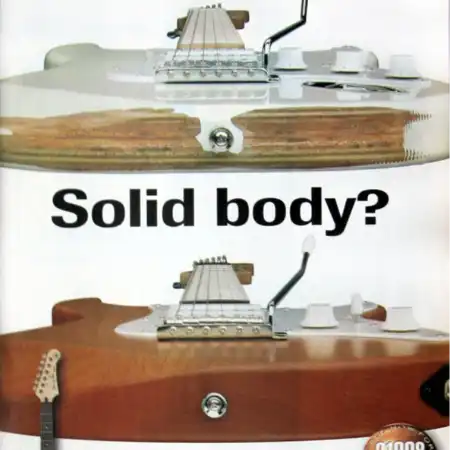
Cover - Korean Squiers

By the late 1980s, rising Japanese production costs led Fender to shift Squier manufacturing to Korea. The first Korean Squiers, built by Young Chang, offered affordable alternatives but soon suffered from inconsistent quality as production moved to Samick and Sung Eum. Early models featured solid or veneered alder bodies, but later guitars used plywood, damaging their reputation. Despite numerous factory changes and low-cost components, models like the Squier Standard, Contemporary, and Squier II Stratocasters kept prices competitive. India briefly produced Squier II guitars in 1988, but severe quality issues ended that venture quickly. Fender’s later Korean efforts, including the Squier Series and Bullet Stratocasters, attempted to restore credibility but continued to rely on laminated bodies. By the mid-1990s, Fender improved materials and introduced better-built models like the Pro Tone Series. These shifts marked a turbulent but pivotal era for Squier, bridging Japan’s legacy and the rise of later Chinese and Indonesian production.

12-String Stratocasters

Cover - 12-string

The Fender Electric XII, introduced in 1965, was Leo Fender’s innovative 12-string design, featuring a unique offset body, large “hockey stick” headstock, split pickups, and a revolutionary 12-saddle bridge for perfect intonation. Used by Jimmy Page, Pete Townshend, Eric Clapton, and during Bob Dylan’s sessions, it became iconic despite being distinct from the Stratocaster. In later decades, Fender Japan produced several 12-string Stratocaster models, starting with the ST-XII (1987–1993) and followed by export versions like the Stratocaster XII and Strat-XII. Later models introduced the advanced GTC-12 bridge, unique finishes, and vintage-style details, culminating in the 2018–2019 Made in Japan Traditional Stratocaster XII.

Squier Silver Series

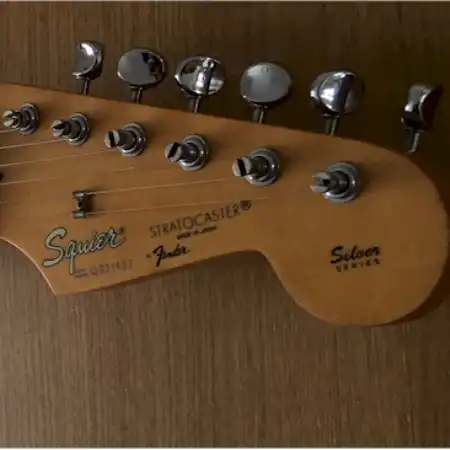
Cover - Squier Silver Series

The Squier Silver Series was launched in 1990 to revive Japanese production after Korean Squiers suffered poor quality and declining sales. Early small runs appeared in 1988–1989, with official production continuing until 1996. Recognizable by their silver Squier logo and headstock decal, the guitars featured inconsistencies in wood (basswood, alder, or P.A.F.), tuners, and finishes. Notable technical changes included the adjustment of the headstock truss rod. Models like the SST-33, SST-36, and SST-39 were sold in Japan. A unique highlight: George Harrison’s Silver Series Stratocaster, customized with a mint-green pickguard, was later sold at auction for $29,384, making it the most expensive used Squier ever.

Fender Japan

COVER - Fender Japan

During the late 1970s and early 1980s, Fender faced intense competition from high-quality Japanese copies of its guitars, particularly Tokai’s Springy Sound Stratocaster, which closely replicated vintage Fenders. This pressure, combined with rising U.S. production costs, prompted Fender executives Bill Schultz and Dan Smith to establish Fender Japan in 1982 with distributors Yamano Music, Kanda Shokai, and manufacturer FujiGen Gakki. Unlike popular myths, FujiGen was not just a supplier but an equal partner in Fender Japan, playing a key role in refining designs and improving production through advanced mechanization. Early Fender Japan models helped restore Fender’s reputation, even outshining domestic competition.

The article dispels rumors that these guitars were rebranded Grecos, explains how Fender’s ad campaigns and design teams shaped perceptions, and highlights Makoto “Nick” Sugimoto’s Custom Edition Team, a precursor to a Japanese Custom Shop. It also explores the transition from “Made in Japan” to “Crafted in Japan” labeling, the involvement of other factories like Dyna Gakki and Tokai, and Fender’s eventual restructuring of Japanese operations under FMC Japan in 2015.

Fender Japan guitars—ranging from affordable models to exceptional high-end instruments—were crucial to Fender’s survival in the CBS era and beyond, cementing Japan’s reputation for craftsmanship and innovation in electric guitars.

The American Original Series

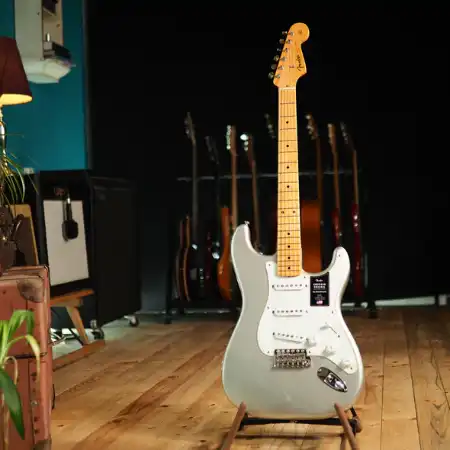
Cover - American Original Series

On January 16, 2018, Fender launched the American Original Series, replacing the long-running American Vintage line. While the Vintage Series focused on exact recreations of specific guitars, the American Original line blended standout features from each decade to balance vintage character with modern playability. Developed under Joey Brasler and Justin Norvell, the series took nearly two years of planning, design, and consultation with musicians. Key updates included a modern 9.5” fingerboard radius, narrow-tall frets, and period-correct nitrocellulose finishes. The American Original ’50s and ’60s Stratocasters reflected their respective eras with different neck profiles, pickup sets, and cosmetic details, while offering improved comfort and versatility. Fender emphasized that the new line wasn’t a step back, but a refinement designed for today’s players. Introduced at Winter NAMM 2018 alongside an ambassador campaign featuring Isaac Brock, Kurt Vile, Raphael Saadiq, and J.D. McPherson, the series represented Fender’s vision of timeless design made modern.

The American Vintage Series

Cover - American Vintage Series

The American Vintage Stratocaster line represented Fender’s commitment to refining its heritage models for modern players while honoring the company’s legacy. The first major update came in 1998, when the American Vintage ’57 and ’62 Stratocasters debuted. Built in Fender’s new Corona facility, these guitars featured more accurate vintage details, including nitro finishes, correct headstock shapes, rolled fingerboard edges, period-correct neck profiles, and newly designed “Original ’57/’62” pickups based on pre-CBS examples. A ’70s model was later added in 2006.

In 2012, Fender launched the second series under the “Pure Vintage Project.” Led by Mike Lewis and George Blanda, the team meticulously studied original instruments across the U.S., re-creating tooling, finishes, and components with unprecedented accuracy. New models included the ’56, ’59, and ’65 Stratocasters, each with period-correct pickups, hardware, and finishes. Marketed under the motto “Historic Benchmark, American Originals,” the series became a definitive statement of Fender’s craftsmanship and historical authenticity.

Vintage Reissue Stratocasters

Index - Vintage Reissue

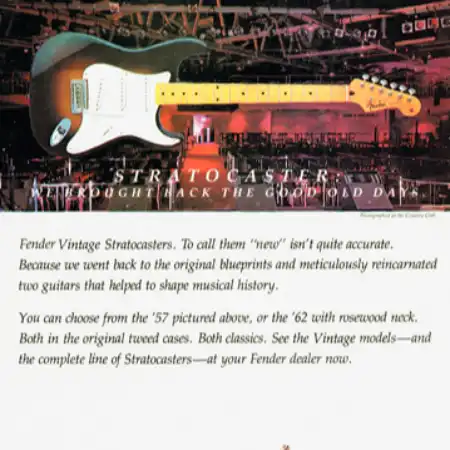
In the early 1980s, Fender responded to growing demand for vintage-style guitars by launching its Vintage Reissue series. While Japanese companies like Tokai dominated the market with affordable vintage-style models, Fender began producing guitars in Japan and simultaneously developed U.S.-made reissues. Led by Dan Smith and John Page, Fender sourced original pre-CBS Stratocasters for reference, working with experts like John Carruthers and Seymour Duncan to recreate classic features. The first models—the ’57 and ’62 Stratocasters—were officially introduced at the 1982 NAMM Show but delayed due to factory retooling.

Though advertised as exact replicas, these reissues included intentional design compromises for broader market appeal, such as altered neck shapes and finishes. Even so, they played a crucial role in Fender’s revival, funding the Standard line and paving the way for the Custom Shop.

Controversy arose when Fender’s 1982 catalog featured a Tokai neck in one photo, mistakenly fueling rumors of counterfeit parts. Ironically, Japanese-made reissues were more historically accurate in some details. The original U.S. models, now called Fullerton Reissues, were produced until 1985 and are highly collectible today. Production later shifted to Corona, and in 1998, the line was relaunched as the American Vintage Series.

The American Deluxe Series and the Noiseless Pickups

Index - American Deluxe Series

The American Deluxe Series and the First Noiseless Pickups
The Fender American Deluxe Series, introduced in July 1998, marked a significant evolution in Fender’s lineup, replacing the Plus Series as the company’s premier American-made production model. This series aimed to enhance the Stratocaster’s sound and playability without altering its iconic design.

Design and Features

Fender revisited the original 1950s Stratocaster blueprints to ensure the body contours closely resembled the classic design. The bodies were crafted from high-quality alder or ash, often showcasing transparent finishes that highlighted the wood grain. To complement the visual appeal, Fender introduced features like rolled neck edges, a modern “C” neck profile, and staggered locking tuners, all contributing to improved comfort and playability.

Cosmetic enhancements included abalone dot markers, aged plastic parts, and a new raised silver “Appliqué” logo. The hardware was polished chrome, and the tremolo system was the Fender Deluxe 2-Point Synchronized Tremolo with a pop-in arm. Notably, the American Deluxe Stratocaster was among the first to feature Fender’s Noiseless pickups, aiming to deliver the classic Strat tone without the hum associated with traditional single-coil pickups.

The First Noiseless Pickups: Vintage Noiseless and Hot Noiseless

The introduction of Noiseless pickups was a response to the demand for single-coil tones without the unwanted hum. The first-generation Noiseless pickups, known as Vintage Noiseless, were designed to replicate the traditional Strat sound while minimizing noise. These pickups were well-received for their clarity and vintage character.

In subsequent years, Fender introduced the Hot Noiseless pickups, which offered a higher output and a more modern tone. These pickups were designed to provide a more powerful sound while maintaining the noiseless operation, catering to players seeking a more robust Stratocaster tone.

The Second Series: SCN Pickups and the S-1 Switch

In the early 2000s, Fender introduced the Samarium Cobalt Noiseless (SCN) pickups, which utilized rare-earth magnets to achieve a quieter operation and a more balanced tone. The SCN pickups were designed to provide a more traditional Stratocaster sound with reduced noise.

Additionally, Fender incorporated the S-1 switching system, allowing players to access a wider range of tonal options by engaging a secondary set of pickup combinations. This innovation expanded the versatility of the American Deluxe Stratocaster, catering to a broader spectrum of musical styles.

The Third Series: N3 Noiseless Pickups and Other Upgrades

The final iteration of the American Deluxe Series featured the N3 Noiseless pickups, which combined Alnico III, II, and V magnets to achieve a more balanced and dynamic tone. These pickups were designed to provide a more powerful sound while maintaining the noiseless operation, catering to players seeking a more robust Stratocaster tone.

Other upgrades in this series included enhanced fretwork, improved neck profiles, and refined hardware, all contributing to the overall playability and tonal quality of the instrument.

Conclusion

The American Deluxe Stratocaster series represents Fender’s commitment to innovation while respecting the classic Stratocaster design. By integrating modern features and the Noiseless pickups, Fender enhanced the playability and versatility of the Stratocaster, making it more appealing to contemporary musicians. The evolution of the Noiseless pickups further underscores Fender’s dedication to providing high-quality instruments that meet the demands of modern guitarists.