Made in Japan Hybrid Series
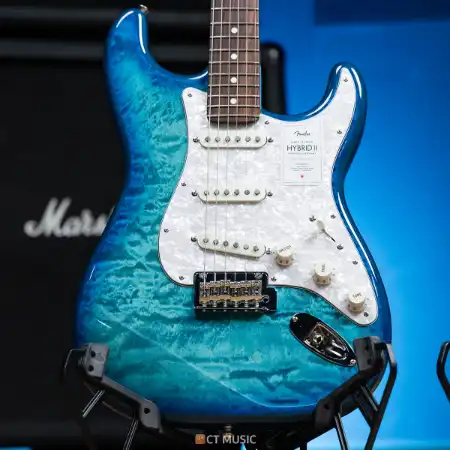
Cover - MIJ Hybrid

The Made in Japan Hybrid Series, launched in 2017 under Chris Fleming’s direction, combined vintage Fender aesthetics with modern playability—featuring U.S.-made pickups, satin necks, and medium-jumbo frets. Building on its success, Fender introduced the Hybrid II Series in 2021, refining ergonomics with U.S.-based body contours, rounded neck edges, and narrow-tall frets. New Hybrid II Custom Voiced Pickups and orange-drop capacitors delivered balanced tone and clarity. With unique finishes like Modena Red and Forest Blue, the Hybrid II embodied the perfect blend of American Fender DNA and Japanese precision, offering versatile, high-quality instruments celebrated by artists and players worldwide.

Made in Japan Heritage Series

Cover - Made in Japan Heritage Series

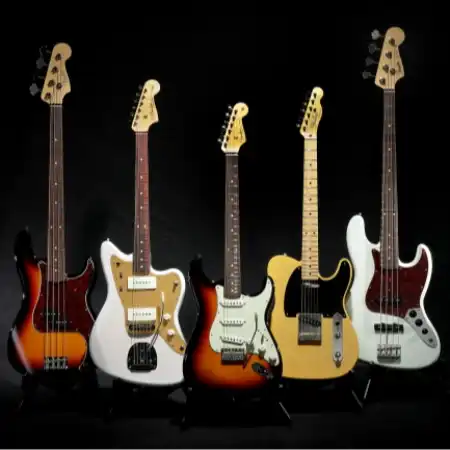
Launched in March 2020, Fender Japan’s Made in Japan Heritage Series aimed to faithfully recreate the company’s vintage DNA through Japanese craftsmanship. Overseen by Master Builder Mark Kendrick, the project combined data from Fender’s U.S. archives with Japan’s precision manufacturing to achieve unmatched authenticity. Each of the eleven models shared a single price point and period-correct details—such as lacquer finishes, Formvar-wound pickups, 7.25” fingerboard radius, and era-specific neck shapes. Rather than copying American Fenders, the Heritage Series expressed what Japanese builders could achieve as equals, blending tradition, accuracy, and pride into a lasting chapter of Fender’s global story.

Made in Japan Traditional Series

Cover - Made in Japan Tradition Series

ChatGPT ha detto:
Launched in 2017 to celebrate 35 years of Fender Japan, the Made in Japan Traditional Series blended Fender’s heritage with Japanese craftsmanship, replacing the Japan Exclusive Series. Under Chris Fleming’s supervision, improvements were made to truss rod installation, fretwork, and finishing, while aesthetic updates included vintage-style decals, redesigned knobs, and a sharper Telecaster body contour. In 2020, the second series introduced modern playability upgrades—narrower nut width, 9.5″ radius—and eco-friendlier materials. Guided by Mark Kendrick’s U.S. design standards, it incorporated American body and neck data, aligning Fender Japan’s precision with global specifications while preserving its unique character.

The JV and SQ Stratocasters

JV and SQ Strats

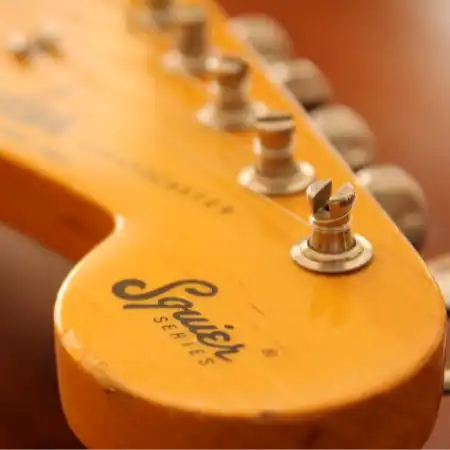
The JV Stratocasters, introduced in April 1982, were the first Japanese-made Fender Stratocasters, modeled after the 1957 and 1962 US originals. Built at Fujigen Gakki, they featured impressive craftsmanship that surprised Fender staff, reproducing pre-CBS specifications with remarkable accuracy. Early JVs were produced for the Japanese market with unique model codes and a mix of alder and sen ash bodies, finished in either nitrocellulose or thin polyester. Export models, branded under the Squier name, appeared in Europe in 1982 and featured U.S.-made pickups, polyester finishes, and competitive pricing. Second-generation export models refined the headstock and branding to differentiate them from American Fenders. In Japan, the Squier SQ Stratocasters launched in 1983, with larger headstocks, bullet truss rods, and three-bolt necks, eventually appearing on MTV ads. Fender Japan also produced domestic Squier and Current Stratocasters under “JV” serials. Misunderstandings about “Ex” markings arose, but they were internal codes, not export indicators. The JV legacy continues with the 2022 JV Modified Series, inspired by these iconic instruments.

Fender Japan

COVER - Fender Japan

During the late 1970s and early 1980s, Fender faced intense competition from high-quality Japanese copies of its guitars, particularly Tokai’s Springy Sound Stratocaster, which closely replicated vintage Fenders. This pressure, combined with rising U.S. production costs, prompted Fender executives Bill Schultz and Dan Smith to establish Fender Japan in 1982 with distributors Yamano Music, Kanda Shokai, and manufacturer FujiGen Gakki. Unlike popular myths, FujiGen was not just a supplier but an equal partner in Fender Japan, playing a key role in refining designs and improving production through advanced mechanization. Early Fender Japan models helped restore Fender’s reputation, even outshining domestic competition.

The article dispels rumors that these guitars were rebranded Grecos, explains how Fender’s ad campaigns and design teams shaped perceptions, and highlights Makoto “Nick” Sugimoto’s Custom Edition Team, a precursor to a Japanese Custom Shop. It also explores the transition from “Made in Japan” to “Crafted in Japan” labeling, the involvement of other factories like Dyna Gakki and Tokai, and Fender’s eventual restructuring of Japanese operations under FMC Japan in 2015.

Fender Japan guitars—ranging from affordable models to exceptional high-end instruments—were crucial to Fender’s survival in the CBS era and beyond, cementing Japan’s reputation for craftsmanship and innovation in electric guitars.