Collectables and HRR Stratocasters
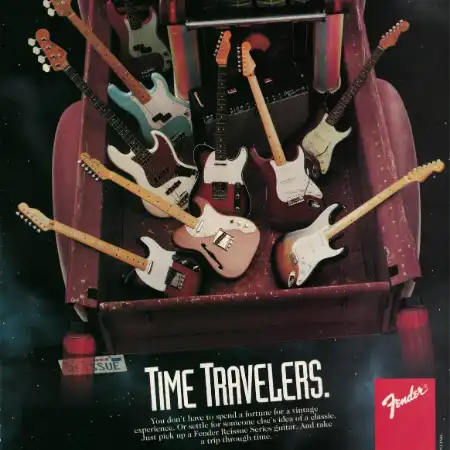
Cover - Collectables and HRR

When Fender shifted Squier production from Japan to Korea, Fender Japan continued exporting reissue guitars, initially under the Reissue or Limited Edition Series, later grouped as the Collectables Series. These guitars, often built with basswood bodies and Reissue Strat pickups, lacked nitro finishes but carried the Fender name proudly, offering players affordable access to vintage-style instruments. The “Time Travelers” ad (c. 1995) promoted these reissues as a ticket to rock ’n’ roll history, featuring ’50s and ’60s Stratocasters, Telecasters, and vintage-style basses. Key models included the ’68 “Hendrix” Strat, the ’50s and ’60s Stratocasters (1989–1998), and the ’72 Strat, each with distinctive necks, pickguards, and hardware.

In 1990, Fender introduced the Hot-Rodded Reissue (HRR) Series, popularized by Richie Sambora. These Japanese-made Stratocasters featured hotter pickups, double-locking tremolos, and modern appointments, blending vintage aesthetics with aggressive tones. Notably, a 1991 Frontline catalog showed a heavily customized HRR Strat resembling Sambora’s signature, highlighting artist personalization and marketing strategy.
Standard Stratocasters made in Japan

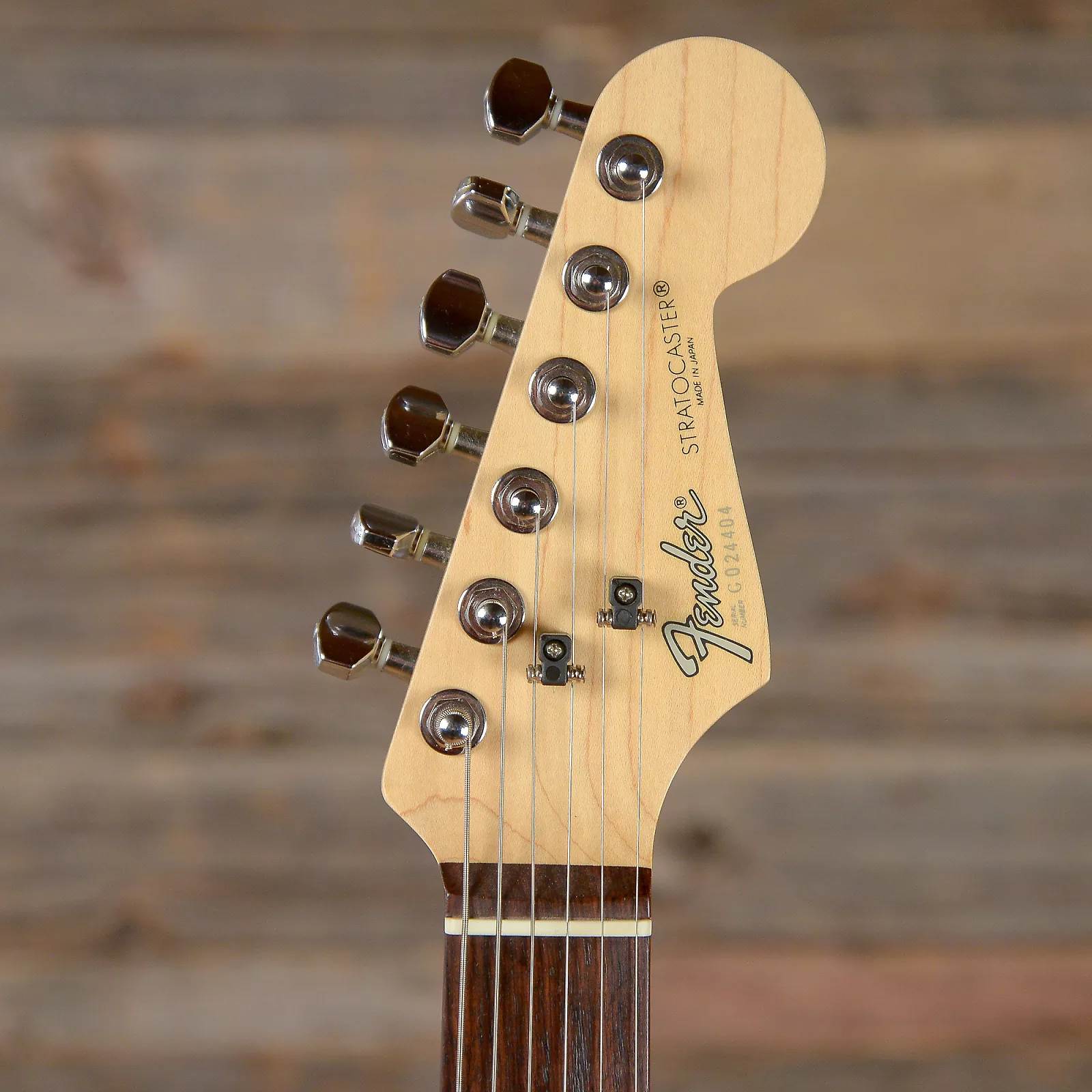
Cover - MIJ Standard

Fender Japan’s Standard Stratocasters, introduced in 1983, offered affordable, modern alternatives to vintage-style reissues. Unlike reissues, they featured silver CBS-style headstock logos, flat-pole pickups, and often basswood bodies. Produced for both domestic and export markets, early models like the ST83-80 mirrored U.S. “2-Knob” Stratocasters but added a 22-fret neck. Export versions included both Fender and Squier-branded guitars, with Squier Standards eventually rebranded as Fender models. Notable variants featured innovative tremolo systems like Fender System I and Kahler units, before a shift to traditional specs in 1988. The line ended in 1991 when Mexican production began, cementing these Japanese models’ collectible status.

Domestic Models and Series Overview (1984 Onward)

Cover - Domestic Model and Codes explained

From 1984 onward, Fender Japan produced a wide range of domestic Stratocasters, dividing them into Vintage, Current, Collectors, and Boxer Series, later joined by Pro Feel models. After the celebrated JV and SQ export series, Fender reserved its best guitars for Japan, exporting lower-tier models. The domestic lineup offered both high-end and affordable reissues, specialized Collectors instruments, and modern Boxer/Pro Feel designs. Fender’s intricate coding system identified model year, price, and features, though inconsistencies and factory stamps often confuse collectors. While most Japanese Stratocasters abroad are export versions, some domestic models have surfaced internationally through second-hand sales, adding to their intrigue.

The JV and SQ Stratocasters

JV and SQ Strats

The JV Stratocasters, introduced in April 1982, were the first Japanese-made Fender Stratocasters, modeled after the 1957 and 1962 US originals. Built at Fujigen Gakki, they featured impressive craftsmanship that surprised Fender staff, reproducing pre-CBS specifications with remarkable accuracy. Early JVs were produced for the Japanese market with unique model codes and a mix of alder and sen ash bodies, finished in either nitrocellulose or thin polyester. Export models, branded under the Squier name, appeared in Europe in 1982 and featured U.S.-made pickups, polyester finishes, and competitive pricing. Second-generation export models refined the headstock and branding to differentiate them from American Fenders. In Japan, the Squier SQ Stratocasters launched in 1983, with larger headstocks, bullet truss rods, and three-bolt necks, eventually appearing on MTV ads. Fender Japan also produced domestic Squier and Current Stratocasters under “JV” serials. Misunderstandings about “Ex” markings arose, but they were internal codes, not export indicators. The JV legacy continues with the 2022 JV Modified Series, inspired by these iconic instruments.

Fender Japan

COVER - Fender Japan

During the late 1970s and early 1980s, Fender faced intense competition from high-quality Japanese copies of its guitars, particularly Tokai’s Springy Sound Stratocaster, which closely replicated vintage Fenders. This pressure, combined with rising U.S. production costs, prompted Fender executives Bill Schultz and Dan Smith to establish Fender Japan in 1982 with distributors Yamano Music, Kanda Shokai, and manufacturer FujiGen Gakki. Unlike popular myths, FujiGen was not just a supplier but an equal partner in Fender Japan, playing a key role in refining designs and improving production through advanced mechanization. Early Fender Japan models helped restore Fender’s reputation, even outshining domestic competition.

The article dispels rumors that these guitars were rebranded Grecos, explains how Fender’s ad campaigns and design teams shaped perceptions, and highlights Makoto “Nick” Sugimoto’s Custom Edition Team, a precursor to a Japanese Custom Shop. It also explores the transition from “Made in Japan” to “Crafted in Japan” labeling, the involvement of other factories like Dyna Gakki and Tokai, and Fender’s eventual restructuring of Japanese operations under FMC Japan in 2015.

Fender Japan guitars—ranging from affordable models to exceptional high-end instruments—were crucial to Fender’s survival in the CBS era and beyond, cementing Japan’s reputation for craftsmanship and innovation in electric guitars.