Player, Player Plus, and Player II Series

COVER - Player Plus

The Player Series debuted in 2018 as the successor to Fender’s Mexican-made Standard line, following CITES restrictions that prompted a shift from rosewood to pau ferro fingerboards. Designed using feedback from players and dealers, it blended traditional aesthetics with modern updates such as AlNiCo pickups, a 22-fret neck, a 2-pivot bridge, refined body contours, and premium hardware. New finishes refreshed its visual appeal.

In 2024, Fender introduced the Player II Series, a refined reimagining that restored rosewood fretboards, added rolled edges, upgraded hardware, chambered body options, and newly voiced pickups, along with vintage-inspired colors and a modern marketing campaign.

The Player Plus Series, launched in 2021, elevated the concept with noiseless pickups, locking tuners, a flatter 12″ radius fingerboard, and bold gradient and sparkle finishes. Positioned as a performance-focused upgrade, it targeted modern players seeking enhanced playability, comfort, and noise-free operation.

The Mexican Standard Series

Cover - MIM Standard Strat

Fender introduced the Mexican-made Standard Stratocaster on January 1, 1991, launching production at its Ensenada factory. Initially assembled from U.S.-supplied bodies and necks and finished in polyester, these guitars reflected Japanese manufacturing influence, including FujiGen tooling and construction details. Early models featured poplar bodies, ceramic pickups, Ping hardware, and a distinctive truss rod insert. Output rose rapidly as Fender refined production, though early instruments showed inconsistencies due to parts shortages and experimentation. By 2002 alder replaced poplar, and later upgrades improved hardware and shielding. In 2008 the revised Standard Stratocaster debuted, marking the model’s full evolution and manufacturing maturity.

Fender’s Ensenada Factory

COVER - Ensenada

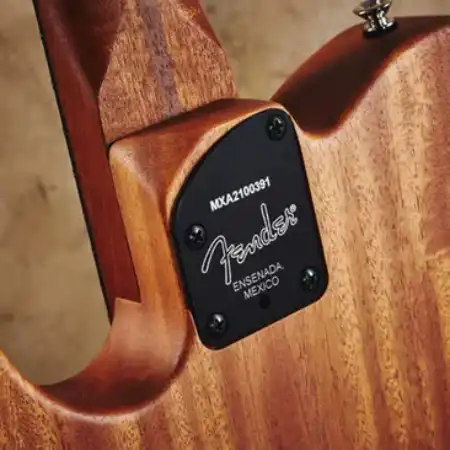
Fender’s Ensenada facility in Baja California emerged in the late 1980s, initially producing strings before expanding into amplifier parts and guitar manufacturing. With crucial support from Japan’s Fujigen, which supplied machinery, training, and production methods, the plant adopted a distinctly Japanese-style manufacturing approach. By the early 1990s, cross-border collaboration with the Corona factory blurred distinctions between U.S. and Mexican builds, and the first “Made in Mexico” Stratocasters appeared in 1991 as affordable, genuine Fender instruments. A devastating 1994 fire destroyed the plant, but Fender rebuilt a larger factory within 100 days, significantly increasing production capacity and cementing Mexico’s role in Fender manufacturing.

Squier Artist Series

Cover - Squier Artist

The Squier Artist Series began in 2002 with the Tom DeLonge Stratocaster, featuring a minimalist design that mirrored the Mexican Fender model. It soon evolved into the Regional Artist Program, which produced signature models in countries where artists had strong local followings. The first was the O-Larn Stratocaster in Thailand (2008), featuring a single volume knob and Hot Rails pickups. This was followed by the Sham Kamikaze Stratocaster in Malaysia (2009), distinguished by a reverse headstock, reverse-staggered pickups, and Kamikaze’s signature. In the same year, the Simon Neil Stratocaster launched in Europe, replicating Neil’s Custom Shop ’60 Strat with mixed AlNiCo pickups designed for tight midrange punch. Building on this approach, Ehsaan Noorani of India received a Squier model in 2011, tailored with a narrow, shallow neck for smaller hands. Across the program, Squier combined affordability, region-specific designs, and artist-inspired features, enabling local guitarists worldwide to access signature instruments while connecting with their favorite musicians.

Squier Classic Vibe Series

Cover - Classic Vibe

The Squier Classic Vibe Series debuted in 2008 under product manager Chris Gill to capture the spirit of classic Fender designs. Built in China, the ’50s and ’60s Stratocasters evoked vintage tone and styling while using modern specifications. Featuring alder bodies, gloss maple necks, and Fender-designed Alnico pickups, they quickly earned praise for quality and value. Later updates introduced new finishes, limited editions, and anniversary models. In 2019 the line was revamped and moved mainly to Indonesia, adding a ’70s model, new pickups, alternative tonewoods, and updated hardware. Despite mixed initial reactions, the series remains respected for affordability, playability, and authentic Stratocaster character.

Vintage Modified Series

Cover - Vintage Modified Series

The Vintage Modified Series debuted in 2003, with Stratocasters added in 2007 to mark 25 years of Squier. Early Indian-made models featured red cedar bodies, Duncan Designed pickups, small headstocks, and vintage styling with modern modifications. In 2012, production moved to Indonesia, introducing basswood bodies, updated electronics, large headstocks, and new models like the ’70s and Surf Stratocasters. From 2018, rosewood fingerboards were replaced with Indian Laurel due to CITES regulations.

The Squier Standard and Deluxe Series

Cover - Squier Standard Stratocaster Headstock

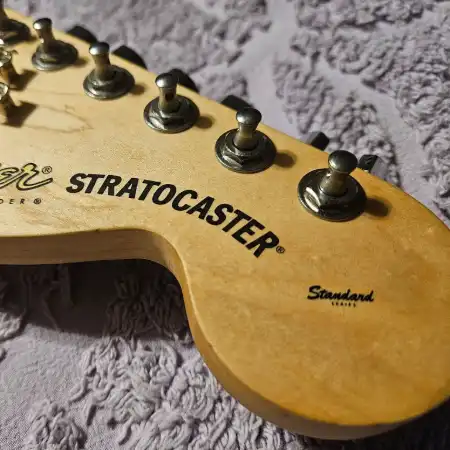
After brief Mexican production in 1998, the Squier Standard Series returned to Asia, debuting at the 1999 NAMM. Positioned above the Affinity line, Standards featured thicker 45mm bodies, upgraded hardware, and eventually 22 frets, AlNiCo pickups, and a twin-pivot tremolo. Production spanned China and Indonesia, with evolving specs and finishes, including metal-oriented Black & Chrome models. The Deluxe Series, launched in 2004, offered higher quality with alder bodies and figured maple tops. Initially limited, it expanded to include Hot Rails and satin-finish models, targeting players seeking enhanced tone, sustain, and distinctive aesthetics within the Squier range.

The first Chinese Squiers

Cover - The first Squier made in China and Indonesia

The first Chinese Squier Stratocasters appeared in late 1994, built at the Yako factory and sold in 1995 as the Squier Bullet SRS. These guitars mirrored earlier Korean Bullets, with low-grade hardware and occasionally plywood bodies, identified by NC-prefix serials. Alongside them emerged an undocumented, odd “PV-4” Strat, lacking serial numbers and featuring a Peavey-style bridge and body, adding confusion to the lineup.

In 1996, Fender formalized Chinese production with the Squier Tradition Series: inexpensive, structurally improved guitars with ceramic pickups, thin hardware, NC or YN serials, and limited finishes. In 1997, this model was renamed the Affinity Series, which later split into Chinese standalone guitars and Indonesian Pak-only versions.

From the late 1990s onward, Affinity Strats evolved through thinner bodies, revised neck profiles, changing woods, new logos, and Pak bundles. By the 2010s, production stabilized between China and Indonesia, with poplar bodies, updated aesthetics, and clear differentiation across configurations and markets.

Squier Production in China & Indonesia

Cover - Squier China and Indonesia ad

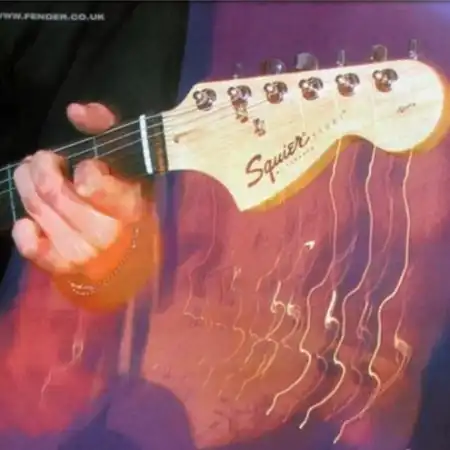
In the early 1990s, Squier shifted production from Korea to China and Indonesia to cut costs and revive its struggling brand. China offered affordable hardwoods, while Indonesia provided solid craftsmanship at lower prices. Key Chinese factories included Yako, AXL, and Grand Reward, which built iconic models like the Classic Vibe and Modern Player series. In Indonesia, P.T. Cort and P.T. Samick handled most production. By the mid-2000s, Squier’s image improved through marketing innovations such as the beginner-friendly “Pak” sets and the “Team Squier Garage to Glory” contest, reinforcing its identity as an accessible, entry-level gateway into the Fender world.

Squier Pro Tone Series

Cover - Squier Pro Tone Skater ad

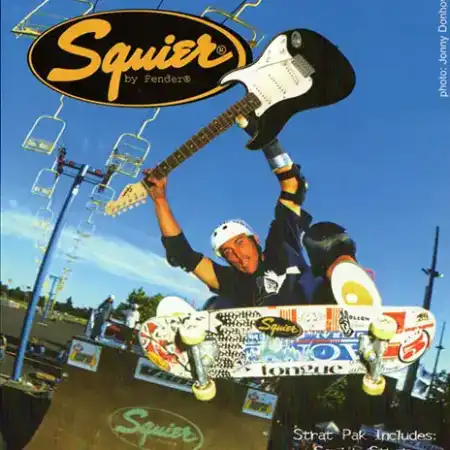
The Squier Pro Tone Series, launched in 1996, was Fender’s bold effort to revive Squier’s reputation after declining Korean-made models and fierce competition in the early ’90s. Designed in Scottsdale and built by Cort in Korea, the Pro Tone guitars featured solid ash bodies, alnico pickups, quality hardware, and eye-catching transparent finishes. They also introduced a refined gold Squier logo, symbolizing pride and independence. Despite their success and strong appeal among players, Pro Tone models overlapped in price with Mexican-made Fenders. To protect its main line, Fender discontinued the series in 1999—ironically ending Squier’s most acclaimed revival.