The ExTrad Series

Cover - ExTrad

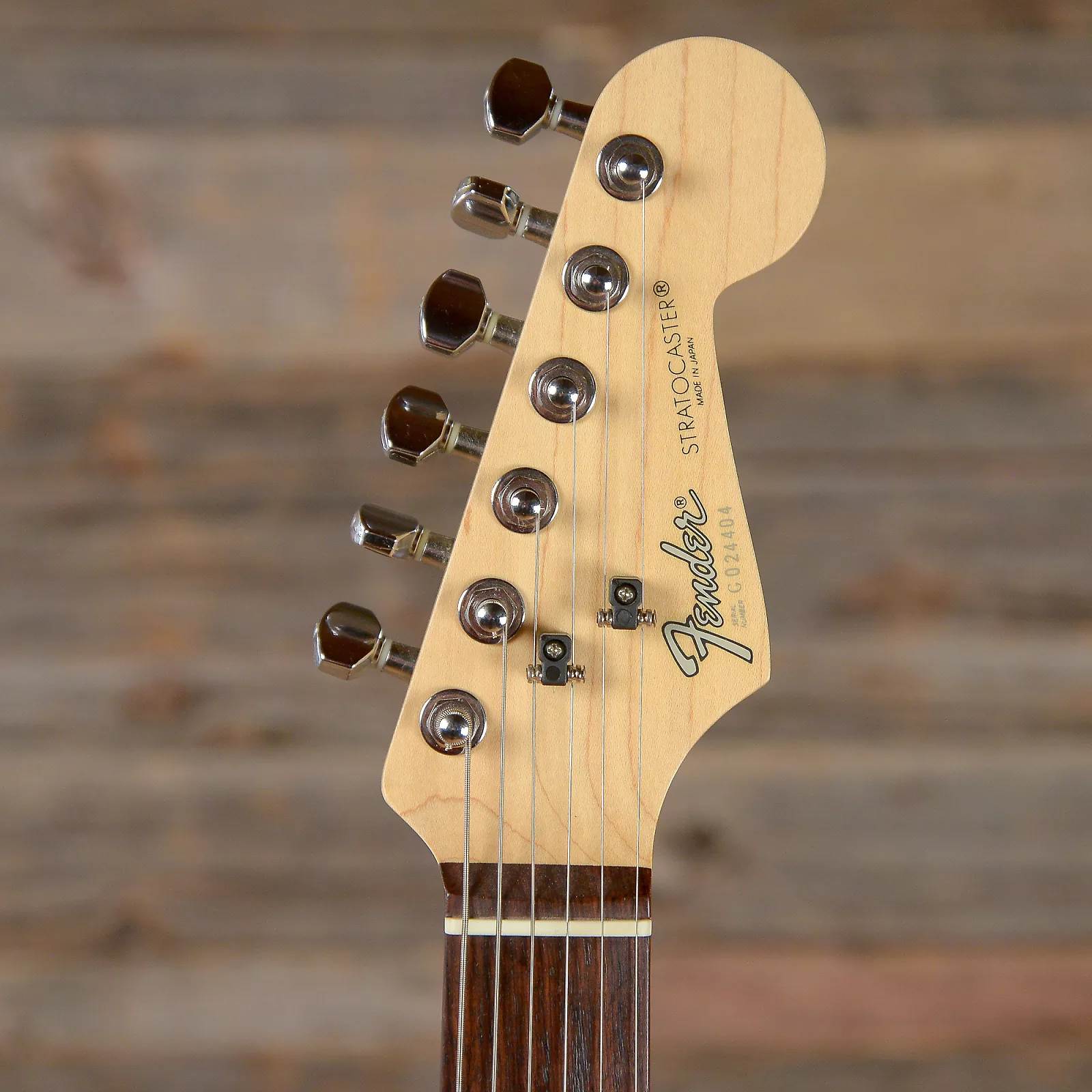
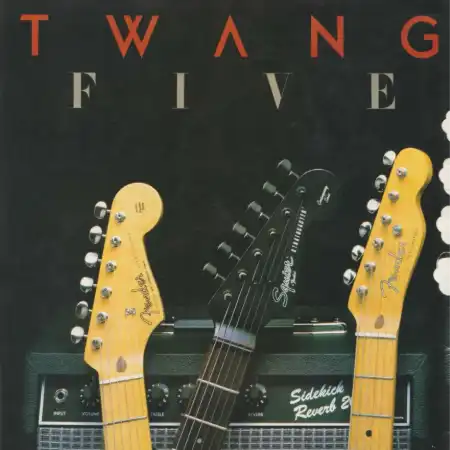
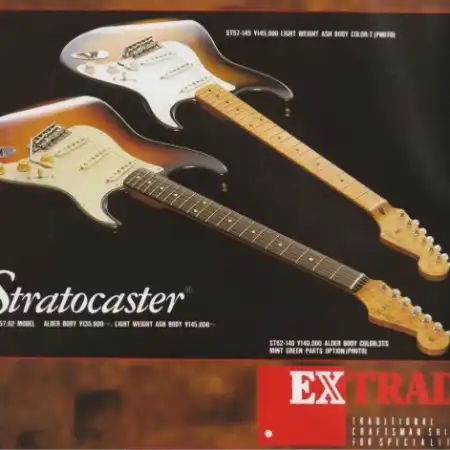
The ExTrad (“Extra Traditional”) Series debuted in Fender Japan’s 1986 Twang catalog and became official in 1989, aimed solely at the domestic market. Custom-order Stratocasters, they offered premium craftsmanship, fine tonewoods, custom pickups, and elegant finishes. Models included the ’54, ’57, and ’62 Strats, with alder or ash bodies. Special 30th- and 35th-anniversary editions celebrated classic years with sunburst finishes and bird’s-eye maple necks. Crafted by Makoto Sugimoto’s Custom Edition Team, these guitars reflected meticulous study of vintage Fenders. Identification relies on logos, serial numbers, neck-pocket stamps, and electronics.
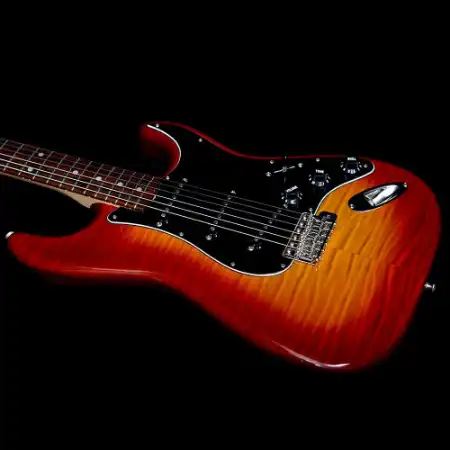
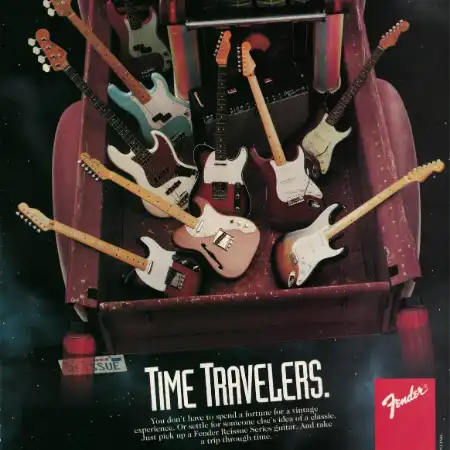
Foto Flame

Cover - Foto Flame

The Foto Flame finish, introduced between the late 1980s and 1990s on Japanese Fender Stratocasters, was not a photographic process but a digital image transfer developed and patented by Fujigen. Using heat-activated plastic film and a vacuum press, a thin flame maple “print” was applied to guitar bodies and necks, then clear-coated, creating the illusion of figured maple tops. Fender only supplied the name for marketing, while Fujigen also applied the process to Ibanez guitars and even luxury car interiors.

Multiple Fender models featured Foto Flame, including the 1989 US Contemporary Stratocaster, Collectable and HRR Strats, the 1994–1996 Foto Flame Stratocaster, and the Floyd Rose Standard Stratocaster Foto Flame, along with Japanese domestic models and Squier versions. While visually convincing, these instruments later developed characteristic cracks in the finish and, in some cases, unusual color changes. Today, Foto Flame guitars remain a curious blend of innovation, marketing, and imperfection in Fender’s history.

Collectables and HRR Stratocasters

Cover - Collectables and HRR

When Fender shifted Squier production from Japan to Korea, Fender Japan continued exporting reissue guitars, initially under the Reissue or Limited Edition Series, later grouped as the Collectables Series. These guitars, often built with basswood bodies and Reissue Strat pickups, lacked nitro finishes but carried the Fender name proudly, offering players affordable access to vintage-style instruments. The “Time Travelers” ad (c. 1995) promoted these reissues as a ticket to rock ’n’ roll history, featuring ’50s and ’60s Stratocasters, Telecasters, and vintage-style basses. Key models included the ’68 “Hendrix” Strat, the ’50s and ’60s Stratocasters (1989–1998), and the ’72 Strat, each with distinctive necks, pickguards, and hardware.

In 1990, Fender introduced the Hot-Rodded Reissue (HRR) Series, popularized by Richie Sambora. These Japanese-made Stratocasters featured hotter pickups, double-locking tremolos, and modern appointments, blending vintage aesthetics with aggressive tones. Notably, a 1991 Frontline catalog showed a heavily customized HRR Strat resembling Sambora’s signature, highlighting artist personalization and marketing strategy.

Standard Stratocasters made in Japan

Cover - MIJ Standard

Fender Japan’s Standard Stratocasters, introduced in 1983, offered affordable, modern alternatives to vintage-style reissues. Unlike reissues, they featured silver CBS-style headstock logos, flat-pole pickups, and often basswood bodies. Produced for both domestic and export markets, early models like the ST83-80 mirrored U.S. “2-Knob” Stratocasters but added a 22-fret neck. Export versions included both Fender and Squier-branded guitars, with Squier Standards eventually rebranded as Fender models. Notable variants featured innovative tremolo systems like Fender System I and Kahler units, before a shift to traditional specs in 1988. The line ended in 1991 when Mexican production began, cementing these Japanese models’ collectible status.

Domestic Models and Series Overview (1984 Onward)

Cover - Domestic Model and Codes explained

From 1984 onward, Fender Japan produced a wide range of domestic Stratocasters, dividing them into Vintage, Current, Collectors, and Boxer Series, later joined by Pro Feel models. After the celebrated JV and SQ export series, Fender reserved its best guitars for Japan, exporting lower-tier models. The domestic lineup offered both high-end and affordable reissues, specialized Collectors instruments, and modern Boxer/Pro Feel designs. Fender’s intricate coding system identified model year, price, and features, though inconsistencies and factory stamps often confuse collectors. While most Japanese Stratocasters abroad are export versions, some domestic models have surfaced internationally through second-hand sales, adding to their intrigue.

The JV and SQ Stratocasters

JV and SQ Strats

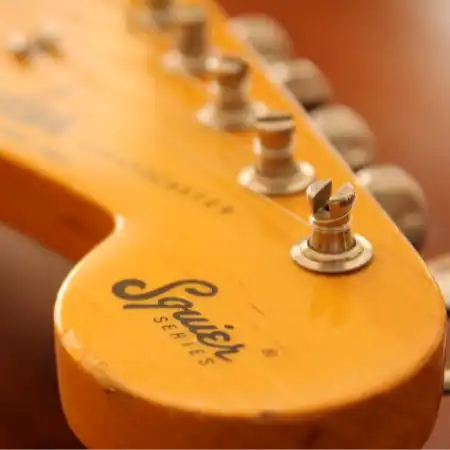
The JV Stratocasters, introduced in April 1982, were the first Japanese-made Fender Stratocasters, modeled after the 1957 and 1962 US originals. Built at Fujigen Gakki, they featured impressive craftsmanship that surprised Fender staff, reproducing pre-CBS specifications with remarkable accuracy. Early JVs were produced for the Japanese market with unique model codes and a mix of alder and sen ash bodies, finished in either nitrocellulose or thin polyester. Export models, branded under the Squier name, appeared in Europe in 1982 and featured U.S.-made pickups, polyester finishes, and competitive pricing. Second-generation export models refined the headstock and branding to differentiate them from American Fenders. In Japan, the Squier SQ Stratocasters launched in 1983, with larger headstocks, bullet truss rods, and three-bolt necks, eventually appearing on MTV ads. Fender Japan also produced domestic Squier and Current Stratocasters under “JV” serials. Misunderstandings about “Ex” markings arose, but they were internal codes, not export indicators. The JV legacy continues with the 2022 JV Modified Series, inspired by these iconic instruments.

Fender Japan

COVER - Fender Japan

During the late 1970s and early 1980s, Fender faced intense competition from high-quality Japanese copies of its guitars, particularly Tokai’s Springy Sound Stratocaster, which closely replicated vintage Fenders. This pressure, combined with rising U.S. production costs, prompted Fender executives Bill Schultz and Dan Smith to establish Fender Japan in 1982 with distributors Yamano Music, Kanda Shokai, and manufacturer FujiGen Gakki. Unlike popular myths, FujiGen was not just a supplier but an equal partner in Fender Japan, playing a key role in refining designs and improving production through advanced mechanization. Early Fender Japan models helped restore Fender’s reputation, even outshining domestic competition.

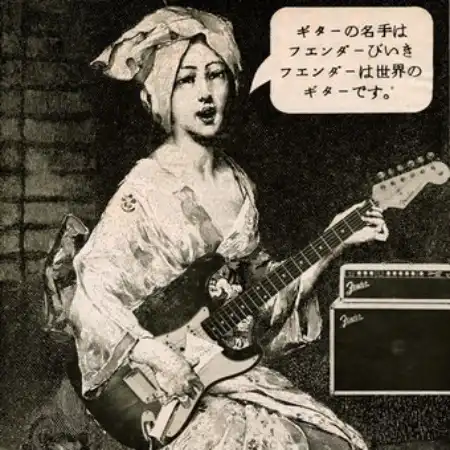
The article dispels rumors that these guitars were rebranded Grecos, explains how Fender’s ad campaigns and design teams shaped perceptions, and highlights Makoto “Nick” Sugimoto’s Custom Edition Team, a precursor to a Japanese Custom Shop. It also explores the transition from “Made in Japan” to “Crafted in Japan” labeling, the involvement of other factories like Dyna Gakki and Tokai, and Fender’s eventual restructuring of Japanese operations under FMC Japan in 2015.

Fender Japan guitars—ranging from affordable models to exceptional high-end instruments—were crucial to Fender’s survival in the CBS era and beyond, cementing Japan’s reputation for craftsmanship and innovation in electric guitars.

The American Performer Series

Cover - Fender-American-Performer-Series-Stratocaster

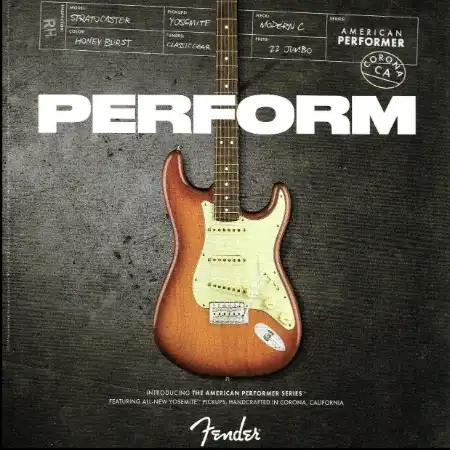
The Fender American Performer Stratocaster, introduced at Winter NAMM 2019, replaced the American Special line with a design focused on real-world performance. Its standout features include Tim Shaw–designed Yosemite pickups, which combine AlNiCo 2 and AlNiCo 4 magnets for balanced clarity and punch, treated with shellac for enhanced responsiveness. The HSS version introduced the innovative Double-Tap humbucker, allowing seamless coil-splitting without volume loss. Playability upgrades included 22 jumbo frets, a Modern “C” neck, 9.5” radius fingerboard, and precise Classic Gear tuners. The Greasebucket circuit added tonal flexibility, rolling off highs without muddying the sound. With finishes like Arctic White, Honey Burst, and Satin Lake Placid Blue, plus a bold ’70s-style headstock, the guitars blended modern utility with classic Fender style. Marketed under the slogan “Made to Perform,” the series emphasized affordability, professional features, and reliability, appealing to serious musicians seeking stage-ready instruments at accessible prices.

The Highway One Series

Cover - Highway 1

In 2002 Fender launched the Highway One Series to fill the gap between affordable Mexican Standards and the pricier American Series. Marketed as “Everything you need, nothing you don’t,” these U.S.-made guitars offered simplified finishes, vintage-style pickups, and cost-saving hardware, while preserving authentic Fender feel. Early models featured satin lacquer finishes, medium-jumbo frets, a vintage tremolo, and standard truss rods, with HSS options and the Greasebucket tone circuit added later. A major 2006 refresh introduced jumbo frets, AlNiCo 3 pickups, and a bold 1970s-style headstock. Rumors circulated that bodies and necks were finished in Mexico and trucked back up “Highway One,” but evidence shows they were fully built and finished in Corona with globally sourced parts. By 2010, the series gave way to the American Special line, which kept the affordable USA-made concept while adding Texas Special pickups, jumbo frets, and upgraded finishes, before Highway Ones were phased out entirely.

The American Vintage II Series

Cover - American Vintage II

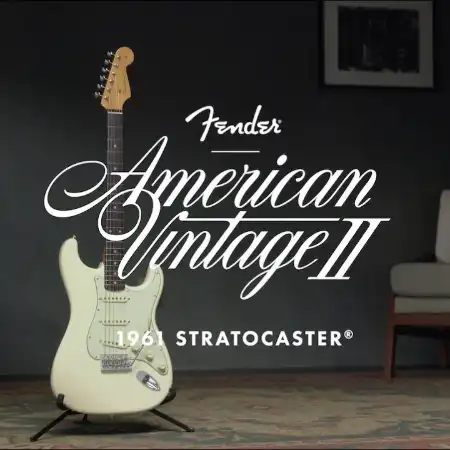
On October 11, 2022, Fender announced the American Vintage II Series, a collection of guitars and basses recreating classic models from 1957, 1961, and 1973 with period-accurate specifications. Building on the legacy of the 1982 Vintage Series, the AVII line reflects the ongoing fascination with vintage aesthetics and tone, offering players authentic features such as 7.25” radius fretboards, era-correct neck profiles, nitrocellulose lacquer finishes, and vintage-style hardware. Fender’s R&D team meticulously studied original drawings, materials, and details to ensure accuracy, while refining elements that had been problematic in the past, such as the 3-bolt neck design of the ’70s Stratocaster. Supported by a global campaign featuring Patti Smith, Brothers Osborne, James Bay, and Jeff Beck, the launch highlighted the timeless influence of Fender instruments. More than replicas, the American Vintage II guitars aim to capture both the sound and inspiration of the originals for today’s musicians.